What Are Zero-Turn Mowers and Why Choose John Deere
John Deere has spent over 185 years earning the trust of landowners, farmers, and lawn care professionals — and their zero-turn mowers represent the pinnacle of that engineering commitment.
When it comes to maintaining a pristine lawn, few machines deliver the speed, precision, and efficiency of a zero-turn mower. For homeowners with large yards and landscaping professionals managing multiple properties, zero-turn radius mowers have become the gold standard in outdoor power equipment. Among all the manufacturers competing in this space, John Deere consistently rises to the top — and for good reason.
How Zero-Turn Technology Works
Unlike traditional riding mowers that use a steering wheel and front-wheel turning mechanism, zero-turn mowers rely on dual hydrostatic transmissions to control each rear drive wheel independently. By pushing one lap bar forward while pulling the other back, the operator can spin the machine in place — achieving a turning radius of virtually zero. This means you can navigate tightly around trees, flower beds, garden borders, and other obstacles without leaving uncut strips of grass. The result is a faster mowing pattern, dramatically reduced trimming time, and a cleaner finished cut that would take a standard riding mower significantly longer to achieve.
John Deere’s Legacy in Lawn Care Equipment
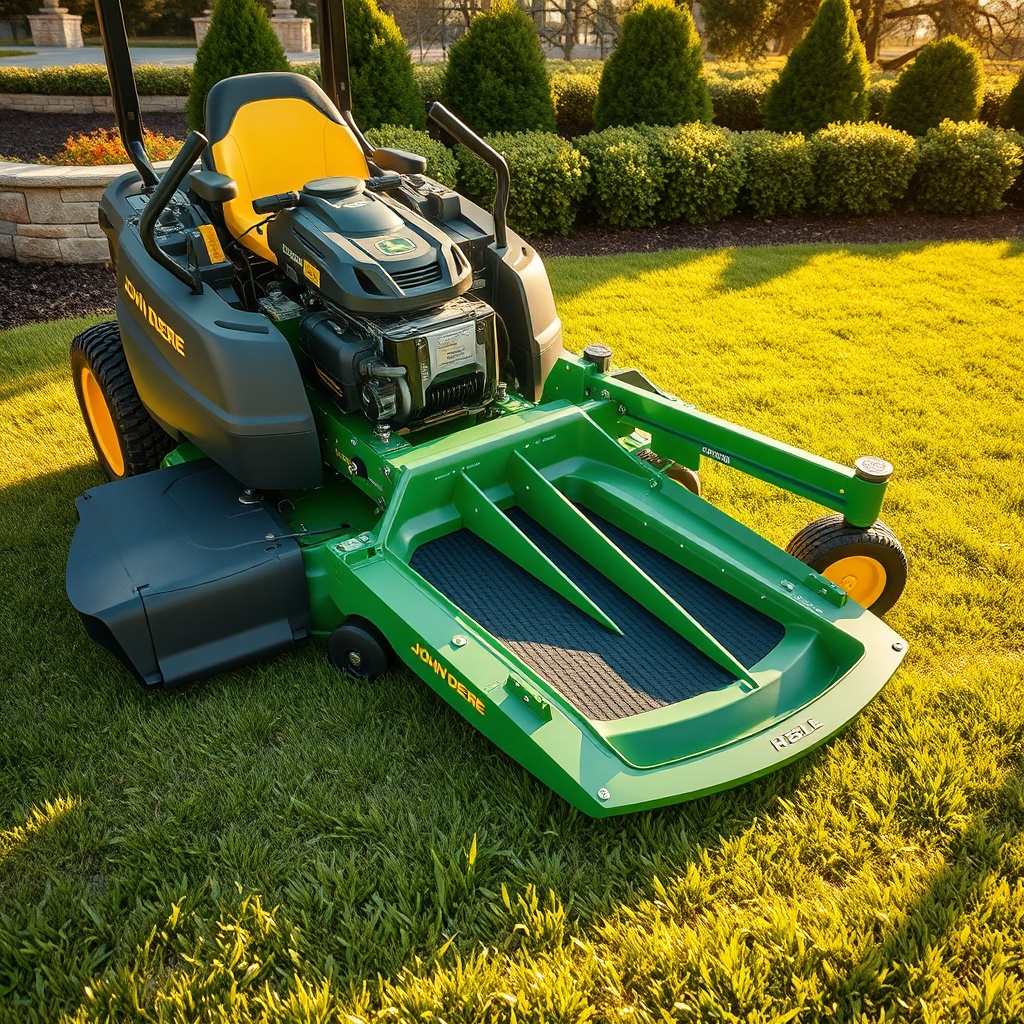
John Deere entered the lawn and garden equipment market in 1963, and the brand has been setting industry benchmarks ever since. Their commitment to innovation, durability, and operator comfort has produced a lineup of zero-turn mowers that appeal to everyone from weekend DIY lawn owners to full-time commercial landscapers. The iconic green-and-yellow machines are backed by a nationwide dealer network, extensive parts availability, and a reputation for longevity that few competitors can match. Choosing a John Deere zero-turn mower isn’t just a purchase — it’s a long-term investment in your property’s appearance and your equipment’s reliability.
John Deere Zero-Turn Mower Model Lineup Overview
John Deere organizes its 0 turn lawn mowers into a well-structured lineup that spans residential use all the way to heavy-duty commercial applications. Understanding which series fits your needs is the first step toward making a smart buying decision.
Model Series
Target User
Engine Range
Deck Size Options
Starting Price (Approx.)
Z315E (Z300)
Homeowner – Small Yard
18 HP Kawasaki
42″, 48″
$2,799
Z530M (Z500)
Homeowner – Large Yard
22–24 HP Kawasaki
48″, 54″, 60″
$4,299
Z720E (Z700)
Semi-Commercial
23–25 HP Kawasaki
48″, 54″, 60″
$5,499
Z930M (Z900)
Commercial/Professional
25–37 HP Kawasaki/Kohler
54″, 60″, 72″
$8,999
Residential Series: Z300 and Z500 Models
The Z300 series is John Deere’s entry-level zero-turn lineup, designed for homeowners with yards up to two acres. Models like the Z315E and Z335E offer reliable Kawasaki engines, comfortable high-back seats, and easy-to-use lap bar controls that make them accessible even for first-time zero-turn operators. They strike an excellent balance between affordability and performance.
Stepping up to the Z500 series unlocks more power, wider cutting decks, and enhanced comfort features. The Z530M and Z545R models are particularly popular among homeowners managing two to four acres of lawn. These machines feature reinforced steel frames, improved suspension seating, and optional mulching kits that make them versatile across different mowing conditions.
Commercial Series: Z700 and Z900 Models
For landscaping professionals or property owners with demanding terrain, the Z700 and Z900 series deliver commercial-grade durability and productivity. The Z720E bridges the gap between residential and commercial use, offering a heavier frame and more powerful engine options without the full price tag of the Z900 lineup.
The Z900 series — including the Z930M, Z950M, and Z970R — represents John Deere’s most capable zero-turn machines. With deck widths reaching 72 inches and engines producing up to 37 horsepower, these mowers are built to handle high-volume mowing day after day. Every component, from the spindle assemblies to the hydraulic system, is engineered for professional-level performance and longevity.
Key Features to Look for in 0 Turn Lawn Mowers John Deere
Shopping for a John Deere zero-turn mower involves evaluating several critical performance and comfort factors. Knowing what to prioritize will help you avoid overspending on features you don’t need — or underspending on a machine that can’t handle your property.
Engine horsepower and brand reliability (Kawasaki vs. Kohler options)
Cutting deck width and material (stamped vs. fabricated steel)
Fuel tank capacity and expected runtime per fill
Seat comfort, suspension type, and adjustability
Lap bar ergonomics and control responsiveness
Mulching, bagging, and side-discharge capabilities
Frame construction and overall machine weight rating
The cutting deck is the heart of any zero-turn mower — investing in a fabricated steel deck over a stamped deck pays dividends in cut quality, longevity, and resistance to damage over years of heavy use.
Engine Power and Cutting Deck Options
John Deere equips its zero-turn lineup with Kawasaki and Kohler engines — two of the most trusted names in outdoor power equipment. Engine size matters most when you’re tackling thick, overgrown grass or mowing at higher speeds. Deck size selection should align directly with your lawn’s square footage; a 42-inch deck suits smaller yards, while a 60- or 72-inch fabricated deck dramatically cuts mowing time on larger properties.
Comfort, Controls, and Operator Features
Long mowing sessions demand ergonomic design. John Deere’s higher-end models feature suspension seats with armrests, adjustable lap bars, and vibration-dampening footplates that reduce operator fatigue. The lap bar control system is intuitive once mastered, giving you precise speed and directional control with minimal physical effort.
Durability and Build Quality Standards
John Deere builds its zero-turn frames from heavy-gauge steel, and commercial models feature fully fabricated decks with reinforced spindle housings. Sealed bearings, heavy-duty belts, and corrosion-resistant coatings contribute to a machine that holds up across seasons. When comparing 0 turn lawn mowers, John Deere’s build consistency and parts availability give it a clear long-term advantage over many competing brands.
How to Choose the Right John Deere Zero-Turn Mower for Your Yard
Selecting the right machine from John Deere’s lineup comes down to three core factors: your lawn’s size, its terrain, and how often you plan to mow. Making the wrong choice — either undershooting on power or overspending on commercial features you’ll never use — is a common and costly mistake that a little upfront research can prevent.
Matching the mower to your specific yard conditions is the most important step in the buying process. A homeowner with a flat, two-acre suburban lawn has completely different needs than a property owner managing five acres of rolling terrain with slopes, drainage ditches, and dense tree coverage.
Matching Mower Size to Your Lawn Acreage
As a general rule, deck width and engine power should scale with your lawn’s square footage. Here’s a straightforward sizing guide to help narrow your options:
Up to 1 acre — Z300 series with a 42″ or 48″ deck provides efficient coverage without excess machine weight.
1 to 2 acres — Z500 series with a 48″ or 54″ deck balances speed and maneuverability for mid-sized properties.
2 to 4 acres — Z530M or Z545R with a 54″ or 60″ fabricated deck significantly reduces total mowing time.
4 to 6 acres — Z700 series with a 60″ deck and a 23–25 HP engine handles larger, more demanding properties.
6+ acres or commercial use — Z900 series with a 60″ to 72″ fabricated deck and up to 37 HP is the appropriate choice for high-volume mowing.
Oversizing your mower on a small, obstacle-heavy yard creates maneuverability problems. Undersizing on a large property leads to excessive mowing time and premature engine wear.
Terrain Considerations and Slope Ratings
Terrain is just as important as acreage when choosing between models. John Deere rates its zero-turn mowers for specific slope tolerances, and exceeding those ratings creates both safety hazards and mechanical stress. Most residential zero-turn mowers are rated for slopes up to 15 degrees, while commercial models may handle slightly steeper grades depending on the configuration.
If your property includes significant hills, consider a Z700 or Z900 series model with a lower center of gravity and wider wheelbase for improved stability. Wet grass, soft soil, and uneven ground also affect traction — larger rear tires and heavier machine weight generally provide better grip in challenging terrain conditions. Always review John Deere’s official slope safety guidelines before operating on inclines.
John Deere Zero-Turn Mower Price Comparison and Value
Understanding where each John Deere model sits in terms of price — and what you’re actually getting for that investment — helps you make a confident, informed decision rather than simply choosing the cheapest option available.
Model
Series
Engine
Deck Width
Approx. Retail Price
Best For
Z315E
Z300 Residential
18 HP Kawasaki
42″
$2,799
Small yards under 1 acre
Z335E
Z300 Residential
20 HP Kawasaki
42″, 48″
$3,199
Homeowners, light use
Z530M
Z500 Residential
22 HP Kawasaki
48″, 54″
$4,299
Mid-size properties
Z545R
Z500 Residential
24 HP Kawasaki
48″, 54″, 60″
$5,199
Large residential yards
Z720E
Z700 Semi-Commercial
23 HP Kawasaki
48″, 54″, 60″
$5,499
Demanding residential/light commercial
Z930M
Z900 Commercial
25 HP Kawasaki
54″, 60″
$8,999
Professional landscapers
Z970R
Z900 Commercial
37 HP Kawasaki
60″, 72″
$14,999
High-volume commercial operations
Zero-turn mowers represent one of the higher-cost categories in outdoor power equipment, but John Deere’s pricing reflects genuine engineering value rather than brand markup alone. When you factor in resale value, parts availability, and expected service life — often 1,500 to 2,000+ hours on commercial models — the cost-per-hour of ownership becomes quite competitive compared to lesser-known brands selling at similar or only slightly lower price points.
Fabricated deck models carry a price premium over stamped deck versions, but the investment pays off in cut quality and long-term durability. For most homeowners mowing two or more acres regularly, stepping up from a Z300 to a Z500 series machine delivers a noticeable improvement in performance that justifies the additional cost. Financing options through John Deere Financial can make higher-tier models accessible without a large upfront payment.
Maintenance Tips to Keep Your John Deere Zero-Turn Running Strong
A well-maintained John Deere zero-turn mower will outlast a neglected one by years — routine service isn’t optional, it’s the single most effective way to protect your investment and maintain peak cutting performance season after season.
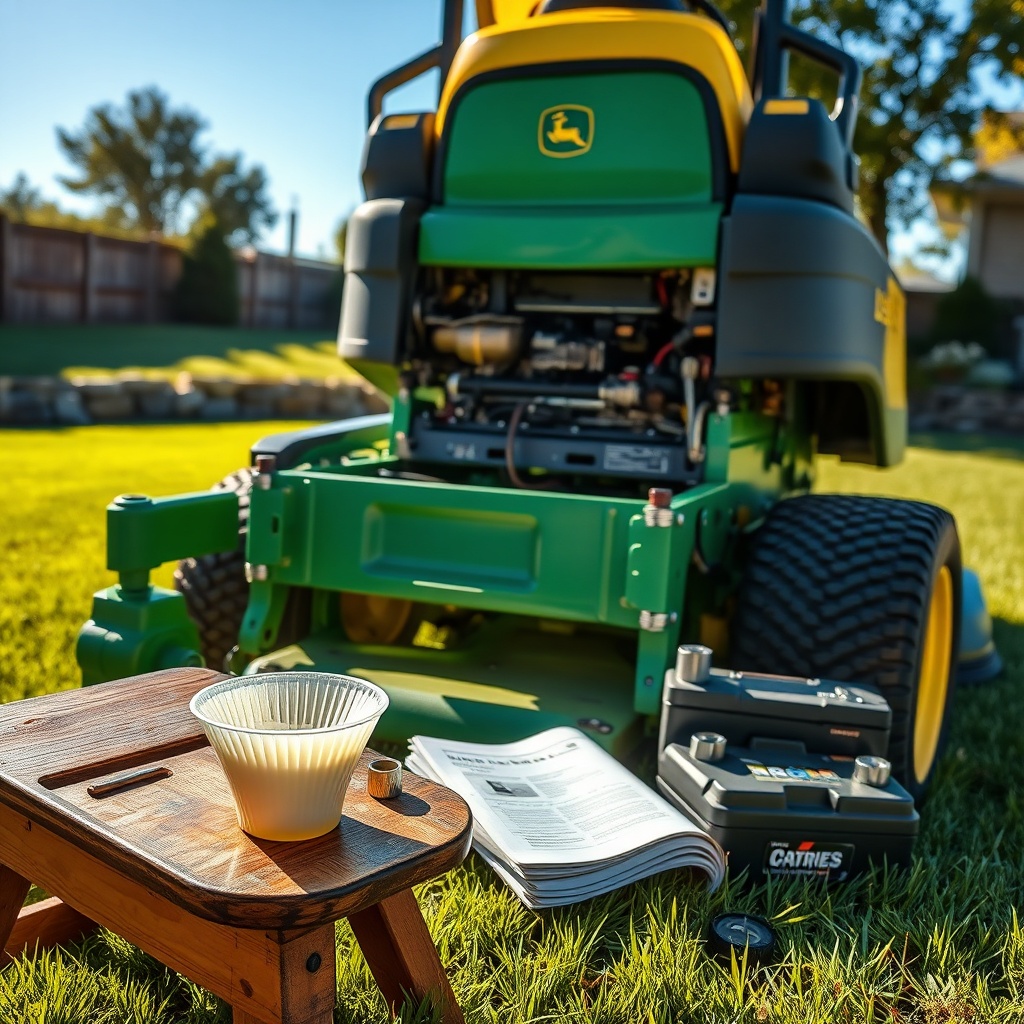
Proper maintenance doesn’t require a professional mechanic for most tasks. With a basic toolkit and John Deere’s published service intervals, the majority of routine upkeep is well within reach for a motivated DIY owner.
Routine Service Schedule and Blade Care
John Deere recommends an oil and filter change every 100 hours of operation, or at least once per season for homeowners who mow less frequently. Air filter inspection should happen every 25 hours, with replacement as needed. Spark plugs typically require attention every 100 hours, and the hydraulic fluid system should be inspected annually on residential models and more frequently on commercial machines under heavy use.
Blade maintenance is equally critical. Dull blades tear grass rather than cutting it cleanly, leading to a ragged appearance and increased susceptibility to disease. Sharpen mower blades every 25 hours of use and inspect for cracks, bends, or excessive wear after hitting rocks or debris. Replacing blades entirely is inexpensive compared to the damage a compromised blade can cause to the spindle assembly.
Common Repairs and DIY Troubleshooting
Several issues arise frequently with zero-turn mowers that owners can address without a dealer visit. A mower that won’t start is often traced to a clogged fuel filter, a dirty carburetor, or a faulty safety interlock switch — all accessible with basic tools. Uneven cutting patterns typically indicate a blade imbalance, worn spindle bearings, or an improperly leveled deck.
Belt wear is another common maintenance item. John Deere’s drive belts and deck belts are consumable components that stretch and crack over time. Inspecting belt tension and condition at the start of each season prevents unexpected mid-mow failures. John Deere’s parts catalog makes sourcing OEM replacement components straightforward, and authorized dealers can provide guidance on any repair that exceeds DIY comfort levels.
Where to Buy and What to Know Before You Purchase
Knowing where to buy your John Deere zero-turn mower is just as important as knowing which model to choose. The purchasing experience, available support, and post-sale service vary significantly depending on the channel you use — and making the wrong choice can leave you without help when you need it most.
Authorized Dealers vs. Online Retailers
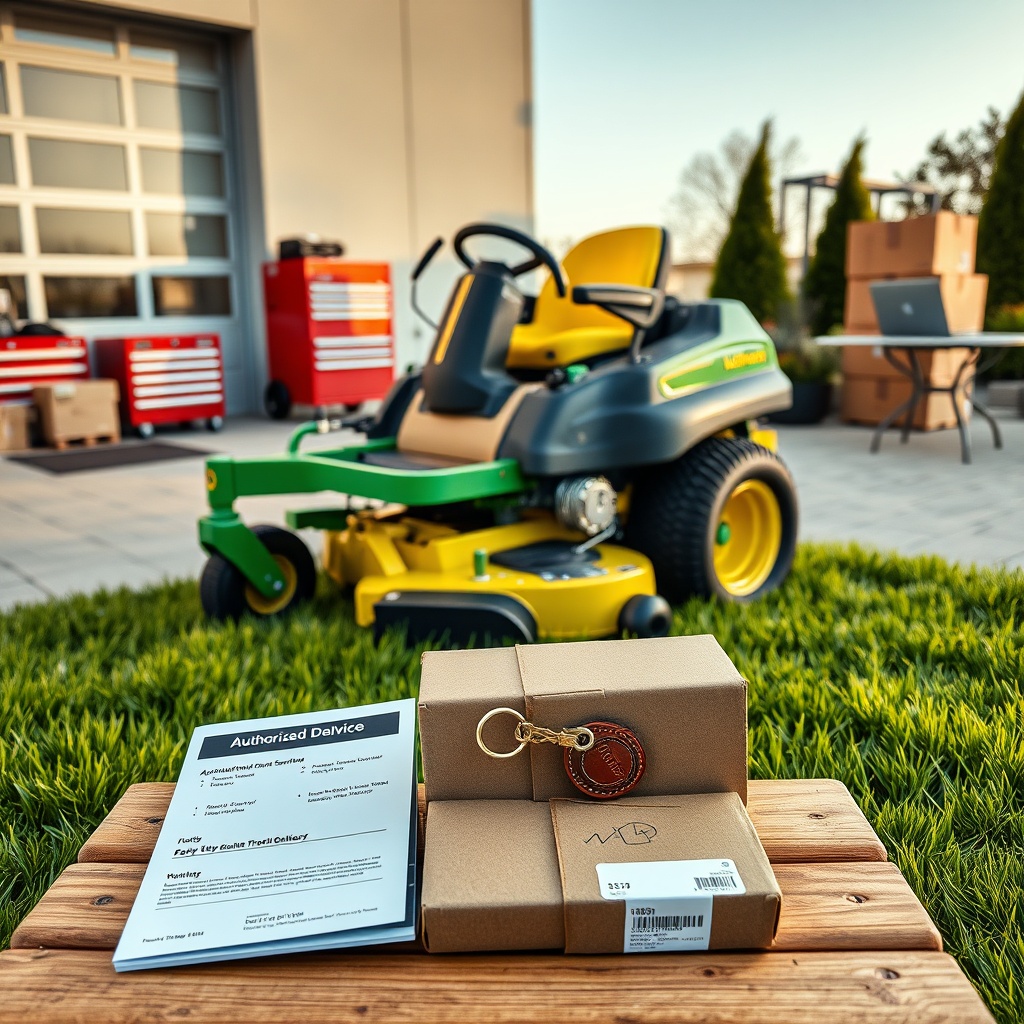
John Deere’s authorized dealer network spans thousands of locations across North America, and purchasing through an authorized dealer offers distinct advantages that online-only retailers simply cannot match. Dealers can perform pre-delivery inspections, handle warranty registration, offer hands-on product demonstrations, and provide ongoing service support throughout the machine’s life. Many dealers also stock common replacement parts, reducing downtime when something needs attention mid-season.
Online retailers like Amazon, Walmart.com, and third-party equipment resellers do list John Deere products, but availability is often limited to smaller residential models, and post-purchase support is minimal. You won’t get a test drive, personalized sizing advice, or the assurance that the machine was properly assembled and inspected before delivery. For a purchase of this size, the dealer experience is almost always the smarter path.
Use John Deere’s official dealer locator at deere.com to find your nearest authorized location. Many dealers also offer seasonal demo events where you can operate multiple models before committing.
Warranty Coverage and Financing Options
John Deere backs its residential zero-turn mowers with a 4-year/300-hour bumper-to-bumper warranty — one of the strongest coverage packages in the industry. Commercial Z900 series models carry a 2-year/500-hour warranty, reflecting their higher-intensity use expectations. Extended protection plans are available through dealers for added peace of mind beyond the standard coverage period.
John Deere Financial offers flexible financing programs, including 0% interest promotional periods that frequently appear on residential models during spring and fall sales events. These programs make it realistic to step up to a Z500 or Z700 series machine without a large lump-sum payment. Always confirm current financing terms directly with your dealer, as promotions change seasonally and approval requirements apply.
Frequently Asked Questions
How many acres can a John Deere zero-turn mower handle efficiently?
The right acreage depends on the model series. Z300 series mowers handle up to 2 acres comfortably, while Z500 series machines are ideal for 2 to 4 acres. For properties exceeding 4 acres, the Z700 or Z900 series with larger deck widths and more powerful engines will deliver the productivity and durability needed for efficient, long-duration mowing.
Are John Deere zero-turn mowers safe to use on hills and slopes?
John Deere zero-turn mowers are rated for specific slope tolerances — most residential models are approved for slopes up to 15 degrees. Operating beyond the rated slope creates tipping hazards and places excessive stress on the hydraulic system. For properties with significant inclines, the Z700 or Z900 series offers a wider wheelbase and lower center of gravity for improved stability. Always consult John Deere’s official slope safety guidelines before mowing on uneven terrain.
What is the average lifespan of a John Deere zero-turn mower?
With proper maintenance, residential John Deere zero-turn mowers routinely last 1,000 to 1,500 hours of operation. Commercial Z900 series models are engineered for 2,000 hours or more under professional use conditions. Regular oil changes, blade sharpening, belt inspections, and hydraulic fluid maintenance are the key factors that determine how long any machine remains in reliable service.
Is a John Deere zero-turn mower worth the higher price compared to competitors?
For most buyers, yes. John Deere’s combination of engineering quality, nationwide dealer support, strong warranty coverage, and high resale value justifies the premium over lesser-known brands. The long-term cost of ownership — factoring in parts availability and machine longevity — often makes John Deere the more economical choice over a full equipment lifecycle.
Can I use a John Deere zero-turn mower for mulching?
Yes. Most John Deere zero-turn models are compatible with optional mulching kits that convert the deck for mulch-in-place operation. Mulching returns finely chopped grass clippings to the lawn as natural fertilizer, reducing the need for bagging. Mulching kits are available through authorized dealers and are model-specific, so confirm compatibility before purchasing.
Is a zoysia grass lawn worth the work? It depends on your climate and your mower. Zoysia makes a thick, soft-looking turf that crowds out weeds and handles heat and foot...
Skip the phosphorus unless a soil test tells you otherwise. That’s the short answer for most lawns in 2026, and it surprises a lot of homeowners who grew up thinking N-P-K...
26 August 2026
The Mowers Guide is reader-supported. When you buy through links on our site, we may earn an affiliate commission.





Comments are closed.