A dull mower blade doesn’t cut grass. It rips it. If your lawn looks ragged, brownish, or torn at the tips a day after mowing, that’s not a watering problem — it’s a blade sharpener mower problem waiting to be solved. The right sharpening tool, used the right way, fixes it in under 30 minutes.
Most people grab whatever grinder is in the garage and go at the blade until it shines. That’s how you end up with an unbalanced blade shaking your deck apart three mows later. The tool matters, but the method matters more.
Signs Your Blade Needs Sharpening
Grass tips turning brown or gray within a day of mowing is the clearest sign you’re dealing with a dull blade. A sharp blade slices cleanly; a dull one tears the leaf tip, leaving a ragged wound that dries out and browns fast.
Check the blade itself, too. Run a finger (carefully, blade removed) along the cutting edge. If it’s rounded over instead of having a defined edge, it’s done. Nicks and chips from rocks or sticks also count — even a mostly sharp blade with three or four dings will cut unevenly across the deck.
Uneven cutting height is another tell. If you notice stripes of taller grass in a pattern that matches your mowing path, one side of the blade is cutting less aggressively than the other. That’s often a dull-versus-sharp mismatch between the two cutting edges, not a deck height issue.
As a rule of thumb, sharpen after every 20 to 25 hours of mowing time for a typical push mower, or roughly once a month during peak season. Riding mowers and zero-turns with wider decks and multiple blades often need checks more often, since one dull blade among three throws off the whole cut.
Which Sharpening Tool Actually Fits Your Mower
The tool you need depends on blade thickness, not personal preference. Push mower blades typically run about 1/8 inch thick; tractor and zero-turn blades often run 3/16 inch to 1/4 inch or more. A sharpener that handles one size well can struggle — or overheat the metal — on the other.
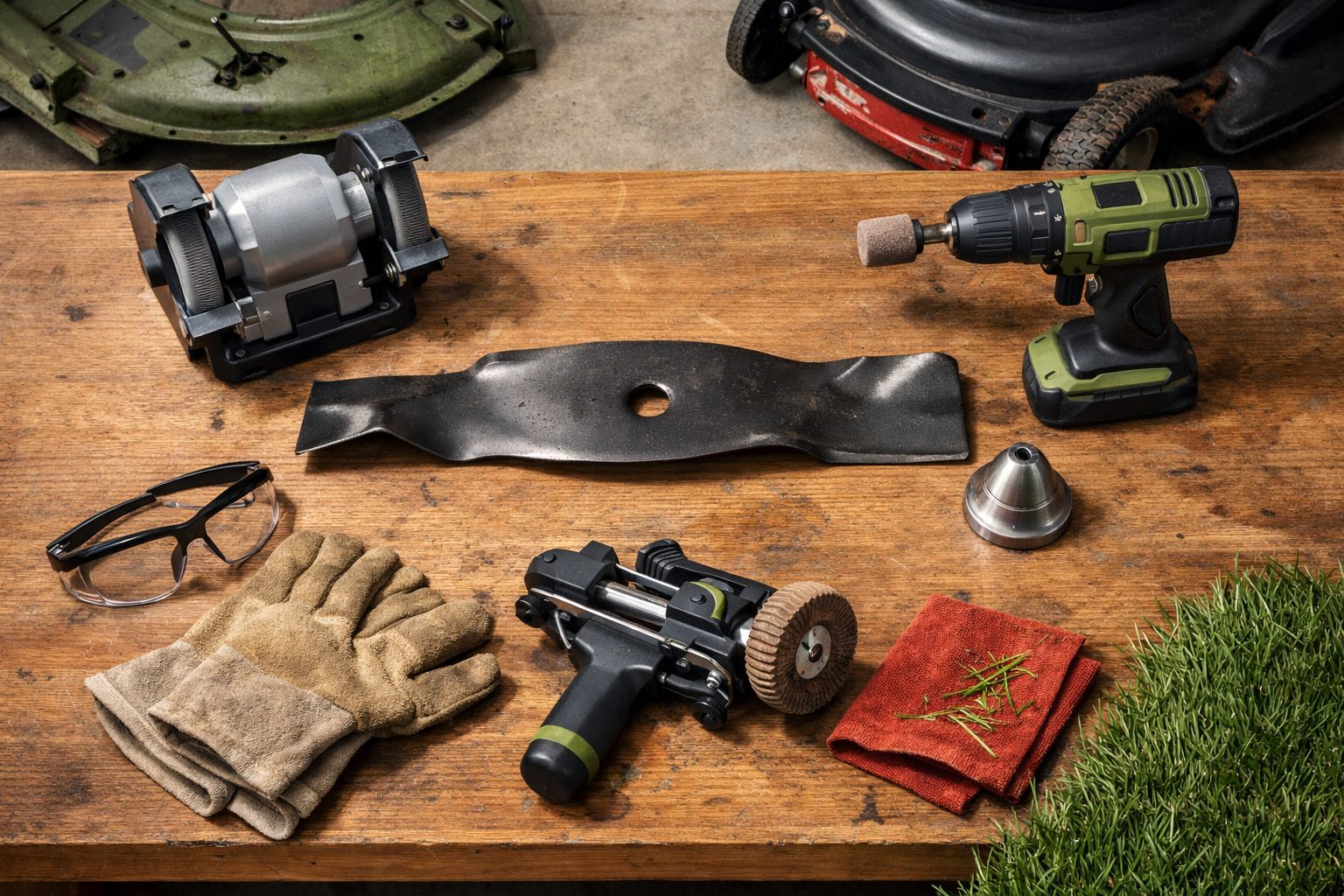
Bench Grinder vs. Drill Attachment
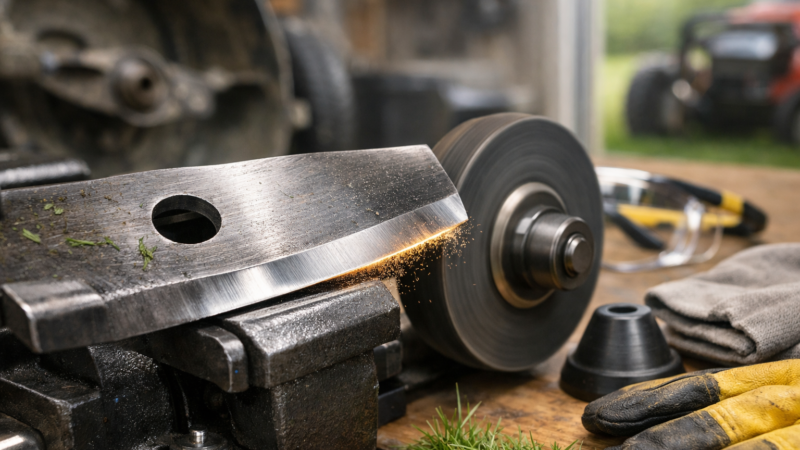
A bench grinder with a coarse wheel (36 to 60 grit) is the workhorse choice for thicker tractor blades. It removes metal fast and lets you control the angle by hand, but it takes practice to avoid grinding unevenly or overheating the edge, which can soften the steel.
A drill-mounted sharpening attachment or flap wheel is lighter-duty. It works fine on thinner push mower blades and is easier for beginners, but it’s slow and often not up to the job on a thick, heavily worn tractor blade. Trying to force one through a 1/4-inch blade edge usually just glazes the wheel.
Manual File vs. Angle Grinder
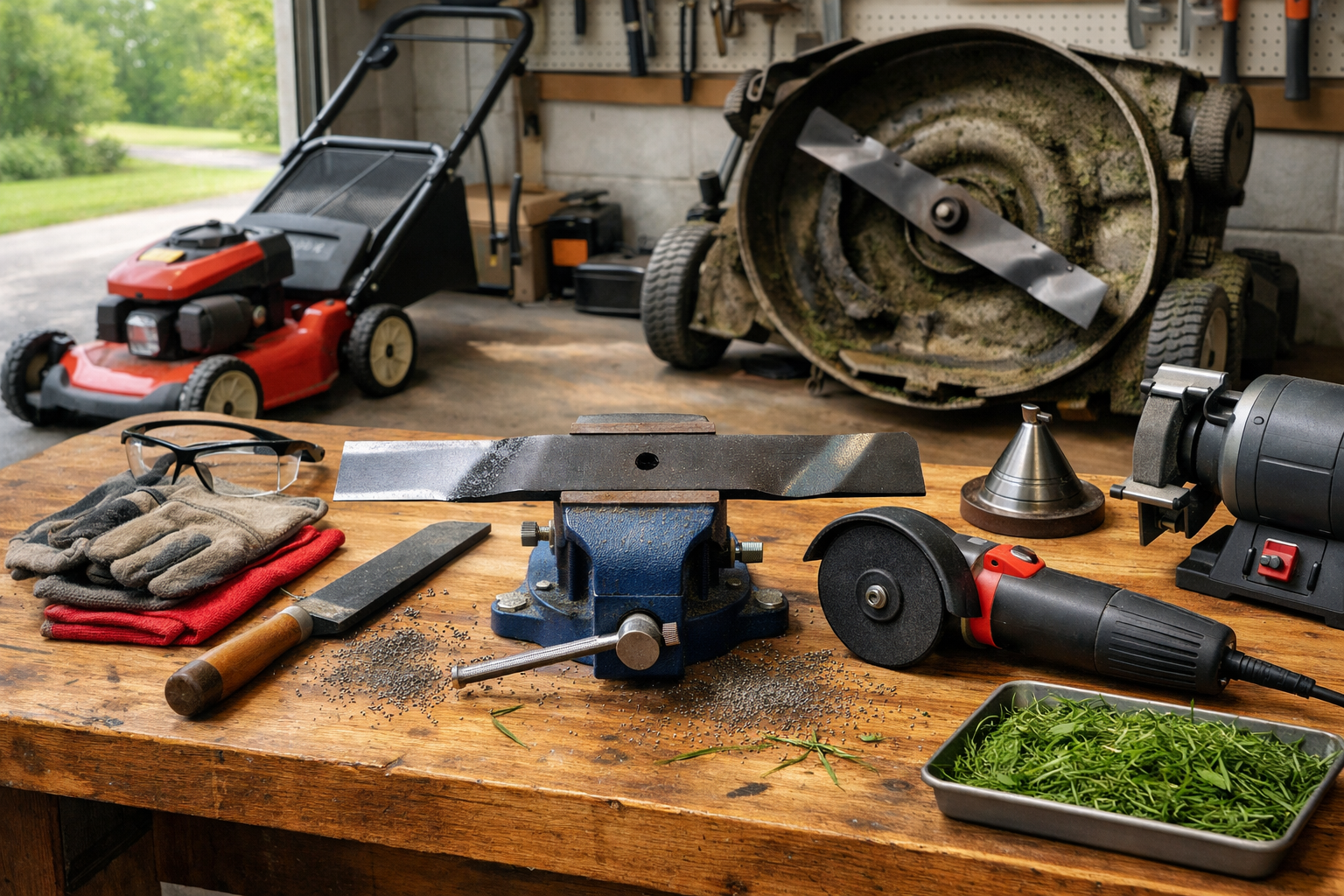
A mill file is the low-tech option, and honestly, it’s underrated. Clamp the blade in a vise, file at a consistent angle in one direction, and you get a controlled edge with zero risk of overheating the metal. It’s slower — expect 10 to 15 minutes per blade — but it’s the safest option for a beginner.
An angle grinder is fast and aggressive, which is exactly why it’s risky. It’s great for thick tractor blades with heavy nicks, but on a thin push mower blade it can eat through metal in seconds and throw off the balance. If you use one, keep the wheel moving and don’t linger in one spot.
Tool
Best For
Speed
Learning Curve
Mill file
Push mower blades, beginners
Slow (10-15 min)
Low
Drill attachment
Thin blades, light touch-ups
Medium
Low
Bench grinder
Tractor and zero-turn blades
Fast
Medium
Angle grinder
Heavy nicks, thick blades
Very fast
High
A basic blade sharpening kit (file guide, grinding wheel, balancer) runs $15 to $40 at most hardware stores and covers push mower needs completely. For tractor blades, a bench grinder setup, if you don’t already own one, is a bigger investment at $80 to $150, but it pays for itself over a few seasons if you maintain more than one machine.
The Right Angle and How to Get It Without Guessing
Mower blades sharpen best at a 30 to 45 degree bevel angle, matching the factory edge already on the blade. Most residential mower blades are ground at around 30 to 35 degrees; check the existing edge before you start; and match it rather than picking a number at random.
A steeper, more “aggressive” angle close to 45 degrees might feel like it cuts sharper initially, but it dulls faster and chips more easily against rocks, sticks, and the occasional buried sprinkler head. A shallower angle around 30 degrees holds an edge longer and is more forgiving for everyday lawn debris.
Skip the urge to sharpen to a razor’s edge. A mower blade isn’t a kitchen knife — it needs a durable edge, not a surgical one. Over-sharpening actually works against you: the thinner the edge, the faster it chips on the first rock it meets, and you’re back at the grinder within a week.
Removing, Balancing, and Reinstalling the Blade Safely
Balance is the step almost everyone skips, and it’s the number one cause of vibration complaints after a “successful” sharpening job. An unbalanced blade spins unevenly, which stresses the spindle bearing and can shake bolts loose over time.
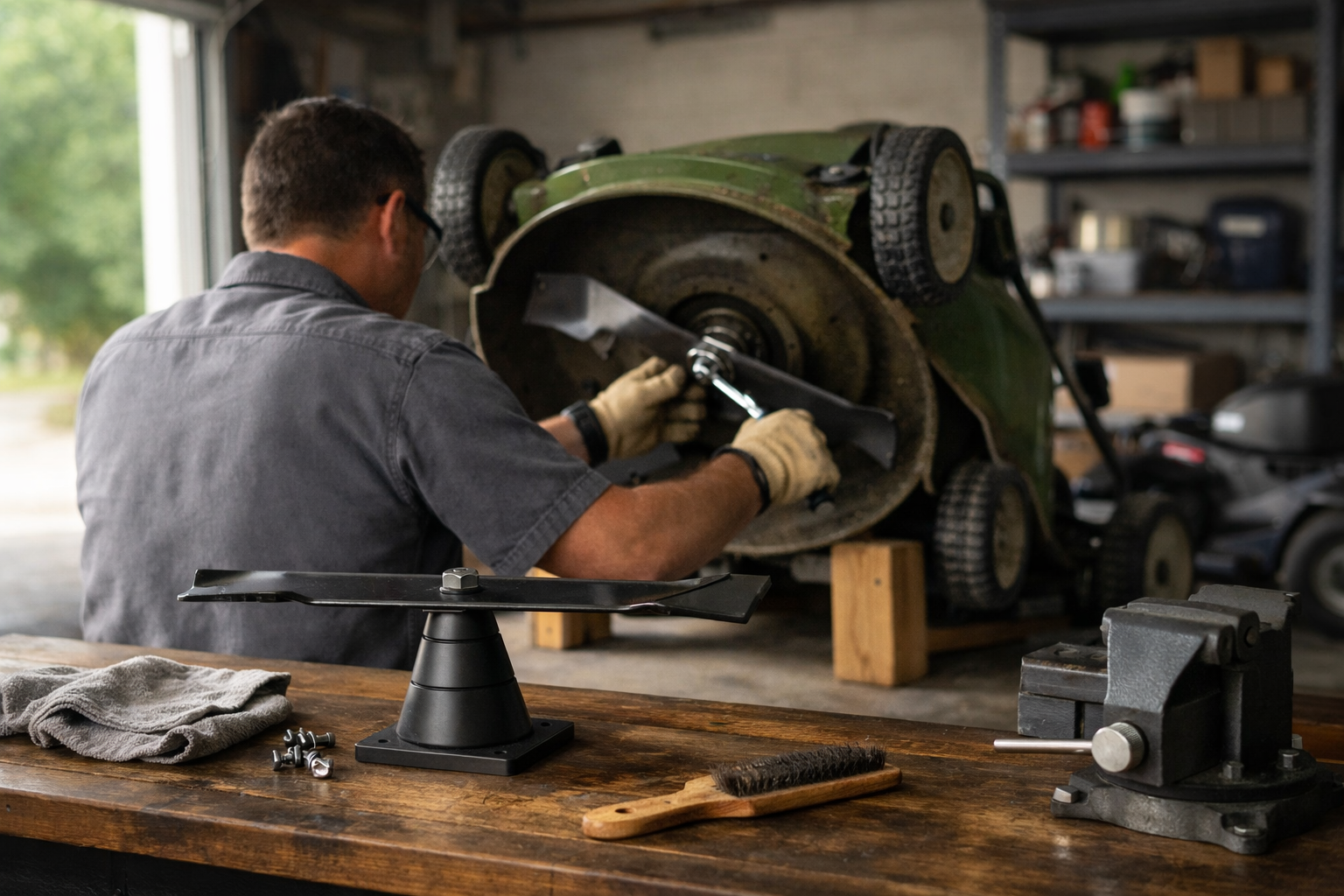
A blade balancer, whether it’s a simple cone-and-nail setup or a magnetic balancer that costs around $10, works on one principle: the blade should hang level. If one side dips, you’ve removed more metal from that side than the other, and it needs another pass.
Here’s the safe sequence for removing, sharpening, and reinstalling a blade:
Disconnect the spark plug wire first — every time, no exceptions, even for a “quick check.”
Tip the mower so the air filter and carburetor face up, to avoid oil and fuel spills.
Wedge a block of wood against the blade to keep it from spinning, then loosen the center bolt with a socket wrench (counterclockwise on most models).
Sharpen using the matched tool for your blade thickness, keeping the original bevel angle.
Balance the blade and re-grind the heavy side until it hangs level.
Reinstall with the bolt torqued to the manufacturer’s spec (commonly 35 to 40 lb-ft on residential mowers, though tractor blades often run higher).
Reconnect the spark plug wire only after the deck is closed back up.
Riding mower blades are heavier and often require a torque wrench rather than guesswork, since an undertightened bolt on a tractor deck can back out under vibration and turn into a dangerous flying object. If you’re new to this, keeping a maintenance log of sharpening dates and torque specs (a habit The Mowers Guide covers in its mower maintenance schedule guides) helps you catch patterns before a small issue becomes a repair bill.
Frequently Asked Questions
How often should I sharpen my mower blade?
Every 20 to 25 hours of mowing, or about once a month in peak season, is a solid baseline. Sharpen sooner if you hit a rock or notice ragged, brown-tipped grass after mowing.
Can I sharpen a mower blade without removing it?
You can with an angle grinder or file while the mower is tipped, but it’s harder to check the angle and nearly impossible to balance. Removing the blade takes 10 extra minutes and gives a far more even result.
Do riding mower blades need a different sharpener than push mower blades?
Yes. Tractor blades run 3/16 to 1/4 inch thick versus about 1/8 inch on push mowers, so they need a bench grinder’s speed and power. A drill attachment or file made for thin blades will struggle and heat up the edge on thicker steel.
Mix it wrong and you’ll be pulling the carburetor apart by mid-summer. Get the echo weed eater fuel mixture right, though, and that trimmer will outlast three cheaper ones. Most people...
Roughly 90% of pre-emergent herbicides work by blocking the cell division that lets a seedling push through the soil, according to how these products are formulated to target weed germination. That’s...
3 August 2026
The Mowers Guide is reader-supported. When you buy through links on our site, we may earn an affiliate commission.





Comments are closed.