Brown patches after mowing? Weeds creeping into thin spots? Before you blame fertilizer or bugs, check your lawnmower blade height. Most lawn problems that homeowners chase for weeks trace back to one lever on the mower nobody’s touched since spring.
Here’s the thing: a chart telling you “2.5 to 3 inches” doesn’t help much if you don’t know whether your current setting is even wrong. Your lawn is already telling you the answer. You just have to read it.
What Your Lawn’s Symptoms Are Telling You About Cutting Height
Skip the chart for a second. Your grass shows visible symptoms when the blade height is off, and those symptoms point in different directions depending on whether you’re cutting too low or too high.
Cutting Too Short: Scalping and Brown Patches
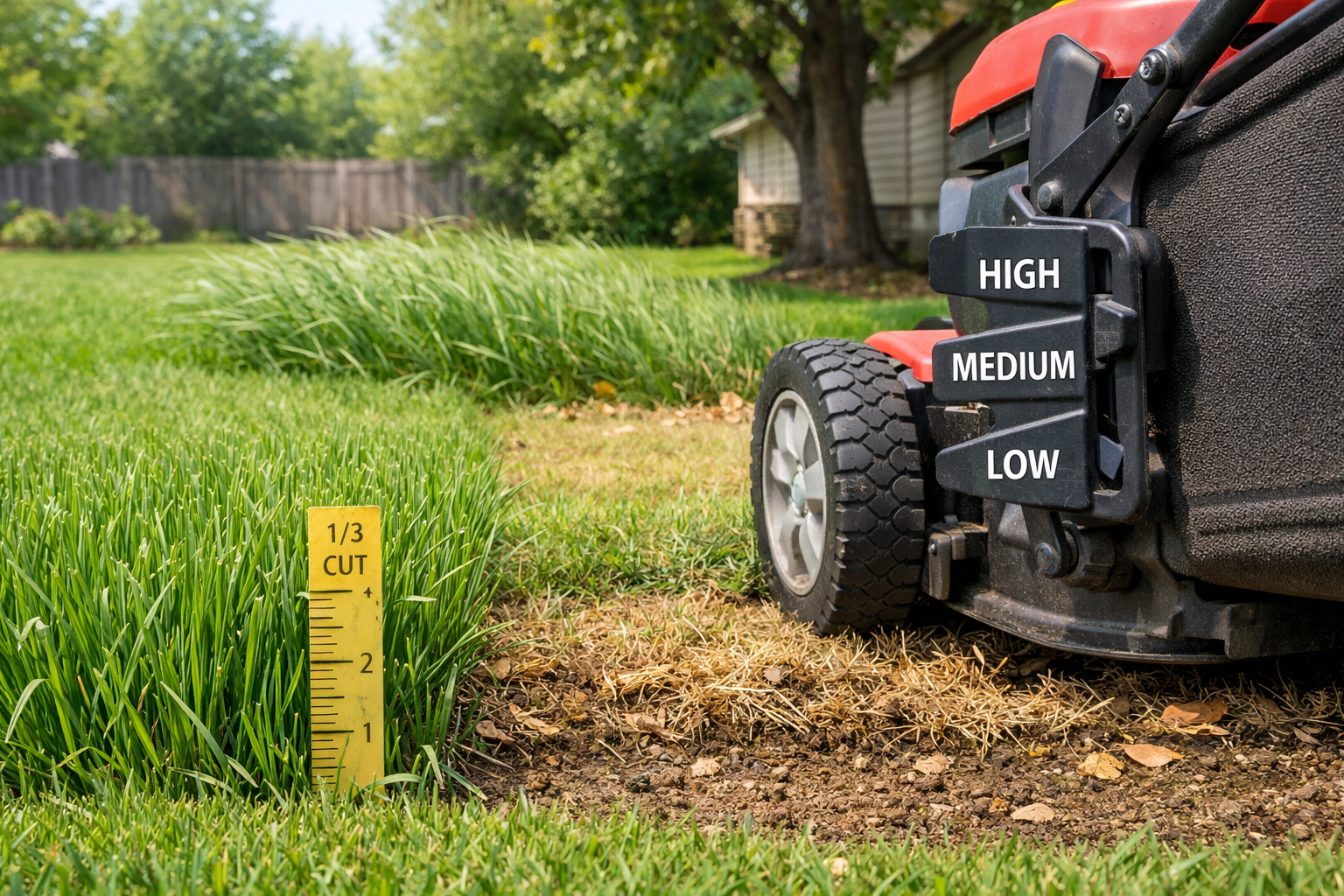
If you see brown or tan patches right after mowing, especially on slopes or uneven ground, that’s scalping. The blade is hitting soil or crown tissue, not just leaf blades. This stresses the grass plant and opens the door for crabgrass and dandelions to move into the bare spots within a couple of weeks.
Cutting Too Tall: Thatch and Floppy Growth
Thick, spongy buildup at the soil line, or grass that looks shaggy and lies over instead of standing up, means you’re leaving too much leaf tissue standing between cuts. This traps moisture near the crown and invites fungal disease, especially in humid summers across the Southeast and Midwest.
The Middle Ground Nobody Talks About
A lawn that greens up fine but thins out under trees or along the house foundation usually isn’t a disease problem. It’s a light problem dressed up as a height problem, and the fix is raising the deck in shaded zones, not spraying anything.
The One-Third Rule and Why Ignoring It Wrecks Your Lawn
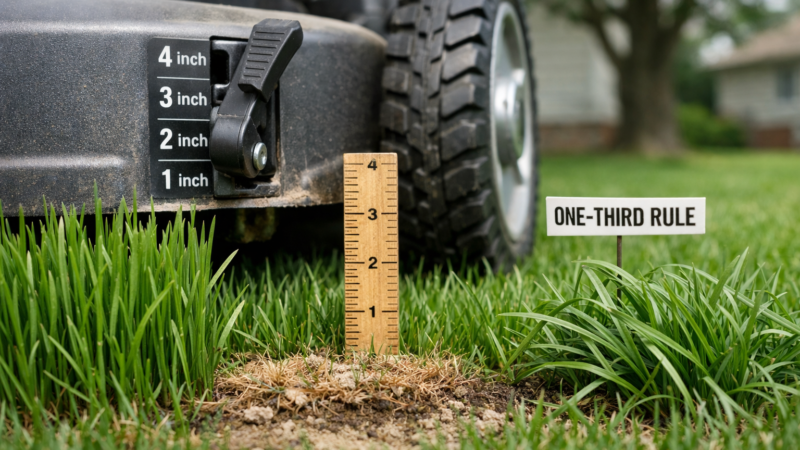
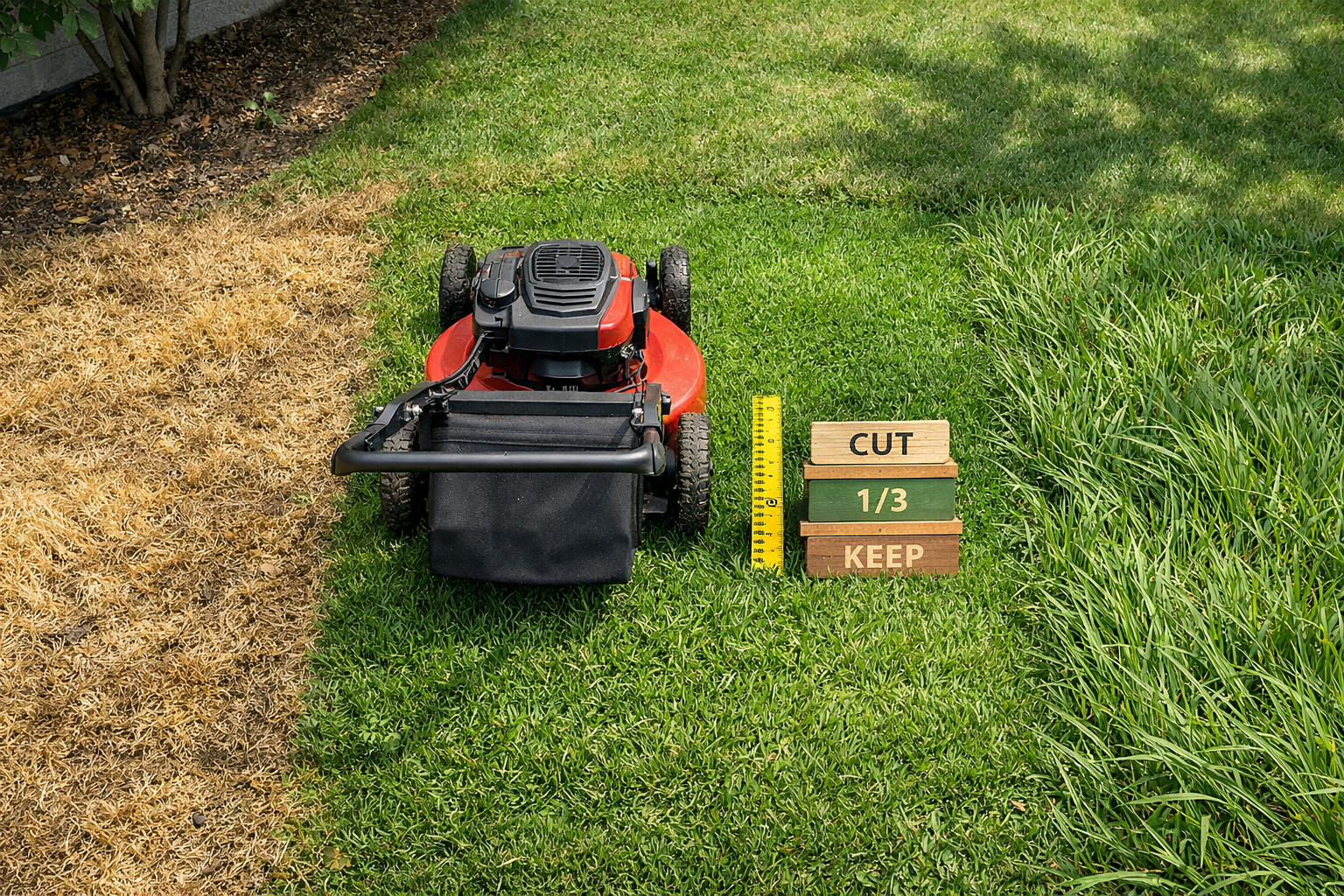
The one-third rule says never remove more than one-third of the grass blade’s height in a single mow. Cut a lawn sitting at 4 inches down to 2 inches in one pass, and you’ve shocked the root system, which slows regrowth for a week or more.
This is where mowing frequency and blade height fight each other. Homeowners cut short thinking it buys them two weeks before mowing again. It doesn’t. Scalped grass actually grows back slower and weaker, so you end up mowing a struggling lawn instead of a thriving one.
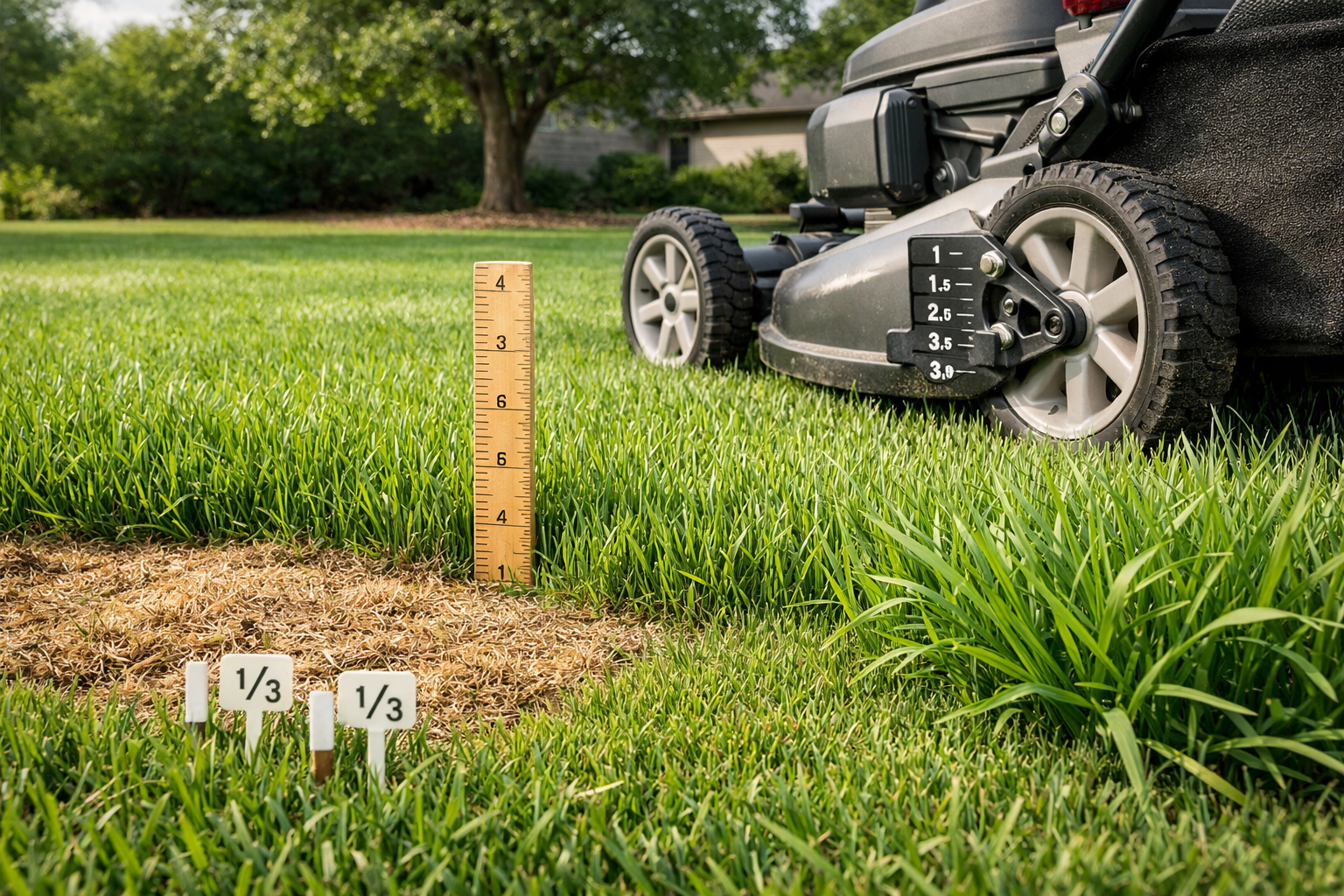
The one-third rule: remove no more than one-third of the grass blade’s total height per mowing pass to avoid shocking the plant.
In practice, if you want your fescue at 3 inches, you should mow again once it hits 4.5 inches, not once it hits 6. During peak spring growth that might mean mowing every 5 days instead of every 10. That’s the trade-off for a lawn that doesn’t scalp.
Matching Blade Height to Your Grass Type
Bermuda and St. Augustine don’t want the same haircut as fescue and Kentucky bluegrass, and setting them all to the same number is one of the most common mistakes I see. Grass species fall into two camps, warm-season and cool-season, and each camp has its own comfort zone.
Warm-season grasses like Bermuda, zoysia, and St. Augustine grow low and dense, so they tolerate — and often prefer — a shorter cut. Cool-season grasses like fescue and bluegrass need more leaf surface to handle heat stress, so cutting them short in July is asking for trouble.
Grass Type
Season Type
Recommended Height
Bermuda
Warm-season
1 to 2 inches
Zoysia
Warm-season
1.5 to 2.5 inches
St. Augustine
Warm-season
2.5 to 4 inches
Fescue
Cool-season
3 to 4 inches
Kentucky bluegrass
Cool-season
2.5 to 3.5 inches
Notice St. Augustine sits taller than the other warm-season grasses. That’s because it grows on above-ground stems called stolons, and cutting it too low damages that structure and thins the lawn fast.
Adjusting Your Mower Correctly (Not Just the Wheels)
Blade height and wheel height settings are related but not identical, and mixing them up is a common troubleshooting dead end. The wheel height lever changes deck height, which changes blade height, but a deck that’s not level will still cut unevenly even at the “right” number.
Finding and Using the Height Adjustment Lever
Most walk-behind mowers have either a single lever near one wheel or individual levers at each wheel. Riding mowers and tractors usually have one lever near the seat controlling all four corners of the deck at once. Move it one notch at a time and check the result before assuming you need a bigger change.
Checking Actual Cutting Height, Not Just the Setting
The number on the lever is a guide, not gospel. Measure actual cutting height by placing a ruler flat on a hard, level surface like a driveway, then measuring from the ground to the blade tip with the mower off and the spark plug wire disconnected.
Leveling the Deck Matters More Than People Think
A deck that’s higher on one side by even half an inch causes one side of the lawn to look scalped while the other looks shaggy, even though the lever says “3 inches” everywhere. Check deck leveling once a season, especially after hitting a curb or rock, using a tape measure at each corner.
Here’s a simple sequence for dialing in height correctly:
Measure current cutting height using the ruler-and-driveway method.
Identify your grass type and its target range from the chart above.
Adjust the height lever one notch at a time toward that target.
Mow a small test strip and check for even, clean-cut blade tips.
Check deck level at all four corners once the height looks right.
Re-measure after five mowing cycles, since blades dull and settings drift.
Seasonal and Stress Adjustments You Shouldn’t Skip
Height isn’t a set-it-and-forget-it number. Raise your cutting height by about half an inch heading into summer heat or drought, since taller grass shades its own roots and needs less water to stay green.
Cool-season lawns benefit from a slightly lower final cut in late fall, around 2 to 2.5 inches, which helps prevent matting and snow mold over winter in northern states. Warm-season lawns, by contrast, should stay at their normal height until they go dormant, since scalping dormant Bermuda offers no real benefit and just exposes soil to weeds.
Drought is its own case. Raise the deck, not the watering can, first. Taller grass survives dry spells better because it has more leaf area for photosynthesis and deeper root reserves to draw from. If you’re troubleshooting a mower issue alongside a height question, a site like The Mowers Guide has model-specific adjustment guides that can save you from guessing which lever does what on your particular deck.
Frequently Asked Questions
How do I know if my lawnmower blade height is set correctly?
Check for even, clean blade tips with no ragged tears, no brown scalped patches, and no thick thatch layer at the soil line. If any of those show up, adjust up or down by half an inch and reassess after two mowings.
Why does my lawn look scalped even though the height setting hasn’t changed?
An unlevel deck is the usual cause. Even a half-inch difference corner to corner will scalp one side while the setting stays the same, so check all four corners with a tape measure.
Should I cut my grass shorter before winter?
Only cool-season grasses like fescue and bluegrass benefit from a slightly shorter final cut, around 2 to 2.5 inches, to prevent matting. Warm-season grasses like Bermuda should stay at normal height until fully dormant.
A quality gas blower for leaves can cut a two-hour leaf cleanup down to under 45 minutes on a half-acre lot. That time difference matters when you’re working against wet fall...
Pop the hood, grab a drain pan, and stop guessing which oil goes in your Honda mower. Changing oil Honda lawn mower engines require isn’t complicated, but it isn’t identical across...
25 August 2026
The Mowers Guide is reader-supported. When you buy through links on our site, we may earn an affiliate commission.





Comments are closed.