Not every John Deere push mower comes ready for a bagger, and that trips up more buyers than you’d think. Some models discharge only, some mulch only, and the John Deere push mower with bagger setups that do exist need the exact matching attachment, not a generic catcher off a shelf. Get the fit wrong and you’re stuck with grass clumping under the deck instead of in the bag.
Which John Deere Push Mowers Actually Take a Bagger?
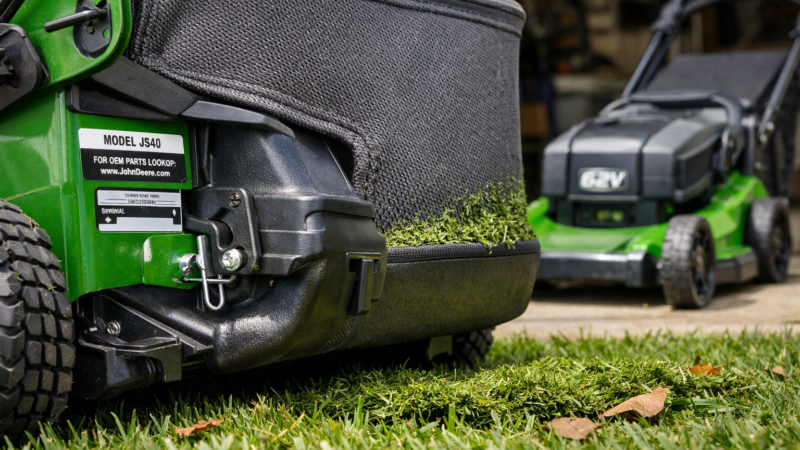
Only certain models are built with a bagger chute and the mounting hardware to hold one. The gas-powered JS40, for example, is a 3-in-1 mower, meaning it can mulch, side-discharge, or bag depending on which attachment you’ve got on it. Not every John Deere model shares that flexibility.
Gas Models
The JS40 and similar walk-behind gas mowers in John Deere’s lineup generally support a rear bagger kit sold as an OEM accessory. These usually run in the 1-2 bushel capacity range, which is fine for a quarter-acre yard but gets tedious fast on anything bigger.
Battery Models
The 62V battery push mower line is a different animal. Battery mowers often use a distinct bagger kit from the gas models because the deck housing and discharge chute are shaped differently to clear the battery pack and motor housing. Trying to force a gas-mower bagger onto a 62V deck is a common mistake, and it just won’t seat right.
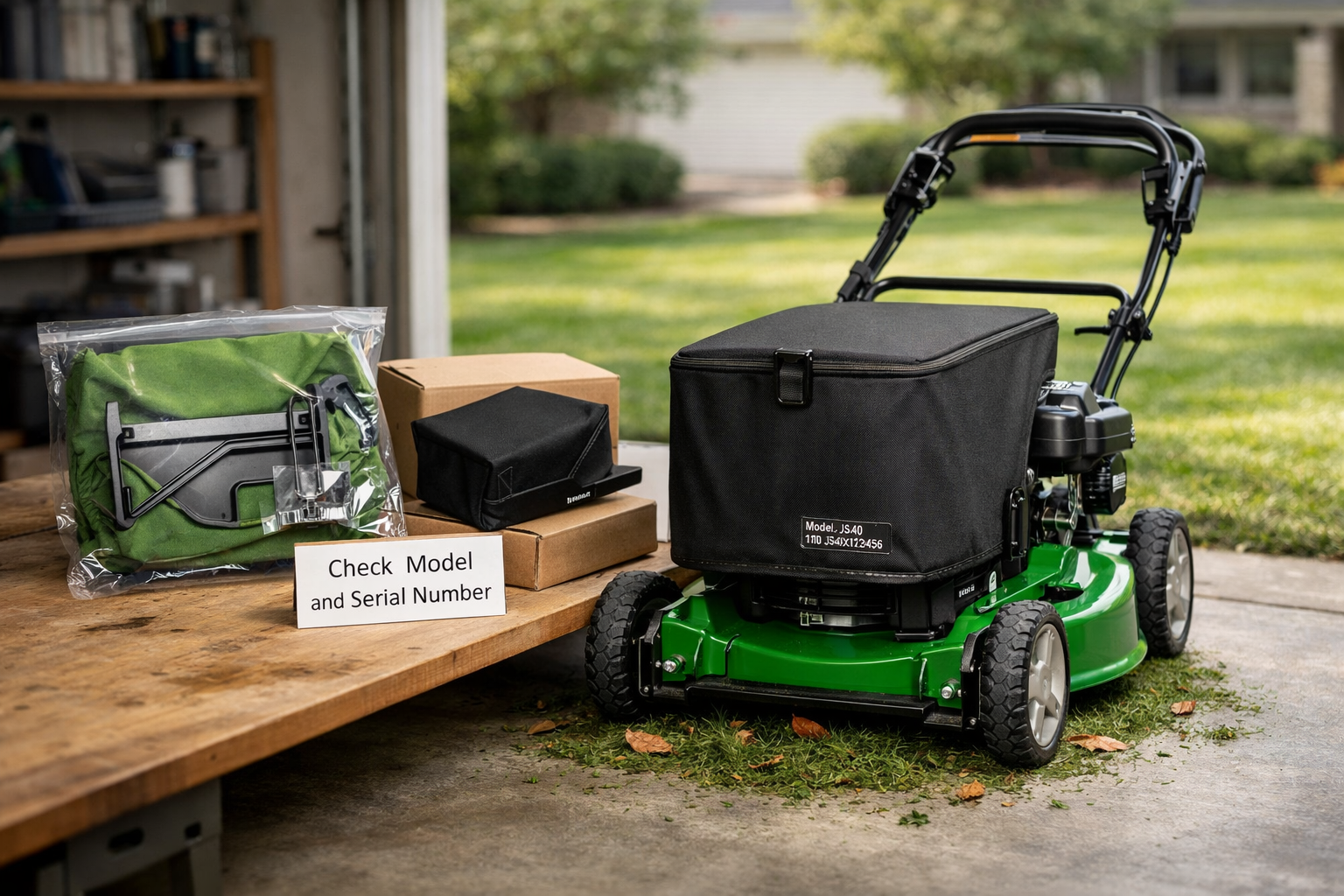
Before buying anything, pull up your mower’s model and serial number (it’s on a sticker under the handlebar or on the deck) and check it against John Deere’s official parts lookup. That’s the only way to know for sure which catcher bag, chute, and hardware kit actually fits your unit.
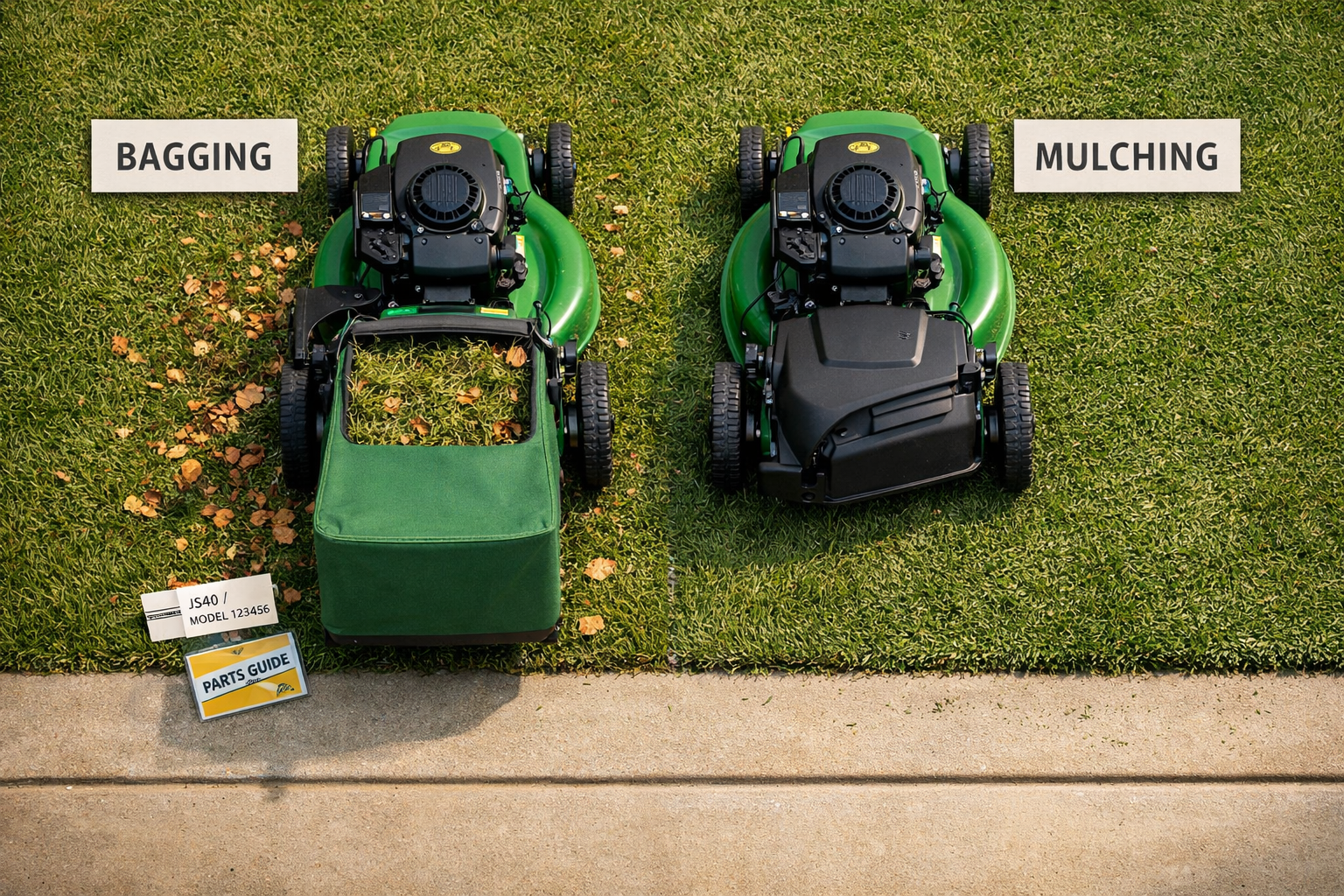
Bagging vs. Mulching: When Bagging Actually Wins
Bagging beats mulching when your grass is tall, wet, or loaded with leaves and debris — situations where mulched clippings would clump and smother the lawn instead of breaking down. Mulching is better for routine, dry, regular-interval mowing.
Here’s the part a lot of guides skip: mulching returns nitrogen and organic matter to the soil, which cuts down on how much fertilizer you need over a season. Bagging removes that benefit every time. If you bag every single cut on a healthy lawn, you’re hauling away free fertilizer and paying for bags of the synthetic stuff to replace it.
A grass catcher is defined simply as an attachment that collects clippings in a mesh or fabric bag instead of letting them fall back onto the turf or discharge out the side.
That said, there are real reasons to bag. Fall cleanup with heavy leaf drop, the first cut after a long rain delay when grass is 6 inches tall, or a lawn recovering from a fungal issue where you don’t want clippings recycled — those are legitimate bagging situations. For everyday summer mowing on a healthy lawn, I’d lean mulch and only swap the bagger on when conditions call for it.
Matching Bagger Capacity to Your Lawn Size
A 1.5-bushel bagger empties fast on a half-acre lot; a 2-plus bushel unit buys you more mowing time between stops. Bushel capacity is the number that actually matters when you’re comparing bagger options, more than the mower’s horsepower or deck size.
Here’s a rough guide based on typical yard sizes and how often you’d realistically want to stop and dump the bag:
Lawn Size
Recommended Bagger Capacity
Approx. Empty Frequency
Under 1/4 acre
1.0–1.5 bushels
Every 10-15 minutes
1/4 to 1/2 acre
1.5–2.0 bushels
Every 15-20 minutes
1/2 to 1 acre
2.0–2.5 bushels
Every 20-25 minutes
Over 1 acre
Consider self-propelled with larger catcher
Every 20-30 minutes
If you’re pushing a mower across anything over half an acre, a basic walk-behind bagger setup starts feeling like a chore. That’s less about the bagger itself and more about the push mower vs. self-propelled question — a self-propelled deck with a bagger takes the strain off your legs on long rows, even though the bag size stays roughly the same.
Installing a Grass Catcher Without Breaking the Chute
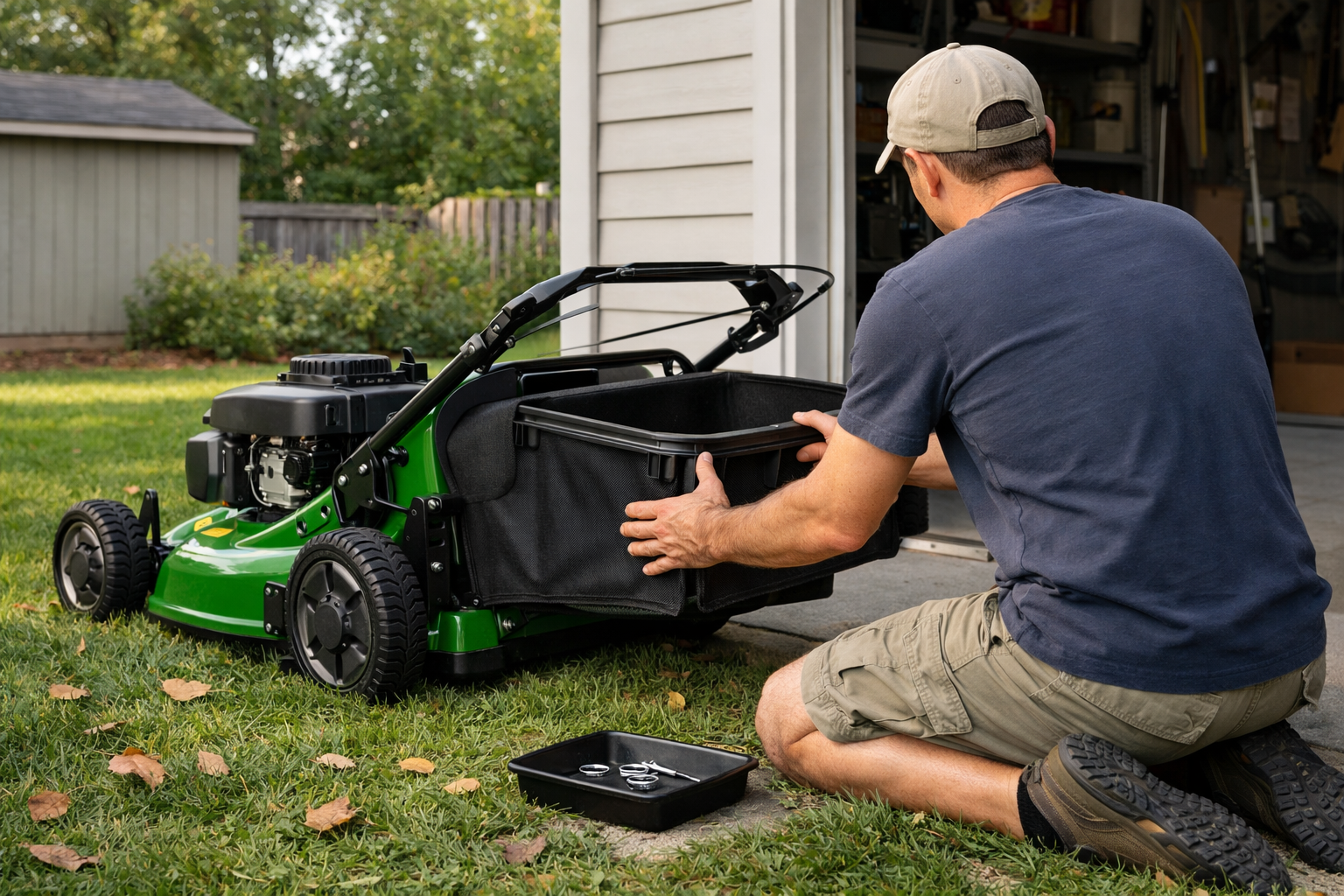
Installation on most John Deere push mowers takes 10 to 15 minutes and needs no tools beyond your hands, assuming you bought the correct kit for your model. The steps are simple, but skipping one usually leads to a bag that won’t seat flush or a discharge door that won’t close right.
Turn off the mower and disconnect the spark plug wire (gas) or remove the battery (electric) before touching the deck.
Remove the mulch plug or side-discharge chute if one is currently installed.
Locate the rear discharge opening and swing the discharge door up.
Slide the bagger’s mounting hooks or frame onto the mower’s rear bracket points.
Lower the discharge door onto the bagger frame so it seats flush against the seal.
Attach the fabric or mesh bag to the frame if it ships separately.
Run the mower briefly without cutting grass to confirm the door seals and nothing rattles loose.
If the door won’t sit flush, don’t force it. That’s usually a sign the bagger frame doesn’t match your deck’s rear opening, which happens more than people expect when a universal or off-brand bagger gets bought instead of the OEM-listed one. For troubleshooting fit issues or general deck maintenance once the bagger’s installed, a site like The Mowers Guide keeps model-specific guides that walk through common install snags.
Buying the Right Bagger: OEM vs. Aftermarket
OEM bagger kits from John Deere cost more but guarantee the fit. Expect somewhere in the $60 to $150 range depending on the model and whether it’s a soft mesh bag or a rigid hopper-style catcher. Aftermarket options can run cheaper, sometimes $30 to $50, but compatibility is a gamble.
The safest path is checking the exact part number listed for your mower’s model and serial number combination on John Deere’s parts site before you buy anything, OEM or not. A mismatched bagger doesn’t just look sloppy, it can leave gaps where clippings blow back out, defeating the entire point of bagging in the first place.
Frequently Asked Questions
Does every John Deere push mower support a bagger attachment?
No. Some models are mulch-only or side-discharge-only by design and have no rear chute or mounting bracket for a bagger. Always check your specific model’s parts list before assuming compatibility.
Can I use the same bagger on a gas mower and a 62V battery mower?
Generally no. Battery models like the 62V line often have a different deck and chute shape, so they usually need their own bagger kit rather than the one made for gas mowers.
Is bagging or mulching better for lawn health overall?
Mulching wins for routine health since it returns nitrogen and organic matter to the soil. Bagging is better situationally, like after heavy rain, tall growth, or heavy leaf drop, but doing it every mow removes free fertilizer value.
A Husqvarna dealer will tell you the same thing most spec sheets leave out: a $2,500 lawn tractor running daily on a hilly, half-acre lot with tree roots and drainage ditches...
Pull the cord three times and nothing happens? Before you assume the engine’s shot, know this: lawn mowers won’t start most often because of stale fuel, a dirty plug, or a...
7 August 2026
The Mowers Guide is reader-supported. When you buy through links on our site, we may earn an affiliate commission.





Comments are closed.