Your lawn feels like a rock when you push a screwdriver into it. Water pools instead of soaking in. That’s your soil telling you it’s compacted, and it’s exactly why aerate your lawn conversations keep coming up every spring and fall. But before you rent a machine or call someone, you need to know if your yard actually has this problem.
Not every lawn needs aeration every year. Some do, some really don’t, and figuring out which camp you’re in saves you a Saturday and about $75 in rental fees.
What Aeration Actually Fixes (and What It Doesn’t)
Aeration pulls plugs of soil out of your lawn, or pokes holes into it, so air, water, and fertilizer can get down to the root zone. It’s a fix for soil compaction, not a cure-all for every ugly lawn.
Signs You Actually Need It
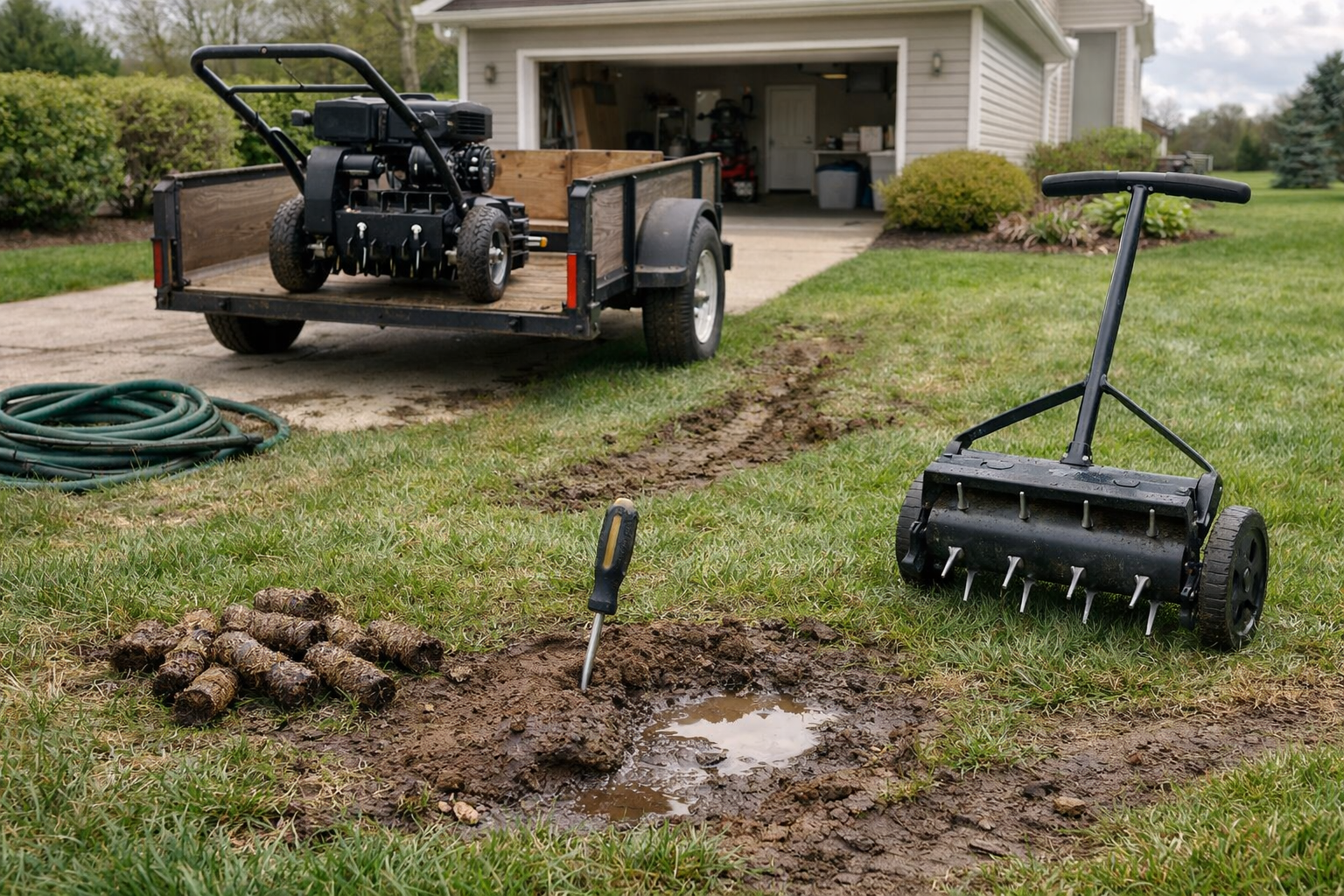
Water runoff after a light rain, soil that resists a screwdriver pushed by hand, and thin grass in high-traffic paths (near a gate, along a driveway, where the dog runs laps) are the real tells. If a screwdriver won’t go 2-3 inches into moist soil with moderate hand pressure, you’ve got compaction worth dealing with.
When Aeration Won’t Help
If your lawn has sandy or loamy soil, gets normal foot traffic, and drains fine, skip it. Aerating a lawn that doesn’t need it doesn’t hurt much, but it wastes a rental fee and a day, and it can stress grass roots for no real gain. Sandy soil lawns with light use often go years without needing a single pass.
Core Aeration vs. Spike Aeration: They’re Not the Same Thing
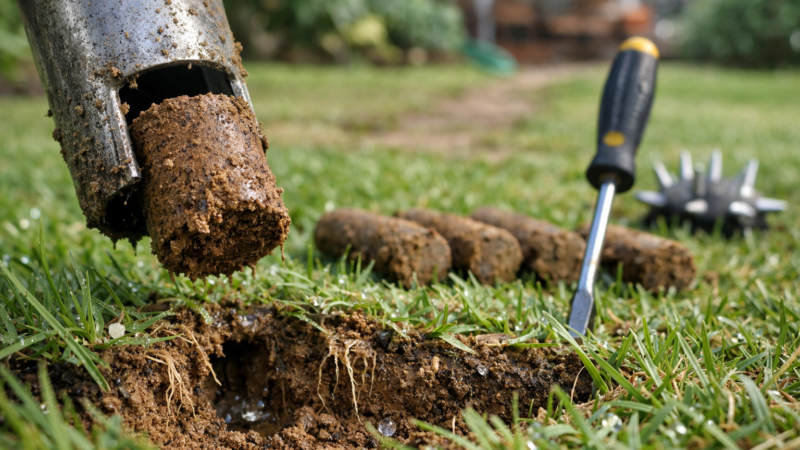
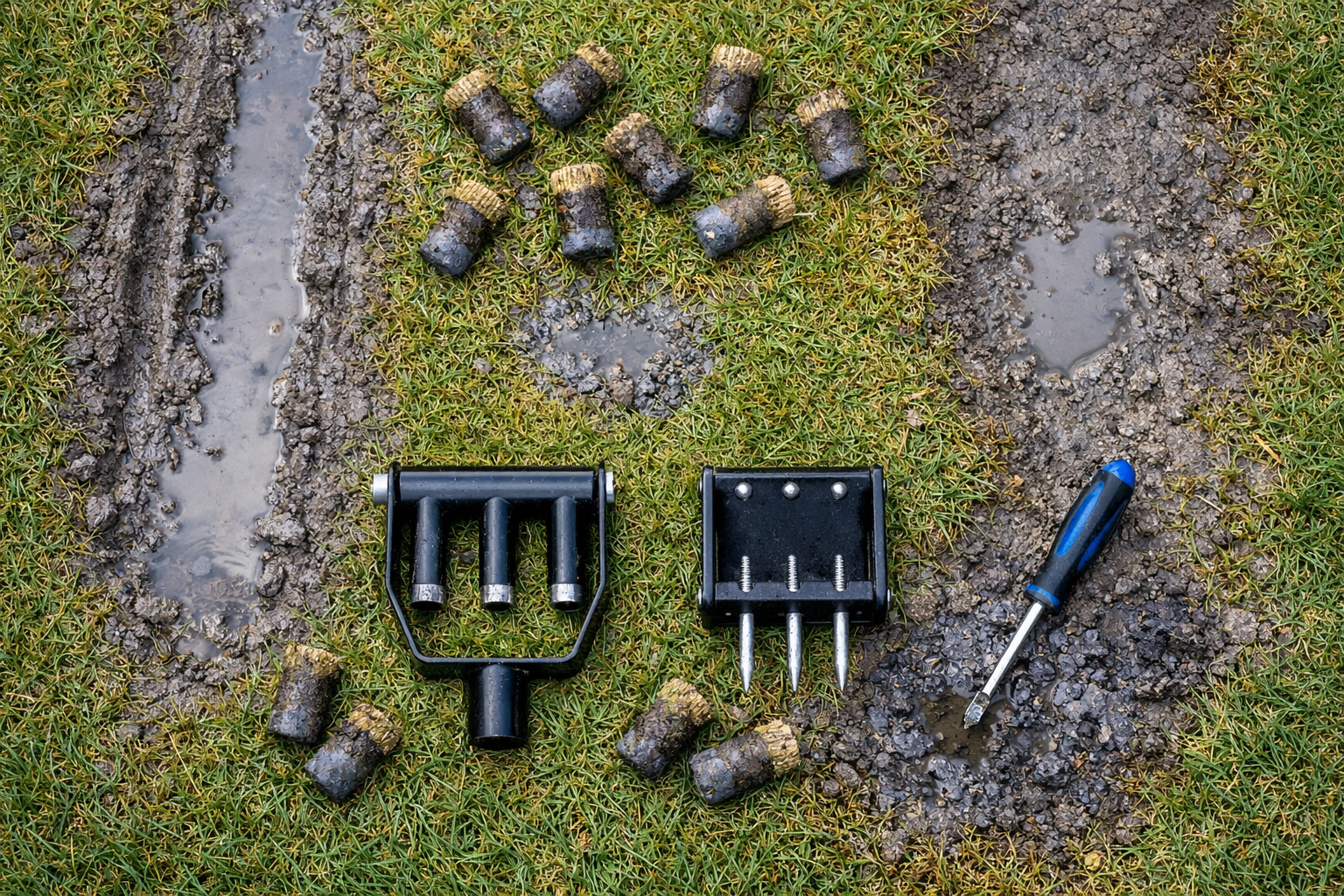
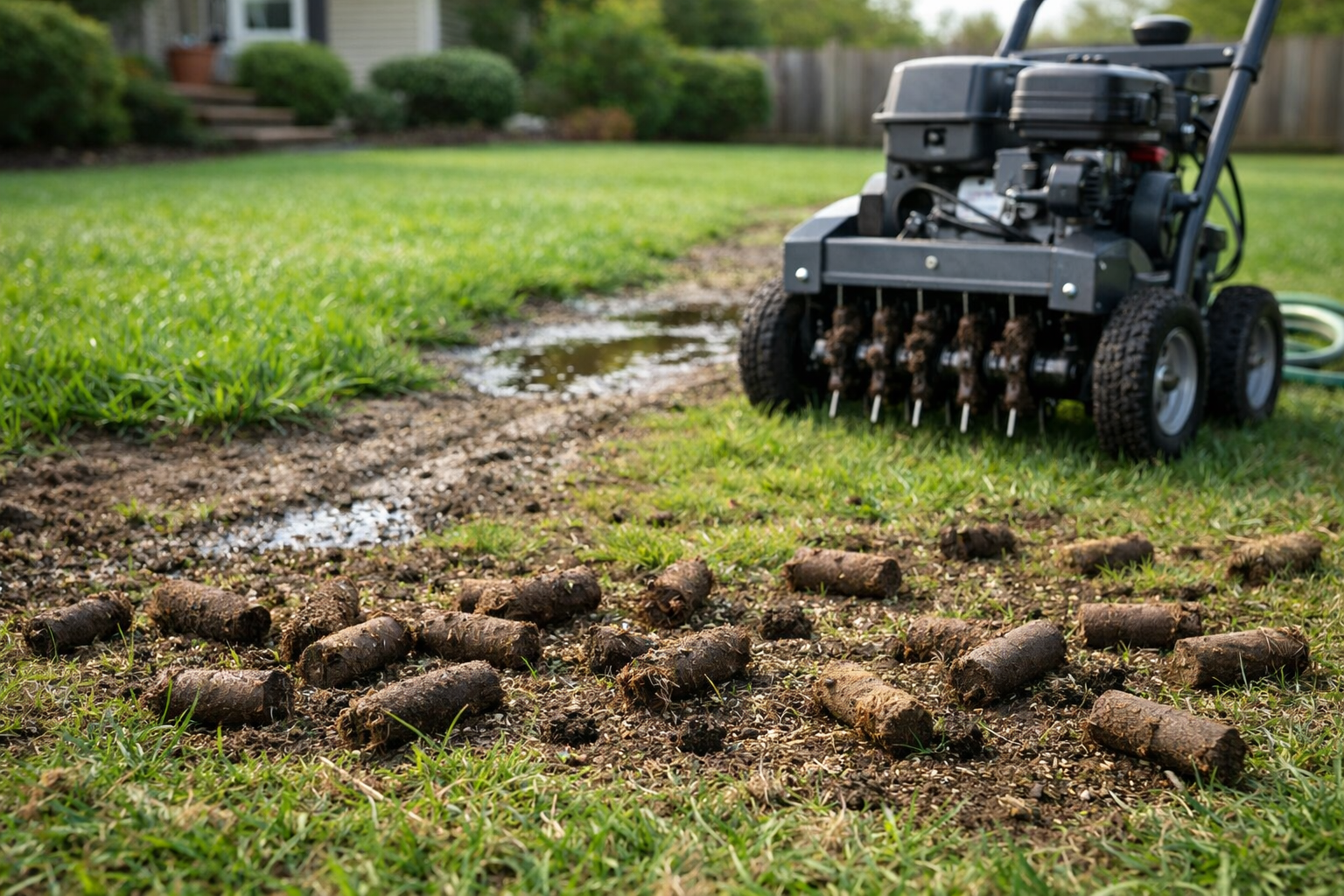
Core aeration removes actual plugs of soil, roughly 2-3 inches deep, and leaves them on the surface to break down. Spike aeration just pokes holes with a solid tine. Core aeration works better, and it’s the one you should pay for or rent equipment for.
Spike aerators (including the strap-on shoe kind sold online) can actually make compaction worse over time. Pushing a solid spike into clay soil compresses the soil around the hole, kind of like pushing a nail into wet clay versus drilling it out. Core aerators remove material instead of displacing it, which is the whole point.
Core aeration: mechanically removing small plugs of soil and thatch to relieve compaction and let air, water, and nutrients reach grass roots.
If you’ve got heavy clay soil, this distinction matters even more. Clay compacts fast under lawn mowers, foot traffic, and even heavy rain. A core aerator with hollow tines is worth the rental cost on clay; a spike tool is close to pointless there.
Aeration Isn’t Dethatching, Even Though They Get Mixed Up
Thatch is the layer of dead grass, roots, and organic debris sitting between the soil and the green blades. A thin layer, under half an inch, is normal and even helps retain moisture. Once it gets past three-quarters of an inch, it starts blocking water and nutrients the same way compacted soil does.
Aeration does pull up some thatch as a side effect, but it’s not designed to remove it. Dethatching uses a vertical mower or a dethatching rake to physically tear the thatch layer out. If your lawn has both compaction and a thick thatch mat, you may need both jobs done, usually in the same weekend, aeration first.
Confusing the two leads people to aerate a thatch problem repeatedly with no improvement, since the tool isn’t built for that job.
Timing by Grass Type: Spring, Fall, and Why It Matters
Aerate cool-season grasses (Kentucky bluegrass, fescue, perennial ryegrass) in early fall or early spring, when they’re actively growing and can recover fast. Aerate warm-season grasses (Bermuda, zoysia, St. Augustine) in late spring through early summer, right as they green up.
Get this backward and you’re aerating dormant or stressed grass, which just opens the door to weeds filling in the holes instead of turfgrass recovering.
Grass Type
Best Aeration Window
Why
Cool-season (fescue, bluegrass)
Early fall (Sept-Oct)
Peak root growth, cooler temps
Cool-season (fescue, bluegrass)
Early spring (April)
Secondary growth window
Warm-season (Bermuda, zoysia)
Late spring-early summer (May-June)
Grass is actively spreading
Pairing With Overseeding
Fall aeration on cool-season lawns pairs well with overseeding, since the holes give seed direct soil contact instead of sitting on top of thatch. Spread seed right after aerating, while the plugs are still breaking down on the surface.
How Often You Actually Need to Do This
Most lawns need aeration once a year at most, and plenty need it every 2-3 years. High-traffic lawns with clay soil, think kids, dogs, and regular mower traffic, lean toward the yearly side. Low-traffic, sandy-soil lawns can often stretch to every 3-4 years.
Renting Equipment vs. Buying: What Makes Sense for Your Yard
Measure your lawn size first; anything under 5,000 square feet is manageable with a rented walk-behind core aerator in an afternoon.
Call two or three local rental centers; a gas-powered core aerator typically runs $65-$90 for a 4-hour block, plus fuel.
Check if a lawn care company offers aeration as a one-time service; expect $75-$150 for an average suburban lot, often cheaper than renting once you factor in your time and hauling the machine.
Water the lawn 1-2 days before aerating; dry, hard soil resists the tines and gives you shallow, useless holes.
Leave the soil plugs on the lawn to break down naturally over 1-2 weeks instead of raking them up.
Water and fertilize within 48 hours after aerating, since the holes let nutrients reach roots directly.
Hold off on herbicide applications for at least 2-3 weeks post-aeration so you don’t stress newly exposed roots.
Buying a core aerator only makes sense if you’re maintaining more than one property, or you’ve got over an acre of high-traffic turf. For a single average yard, renting once a year (or once every few years) beats owning a machine that sits in the garage. If you want a rundown of aerator attachments that work with tow-behind tractors, themowersguide.com has model-specific comparisons that go deeper than a rental counter clerk usually can.
Frequently Asked Questions
Do I need to aerate every spring and fall?
No. Most lawns need aeration once a year at most, and many are fine every 2-3 years. Doing it twice a year on soil that isn’t compacted just stresses grass roots without any real payoff.
Can I aerate right after mowing?
Yes, that’s actually a good order of operations. Mow shorter than usual first, then aerate, since shorter grass makes it easier to see soil contact and spread overseed afterward.
Will aeration kill my grass?
No, healthy grass recovers within 2-3 weeks. You’ll see soil plugs and some thinning right after, but that’s normal, not damage, as long as you water within the first two days.
Strip the threads on your crankshaft, and you’re looking at a repair bill that can beat the price of a new mower. That’s the real danger with a torque wrench lawn...
Grass clippings left on your lawn after mulching can return the equivalent of roughly one pound of nitrogen per 1,000 square feet per growing season. That’s a meaningful supplement to your...
14 July 2026
The Mowers Guide is reader-supported. When you buy through links on our site, we may earn an affiliate commission.




Comments are closed.