Mix it wrong and you’ll be pulling the carburetor apart by mid-summer. Get the echo weed eater fuel mixture right, though, and that trimmer will outlast three cheaper ones. Most people searching for this just want the ratio and a straight answer on whether they’re about to ruin their engine.
Here’s the part most guides skip: the ratio matters, but it’s rarely what kills an Echo trimmer. What kills them is old fuel sitting in the tank for weeks, slowly turning into varnish inside a carburetor that costs more to fix than the trimmer did new.
The Correct Echo Weed Eater Fuel Mixture Ratio
Most Echo trimmers run on a 50:1 gas-to-oil ratio — that’s 2.6 ounces of 2-cycle oil per gallon of gasoline. This applies to the bulk of Echo’s X Series and PAS trimmers sold over the last decade.
Check Your Specific Model First
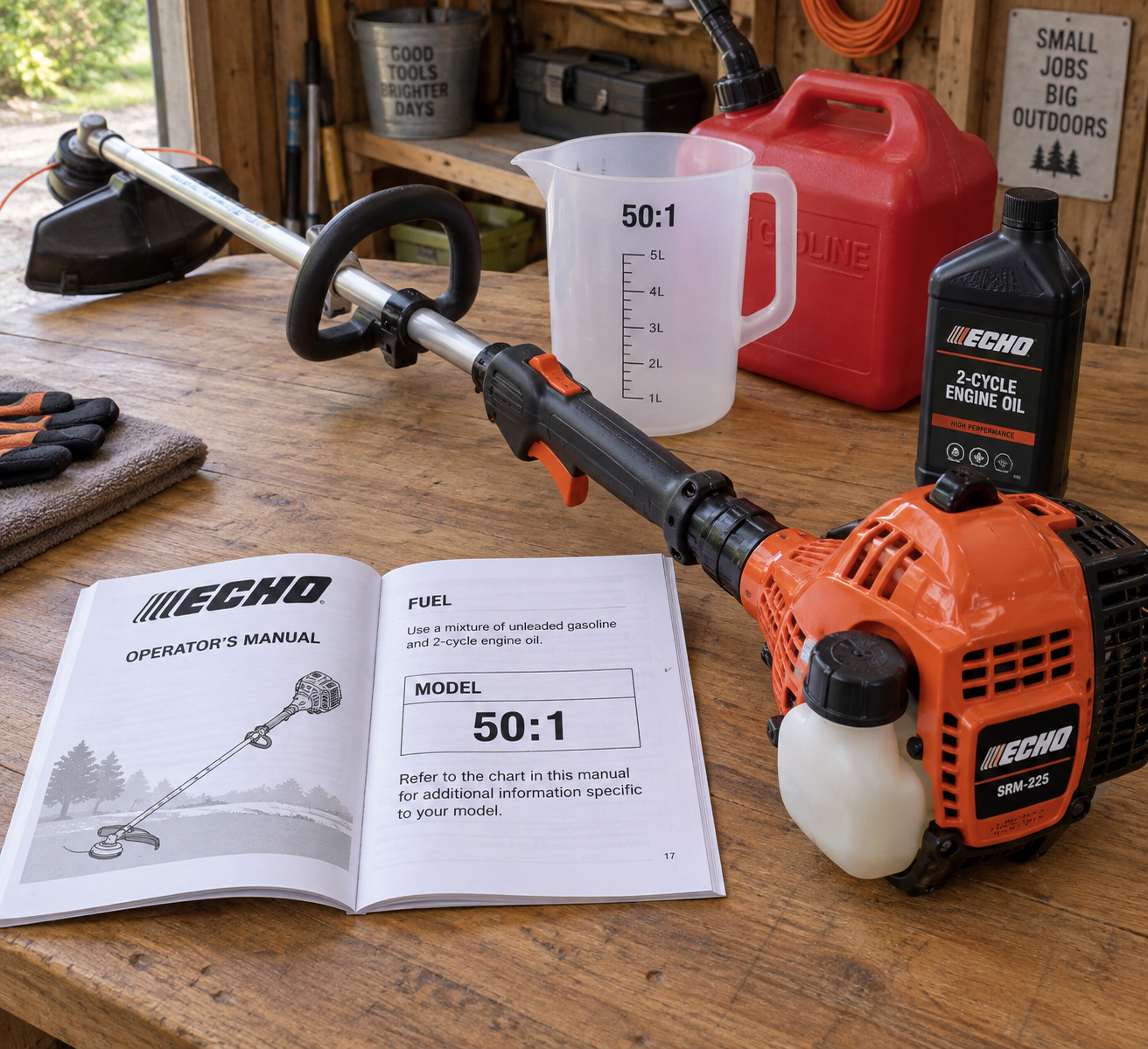
Not every Echo unit uses 50:1. A handful of older or commercial-grade units, and some Echo-branded chainsaws, call for 40:1 (3.2 ounces per gallon). The ratio is stamped right on the fuel cap or printed in the owner’s manual — always check that before mixing, because guessing wrong by even one ratio class can cause the engine to run too lean or too rich.
Why the Ratio Isn’t the Main Danger
A slightly off ratio (say 45:1 instead of 50:1) won’t destroy your engine overnight. It’s forgiving within a narrow margin. Old, separated fuel is the bigger threat — it gums up the carburetor’s tiny passages regardless of what ratio you started with.
Mixing It Properly: Tools and Steps
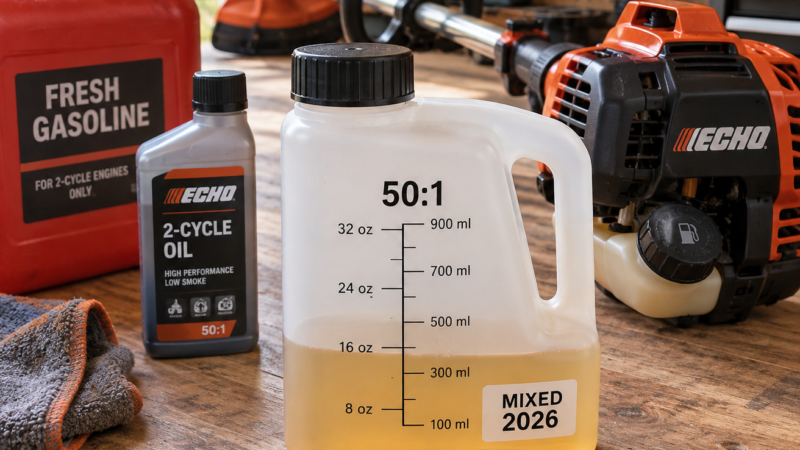
Get a dedicated fuel mixing container — not a generic water bottle, not a jug you eyeballed from the shed. Echo sells marked mixing jugs for under $10, and they remove all the guesswork.
Pour 1 gallon of fresh gasoline into the mixing container.
Add 2.6 ounces of Echo Power Blend 2-cycle oil (or equivalent air-cooled 2-cycle oil).
Seal the container and shake it for 30 seconds.
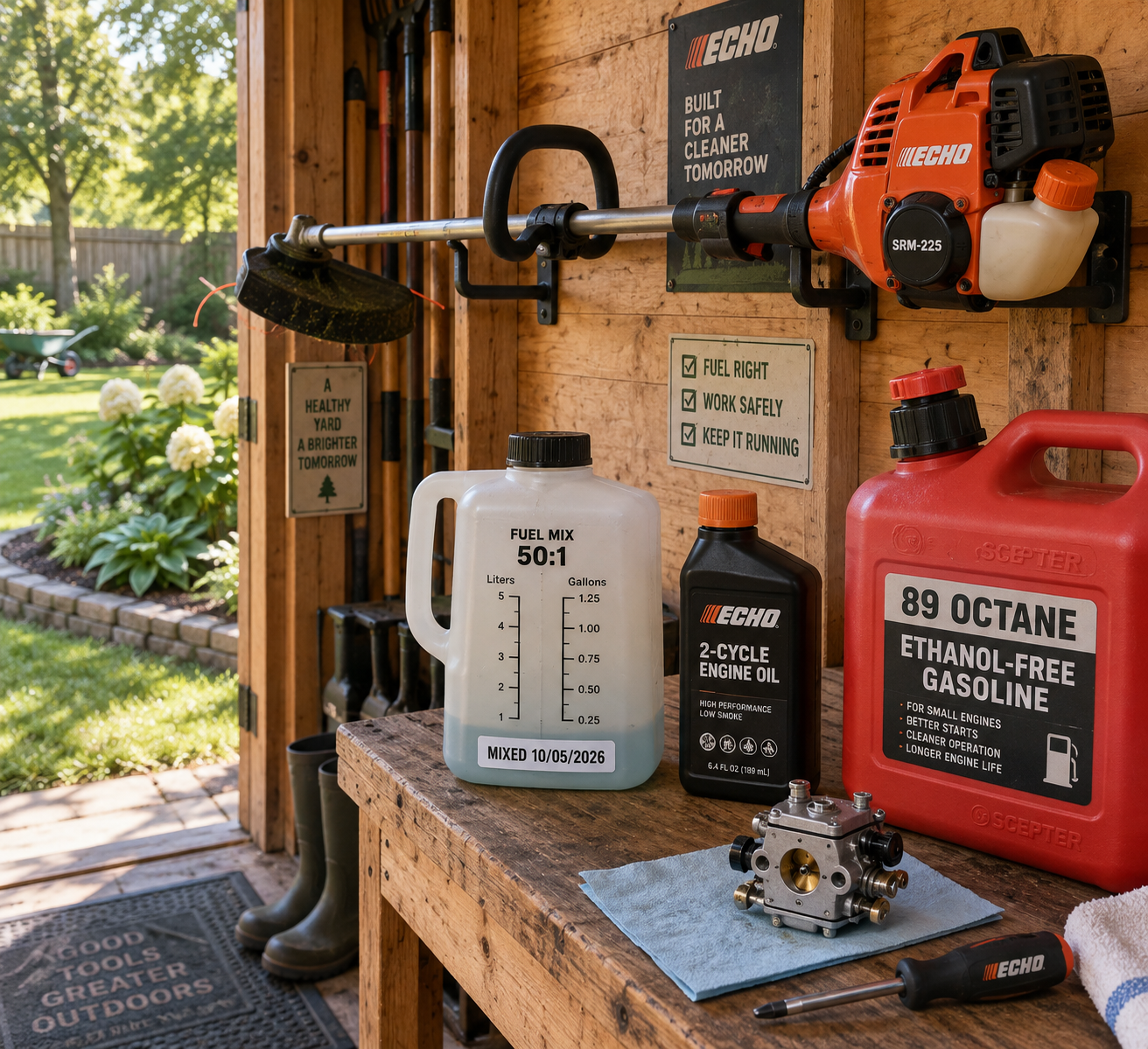
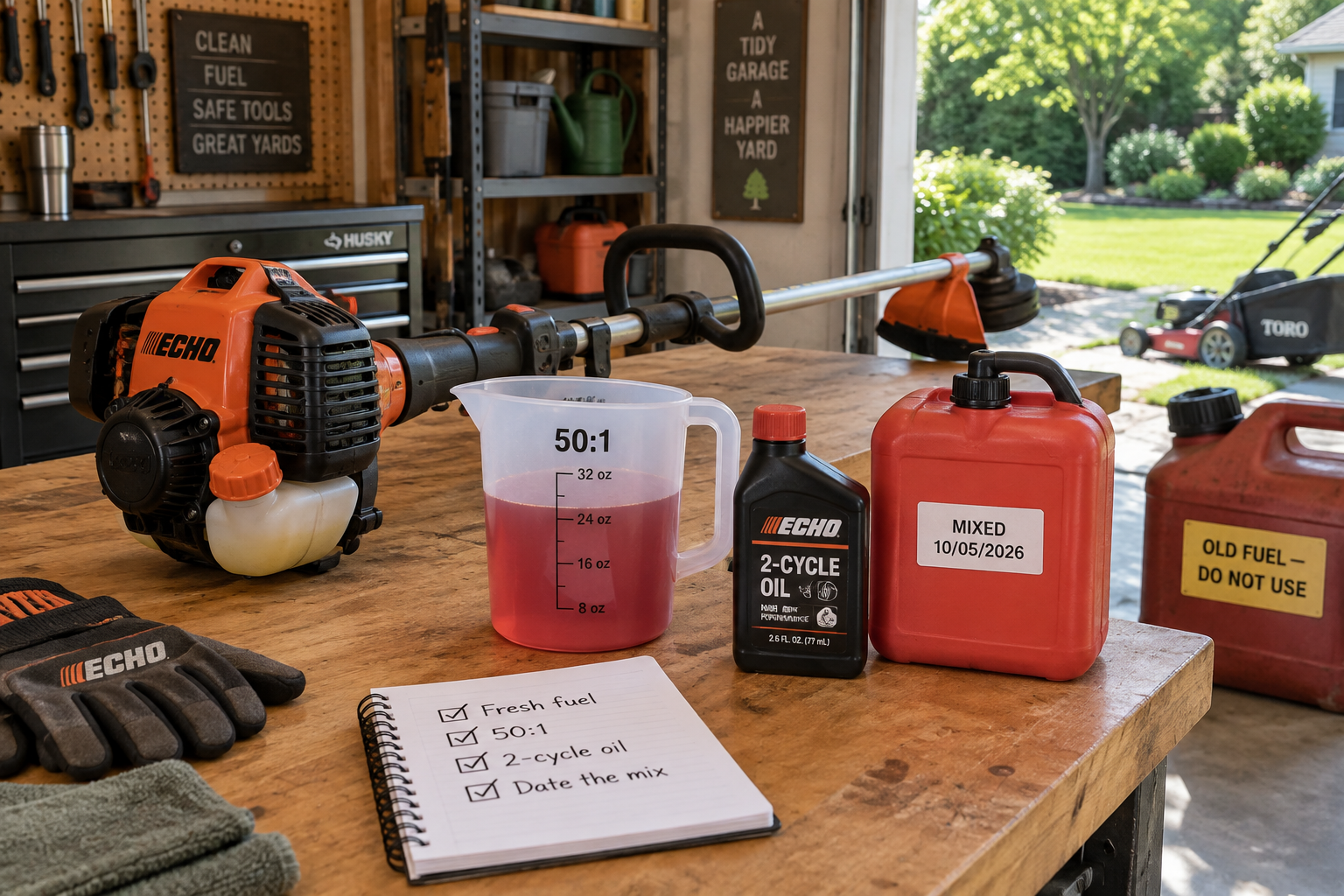
Label the container with today’s date.
Fill your trimmer’s tank only what you’ll use within 30 days.
Shake the container again before every refill — the mix can settle.
Skipping the labeling step sounds minor, but it’s how people end up running 90-day-old fuel without realizing it.
Gasoline Choice: Octane and Ethanol Matter
Use gasoline rated 87 octane or higher, and reach for ethanol-free fuel whenever it’s available. Many gas stations sell a non-ethanol “rec fuel” or “small engine fuel” grade at the pump, usually a dollar or so more per gallon than regular.
Ethanol attracts moisture, and that moisture separates from the gas-oil mix over time. That separation is exactly what clogs carburetor jets and leads to rough idling, hard starts, or a trimmer that won’t run at all. If ethanol-free gas isn’t available nearby, add a fuel stabilizer rated for ethanol blends to slow the breakdown.
The 30-Day Rule: Why Old Mixed Fuel Wrecks Carburetors
This is the one thing most mixing guides leave out, and it’s the actual cause behind most Echo trimmer repair visits. Mixed fuel — gasoline plus 2-cycle oil — starts degrading within 30 days, even in a sealed container.
“Gasoline begins to oxidize and lose combustibility within 30 to 60 days of storage, faster once blended with ethanol.” — U.S. Department of Energy, Alternative Fuels Data Center
Once the oil and gas separate, the oil can stick to internal surfaces while the gas thins out, leaving a residue behind as it evaporates. That residue hardens into a varnish-like film inside carburetor jets that are often smaller than a strand of hair. A shop teardown to clear that out typically runs $60 to $120, more if the carburetor needs replacing outright.
If a trimmer is going to sit for more than a month — over winter, say — either drain the tank and run it dry, or mix a smaller batch you’ll actually use up. A fuel mixture table makes the trade-off clear:
Fuel Age
Condition
Risk to Engine
0-14 days
Fresh, stable
Low
15-30 days
Starting to break down
Low to moderate
31-60 days
Oil separation likely
High — hard starts, rough idle
60+ days
Varnish forming
Severe — carburetor damage likely
A small engine maintenance resource like themowersguide.com’s troubleshooting guides can walk you through diagnosing carburetor symptoms before they turn into a full rebuild.
Common Mixing Mistakes to Avoid
Four mistakes cause almost every fuel-related failure on Echo trimmers, and none of them involve anything exotic.
Assuming every Echo model uses 50:1 — some call for 40:1, and the fuel cap tells you which.
Eyeballing the pour instead of using a marked container, which throws off the ratio more than people expect.
Using automotive motor oil instead of oil formulated for air-cooled 2-cycle engines — it lacks the additives that keep a trimmer’s small engine from overheating.
Letting mixed fuel sit past 30 days, which is still the leading cause of Echo carburetor repairs.
Frequently Asked Questions
What happens if I use the wrong fuel ratio in my Echo trimmer?
Too little oil (a leaner mix than specified) causes excess friction and can lead to premature engine wear or seizure. Too much oil causes smoking, fouled spark plugs, and poor performance, but it’s less immediately damaging than running too lean.
Can I use regular 4-cycle motor oil in my Echo weed eater?
No. Echo trimmers use a 2-cycle engine, where oil mixes directly with the fuel to lubricate internal parts. Automotive 4-cycle oil lacks the additives for that job and will cause buildup and premature wear.
How long does mixed Echo trimmer fuel actually last?
Plan on using mixed fuel within 30 days for reliable starts. Past that window, oil separation and ethanol-related moisture buildup raise the risk of carburetor clogs significantly, even if the fuel still smells and looks normal.
Pop the hood, grab a drain pan, and stop guessing which oil goes in your Honda mower. Changing oil Honda lawn mower engines require isn’t complicated, but it isn’t identical across...
Ten days. That’s roughly how fast perennial rye grass pokes through soil under good conditions, compared to 14-30 days for Kentucky bluegrass. That speed is the whole reason lawn owners reach...
21 July 2026
The Mowers Guide is reader-supported. When you buy through links on our site, we may earn an affiliate commission.






Comments are closed.