Is a zoysia grass lawn worth the work? It depends on your climate and your mower. Zoysia makes a thick, soft-looking turf that crowds out weeds and handles heat and foot traffic. But it grows slowly, turns tan in winter, and its wiry blades chew up dull mower blades. Here’s what you need to know before you buy sod or plugs.
Where Zoysia Works and Where It Doesn’t
Zoysia is a warm-season grass, meaning it grows fastest in summer heat and goes dormant when temperatures drop. It does best in USDA zones 7 through 10, and the transition zone (think Raleigh, St. Louis, Nashville) is its sweet spot.
Winter Dormancy Isn’t Death
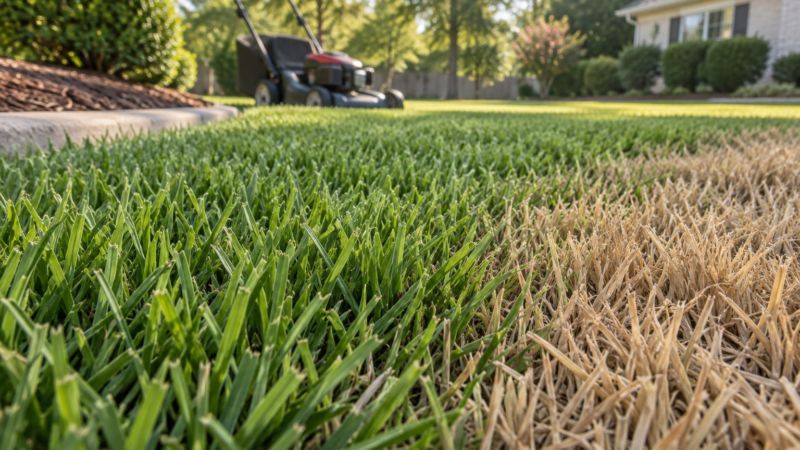
Once soil temperatures sit below about 50°F, zoysia turns straw-colored. That’s normal. The crowns and roots are alive and the lawn greens up again in spring. Scratch a stem; if it’s tan but firm, you’re fine. Meyer and other common types can stay brown for four to five months in the upper South, which bugs some homeowners.
Sun, Shade and Cold Limits
Zoysia wants at least 6 hours of direct sun. It tolerates light shade better than Bermuda, but it thins out badly under heavy tree cover. Skip it in cold northern climates too. Zones 5 and colder get a long brown season and slow recovery from winter injury, and fescue or Kentucky bluegrass makes more sense there.
Choosing a Type, Then Planting It
Pick your variety first, because it decides your planting method and your price.
Type
Texture
Typical planting form
Notes
Meyer
Medium
Sod, plugs
Most cold hardy; the old standard
Emerald
Fine
Sod, plugs
Dense, dark green; best in warmer zones
Zeon
Fine, soft
Sod, plugs
Popular for lower mowing and a plush feel
Zenith
Medium
Seed
One of the few seeded options
Japanese lawn grass (Zoysia japonica)
Coarse
Seed, sod
Cheapest; the least dense
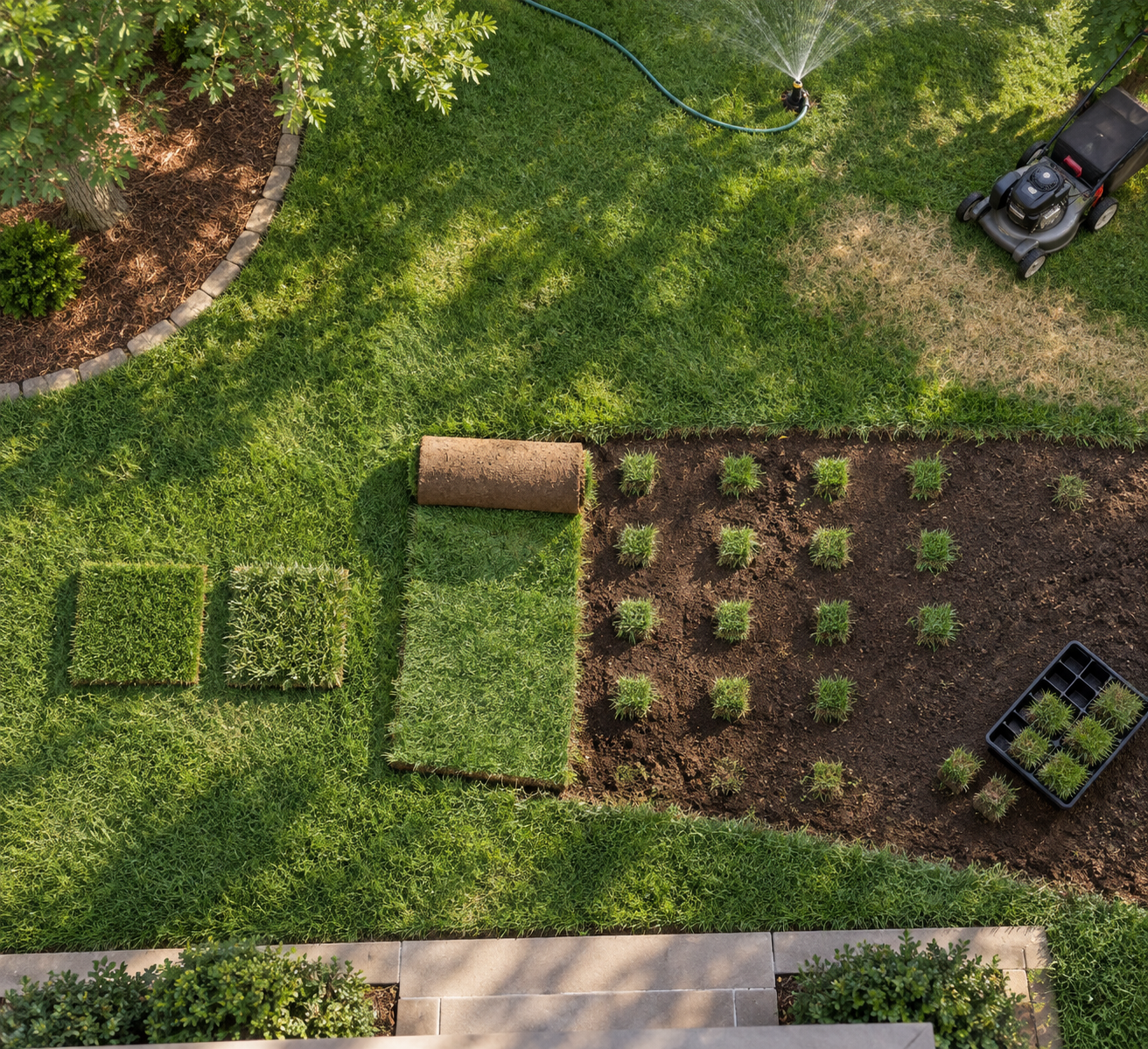
Sod costs roughly $1 to $2 per square foot installed by the pallet, more with labor. Plugs and sprigs cost less up front but take much longer to fill in. Seed is cheapest, though it’s slow and limited to a few varieties. Those are estimates; prices vary by region and season.
Plan for Slow Establishment
Plugs spaced 6 inches apart can take two growing seasons to close up; at 12 inches, expect three. Seed needs soil near 70°F and steady moisture for weeks. Don’t expect a lawn by July. Weeds will move into the gaps, so spot-treat them early. If you want coverage this year, buy sod and accept the bill.
Mowing Zoysia Without Wrecking Your Mower
This is where zoysia earns its reputation. The leaf blades are stiff and silica-rich, so a dull blade doesn’t cut. It shreds, and the tips turn gray-brown a day later.
Zoysia is typically mowed at about 1 to 2.5 inches, depending on the variety.
Mow Meyer around 2 to 2.5 inches. Fine-bladed types like Emerald can go lower. Scalping it, or letting it get tall and then chopping it back, stresses the turf and exposes stems.
Rotary or Reel?
A sharp rotary mower works fine at 2 inches and above. If you want 1 inch or less, you need a reel mower (scissor-style cutting) with a tight bed knife. Reels give the cleanest cut, but they cost more, and setup takes patience.
Blade Care Is the Real Cost
Sharpen rotary blades every 10 to 15 mowing hours, which is about every month in peak season. Professional sharpening runs roughly $8 to $15 per blade. A spare blade lets you swap in minutes. A weak mower will bog down too, so a walk-behind with a decent engine beats a bargain model.
Feeding, Watering and Thatch Control
Zoysia needs less than most turf. Overdoing it is the usual mistake.
Soil test first; aim for pH 6.0 to 6.5.
Start fertilizing after full green-up, not at the first warm day.
Apply 2 to 3 lbs of nitrogen per 1,000 square feet per year, split into feedings.
Water deeply, about 1 inch per week, then back off.
Stop feeding about 6 to 8 weeks before first frost.
Dethatch in late spring or early summer if thatch exceeds about ½ inch.
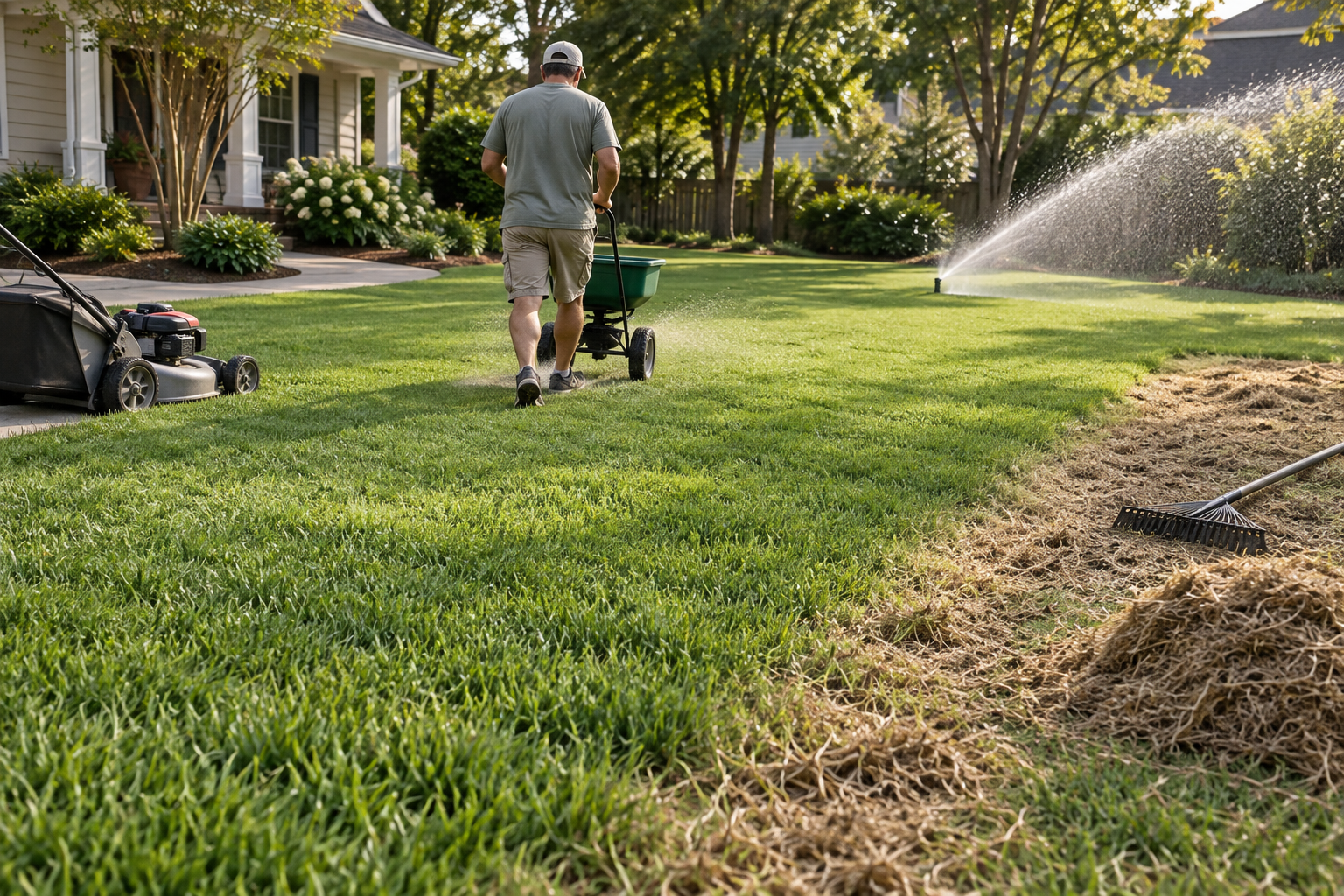
Heavy nitrogen and frequent light watering build thatch, the spongy layer of dead stems above the soil. Zoysia makes plenty already. Dethatching a thick lawn means renting a power rake for roughly $60 to $100 a day, and it’s messy.
Thatch also invites large patch, a fungal disease that leaves orange-brown rings in spring and fall. Grubs are the other pest; if birds and skunks are tearing up turf, check for them. Healthy zoysia that’s mowed sharp and fed lightly rarely needs more than that.
Zoysia vs. Bermuda, St. Augustine and Fescue
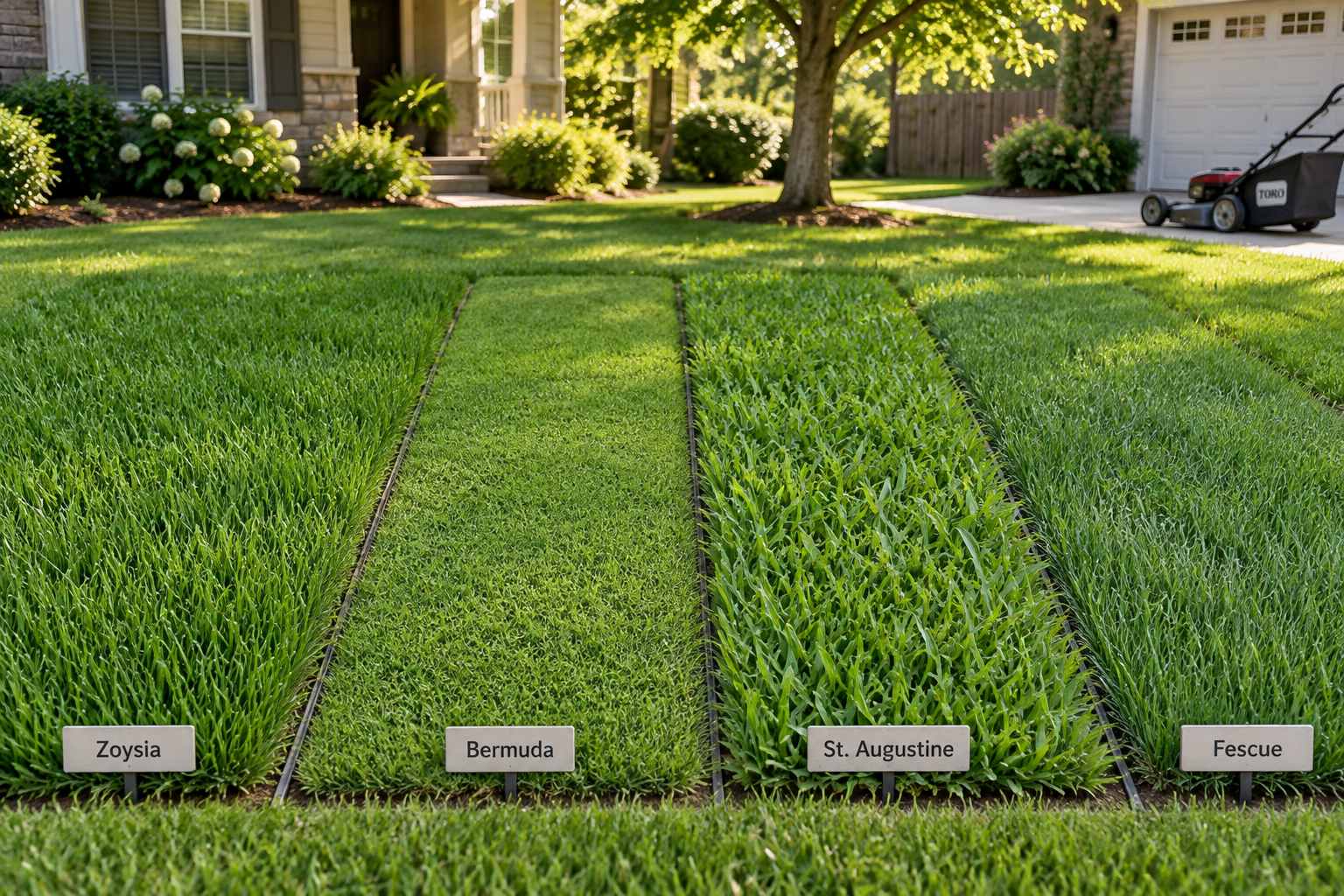
Choose zoysia if you want dense turf, decent shade tolerance for a warm-season grass, and you’ll tolerate slow growth. Bermuda grows faster and recovers from damage quicker, but it hates shade. St. Augustine handles more shade and is easier on mowers, but it’s weaker in cold and prone to chinch bugs. Tall fescue is the easiest cut and stays green longer, but it struggles in southern summers.
So when should you skip zoysia? If you hate maintenance, own a worn-out mower, or want a lawn filled in fast, pick something else. The long-term cost is sharpening, a better mower, and patience. For deeper mower comparisons, themowersguide.com has reviews worth checking.
The drawback of Zoysia is simple: it’s slow and tough. The payoff is a lawn that, once it fills in, needs less water and fewer weed treatments than most.
Frequently Asked Questions
How long does a zoysia lawn take to establish?
Sod roots in two to three weeks. Plugs take two to three growing seasons, and seed takes at least one full season. Spacing, soil warmth and watering all change the timeline.
Can I mow zoysia with a regular rotary mower?
Yes, if the blade is sharp and you cut at 2 inches or higher. Below that height a rotary scalps uneven spots. A reel mower gives a cleaner cut at 1 inch or less.
Does zoysia grass stay green all year?
No. In zones 7 and colder it browns after frost and stays tan until soil warms in spring. In zones 9 and 10 it may stay mostly green, though growth slows in winter.
Mow tall fescue below 3 inches and you cut off the very thing that makes it drought-tolerant: a root system that can reach 2 to 3 feet deep when the canopy...
Kneel down and look close. Is that blade wide and coarse, or thin and wiry? Does it feel rough between your fingers, or almost slick? That’s step one in sorting through...
13 August 2026
The Mowers Guide is reader-supported. When you buy through links on our site, we may earn an affiliate commission.






Comments are closed.