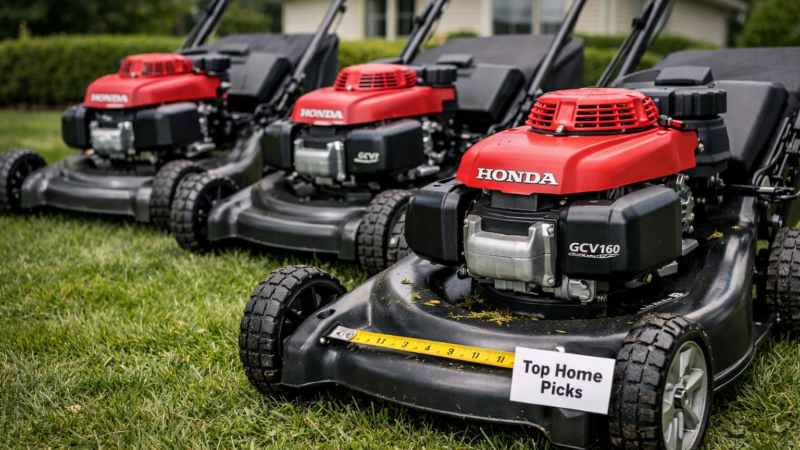
Honda doesn’t make lawn mowers for the U.S. residential market anymore, so every “Honda mower” you see is really another brand’s deck bolted to a Honda engine. That distinction matters more than most buying guides admit. Pick the wrong deck or drive system, and you’re stuck with a great engine on a mediocre machine.
If you’re shopping for a push mower with Honda engine power, you’re really choosing between brands like Toro, Snapper, and a few commercial-leaning names that license the GCV160 or GCV170 engine. The engine will outlast the mower in most cases. Your job is picking the right chassis around it.
Which Brands Actually Pair With Honda Engines?
Toro and Snapper are the two mainstream U.S. brands still putting Honda engines under their decks, and the difference between their lineups comes down to deck construction and self-propel hardware, not the engine itself. Both use the same core Honda GCV family, so your decision hinges on everything Honda didn’t build.
Toro’s Honda-Powered Lineup
Toro’s Recycler line has offered Honda GCV170 variants on select models, usually paired with a steel deck around 22 inches wide. Toro leans on its own Personal Pace self-propel system, which adjusts walking speed automatically based on how hard you push the handle. It’s a genuinely useful feature on uneven yards, though it adds $80 to $150 over a fixed-speed version.
Snapper and Other Licensees
Snapper has used Honda engines on some higher-tier push and self-propelled models, often with steel decks and rear-wheel drive for better traction on slopes. Availability shifts year to year depending on supply agreements, so check current model listings before assuming last year’s spec sheet still applies. Always confirm the engine badge on the shroud, not just the marketing copy, since some model years swap between Honda and a proprietary engine mid-run.
Engine Specs That Actually Change Performance
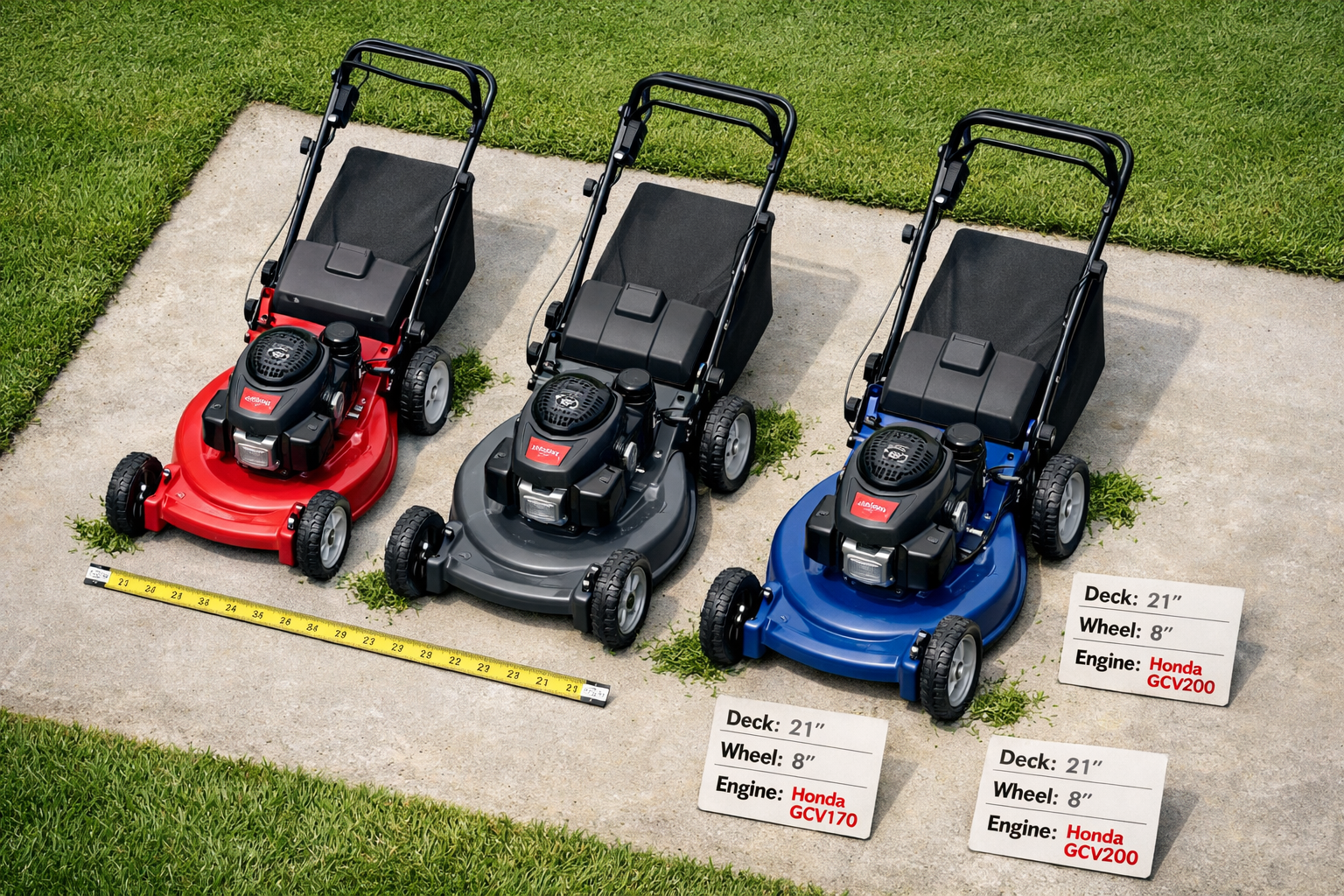
Not every Honda engine on a push mower is the same, and treating “Honda engine” as one spec is the most common mistake buyers make. The GCV160 and GCV170 are common on residential push mowers, while the GCV200 shows up on higher-torque or self-propelled models that need more grunt to move themselves plus the deck.
Displacement tells you more than horsepower marketing numbers do. The GCV160 runs 160cc and is fine for flat quarter-acre lots with soft grass. Step up to the GCV170 or GCV200 if you’ve got thicker St. Augustine or Bermuda grass, or any incline steeper than a gentle slope.
A GCV-series overhead cam engine typically ships with a cast iron cylinder sleeve, which is a big part of why these engines are known for lasting well past 500 hours of mowing with basic maintenance.
Starting systems matter too. Most push mowers with Honda engines still use recoil (pull-cord) start, and Honda’s auto-choke system means you rarely need to fiddle with a manual choke lever, even on a cold morning. Electric start is available on some higher-tier models but adds cost and a battery to maintain.
Push vs Self-Propelled: What Fits Your Yard
Self-propelled costs more but saves your back, especially on lawns over a third of an acre or anything with a slope. A basic push (manual push) model with a Honda GCV160 typically runs $400 to $550, while a self-propelled version with the same engine family jumps to $550 to $800.
Here’s the honest tradeoff: a push mower is lighter, simpler to repair, and cheaper up front. But if you’re mowing more than 8,000 square feet regularly, or your yard has any real grade to it, self-propelled drive stops being a luxury and starts being the thing that keeps you mowing into your 60s without knee pain.
Rear-wheel drive self-propelled models handle slopes and grass clippings better than front-wheel drive. Front-wheel drive is easier to turn and lift for bagging, but it can slip on wet grass or steep terrain. If your yard is mostly flat, front-wheel drive saves you $50 to $100 and works fine.
Model Type
Engine
Deck Width
Drive
Typical Price
Toro Recycler (push)
Honda GCV170
22 in
Manual push
$450–$550
Toro Recycler (self-propelled)
Honda GCV170
22 in
Rear-wheel, variable speed
$600–$750
Snapper push model
Honda GCV160
21 in
Manual push
$400–$500
Snapper self-propelled
Honda GCV190/200
21–22 in
Rear-wheel
$650–$800
Deck Material, Cutting Modes, and Long-Term Costs
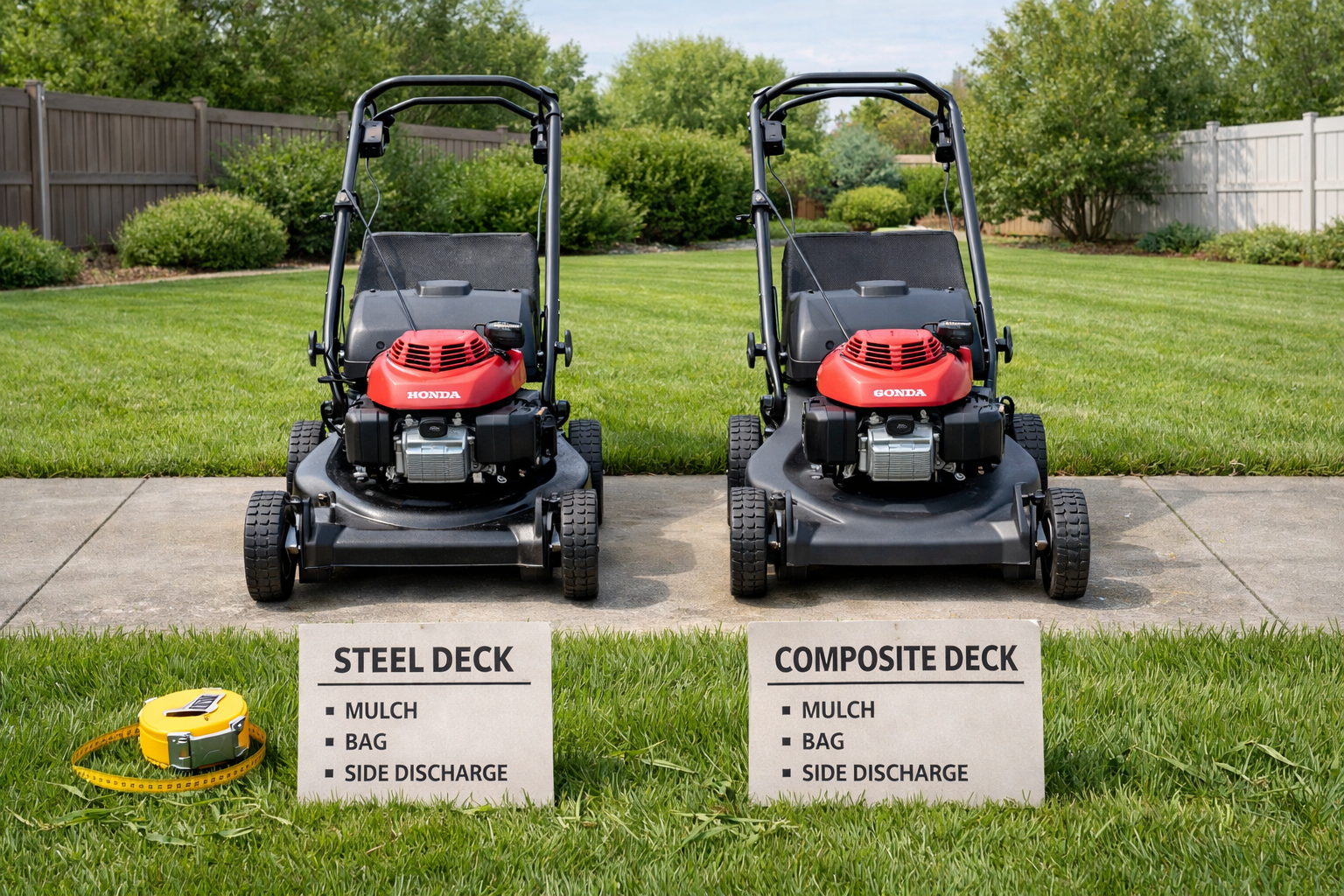
Deck material affects durability and resale value as much as the engine badge does, and it’s the detail most first-time buyers skip past. Steel decks are heavier and more dent-resistant but rust over time if you don’t rinse grass off after mowing. Aluminum decks cost more up front, resist corrosion completely, and stay lighter, which matters if you’re lifting the mower into a truck bed or over a fence.
Mulching, Bagging, and Side Discharge
Most Honda-engine push mowers today ship as 3-in-1 units, meaning you can switch between mulching, rear bagging, and side discharge without buying attachments. Mulching cuts down on yard waste and feeds nitrogen back into the soil, but it struggles with tall or wet grass. Bagging is better if you’re dealing with heavy leaf drop in the fall or a lawn that grows fast enough to clump.
What Maintenance Actually Costs
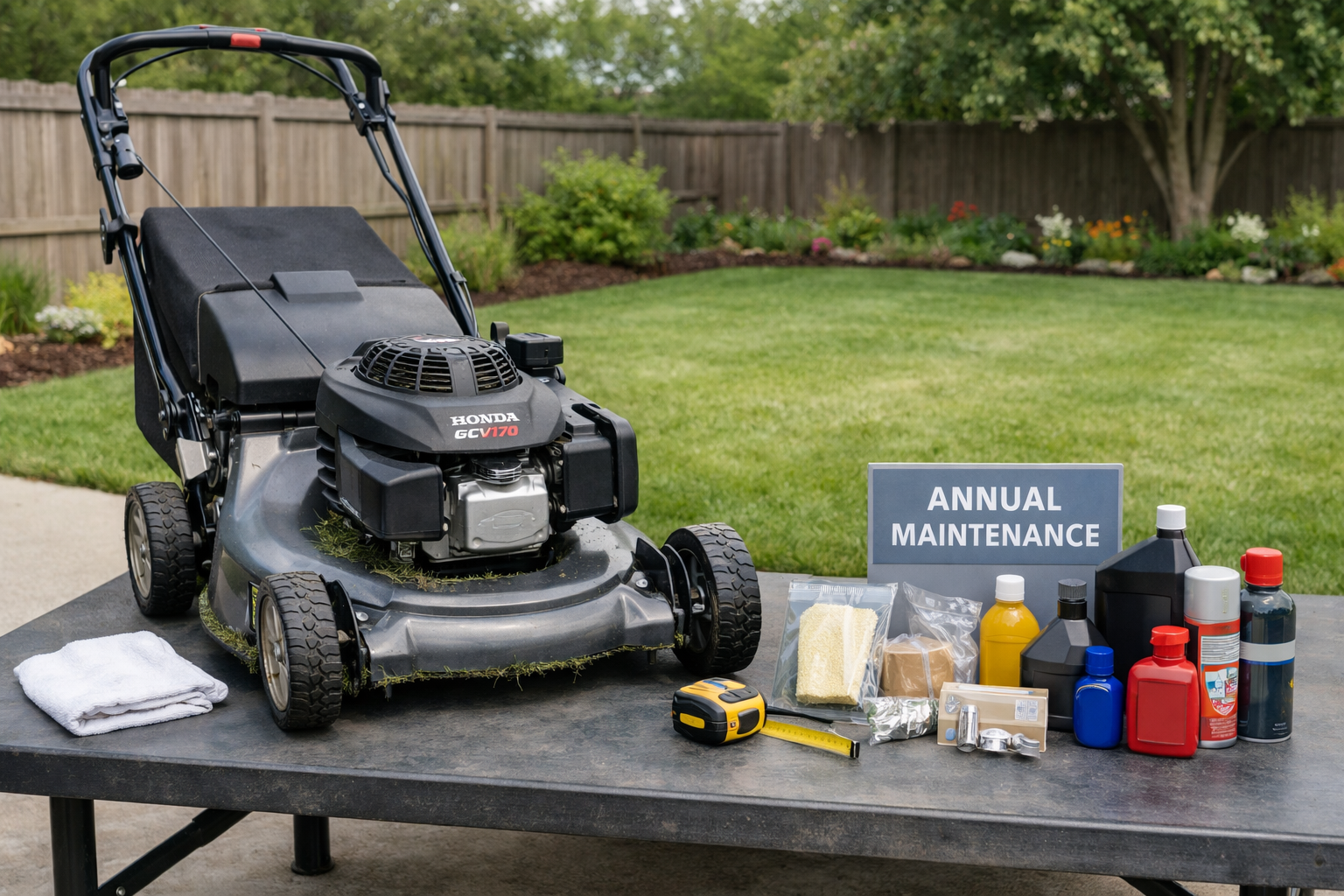
Honda engines are simple to maintain, and that’s part of the appeal. Here’s the basic seasonal rhythm:
Change the oil every 25 hours of use or once per season, whichever comes first (roughly $8 to $12 for SAE 30 oil).
Replace or clean the air filter once a year, about $5 to $10 depending on foam vs paper style.
Swap the spark plug every two seasons, around $4 to $6.
Sharpen or replace the blade at least once a season, $10 to $25 depending on whether you sharpen it yourself or pay a shop.
Drain or stabilize the fuel before winter storage to avoid gumming up the carburetor.
Parts availability is where Honda pulls ahead of proprietary engines from budget brands. Honda’s small-engine parts network is deep, and most local mower repair shops stock GCV-series parts or can order them within a day or two. If you want a deeper walkthrough on seasonal upkeep, themowersguide.com’s maintenance guides break down the full service schedule by engine model.
Frequently Asked Questions
Is a Honda-engine mower better than one with a proprietary engine?
Generally, yes, for longevity and parts access. Honda GCV engines have a strong reputation for running 500+ hours with basic care, and replacement parts are easier to find nationwide than for many house-brand engines.
Does Honda still make its own branded push mowers for U.S. homeowners?
No. Honda exited the U.S. residential walk-behind mower market, so current “Honda mowers” are actually Toro, Snapper, and similar brands using licensed Honda engines under their own decks.
Is the extra cost of self-propelled worth it for a small flat yard?
Usually not. If your lot is under a quarter acre and mostly flat, a manual push model with a Honda GCV160 saves $150 to $250 without costing you much effort.
Wrong bagger, wrong bolt pattern, wasted money. That’s what happens when you order a grass catcher for Craftsman riding mower by guessing deck size alone. Craftsman changed hands, rebadged parts, and...
Discover the pros and cons of gas, electric, and battery-powered lawn mower engines. I’ll help you choose the perfect engine for your yard maintenance needs.
3 May 2025
The Mowers Guide is reader-supported. When you buy through links on our site, we may earn an affiliate commission.





Comments are closed.