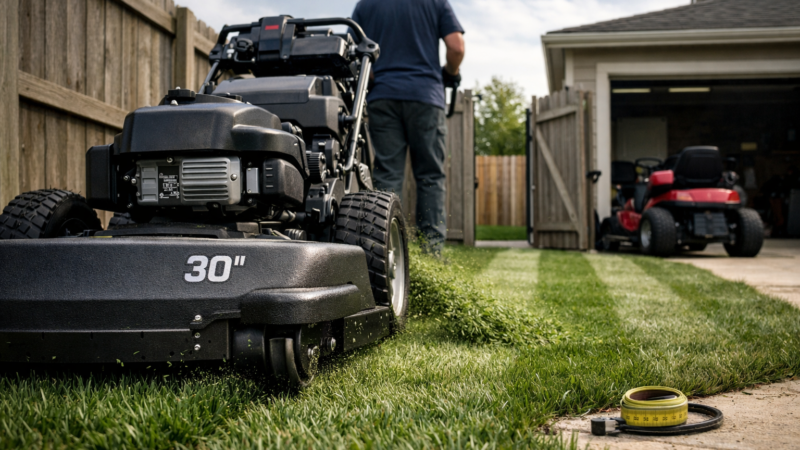
Measure your gate before you fall in love with a deck size. A 30 inch mower sounds like it’ll clear anything wider than 30 inches, but that number is deck width only — add the wheels, the handlebar frame, and a few inches of margin, and you’re often looking at 32 to 34 inches of real clearance needed. That mismatch is the number one reason these mowers get returned.
If your side yard gate or gap is anywhere near 30 to 36 inches, this size category is worth a hard look. It’s the sweet spot between a skinny 21-inch push mower that takes forever on a half-acre lot and a 42-inch riding mower that won’t fit through anything.
Why a 30 Inch Deck Hits the Sweet Spot for Mid-Size Lawns
A 30 inch deck cuts a wide enough swath to knock out a quarter- to half-acre lawn in well under an hour, while still being narrow enough to squeeze through most residential gates. It’s the size that shows up constantly on suburban lots built with 3-foot side gates and tight fence lines.
Go smaller — 21 inches — and you’re pushing back and forth across a big lawn for twice as long. Go bigger, and you’re stuck locked out of the backyard unless you drive the mower around the block. The 30 inch class threads that needle without forcing you to compromise much on either end.
Cutting width isn’t the whole efficiency story, either. A 30 inch deck paired with a decent engine (think 10.5 to 13.5 gross torque ft-lbs on a walk-behind, or a 500cc-plus V-twin on a rider) will move through thick or wet grass without bogging down. A wide deck on a weak engine just means you’re dragging a heavier machine through grass that stalls the blade anyway.
Walk-Behind vs. Riding: Same Deck Size, Different Machine
Here’s something a lot of first-time buyers miss: a 30 inch mower isn’t automatically a riding mower. Plenty of self-propelled walk-behinds, especially wide-cut commercial and residential models, come in 30-inch decks. Riding mowers and zero-turns also make 30-inch versions, usually the smallest riders a brand offers.
Walk-behinds in this size are heavier and harder to maneuver than a standard 21-inch push mower, but they still fit through the same gates and store in the same shed corner. Riding versions need a trailer or a wide garage door, plus a flat spot to park them. Don’t assume “30 inch” means “sit-down mower” when you’re comparing listings — check the product type first, the deck size second.
Gate and Gap Clearance: The Measurement Everyone Skips
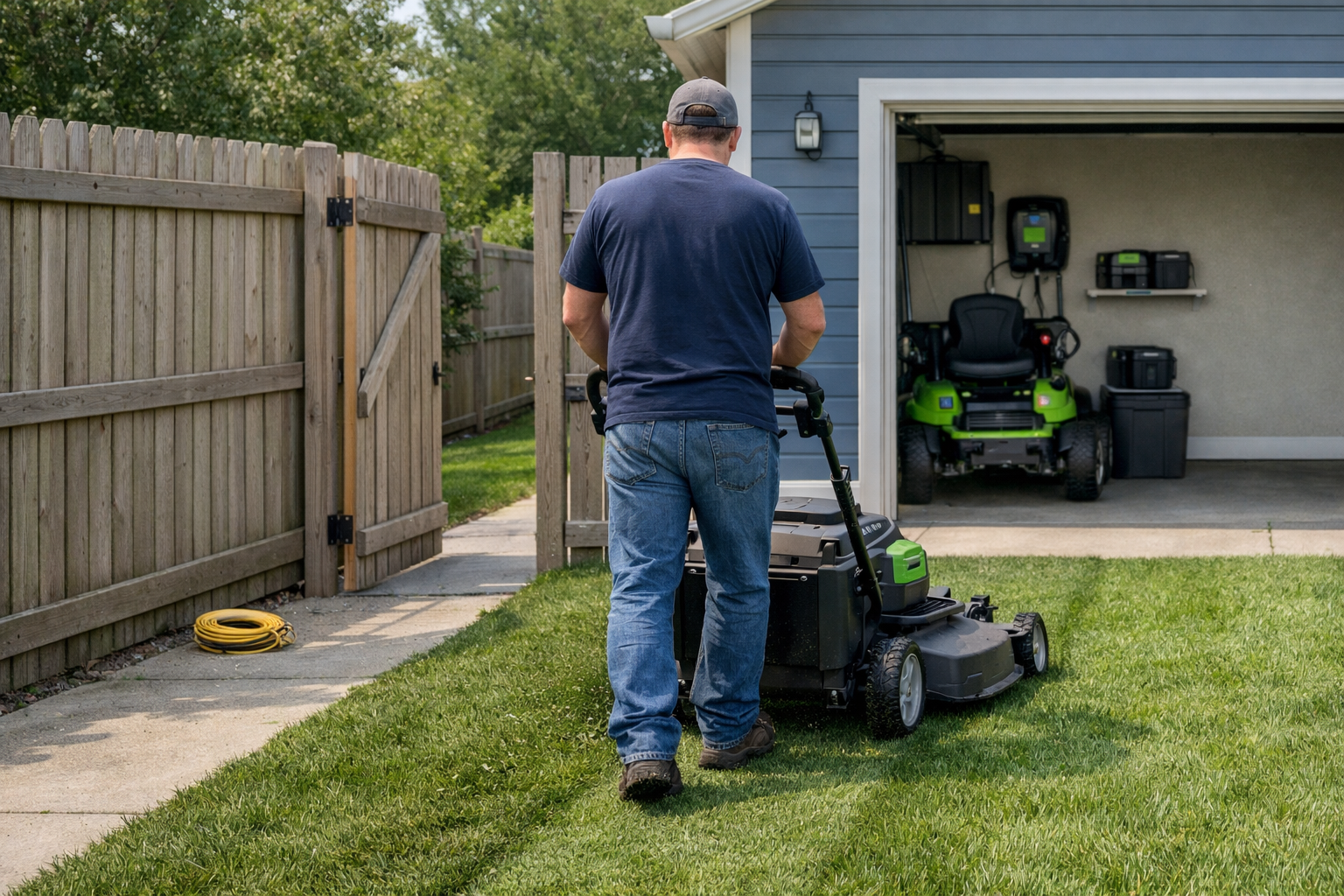
This is the section that actually decides whether a 30 inch mower works for your yard, so measure twice before you buy. Take a tape measure to your narrowest gate, fence gap, or side-yard path, and subtract 2 to 4 inches for wheel width and handlebar spread on a walk-behind.
Most residential gates run 36 to 42 inches, which gives a 30-inch deck room to spare. But older homes, especially anything built before the 1980s in tighter urban lots, sometimes have gates as narrow as 30 to 32 inches. In that case, a 30 inch deck can be a squeeze or a flat no, depending on the specific model’s wheel track.
A mower’s stated deck width tells you cutting swath, not the physical footprint of the machine. Always measure the widest point — usually the rear wheels or the handlebar grips — not the deck itself.
Riding mowers add another wrinkle. Riding mowers with 30-inch decks still need 34 to 38 inches of clear path once you account for the tires and any deflector shields. If your gate is original to the house and hasn’t been widened, get exact numbers from the mower’s spec sheet, not just the marketing headline.
Gas, Battery, or Corded: Matching Power to a Mid-Size Deck
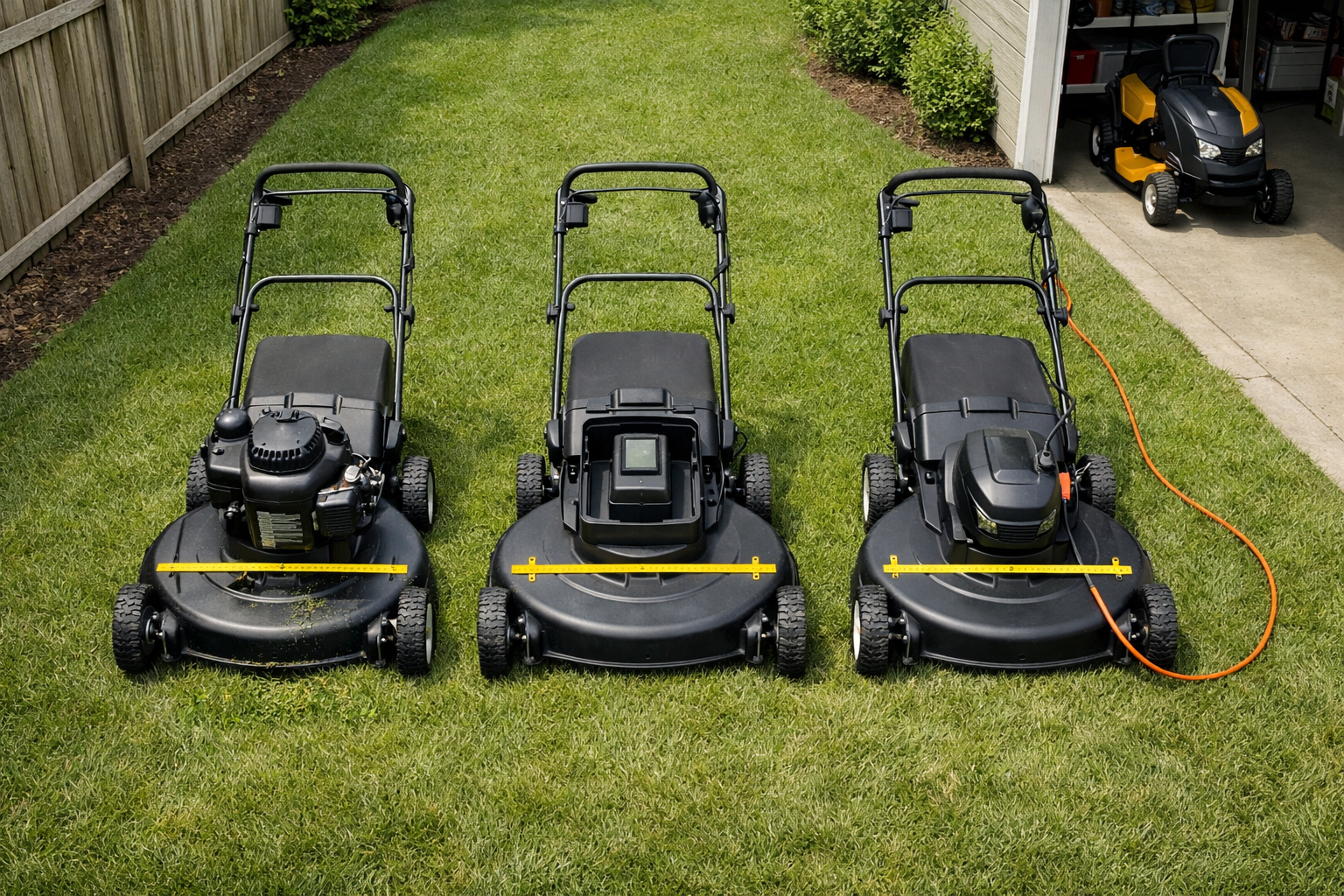
Gas is still the strongest choice for a 30 inch deck on anything over a quarter acre, mainly because battery packs big enough to run a wide deck for 45+ minutes are expensive and heavy. Battery mowers in this size class exist, but they’re a newer, pricier segment.
Gas Engines Still Win on Runtime
A gas-powered 30 inch walk-behind or rider will run for hours on a full tank, refuel in under a minute, and handle thick, wet, or tall grass without losing power partway through the yard. The tradeoff is noise, exhaust, and more required maintenance.
Battery Power Is Catching Up, Slowly
Battery-powered mowers at 30 inches are mostly commercial-grade or premium residential riders, and they run $3,000 to $6,000-plus once you price in extra battery packs. Runtime on a mid-size battery rider typically lands around 1 to 2 hours per charge, which covers most half-acre lawns but not much beyond that. For a DIY homeowner mowing weekly, gas remains the more practical, lower-cost path — I’d only go battery if noise restrictions or fume sensitivity make gas a non-starter.
Mulching, Bagging, and Getting Around Obstacles
Most 30 inch mowers handle mulching and bagging equally well, but check whether the bagger is sold separately — it often is, and it can add $150 to $300 to your total cost. Side-discharge is standard on nearly every model; mulching usually just needs a plug kit.
Maneuverability is where deck size really shows its tradeoffs. A 30 inch mower turns tighter than a 42-inch riding mower but wider than a 21-inch push model, so mowing around flower beds, tree trunks, and playsets takes more planning. Zero-turn riders in this size class are the exception — their turning radius can be as tight as 0 inches at the wheel, even with the wider deck.
Walk your yard first and flag every obstacle narrower than 4 feet apart.
Measure your tightest gate or gap and subtract 3 inches for wheel clearance.
Decide gas, battery, or corded electric based on lawn size and how often you’ll mow.
Pick walk-behind or riding based on storage space and how much of the lawn is flat and open.
Confirm mulching kit or bagger is included, not sold as an add-on.
Check the turning radius spec if your yard has tight corners around beds or trees.
Plan storage now — a 30 inch deck mower needs roughly 4 feet of shed or garage width to park comfortably.
Model Type
Typical Price Range
Best For
Gas walk-behind, 30-inch
$900 – $1,600
Half-acre lawns, tighter gates
Gas riding mower, 30-inch
$1,800 – $2,800
Open half- to 1-acre lawns
Battery riding mower, 30-inch
$3,000 – $6,500
Noise-sensitive areas, smaller acreage
Commercial-grade walk-behind
$2,500 – $4,000
Frequent mowing, tougher grass
Keeping a 30 Inch Deck Cutting Well Season After Season
A wider deck means a longer blade, and a longer blade dulls faster because it’s covering more ground per rotation. Sharpen or swap the blade every 20 to 25 hours of use, more often if you’re mowing rough, twiggy, or sandy terrain.
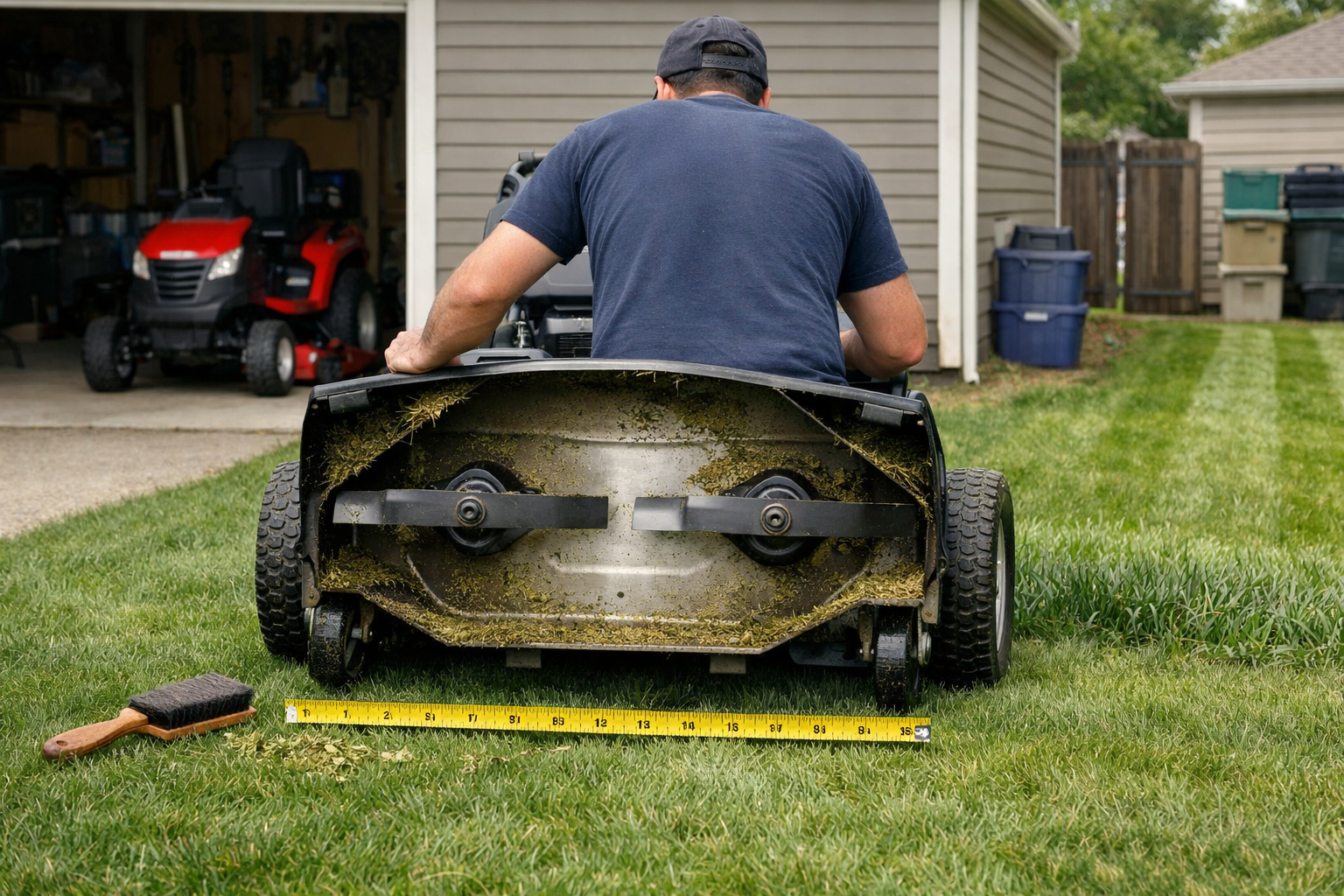
Deck maintenance matters more here than on a small push mower, since grass buildup underneath a 30-inch deck is heavier and harder to scrape clean by hand. Tip the mower (engine cutoff switch off, spark plug wire disconnected) and hose it out after every few mows during peak growing season.
Brands that consistently show up in the 30-inch category include Toro’s TimeMaster line, Craftsman’s mid-size riders, and Cub Cadet’s smaller zero-turn models. If you’re cross-shopping specific models before buying, a side-by-side comparison on a site like The Mowers Guide can save you from learning a deck-size quirk the hard way, after the return window’s closed.
Storage is the detail people forget until moving day for the mower itself. A 30 inch deck mower, especially a rider, needs a dedicated 4-foot-wide clear spot, not just “somewhere in the garage.” Measure that too, before the mower shows up on a truck.
Frequently Asked Questions
Will a 30 inch mower fit through a standard 36-inch gate?
Usually yes, but check the wheel track and handlebar width first. A 30-inch deck with wide wheels can still need 33 to 35 inches of clearance, cutting it close on a 36-inch gate frame.
Is a 30 inch mower better as a walk-behind or riding model for a half-acre lot?
A walk-behind usually makes more sense under half an acre since it’s cheaper, stores easier, and still covers the lawn in 45 to 60 minutes. Riding versions pay off once you’re consistently over three-quarters of an acre.
How long should the blade last on a 30 inch deck before sharpening?
Plan on sharpening every 20 to 25 hours of cutting time, roughly once a month for a weekly-mowed lawn. Rocky or sandy soil dulls the blade faster and may need attention every 15 hours.
Soil temperature, not the calendar, decides whether planting lawn seed in summer works. Warm-season grasses like Bermuda and zoysia germinate best between 70°F and 95°F soil temperature, which is exactly what...
Your lawn feels like a rock when you push a screwdriver into it. Water pools instead of soaking in. That’s your soil telling you it’s compacted, and it’s exactly why aerate...
3 September 2026
The Mowers Guide is reader-supported. When you buy through links on our site, we may earn an affiliate commission.





Comments are closed.