Forget the riding mower myth. You don’t need a $3,000 tractor to get those sharp light-and-dark stripes across your lawn — you need a $20-40 roller attachment and a decent mowing pattern. That’s really it.
Grass stripes aren’t paint or a different grass type. They’re just blades bent in opposite directions, catching sunlight differently depending on which way they lean. Once you get that, the whole “how to stripe a yard” question gets a lot simpler.
What Actually Makes Grass Stripe
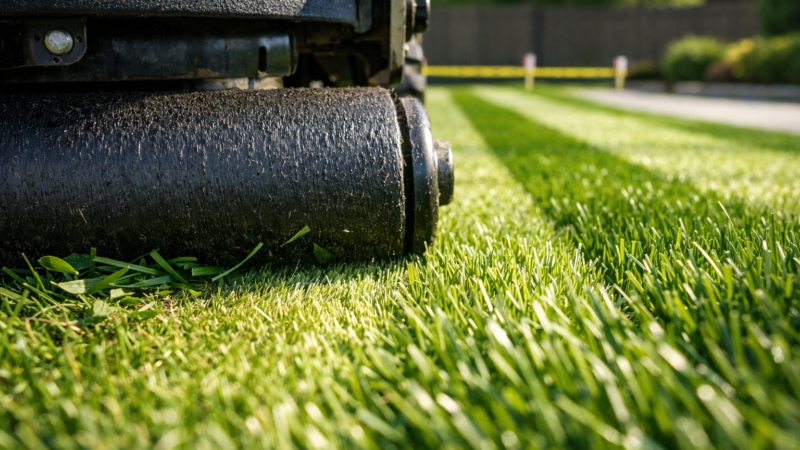
Stripes come from light reflecting off bent grass blades, not from cutting height or grass color. When you push a mower over grass and something behind the deck presses the blades down, they lean one direction. The next pass, going the opposite way, bends them the other direction. That contrast is what your eye reads as light and dark bands.
The Roller Does the Bending
A striping roller — a cylinder attached behind the mower deck — is what lays the grass flat. Rotary mowers already push some air and clippings downward, giving a faint stripe on their own, but a roller makes it obvious. You can buy a universal roller kit for most push mowers in the $25-40 range, and dedicated riding mower striping kits run higher, often $150-300 depending on width and brand.
Reel Mowers Have a Head Start
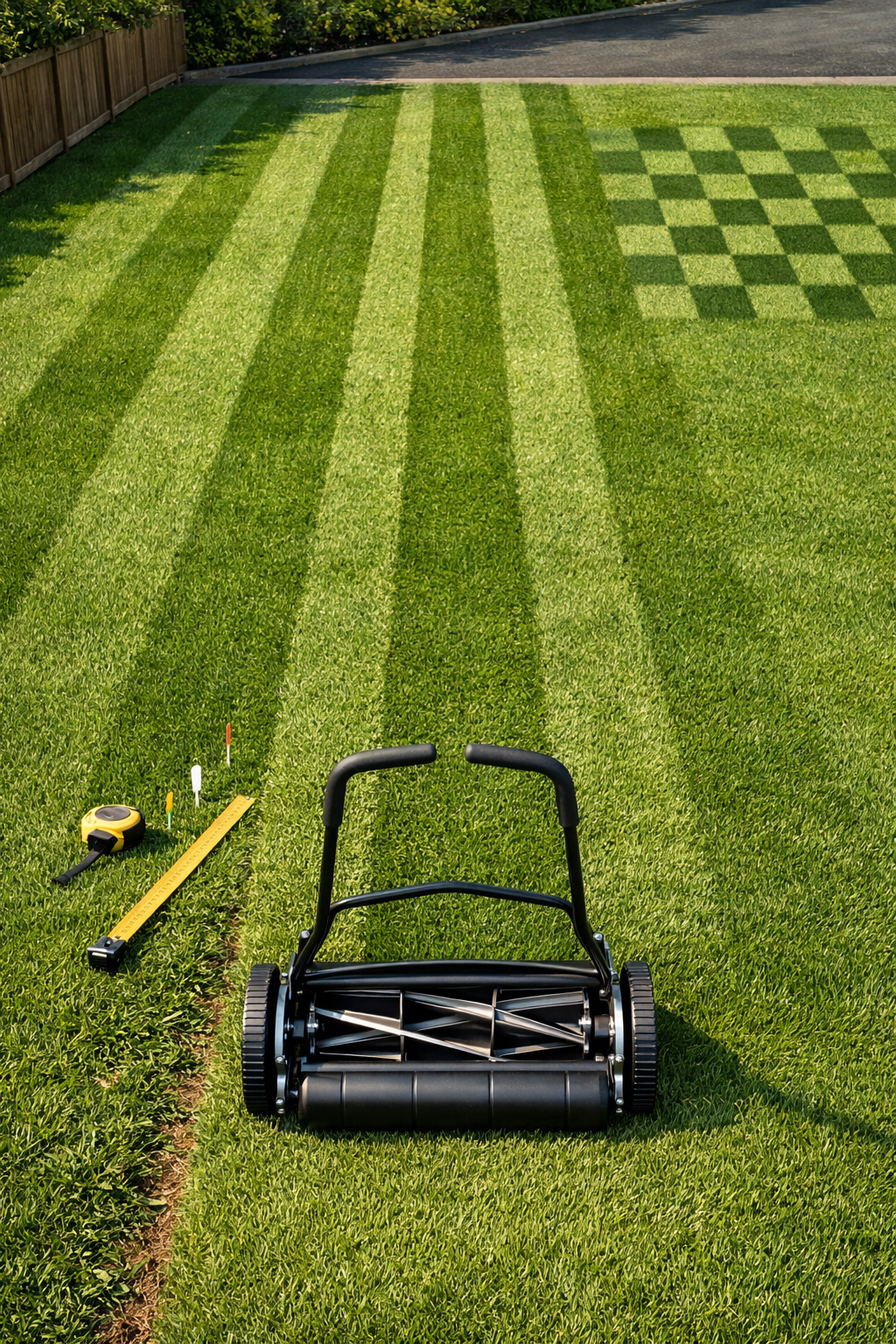
Reel mowers naturally stripe better because their rear roller bar is built in — that’s part of why golf courses and baseball infields use them. If you already own one, you’re basically halfway there without buying anything.
Choosing a Stripe Pattern That Fits Your Yard
The classic straight stripe pattern works on almost any lot, but the pattern you pick should match your yard’s shape and how much time you want to spend. A long rectangular yard looks best with straight lines running the long way. A smaller or oddly shaped lot often looks better with diagonal or checkerboard patterns because they hide uneven edges.
Diagonal stripes run at a 45-degree angle to your fence line or driveway. They tend to make a small yard look bigger because the eye follows a longer visual line. Checkerboard patterns need two passes — one set of stripes, then a second set at 90 degrees on top — which doubles your mowing time but gives that stadium-turf look people notice from the street.
Wave patterns are the hardest to pull off with a push mower since you’re steering a curve instead of a straight edge. I’d skip waves until you’ve got the basic straight-stripe technique down cold; there’s no shame in mastering one pattern before adding a second.
Pattern
Difficulty
Best Yard Shape
Extra Mowing Time
Straight lines
Easy
Long, rectangular
None
Diagonal
Easy-moderate
Small or square
None
Checkerboard
Moderate
Medium, open
+30-50%
Waves
Hard
Wide, unobstructed
+40-60%
The Overlap and Direction Technique That Actually Creates Contrast
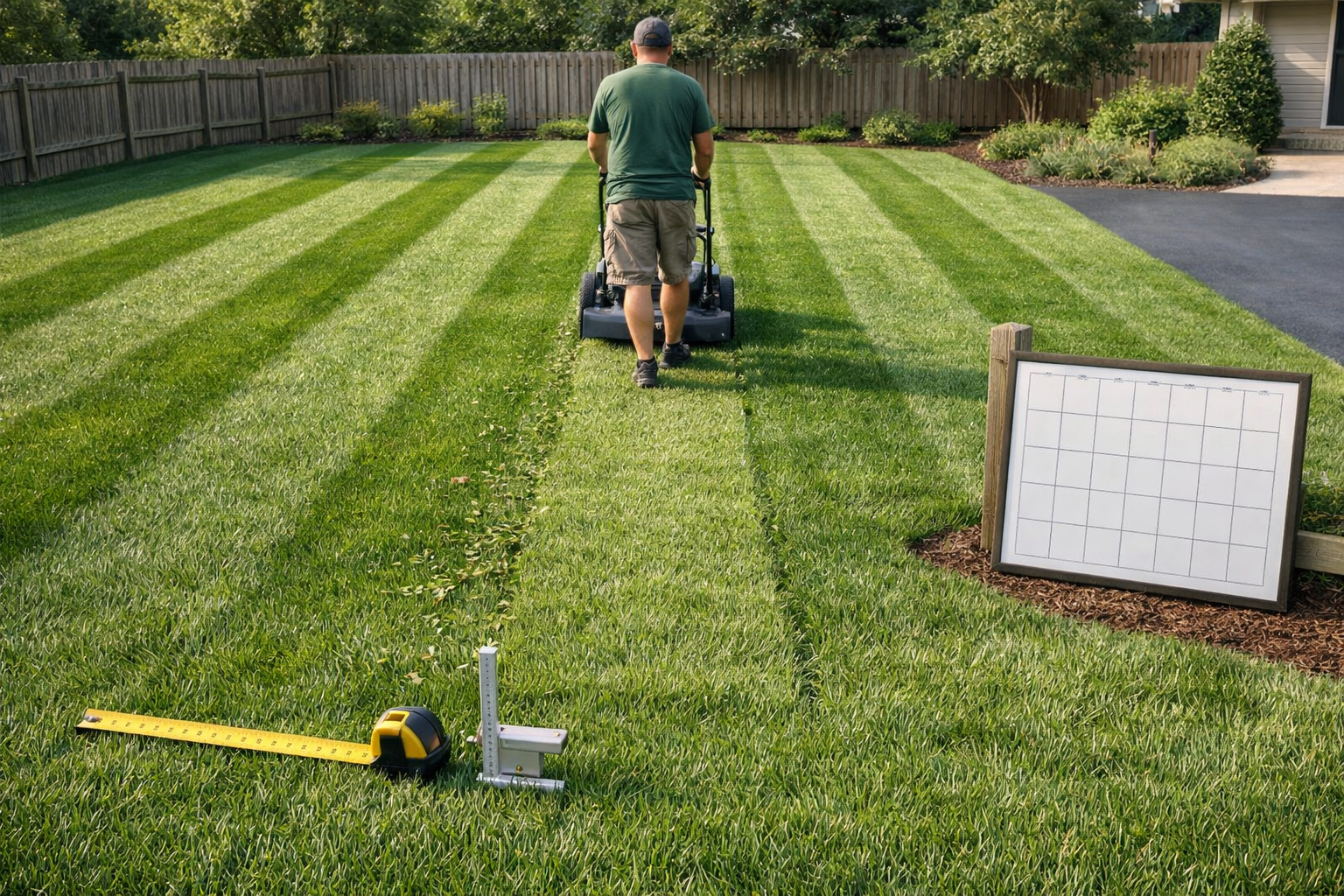
Mowing the same direction every week is the single biggest reason stripes look weak or disappear. You need to alternate direction on each cut, and you need to overlap each pass by 2-3 inches so you don’t leave thin unmowed strips between rows.
Here’s the sequence that works on most residential lawns:
Pick a straight reference line — a driveway edge, a fence, or a chalk line — and make your first pass along it.
Turn around at the end, come back overlapping the previous pass by roughly 2-3 inches.
Keep going in straight rows until the whole lawn is cut in one direction.
Mow the border and any tight corners separately with a push mower or trimmer for a clean edge.
Next mow (usually 5-7 days later), rotate 90 degrees or reverse direction entirely.
Repeat the rotation every cut so the lean pattern keeps changing.
Reapply the same reference line each time so your rows stay parallel instead of drifting.
Skipping step 5 is the mistake almost everyone makes early on. Mow north-to-south every single time and the grass blades eventually train themselves to lean one way permanently, flattening out the contrast until the yard just looks like plain green grass again.
Grass Height, Grass Type, and Mowing Frequency Matter More Than the Roller
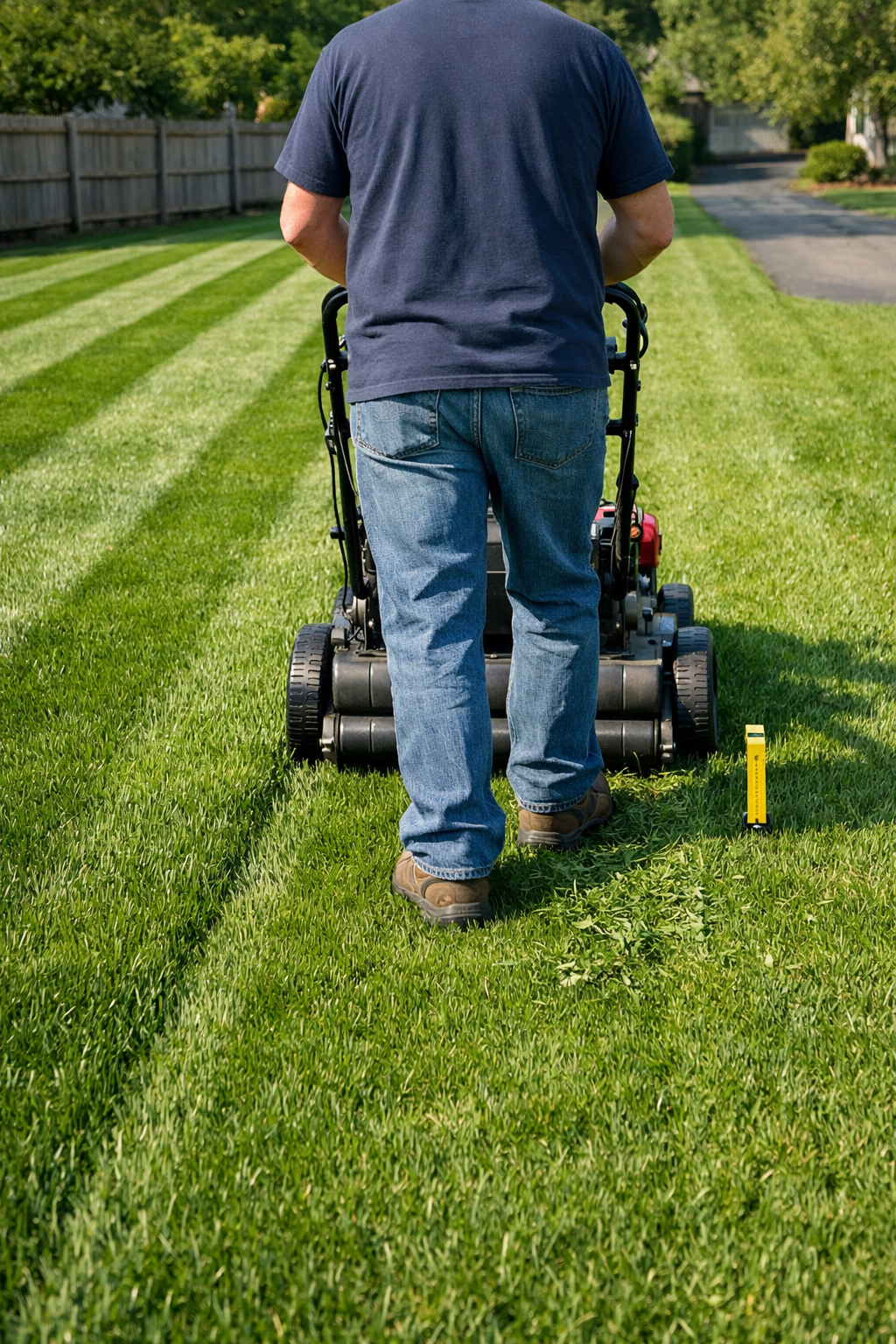
Cutting too short is the fastest way to kill a striping effort. Grass needs enough blade length to bend and hold a lean; scalp it down to an inch and there’s nothing for the roller to press over.
Ideal Height by Grass Type
Cool-season grasses like Kentucky bluegrass and tall fescue stripe well at 2.5 to 3.5 inches. Warm-season types like Bermuda and zoysia hold stripes nicely even shorter, around 1.5 to 2 inches, because their blade density is higher. St. Augustine grass, common across Florida and the Gulf Coast, stripes fine too but shouldn’t go below about 3 inches or it thins out fast.
Mowing Frequency Keeps the Lines Sharp
Stripes fade within a week or two without a fresh remow along the same rotated pattern. During peak growing season, that usually means mowing every 5-7 days. Skip two weeks and the grass grows past the “lean and hold” stage, and the lines blur into a shaggy, uneven surface.
A quarter-inch of overgrowth on one section versus another is enough for the human eye to notice an uneven stripe pattern from a distance.
Sunlight angle plays into this too. Stripes show up brightest in early morning or late afternoon, when the sun hits the lawn at a low angle and lights up the leaning blades. Midday sun from straight overhead flattens the contrast, so don’t judge your work at noon and assume it failed.
If you’re shopping for a roller attachment, checking width, weight, and mounting compatibility against your specific mower deck first saves a return trip — a mismatch is one of the more common complaints in attachment reviews on sites like themowersguide.com, and it’s an easy thing to check before buying.
Frequently Asked Questions
Do I need a riding mower to stripe my lawn?
No. A push mower with a $20-40 roller attachment stripes just as well as a riding mower with a factory kit. The technique — direction, overlap, remowing — matters more than the machine.
How often do I need to remow to keep stripes visible?
Every 5-7 days during active growing season. Cool-season lawns in spring and fall, and warm-season lawns in summer, both need that weekly rhythm or the lean pattern grows out and disappears.
Will striping damage my grass over time?
Not if you avoid scalping. Keep cool-season grass at 2.5-3.5 inches and warm-season grass at 1.5-2 inches, and rotate mowing direction each cut so no single stripe of grass gets crushed the same way repeatedly.
Strip the threads on your crankshaft, and you’re looking at a repair bill that can beat the price of a new mower. That’s the real danger with a torque wrench lawn...
The right mower for sloped lawns can make all the difference in keeping your yard looking neat and ensuring a safe mowing experience. I had a really hard time when I...
24 December 2024
The Mowers Guide is reader-supported. When you buy through links on our site, we may earn an affiliate commission.





Comments are closed.