A quality stihl yard blower runs anywhere from around $180 for a basic handheld to over $700 for a professional backpack model — and buying the wrong tier is one of the most common (and avoidable) mistakes homeowners make. That price gap reflects real differences in power, runtime, and physical design, not just brand markup. Knowing which series fits your property before you walk into a dealer saves you money and frustration.
Stihl organizes its blower lineup into three main series: BG, SH, and BR. Each targets a different workload. The handheld models handle typical suburban cleanup, while the BR backpack units are built for properties where you’re moving serious debris volume over longer distances.
Stihl’s Blower Lineup: BG, SH, and BR Series Explained
Stihl’s blower range splits into three distinct families, each designed around a specific workload rather than just a price point. Understanding what separates them keeps you from paying for features you won’t use, or buying a tool that quits on you halfway through the job.
The BG series designation stands for Blasgerät, the German term for blower, which reflects Stihl’s engineering origins and is still used across its current product line.
Handheld Models: BG and SH Series for Smaller Yards
The BG series covers gas-powered handheld blowers. Models like the BG 50 and BG 86 are single-function units. They blow, period. They weigh in around 9 lbs and are easy to grab for a 20-minute driveway or patio cleanup. The BG series is the right starting point for lots under a quarter-acre where you’re dealing with dry leaves, grass clippings, or light debris.
The SH series adds a vacuum and mulching function on top of the blower capability. The SH 56 C-E, for example, lets you switch between blowing and vacuuming by swapping the tube, which is useful if you want to bag mulched leaves rather than just move them to the curb. That added function comes with a slight weight penalty and a higher price, typically $30 to $60 more than a comparable BG model.
Backpack Models: BR Series for Larger Properties and Heavy Debris
The BR series is Stihl’s backpack lineup, and it’s a different category of tool entirely. Units like the BR 600 and BR 800 C-E mount to a padded frame you wear on your back, which transfers the weight off your arm and lets you run the blower for extended periods without fatigue. The BR 600 produces around 677 CFM, which is enough airflow to move wet leaves, pine cones, and packed debris that a handheld simply can’t budge.
These are professional-grade tools. They’re also louder, heavier (around 22 lbs for the BR 600), and more expensive. Expect to pay $450 and up. For a standard suburban lot, that’s overkill. For a half-acre or more with mature trees, it’s the right tool.
Match the Blower to Your Yard — Not the Other Way Around
The single biggest purchasing mistake is choosing a blower based on brand reputation or price rather than actual yard size and debris load. A BR 600 on a 5,000-square-foot lot is like using a pressure washer to rinse a coffee mug. It works, but you’re hauling unnecessary weight and spending $300 more than the job requires.
Here’s how the Stihl lineup maps to common property types:
Yard Size
Debris Type
Recommended Series
Approx. Price Range
Under 1/4 acre
Dry leaves, clippings
BG 50 / BG 86
$180 – $250
1/4 to 1/2 acre
Mixed dry and damp leaves
SH 56 C-E / BG 86
$230 – $320
1/2 to 1 acre
Leaves, pine cones, wet debris
BR 350 / BR 450
$350 – $480
Over 1 acre
Heavy debris, wooded areas
BR 600 / BR 800 C-E
$450 – $750+
Small to Mid-Size Suburban Lots: Where Handhelds Win
For a typical suburban lot (say, 6,000 to 10,000 square feet), a BG 86 or SH 56 C-E handles the work without making you feel like you’re gearing up for commercial landscaping. These models run a stratified charge engine design that reduces fuel consumption and emissions compared to older carbureted units. Cleanup time on a lot this size runs roughly 20 to 40 minutes per session, well within the comfort range of a handheld.
The drawback is arm fatigue on longer sessions. If you’re clearing leaves from a large patio, a long driveway, and a side yard back to back, your forearm will remind you of that by the end.
Heavily Wooded or Large Properties: When the BR Series Pays Off
Once you’re dealing with more than a half-acre, especially with mature oaks, maples, or pines dropping debris, the BR series earns its price. The backpack frame distributes weight across your shoulders and hips, and the higher CFM (cubic feet per minute) output actually moves wet, matted leaves instead of just skimming over them. The BR 450 is a practical middle-ground model: more power than any handheld, lighter than the BR 600, and priced around $420 to $450 at most Stihl dealers.
Properties with gravel paths or mulched beds also benefit from the variable throttle control on BR models, which lets you dial back airflow to avoid scattering mulch.
Gas, Battery, or Electric: Which Power Source Actually Fits Your Needs
Gas models dominate Stihl’s blower lineup by sheer variety, but the battery and corded options have closed the gap significantly over the past few years. The right power source depends on your runtime needs, tolerance for maintenance, and whether you have access to an outlet near your work area.
Gas Models and the 2-MIX Engine Advantage
Stihl’s gas blowers use what the company calls the 2-MIX engine, a two-stroke design that introduces a layer of fresh air between the fuel mixture and the exhaust port. This reduces unburned fuel in the exhaust, cutting emissions by roughly 70% compared to a conventional two-stroke. That’s not just an environmental note — it also means the engine runs cleaner internally, which extends service life when you maintain it properly.
Gas models give you unlimited runtime as long as you have fuel, which makes them the practical choice for large properties or back-to-back jobs. The trade-off is maintenance: fuel mixing, air filter cleaning, spark plug checks, and carburetor adjustments are all part of ownership.
AK and AP Battery Series: Real Power Without the Fumes
Stihl’s battery blowers run on either the AK system (18V, for lighter tools) or the AP system (36V, for higher-demand tools like the BGA 57 and BGA 100). The BGA 57 with an AP 300 S battery produces around 36 minutes of runtime at mid-throttle — enough for most suburban lots in a single charge. These models are genuinely quiet, which matters if you live in a neighborhood with noise ordinances or just prefer not to start a loud engine at 7 a.m.
The honest drawback: battery cost. A spare AP 300 S battery runs around $130 to $160 on its own. If your yard takes more than one charge to finish, budget for a second battery or plan around charging time.
Corded Electric: The Overlooked Option for Small Spaces
Stihl’s corded electric blower, the BGE 71, is the least talked-about option in the lineup — and for small, enclosed spaces like a garage, workshop, or small patio, it’s worth considering. No fuel, no battery management, no warm-up. Plug it in and go. At around $100 to $130, it’s also the most affordable entry point into Stihl’s blower range.
The cord limits your range to about 100 feet from an outlet (using a standard 100-foot extension cord), so it’s not a yard tool for anything larger than a small urban lot. But for someone who just needs to clear a back patio or blow out a garage floor a few times a season, it does the job without any ongoing fuel or battery costs.
CFM vs. MPH: The Spec That Actually Moves Leaves
CFM moves debris; MPH just gets it started. Most buyers focus on miles per hour because it sounds like power, but CFM (cubic feet per minute), the volume of air a blower pushes, is what actually lifts and relocates wet, matted leaves. MPH tells you how fast the air exits the nozzle. CFM tells you how much air is behind it.
CFM measures the volume of airflow a blower produces, while MPH measures the velocity of that airflow at the nozzle tip. Both specs together describe real-world clearing power, but CFM is the stronger predictor of performance on heavy debris.
Think of it this way: a garden hose with a tight nozzle produces high velocity but low volume. Open the nozzle wide and you move more water. Blowers work the same way. The Stihl BG 86 produces around 459 CFM at 179 MPH, a solid handheld balance. The BR 600 hits 677 CFM, which is why it clears wet oak leaves where the BG 86 just pushes them sideways. When comparing models, look at CFM first, especially if your yard has heavy or damp debris.
Starting Systems, Fuel Mix, and Basic Maintenance
Stihl gas blowers are reliable starters when you follow the right procedure, but they do require more attention than battery or electric models. Here’s the standard startup and maintenance sequence for gas-powered units:
Prime the carburetor by pressing the primer bulb 5 to 6 times until fuel is visible.
Set the choke to the closed (cold start) position before the first pull.
Pull the starter cord until the engine fires briefly, then open the choke halfway.
Pull again until the engine runs, then let it warm up for 30 seconds at low throttle.
Check the air filter every 10 hours of use; replace it when it looks gray or clogged.
Easy2Start and Primer Bulb: What to Expect at First Pull
Stihl’s Easy2Start (ErgoStart) system uses a spring-assist mechanism in the recoil starter that reduces pull resistance by roughly half compared to a standard cord. Models like the BR 450 C-E include it. You still need to prime and choke correctly. Easy2Start reduces effort, not steps. Cold-weather starts take one or two extra pulls regardless of the system.
Fuel-to-Oil Ratio and Why Getting It Wrong Kills Engines
All Stihl gas blowers run on a 50:1 fuel-to-oil ratio — 2.6 oz of two-stroke oil per 1 gallon of gasoline. Stihl sells its own MotoMix pre-blended fuel, which eliminates mixing error. Running too lean (too little oil) starves the engine of lubrication and causes piston scoring within a single season. Use fresh fuel; gasoline older than 30 days starts degrading and gums up the carburetor.
Noise Levels, Emissions, and Ergonomic Design
Gas backpack blowers are loud. The BR 600 operates at around 75 dB at the operator’s ear — hearing protection is worth wearing on sessions longer than 20 minutes. Handheld models like the BG 86 run closer to 68 dB, which is more tolerable but still noticeable to neighbors.
Battery models like the BGA 57 drop noise to around 56 dB, which clears most residential noise ordinances and makes early-morning use practical. Stihl’s 2-MIX engine gas models also meet CARB (California Air Resources Board) emissions standards, so they’re legal to use in all 50 states.
On the ergonomic side, BR series backpack frames include padded shoulder straps and a hip belt. The weight sits on your hips, not your shoulders, which makes a real difference over a 45-minute session. Handheld models use a rear-grip design that keeps your wrist in a neutral position, reducing strain on shorter jobs.
Where to Buy a Stihl Blower and What the Warranty Covers
Stihl does not sell through Home Depot, Lowe’s, or Amazon. That’s one of the most common surprises for first-time buyers. Every Stihl blower is sold exclusively through authorized Stihl dealers — independent equipment shops, some True Value locations, and select hardware stores that carry the brand by agreement. You can find your nearest dealer at stihl.com using the dealer locator.
This matters for more than just the purchase. Dealer staff can demonstrate the blower, help you match the model to your yard size, and handle warranty claims on-site. That hands-on support is part of what you’re paying for with Stihl pricing.
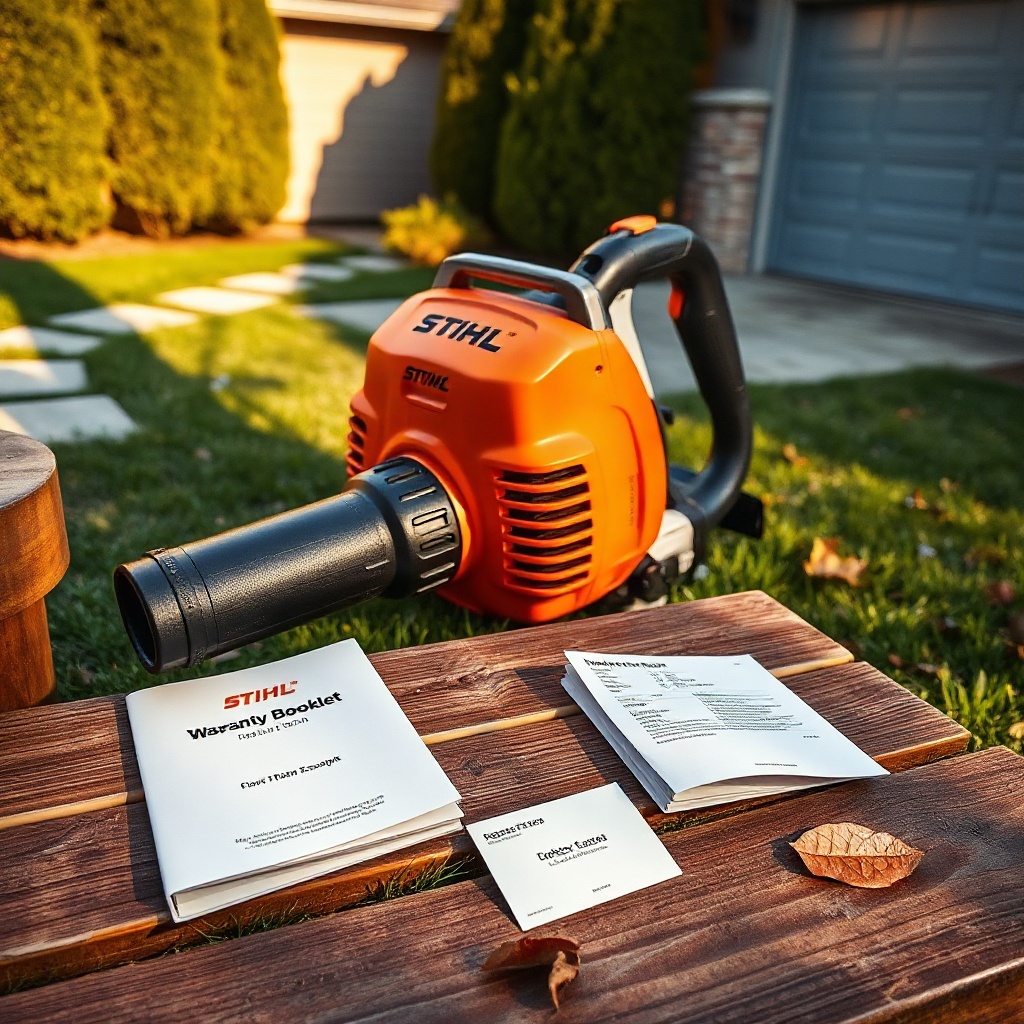
On warranty: Stihl covers its consumer-grade gas blowers for 2 years from the date of purchase against manufacturing defects. Battery-powered models like the BGA 57 carry a 3-year warranty on the tool and a separate 3-year warranty on the battery when registered within 30 days of purchase. Professional-grade BR series units used commercially drop to a 1-year warranty. Wear items (air filters, spark plugs, recoil cords) are not covered under any tier. Keep your receipt; dealers require proof of purchase to process a claim.
Frequently Asked Questions
Can I use regular 87-octane gasoline in a Stihl gas blower?
Yes, 87-octane (minimum) unleaded gasoline works fine. Stihl recommends fuel with no more than 10% ethanol (E10). Avoid E15 or E85, since higher ethanol content attracts moisture and degrades carburetor components faster than standard gasoline does.
How long does a Stihl AP battery last before it needs replacing?
Stihl’s AP series batteries are rated for roughly 500 full charge cycles before capacity noticeably drops. For most homeowners doing one charge per week during a 20-week season, that works out to well over four years of regular use before performance declines.
Is a Stihl backpack blower worth it for a half-acre lot?
It depends on debris type. A half-acre of open grass clears fine with a BG 86 handheld. If that half-acre has mature deciduous trees dropping heavy leaf loads, the BR 430 or BR 450 pays off in time saved. The CFM difference is significant enough to cut clearing time by a third or more on heavy debris.
Do Stihl blowers require dealer service, or can I do my own maintenance?
Basic maintenance (air filter swaps, spark plug replacement, fuel system cleaning) is owner-serviceable with standard tools. Carburetor rebuilds and ignition module replacements are better handled by a dealer, especially if the blower is still under warranty, since unauthorized disassembly can void coverage.
Most small engine repair shops report that ethanol-related fuel damage is one of the top reasons mowers won’t start after sitting all winter. That single fact tells you more about picking...
Pop the hood, grab a drain pan, and stop guessing which oil goes in your Honda mower. Changing oil Honda lawn mower engines require isn’t complicated, but it isn’t identical across...
25 August 2026
The Mowers Guide is reader-supported. When you buy through links on our site, we may earn an affiliate commission.





Comments are closed.