Bagging or mowing tall, wet grass? Put on high lift blades. Want to leave fine clippings on a dry, regularly mowed lawn as free fertilizer? Choose mulching blades.
That is the short answer to high lift vs mulching blades. The right blade depends on your discharge mode, your grass conditions and your engine power. The sections below show where each blade wins, where it fails, and how to check that a new blade fits your deck.
Side-by-Side: How the Two Blades Compare
Which blade wins depends on what you ask of it. The table below compares them on the same criteria, so you can find your own situation fast.
Criteria
High lift blade
Mulching blade
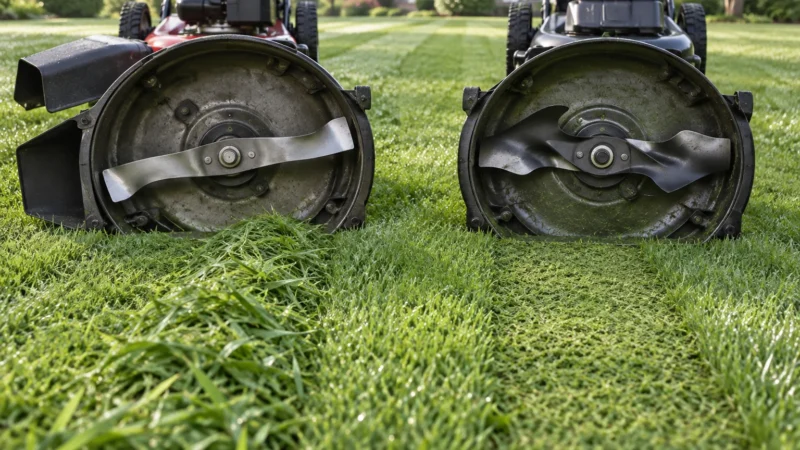
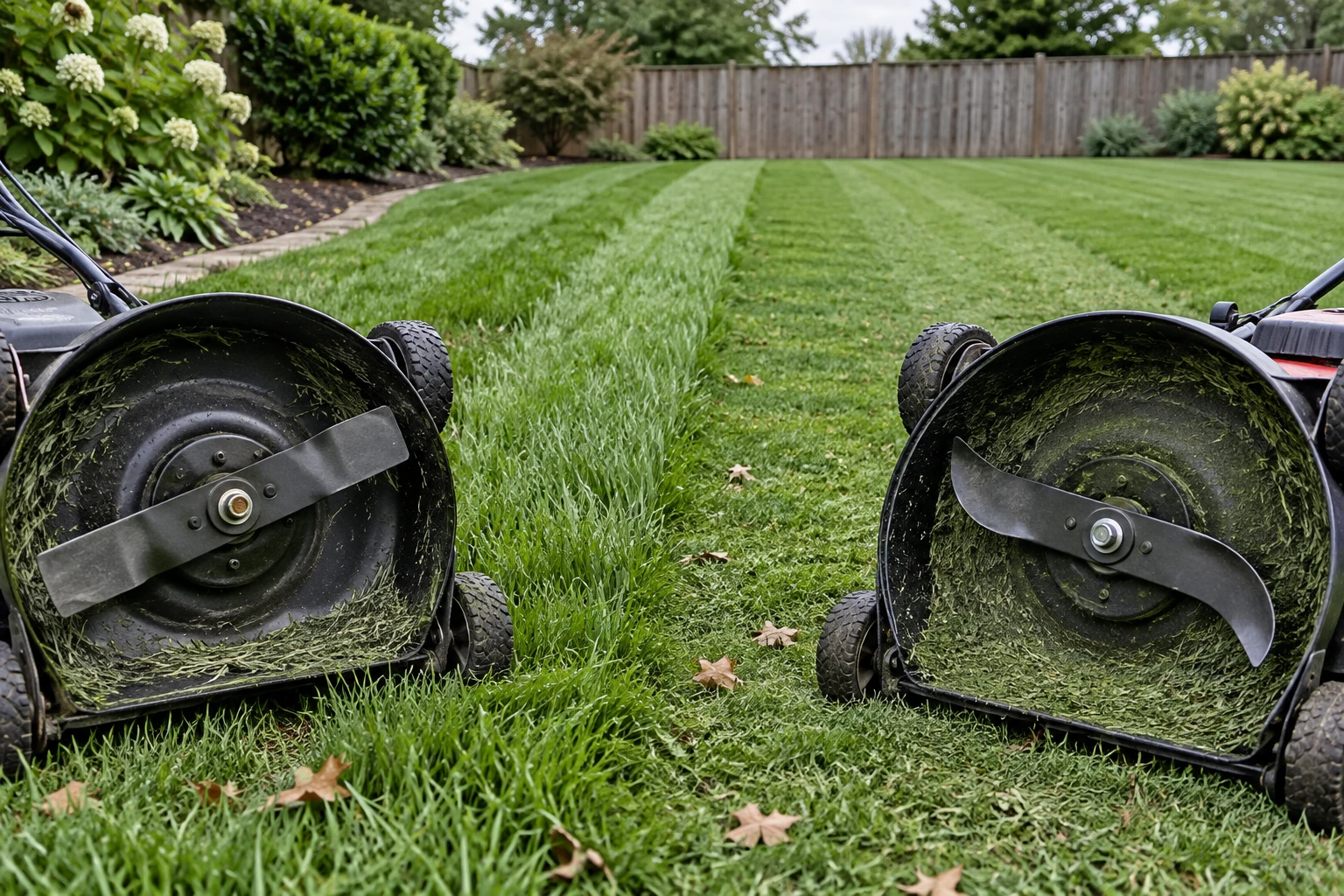
Blade shape
Mostly straight edge, steep angled fins at the back
Curved surface with extra cutting edges
Airflow under the deck
Strong upward draft
Circular, recirculating, weaker outward flow
Best for bagging
Yes, the strongest choice
Works, but fills the bag with fine, heavy clippings
Best for side discharge
Yes
Acceptable in dry grass
Best for mulching
Only with a mulch plug, and clippings stay coarser
Yes, its main job
Tall or thick grass
Handles it well
Can clog and stall
Wet grass
Better, clumps less
Clogs easily
Engine power needed
Higher
Medium, and more if the deck is overloaded
Nutrients returned to lawn
Little
Roughly 2 lbs of nitrogen per 1,000 sq ft a year
Leaf cleanup
Moves leaves out
Shreds leaves finely
Price is a tie. Both types usually cost about the same for a standard push or riding mower blade, typically $10 to $30 each for common aftermarket versions. Expect more for some OEM (original maker) parts.
How High Lift Blades Work
Do you want clippings gone from the deck, not chopped up under it? That is the job of a high lift blade.
The design: steep fins and strong airflow
A high lift blade has a steep angle on its trailing edge, often called the wing or fin. As the blade spins, that fin acts like a fan. It creates a strong upward draft inside the deck.
The draft pulls grass blades upright before the blade cuts them. That gives an even cut, even on grass that is leaning over. Then the same airflow pushes the clippings toward the chute or into the bag.
Why you may hear “2-in-1”
Many makers call high lift blades 2-in-1 blades because they cut and then either discharge or bag. Some also call them standard blades. A low-lift blade is a third option. It has a flatter fin, makes less airflow and uses less fuel. It suits dry, flat lawns where you just want to cut and leave the clippings.
The cost: more power and more dust
That strong draft takes engine power. A small, tired engine can bog down in thick grass with high lift blades. The draft can also blow dust and dry soil out of the deck on sandy or bare ground, which matters if your lawn has thin patches.
How Mulching Blades Work
A mulching blade keeps clippings under the deck longer. It cuts them again and again until they are tiny.
The design: curves and extra edges
The blade has a curved surface and longer cutting edges. Some designs use two blades stacked in a cross shape. The curve sends clippings in a loop under the deck, so each piece gets cut several times before it drops to the lawn.
Makers often call these 3-in-1 blades because they can mulch, discharge or bag. They are not as good at discharging as a high lift blade, but they are the most flexible option on one mower.
Gator blades are a type of mulching blade
Are mulching blades the same as gator blades? Not exactly, but they are close cousins. A gator blade (sold as Gator, Fusion or similar) has a serrated, saw-like trailing edge. It mulches and also discharges fairly well, so it is a popular all-season option. If you want one blade that does a bit of everything, a gator style is a good pick. Just check that it fits your deck.
What you get: free fertilizer
Fine clippings break down fast and feed the soil. Over a season, that returns roughly 2 lbs of nitrogen per 1,000 square feet. You also skip the work of emptying a bag. Your back will thank you!
Wet, Tall or Thick Grass: Where the Difference Shows
This is where most people feel the gap. Mulching blades like dry grass that you cut often. They do not like heavy, damp growth.
Wet grass
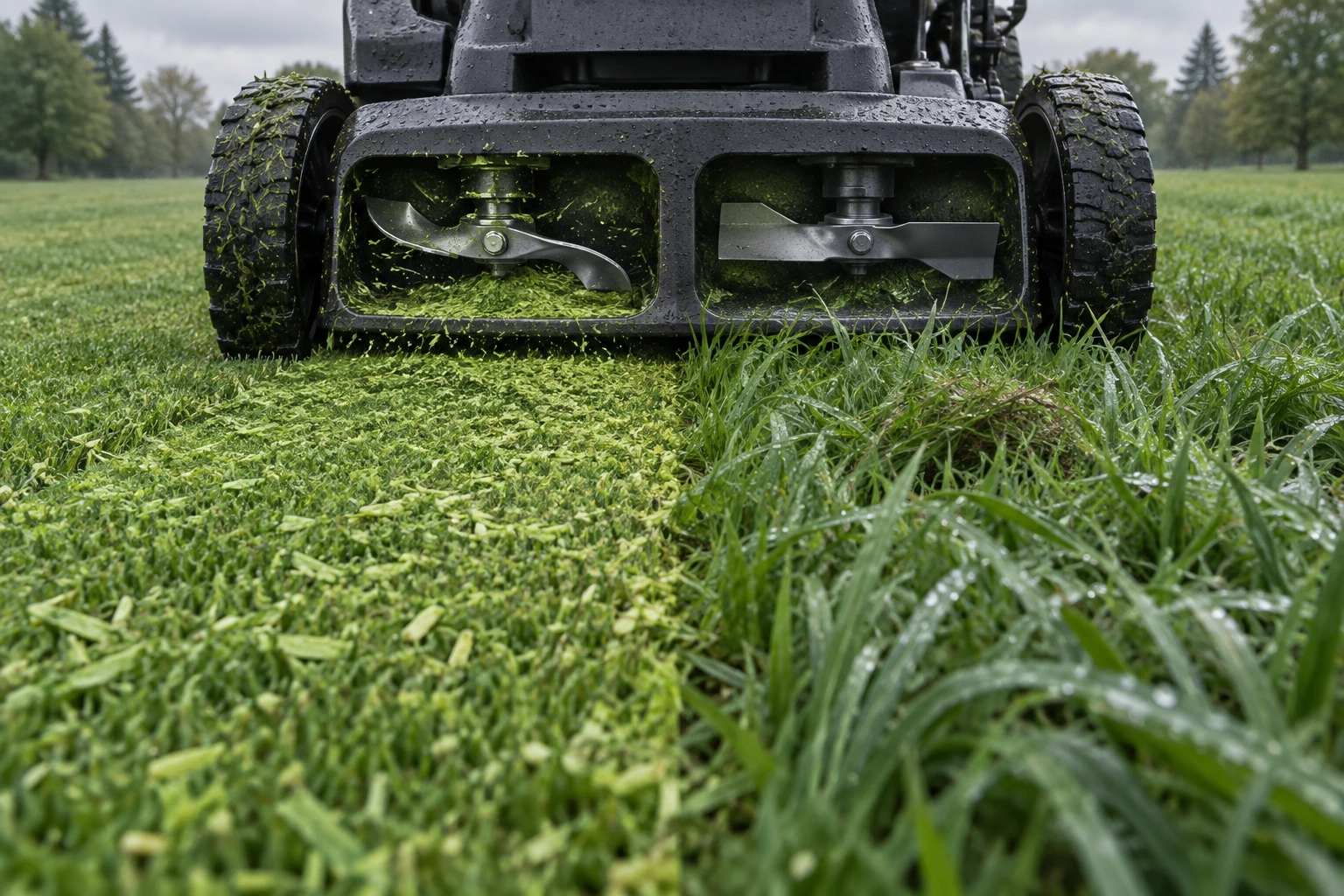
Wet clippings stick together. A mulching blade holds them under the deck, so they pile up and form clumps. You then find ropes of grass on the lawn and a deck caked with green paste.
A high lift blade throws clippings out fast, so less of it sticks. If you cannot wait for the lawn to dry, use high lift. Even then, mowing wet grass is a last resort, because the cut is never as clean.
Tall grass after a missed week
Say you skipped two weeks in June and the lawn is now 7 inches tall. A mulching blade must chop all that grass several times. Your engine labors, and the deck clogs.
With high lift blades, the airflow moves the bulk through the deck. Even better, raise the deck, mow once, then lower it and mow again a few days later. Follow the one-third rule, which says never cut off more than a third of the grass height in one pass. That helps either blade.
Engine power and deck clogging
More cutting edges and more recirculation mean more load. A mulching blade in heavy grass can slow a small engine until it stalls. A high lift blade also asks for power, but it wastes less on recutting.
If the engine bogs down, slow your ground speed first. Then raise the deck. Changing blades is the last fix, not the first.
Bagging, Side Discharge or Mulching: Match the Blade to the Exit
Your discharge mode matters as much as your grass. Think about where the clippings go.
Bagging
High lift is the better choice for bagging. The airflow carries clippings into the bag and packs it well. With a mulching blade, the clippings come out finer and denser. The bag fills with heavy material, and the chute can clog.
A mulching blade can still bag. If you mostly mulch but bag a few times a year, such as for a dormant-season cleanup, it will do the job. Bag more often than that and high lift pays off.
Side discharge
Side discharge throws clippings out in a stream. High lift blades do this best, especially in lush grass that you mow only now and then. Medium-lift blades are a middle path. They make less intense airflow, so grass does not get thrown so high that it sticks to the deck.
Mulching
Can you still mulch with high lift blades? Yes, if your deck takes a mulch plug or kit. A plug closes the discharge opening so clippings stay under the deck. But a high lift blade does not recut as much, so clippings come out coarser and can sit on the lawn in clumps. Mulching blades are the better match for this job.
A mulching blade is built to cut clippings into small pieces and return them to the lawn, while a high lift blade is built to move air so clippings go into a bag or out the chute.
Mulch kits and plugs also matter on a mulching blade. For best results, use the blade with a plug or a deck designed for mulching. A mulching blade on a side-discharge deck with the chute open will not mulch well.
Leaves, Striping and Cut Quality
Fall is when the blade question changes. Leaves are lighter than wet grass but they pile up fast.
Leaf cleanup
Mulching blades chop leaves into small bits. On a light or moderate leaf cover, you can mow right over them and leave the pieces to feed the lawn. For a heavy cover, mulch in two passes, or bag the shredded leaves.
If you want the leaves gone, a high lift blade moves them toward the bag or chute. Heavy leaves mixed with wet grass are tricky. Mow the wet grass first, then change to a mulching blade for the leaves, or the other way around, depending on which is the bigger job.
Striping
Are high lift blades good for striping? Mostly, yes. Stripes come from bending grass blades one way with a roller or the deck’s rear flap. High lift airflow stands the grass up before the cut, so the lawn looks tidy and the bending shows. Mulching blades can stripe too, but the lawn can look a bit less crisp, since fine clippings fall back on top.
Cut quality is close to a tie on a sharp blade in dry grass. The difference shows in damp or tall grass, where high lift gives the cleaner finish. A very high-end option, the contour blade, makes the most manicured cut, but it needs dry grass and strict use of the one-third rule.
When to Choose Each Blade, and When Not To
Here is the verdict. Pick by what you do most often, not by what sounds better.
Choose mulching blades if
You mow weekly and the grass is usually dry. You want to leave clippings on the lawn. Your mower has a mulch plug or a deck made for mulching. Your engine is not tiny. You also like shredded leaves staying in the yard.
Do not use mulching blades in tall, wet or dense grass. Do not use them if you bag every time, or if your engine bogs down easily.
Choose high lift blades if
You bag most of the time, or you side discharge. You often mow after rain, or you skip a week now and then. Your grass is thick and lush. You also want the best airflow for stripes.
Do not use high lift blades if you want fine clippings as fertilizer and your deck has no mulch plug. They also struggle on a weak engine in thick grass, and they can blow dust on dry, sandy ground.
Neither fits?
If your lawn is dry, flat and easy, a low-lift standard blade uses less fuel and does fine. If you do both jobs, such as bagging in spring and mulching in summer, keep two sets and swap them. A gator style blade is a good single-blade compromise.
One more point: sharpness often matters more than blade type. A dull blade tears grass, leaves brown tips, and makes any blade seem bad. Sharpen or replace blades about once a season, or sooner if you hit rocks or roots. A bent or unbalanced blade causes shaking, so replace it. Level the deck too, since an uneven deck cuts badly with any blade.
Will It Fit? Check Your Deck Before You Buy
A blade that is the right type but the wrong size can damage your deck or be unsafe. Do not buy by type alone.
Six things to confirm
Start with the OEM part number, which is usually stamped on the old blade or listed in your owner’s manual. Then measure the length end to end. Check the center hole size and the bolt pattern. Note your deck size and how many blades it needs. Last, choose the type you want and check it against the manual. Even blades that look the same can differ in thickness or tip speed rating.
Aftermarket or OEM
Aftermarket makers such as Oregon and Stens sell cross-reference blades that match OEM specs. These can cost less. Use the part number to find the right one. Some warranties care about parts, so read yours first.
Safety when you swap
Disconnect the spark plug wire before you touch the blade. On a battery mower, take out the battery or the key. Wear thick gloves. Mark which side faces the ground, because many blades go on upside down by mistake. Then tighten the bolt to the torque listed in your manual.
If you want a refresher on sharpening and balancing, The Mowers Guide has maintenance guides that walk through it step by step.
Frequently Asked Questions
Can you still mulch with high lift blades?
Yes, if your deck accepts a mulch plug or kit. The plug keeps clippings under the deck. Results are coarser than with a mulching blade, so mow often and keep the grass short.
When should I use high lift blades?
Use them when you bag, side discharge, or mow tall, thick or wet grass. Their strong airflow lifts grass before the cut and moves clippings out without clumping.
Are high lift blades worth it?
Yes, if you bag or often mow in damp or overgrown conditions. If you mow dry grass weekly and mulch, a mulching blade is the better value.
Do mulching blades work for bagging?
They can, but not as well. Clippings come out fine and heavy, so the bag fills fast and the chute can clog. For regular bagging, choose high lift.
Will mulching blades fit my mower deck?
Only if length, center hole, bolt pattern and deck size match. Use your OEM part number and owner’s manual to confirm before you order.
Happy mowing, and may your clippings always land where you want them!






Comments are closed.