Skip the phosphorus unless a soil test tells you otherwise. That’s the short answer for most lawns in 2026, and it surprises a lot of homeowners who grew up thinking N-P-K numbers should all be high. Phosphorus isn’t a “more is better” nutrient — most established turf already has plenty sitting in the soil, and dumping more on doesn’t make grass greener. It targets roots, not color, and too much of it ends up in a storm drain instead of your yard.
What Phosphorus Actually Does for Your Lawn
Phosphorus (the “P” in N-P-K) fuels root development, seed germination, and early energy transfer inside the plant. It’s not a color nutrient — that’s nitrogen’s job. If your grass looks pale or yellowish, more phosphorus won’t fix it.
Grass needs phosphorus most heavily in its first few weeks of life, when roots are forming and the plant is building its underground network. Once a lawn is established, usually after the first full growing season, its phosphorus needs drop way off. Most soils, especially older residential lawns that have been fertilized over the years, already carry a surplus.
Phosphorus availability also depends on soil pH. In soils below 6.0 or above 7.5, phosphorus starts binding to other minerals and becomes harder for roots to absorb, even if plenty is technically present in the dirt. That’s one reason a soil test matters more than just checking the bag label.
Do You Actually Need a Soil Test First?
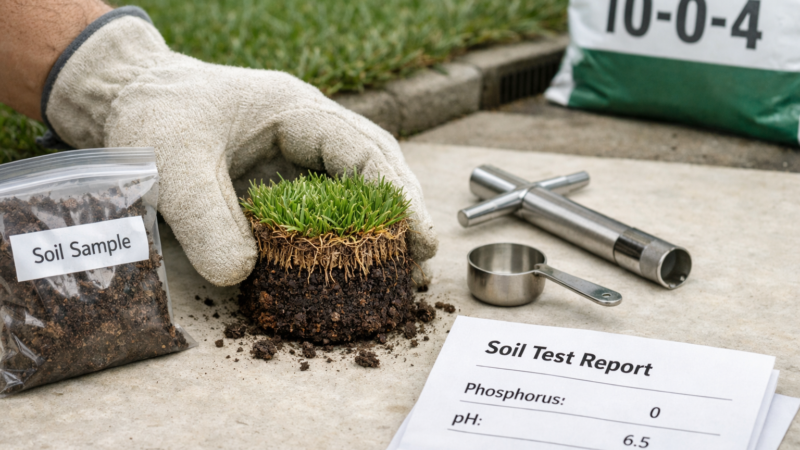
Yes. A soil test is the only reliable way to know if your lawn is phosphorus-deficient, and skipping it is the most common mistake homeowners make. Guessing wastes money and, in a lot of states, breaks local fertilizer law.
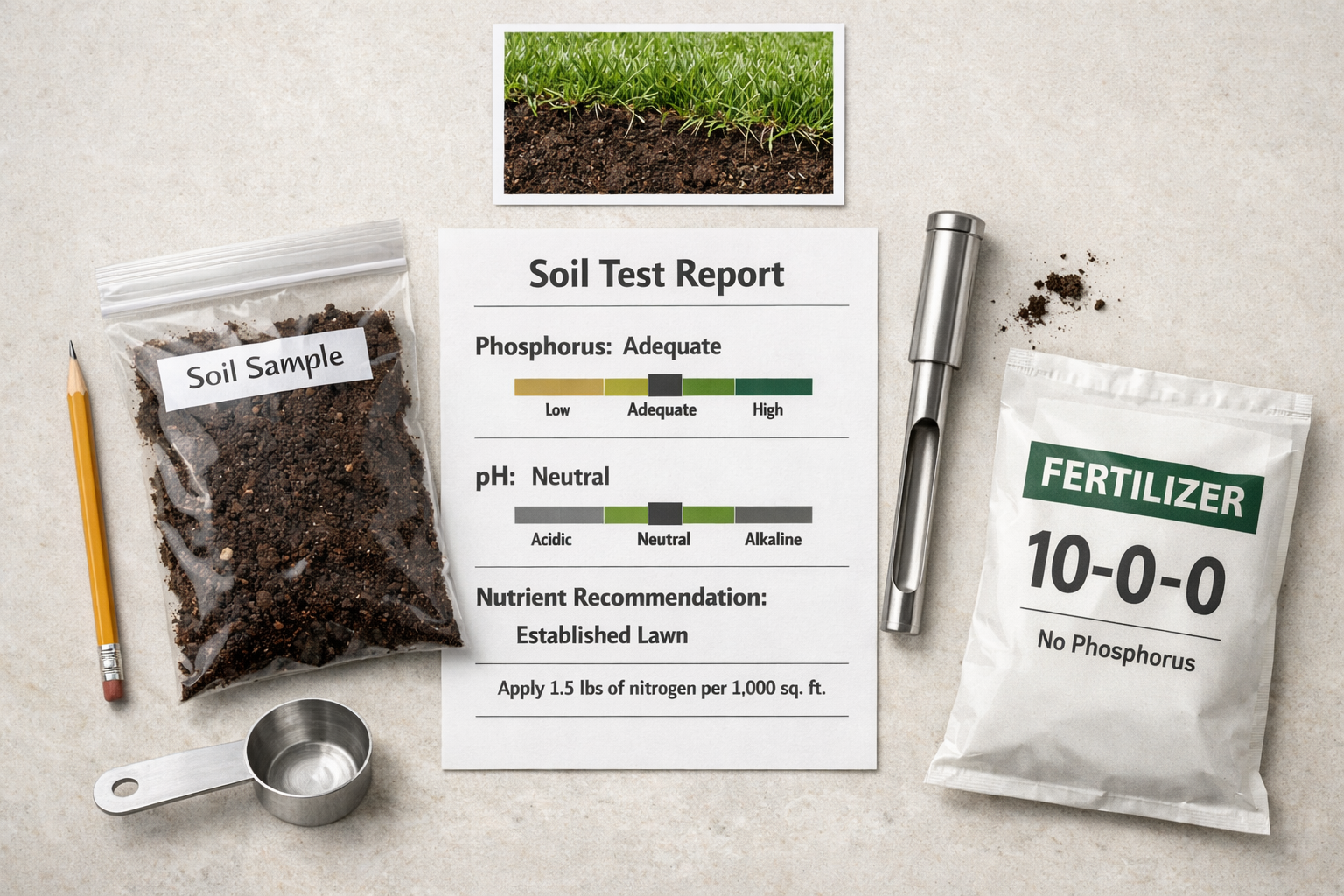
Soil tests run cheap. Many state university extension offices (Penn State, Ohio State, University of Minnesota, and others) offer mail-in kits for somewhere around $10 to $20, with results back in one to two weeks. That report tells you phosphorus levels in parts per million, your pH, and usually a specific fertilizer recommendation in pounds per 1,000 square feet.
Reading the Results
A test that comes back “optimal” or “high” for phosphorus means don’t add any. “Low” or “deficient” is the only scenario where a phosphorus application makes sense, and even then, you apply a specific amount, not a routine dose every spring.
When to Skip It
If your lawn is a mature, well-established stand of turf that’s been fertilized responsibly for years, the odds of a true phosphorus deficiency are low. Save the test money for nitrogen and potassium tracking instead, or spend it on a spreader calibration check through a resource like themowersguide.com’s spreader guides, which matters more for even nitrogen coverage than most people realize.
Starter Fertilizer vs. Maintenance Feed: Know the Difference
Starter fertilizer and regular lawn food are not interchangeable, and mixing them up is a routine mistake. Starter blends carry a higher phosphorus number specifically for new seed or sod; maintenance fertilizers, used on established lawns, usually carry little to none.
Reading the Bag
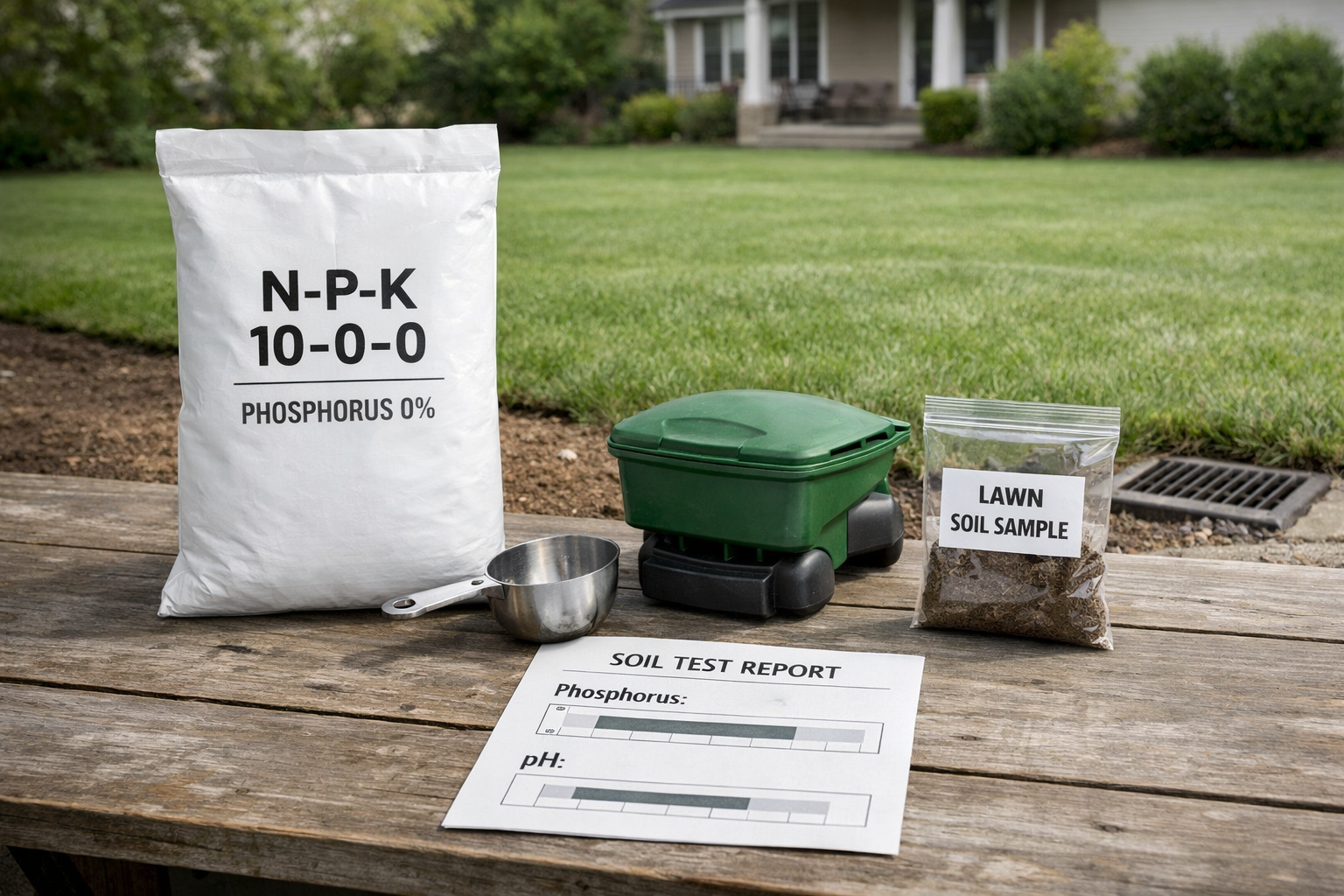
An N-P-K ratio like 24-25-4 is a classic starter blend — high nitrogen and phosphorus to push root and shoot growth in new grass. A maintenance bag might read 29-0-4 or 32-0-10, with that middle zero telling you exactly what it’s missing on purpose.
The Timing Rule
Starter fertilizer belongs down at seeding or sodding time, worked into the top few inches of soil, or spread right before laying sod. Once that lawn is mowed three or four times, switch to a phosphorus-free maintenance product for every feeding after that.
Fertilizer Type
Typical N-P-K
When to Use
Phosphorus Level
Starter fertilizer
24-25-4
New seed or sod only
High
Maintenance fertilizer
29-0-4
Established lawn, spring/fall
None to trace
Weed-and-feed
30-0-3
Established lawn with weeds
None to trace
Soil-test-directed blend
Varies
Only after confirmed deficiency
Low to moderate
Why So Many States Restrict Phosphorus Fertilizer
Phosphorus runoff feeds algae blooms in lakes and streams, and that’s the real reason behind the wave of state-level bans. Once phosphorus washes into water, it doesn’t just disappear — it fuels algae growth that chokes oxygen out of the water and kills fish.
Check your state’s Department of Agriculture or Environmental Protection website for the exact rule before buying anything.
Confirm whether your state requires a soil test result to legally apply phosphorus fertilizer to an established lawn.
Look for exceptions for new lawns, since most bans allow phosphorus at seeding or sodding time.
Ask your local supplier if their “lawn starter” bags meet your state’s legal phosphorus cap.
Keep any soil test paperwork for at least a season in case a municipality asks for proof.
Avoid applying near storm drains, curbs, or waterways regardless of what your state allows.
States including Minnesota, New York, New Jersey, and Wisconsin have restricted phosphorus lawn fertilizer sales for over a decade now, generally allowing it only for new lawns or when a soil test shows a deficiency.
Phosphorus (P) is essential for root development and energy transfer in plants, but excess phosphorus runoff is a leading contributor to algal blooms in freshwater lakes and rivers. — U.S. Environmental Protection Agency
Spotting a Real Phosphorus Deficiency
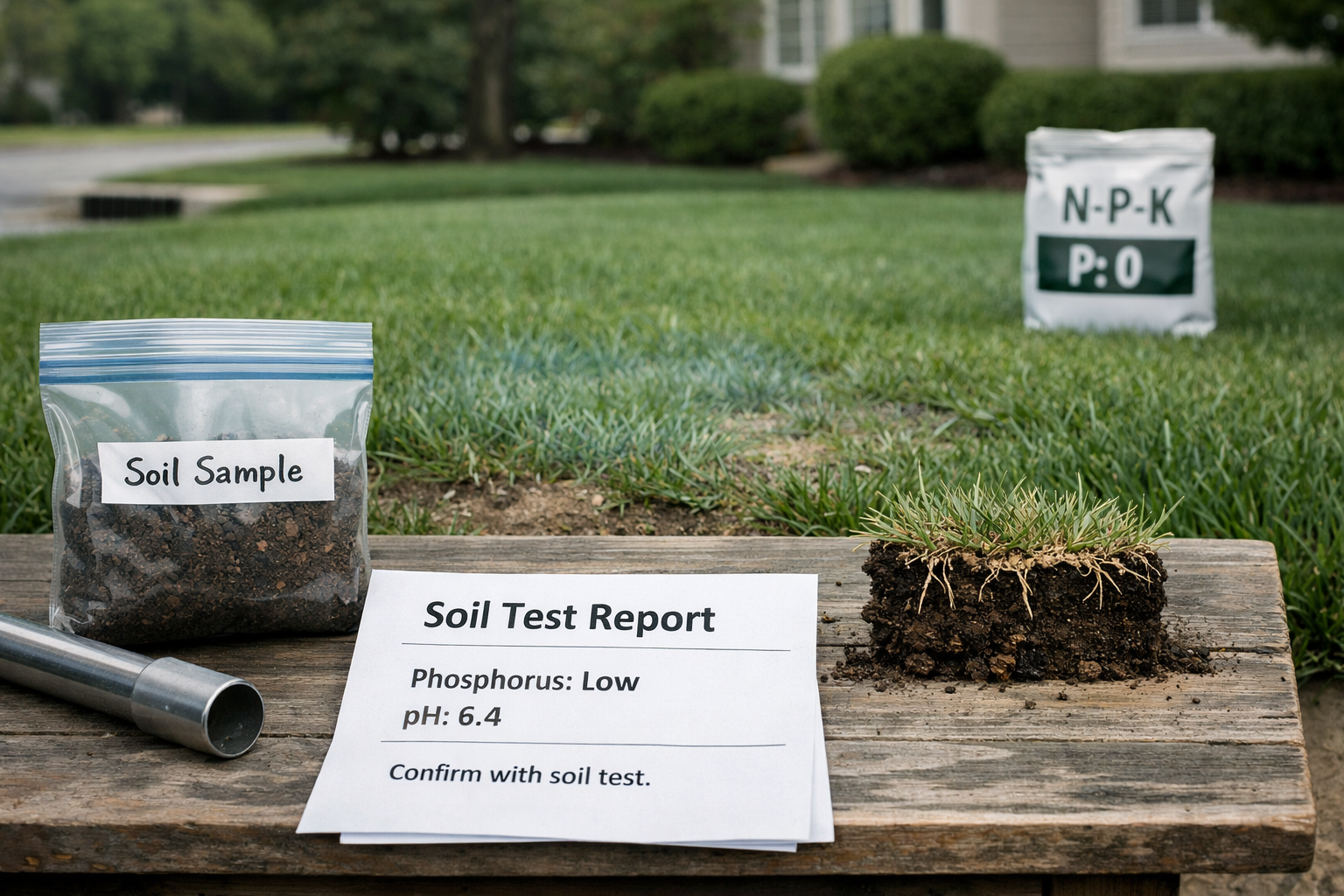
A genuine phosphorus deficiency shows up as stunted, thin root systems, slow establishment in new seed, and sometimes a dull purplish or reddish tint along leaf edges. It’s rare in older lawns and easy to confuse with other stress signs.
Don’t assume purple-tinged grass means phosphorus trouble automatically — cold spring temperatures cause the same look in some turf varieties, especially perennial ryegrass and certain fescues. That reddish tint fades once soil warms above roughly 55°F. If the color sticks around into summer along with weak, shallow roots you can pull up with a light tug, that’s a better sign of an actual shortage.
If a soil test confirms low phosphorus, organic options work well and release slower than synthetic ones. Bone meal (roughly 3-15-0) and rock phosphate (0-3-0 with a much slower release) both add phosphorus without the fast runoff risk synthetic blends carry. They’re a solid pick for anyone wanting a gentler correction rather than a quick spike.
Frequently Asked Questions
Can I use starter fertilizer on my whole established lawn instead of buying two products?
Don’t. Established turf doesn’t need the extra phosphorus, and in states with fertilizer restrictions, applying starter blends outside of new seeding is often illegal without a documented deficiency.
How long after seeding should I wait before switching off phosphorus fertilizer?
Switch to a phosphorus-free maintenance feed after your new lawn has been mowed three or four times, usually 6 to 8 weeks after germination depending on grass type and weather.
Will low-phosphorus fertilizer hurt my lawn’s color or thickness?
No. Color comes from nitrogen, and thickness comes from mowing height, watering, and nitrogen timing. Phosphorus only matters for root and seedling development, so a phosphorus-free lawn food won’t dull established grass.
A zero turn rider mower can cut mowing time on a half-acre lot by 40% or more compared to a standard riding mower, and that time savings compounds every single week...
Your string trimmer choice comes down to one question: how much yard do you have, and how much do you want to spend feeding it? A lawn string trimmer isn’t just...
16 August 2026
The Mowers Guide is reader-supported. When you buy through links on our site, we may earn an affiliate commission.





Comments are closed.