Kentucky bluegrass covers roughly 40 to 60 million acres of lawn, park, and sports turf across the northern United States, making it the most widely planted cool-season lawn grass in the country. If your lawn is thinning in July and greening back up in September, that’s not a disease. That’s Poa pratensis doing exactly what it’s built to do, and understanding that cycle changes how you mow, water, and feed it the rest of the year.
A kentucky bluegrass lawn rewards attention to detail more than it rewards effort. Get the mowing height and fall fertilizer timing right, and the grass will fill in bare patches on its own through its underground stems. Get those wrong, and no amount of watering will fix the thin, patchy look homeowners usually blame on bugs or disease.
What Makes Kentucky Bluegrass Different From Other Lawn Grasses
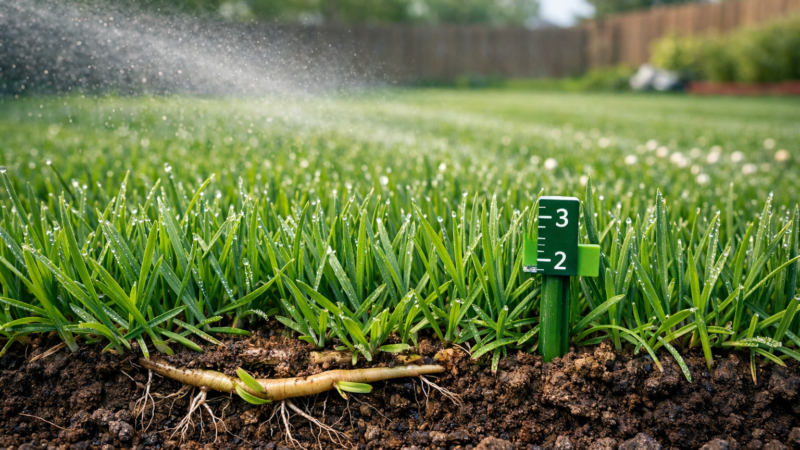
Kentucky bluegrass spreads by rhizomes, underground horizontal stems that push out new shoots several inches from the parent plant. That’s the trait that separates it from bunch-type grasses like tall fescue, and it’s why a bluegrass lawn can heal itself after damage instead of needing constant reseeding.
Rhizome Spread and Self-Repair
Rhizomes grow laterally under the soil surface, typically in the top 1 to 3 inches, and send up new tillers as they extend. A single bluegrass plant can colonize a patch of soil a foot or more across over a couple of growing seasons. This is why bluegrass lawns look uniform and dense once established, even though they started from thousands of individual seeds.
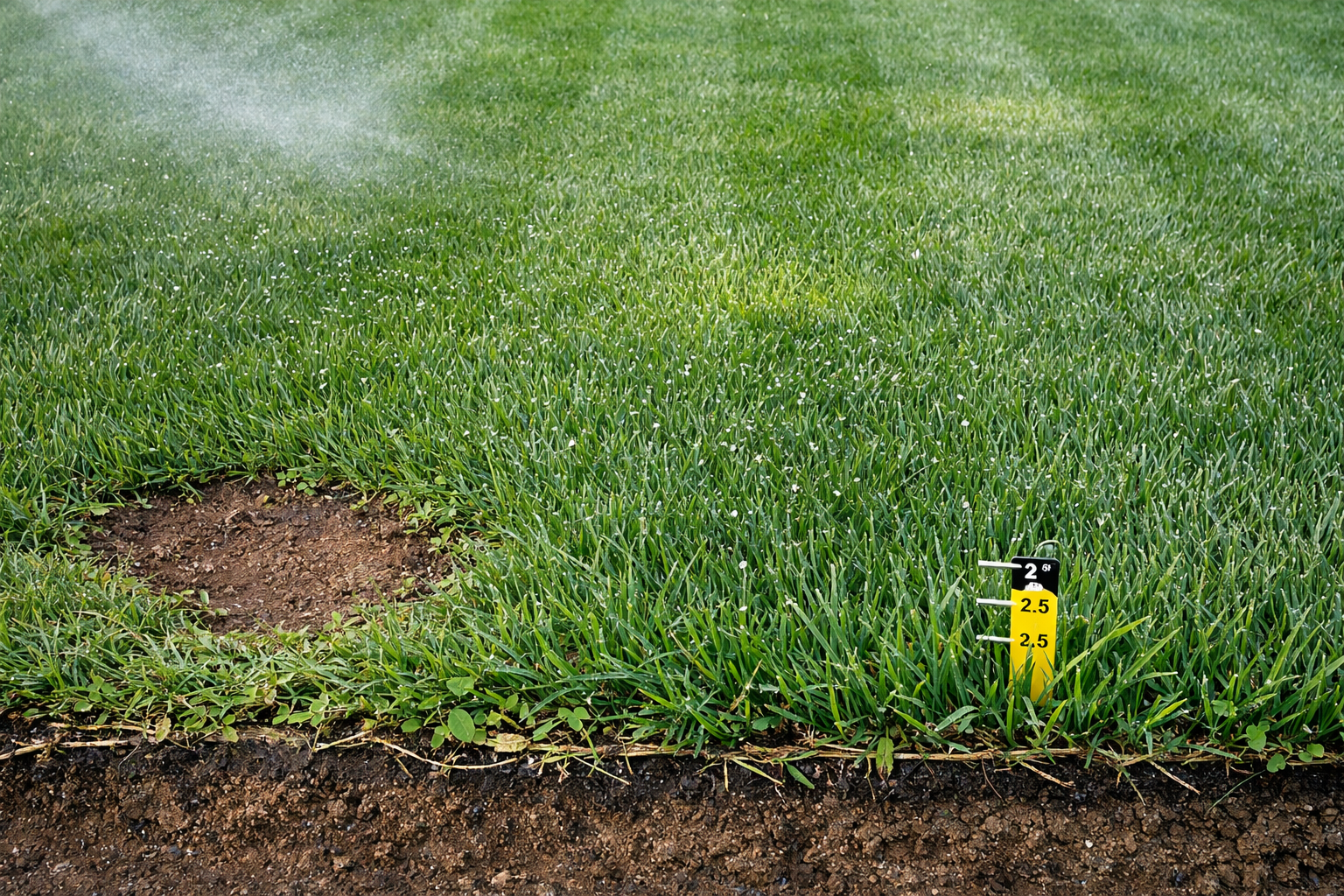
This spreading habit also means damage recovers differently than with bunch grasses. A dog spot or a scalped patch in a fescue lawn stays bare until you reseed it. In bluegrass, the surrounding rhizomes creep in and close the gap, usually within one full growing season if the plant is healthy going into it.
Leaf Structure and the “Boat-Shaped” Tip
Bluegrass blades taper to a distinct boat-shaped tip, and the blade folds in half lengthwise in the bud before it unfurls. That’s a useful identifying trait if you’re trying to figure out what’s actually growing in your yard versus what the seed bag said. Color runs medium to dark green, sometimes with a slight blue cast, which is where the “blue” in the name comes from — though it’s subtle, not the vivid blue people expect.
The texture is fine to medium, and the density that comes from heavy rhizome production is what gives bluegrass lawns their carpet-like feel underfoot. That density is a double-edged trait, though. It also means bluegrass builds thatch faster than many other species, a point that matters later when we get into dethatching schedules.
Cool-Season Zones: Where Kentucky Bluegrass Actually Thrives
Kentucky bluegrass performs best in USDA cool-season turf zones — roughly the northern two-thirds of the U.S., from New England across the upper Midwest into the Pacific Northwest, plus the transition zone in states like Kentucky, Missouri, and Virginia. It struggles badly in the Deep South and low desert Southwest, where summer heat pushes it into extended dormancy or outright decline.
This is one of the most common misconceptions homeowners run into. People plant bluegrass because it’s the classic “green lawn” grass they picture, without checking whether their climate supports it. In Atlanta or Phoenix, bluegrass will fight a losing battle against heat stress every single summer, no matter how well you water and feed it.
The plant’s optimal growth happens when soil temperatures sit between 60°F and 75°F, which lines up with spring and fall in most of its range. Above that, especially once air temperatures push past 85°F to 90°F for extended stretches, the plant shifts into a survival mode that looks a lot like dying but usually isn’t.
Kentucky bluegrass is classified as a cool-season turfgrass species that goes dormant, turning brown, during extended heat and drought stress, then typically recovers with cooler temperatures and moisture — a normal physiological response, not a sign of death.
In the transition zone, bluegrass is often blended with tall fescue precisely because neither grass handles that region’s swings in temperature and rainfall perfectly on its own. If you’re gardening in Missouri or Virginia, a straight bluegrass stand is a riskier bet than a blend, and most local suppliers will tell you the same thing if you ask before you buy seed.
Homeowners in the upper Midwest and Northeast have the easiest run with pure bluegrass. Places like Minnesota, Wisconsin, and much of Pennsylvania sit right in the sweet spot where summers rarely get hot enough for long enough to cause serious dormancy problems.
Mowing Height and Blade Sharpness: The Setting Most Guides Skip
Mowing height is the single biggest lever you control on a kentucky bluegrass lawn, and most homeowners have it set wrong. Cut bluegrass at 2.5 to 3.5 inches during the growing season, and never remove more than one-third of the blade length in a single pass.
Why Cutting Height Controls Rhizome Health
Grass blades feed the plant through photosynthesis, and the energy produced gets stored partly in those rhizomes we talked about earlier. Cut the lawn too short — down at 1.5 inches, which is common when people run a mower on a low deck setting to “cut down on mowing frequency” — and you’re starving the rhizome system of the sugars it needs to keep spreading and repairing damage.
This is the scalping problem, and it’s the direct cause of a lot of browning that gets misdiagnosed as disease or drought stress. A scalped lawn has less leaf surface to cool the soil and shade out weed seeds, so it dries out faster and lets crabgrass and other opportunists move in. Raise the deck to 3 inches and keep it there through summer, and you’ll see noticeably less browning even without changing your watering schedule.
Blade Sharpness Changes the Outcome More Than People Expect
A dull mower blade tears grass tissue instead of slicing it cleanly. Torn tips turn brown or gray within a day or two, and from a few feet away that ragged, discolored look is nearly impossible to distinguish from an early-stage fungal disease. Homeowners spend money on fungicide treating a problem that a $15 blade sharpening would have solved.
Sharpen or replace mower blades roughly every 20 to 25 hours of use, more often if you’re mowing sandy or rocky soil that dulls the edge faster. If you’re shopping for a new blade or trying to match the right cutting height range for your specific mower deck, a resource like themowersguide.com’s mower reviews and specs pages can save you the trial-and-error of checking manufacturer height adjustment ranges by hand.
Setting the Deck for Bluegrass Specifically
Bluegrass tolerates a slightly lower cut than tall fescue but a slightly higher cut than the warm-season grasses homeowners might be used to from prior lawns. Set your deck to the 2.5-inch mark in early spring and late fall when growth is slower, and bump it up to 3 to 3.5 inches through the heat of June, July, and August. That extra half-inch of leaf tissue during summer stress is often the difference between a lawn that holds color and one that goes dormant early.
Watering Strategy: Deep and Infrequent Beats Daily Sprinkles
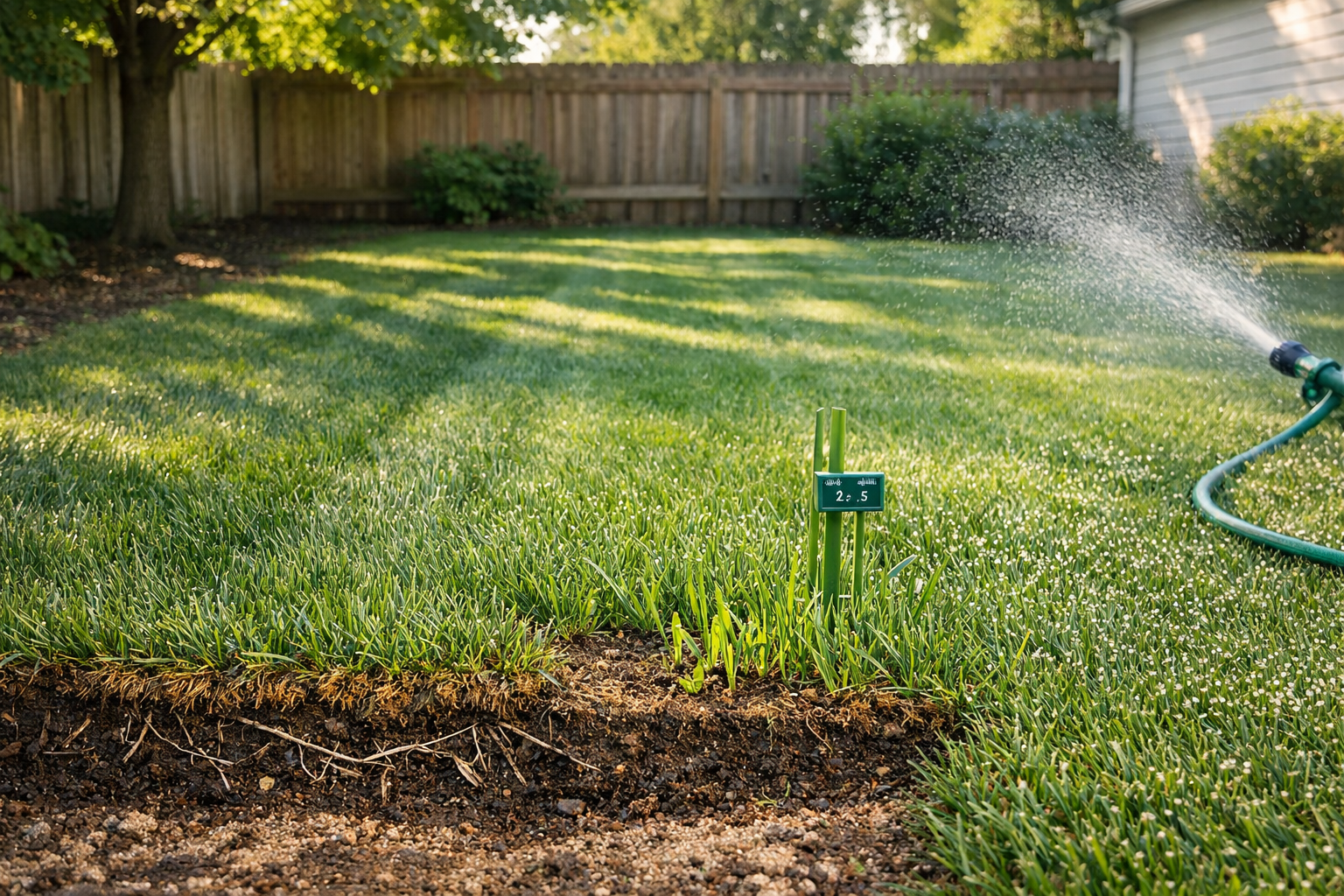
Kentucky bluegrass needs about 1 to 1.5 inches of water per week, delivered in one or two deep sessions rather than daily light watering. Shallow, frequent watering is the single most common irrigation mistake homeowners make, and it directly undermines the rhizome system that makes bluegrass worth planting in the first place.
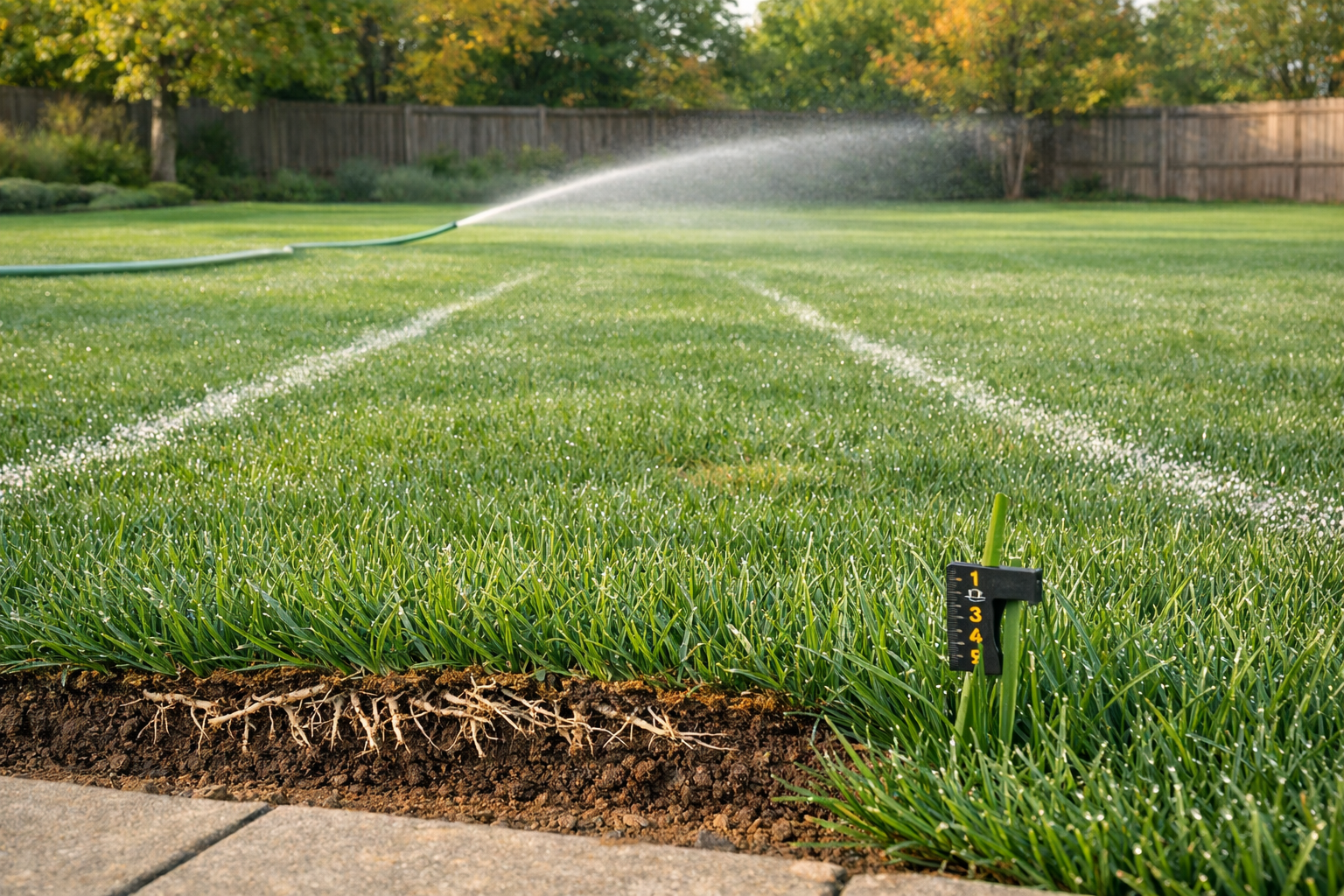
Roots follow water. If you water for 10 minutes every day, roots stay shallow because that’s where the moisture is, and shallow roots make the plant far more vulnerable to the first hot, dry stretch of summer. Watering deeply once or twice a week pushes moisture down 6 to 8 inches, which trains roots to grow deeper and gives the plant a bigger reserve to draw from between waterings.
A simple way to check coverage is the tuna-can test: place an empty tuna can on the lawn while your sprinkler runs, and time how long it takes to fill to about 1.5 inches. That tells you exactly how long to run your system for a proper deep watering, and it’s a five-minute test that removes the guesswork most people are operating on.
Drought Tolerance Is Real, But Limited
Bluegrass has a genuine drought survival mechanism — it can go dormant, stop growing, and turn straw-brown for several weeks, then green back up once rain returns. This isn’t the same as drought tolerance in the sense that, say, buffalo grass has it; bluegrass is surviving, not thriving, during that stretch. Expect dormancy to kick in after roughly three to four weeks without meaningful rainfall or irrigation in most climates.
Extended dormancy past six to eight weeks starts to risk actual die-off rather than just dormancy, particularly in newer lawns with rhizome systems that haven’t fully established. If you know a drought stretch is coming, one deep watering every two to three weeks during dormancy — enough to keep the crown and rhizomes alive without breaking dormancy — is a reasonable middle ground between full irrigation and total neglect.
Signs You’re Overwatering, Not Underwatering
A soggy, spongy feel underfoot, a sulfur or rotten smell near the soil surface, and mushroom growth after mowing are all overwatering signs that get mistaken for drought stress because the grass often looks similarly unhappy either way. If your lawn looks stressed but you’re already watering daily, the fix is almost always to water less often, not more.
Fertilization Schedule: Fall Feeding Matters More Than Spring
Fall fertilization is the single most important feeding of the year for a kentucky bluegrass lawn, more important than the spring application most homeowners prioritize instead. The plant is building rhizome and root mass in September and October to survive winter and fuel spring green-up, and nitrogen applied then goes straight into that structural growth rather than just pushing leaf blades.
The Four-Application Framework
A standard cool-season fertilization program spreads four applications across the year, weighted toward fall rather than spring. Skipping the early fall application in favor of a heavier spring feeding is one of the more common mistakes homeowners make, because it produces a lawn that looks great in May and struggles by August.
Early fall (early to mid-September): Apply nitrogen at roughly 0.75 to 1 lb per 1,000 square feet to fuel rhizome and root development going into cooler weather.
Late fall (late October to November, after the last mow): A second, slightly heavier feeding, sometimes called a “winterizer,” at around 1 lb per 1,000 square feet, builds carbohydrate reserves for winter survival and early spring green-up.
Spring (April to early May): A lighter application, around 0.5 to 0.75 lb per 1,000 square feet, supports green-up without forcing excess top growth that requires more frequent mowing.
Late spring/early summer (optional, late May to early June): A light feeding only if the lawn shows pale color; skip this application in hot, dry climates where it can push growth right before summer stress hits.
Reading the Nitrogen Numbers on the Bag
Fertilizer bags list three numbers — nitrogen, phosphorus, and potassium, in that order — and for bluegrass lawns, nitrogen is doing most of the work. A bag labeled 24-0-6 or similar high-nitrogen, low-phosphorus blend suits most established lawns, since phosphorus is only critical for new seedings and many states now restrict its use on established turf anyway.
Don’t guess at rates from the bag’s general instructions alone — calculate based on your actual lawn square footage. A 5,000-square-foot lawn getting a 1 lb per 1,000 square feet application needs 5 lbs of actual nitrogen, and the bag’s coverage numbers already account for that if you read the fine print on percentage of nitrogen by weight.
Application Timing
Nitrogen Rate (lb N / 1,000 sq ft)
Primary Purpose
Early fall (Sept)
0.75 – 1.0
Rhizome and root growth
Late fall (Oct–Nov)
1.0
Winter reserves, spring green-up
Spring (April–May)
0.5 – 0.75
Color, moderate top growth
Late spring (optional)
0.5 or skip
Touch-up only if pale
Seeding and Germination: Why Patience Beats a Quick Fix
Kentucky bluegrass seed takes 14 to 28 days to germinate, noticeably slower than perennial rye’s 5 to 10 days or fescue’s 7 to 14 days. That patience requirement is the top reason homeowners think their bluegrass seeding failed when it’s actually still working.
Timing the Seeding Window
Late summer to early fall — roughly mid-August through mid-September in most cool-season zones — is the best seeding window, because soil temperatures are warm enough for germination while cooler air temperatures reduce competition from crabgrass and other summer weeds. Spring seeding works too, but the germinating seedlings then have to compete with summer heat almost immediately, which is a tougher survival test.
Keep the top half-inch of soil consistently moist during that 2-to-4-week germination window, which usually means light watering once or even twice a day rather than the deep, infrequent watering you’d use on established turf. Once seedlings reach mowing height, roughly 3 to 3.5 inches, you can transition to the deep-and-infrequent watering schedule and the standard mowing height range.
Why Blends Outperform Pure Bluegrass in Many Yards
Pure Kentucky bluegrass seed is slower to establish and less tolerant of shade and traffic than blends that mix in perennial ryegrass or fine fescue. Many bagged “premium” lawn seed products sold at hardware stores are actually bluegrass-fescue-rye blends for exactly this reason — the rye germinates fast and holds the soil while the slower bluegrass fills in underneath over the following months.
For a shaded lawn or one with moderate foot traffic, a blend with 20 to 30 percent fine fescue mixed into the bluegrass gives you better shade performance without giving up the rhizome-driven self-repair that makes straight bluegrass appealing in sunny areas. Check the seed tag’s percentage breakdown by weight before buying, since “Kentucky bluegrass” printed large on the front doesn’t guarantee it’s the dominant species in the bag.
Shade Tolerance, Disease Risk, and Thatch Management
Kentucky bluegrass needs at least 4 to 6 hours of direct sun daily to maintain density, and it thins out predictably in heavier shade regardless of how well you water or fertilize it. This is a light problem, not a nutrient problem, and no amount of fertilizer fixes a lawn that isn’t getting enough sun.
Common Diseases and What Actually Causes Them
Necrotic ring spot and summer patch are two of the more serious fungal diseases affecting bluegrass, both producing ring-shaped or irregular patches of dead turf that get worse under heat and drought stress — conditions made worse by the same overwatering and scalping mistakes covered earlier. Leaf spot (sometimes called melting-out) shows up as small purplish-brown spots on blades during cool, wet spring weather and can cause thinning if left unmanaged.
The overlap between disease symptoms and simple mowing or watering stress is exactly why so many homeowners misdiagnose their lawns. Before assuming disease, check your mowing height, blade sharpness, and watering depth first, since fixing those resolves a surprising share of “disease” complaints without a single fungicide application.
Dethatching and Aeration Timing
Thatch is the layer of dead organic matter between the soil and living grass, and bluegrass builds it faster than most cool-season species because of its aggressive rhizome production. A thatch layer over half an inch thick starts blocking water and nutrients from reaching the root zone, which shows up as a spongy feel underfoot and gradual thinning even with good care otherwise.
Dethatch and aerate in early fall, ideally right before that first fall fertilizer application, so the newly opened soil and exposed rhizomes take full advantage of the feeding. Core aeration, which pulls small plugs of soil out rather than just slicing the surface, works better on compacted clay soils common in many suburban lawns than spike aeration does. Doing this once a year on most residential lawns is enough; heavily used lawns with kids or dogs might benefit from aerating twice, in spring and fall.
Frequently Asked Questions
How do I tell dormancy from a dead lawn?
Tug on a few brown blades — if the plant resists and the crown at the soil line looks white or pale green rather than brown and mushy, it’s dormant, not dead. Dormant bluegrass typically greens back up within 1 to 2 weeks of consistent rain or irrigation.
Can Kentucky bluegrass survive in partial shade under trees?
It struggles below 4 hours of direct sun and thins out over a season or two even with good care. A fine fescue blend handles shaded areas under trees better while still matching the color and texture of the sunnier bluegrass sections nearby.
Why is my new bluegrass seeding still bare after two weeks?
That’s normal — bluegrass takes 14 to 28 days to germinate, roughly twice as long as rye or fescue. Check soil moisture in the top half-inch before assuming failure; bare patches after 4 weeks with consistent watering are the real warning sign.
Should I bag or mulch clippings on a bluegrass lawn?
Mulch clippings when you’re following the one-third mowing rule, since short clippings break down fast and return nitrogen to the soil. Bag only if you’ve let the grass grow too long between cuts and clippings would clump and smother the lawn underneath.
Soil temperature, not the calendar, decides whether planting lawn seed in summer works. Warm-season grasses like Bermuda and zoysia germinate best between 70°F and 95°F soil temperature, which is exactly what...
Won’t start? Runs rough, dies at idle, or surges under load? Before you touch the carburetor or drain the fuel tank, pull the spark plug. A fouled plug mimics half the...
5 August 2026
The Mowers Guide is reader-supported. When you buy through links on our site, we may earn an affiliate commission.





Comments are closed.