Pull the cord three times and nothing happens? Before you assume the engine’s shot, know this: lawn mowers won’t start most often because of stale fuel, a dirty plug, or a clogged filter — all fixes that cost under $10 and take about 15 minutes. That’s the good news standing between you and a repair shop bill.
This isn’t about guessing. It’s about working through the likely causes in order, cheapest and fastest first, so you don’t replace a battery when the real problem was a gummed-up carburetor.
Check Fuel and Air First: The Free Fixes
Fuel and air problems cause the majority of no-start calls, and both cost nothing to check. Start here before touching a wrench on anything else.
Stale fuel is enemy number one. Gasoline sitting in a tank over winter starts breaking down within 30 days, and ethanol-blended gas absorbs moisture that gums up the carburetor jets. If your mower sat since last fall with fuel still in it, drain the tank and run fresh gas through. A $6 can of fuel stabilizer added at season’s end prevents this entirely.
Check the fuel shutoff valve next — some mowers, especially riding models, have one near the tank, and if it got bumped closed, no fuel reaches the carburetor at all. Also glance at the fuel line for cracks or a chewed spot; mice love nesting near mower engines over winter.
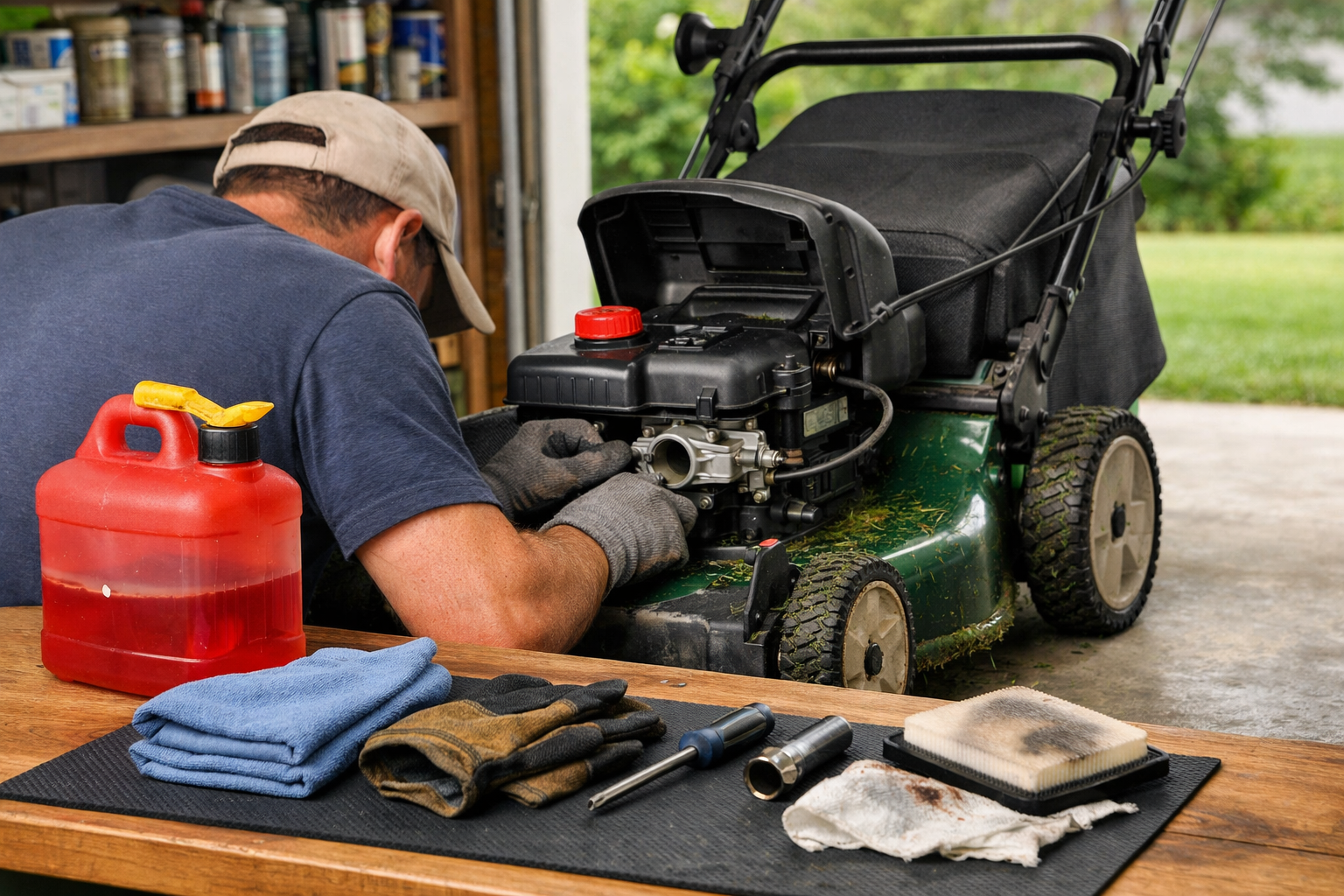
The air filter matters more than people think. A foam or paper filter clogged with grass dust chokes the engine of oxygen, and it either won’t start or dies seconds after. Pull it out and hold it to the light — if you can’t see through it, replace it (about $8-12) or wash a foam filter in soapy water and let it dry fully first.
Spark Plug and Ignition: The 10-Minute Diagnostic
A bad or fouled spark plug is the second most common culprit, and testing it takes about 10 minutes with tools you probably already own. Pull the plug, check its condition, and you’ll usually know right away if it’s the problem.
Reading the Plug
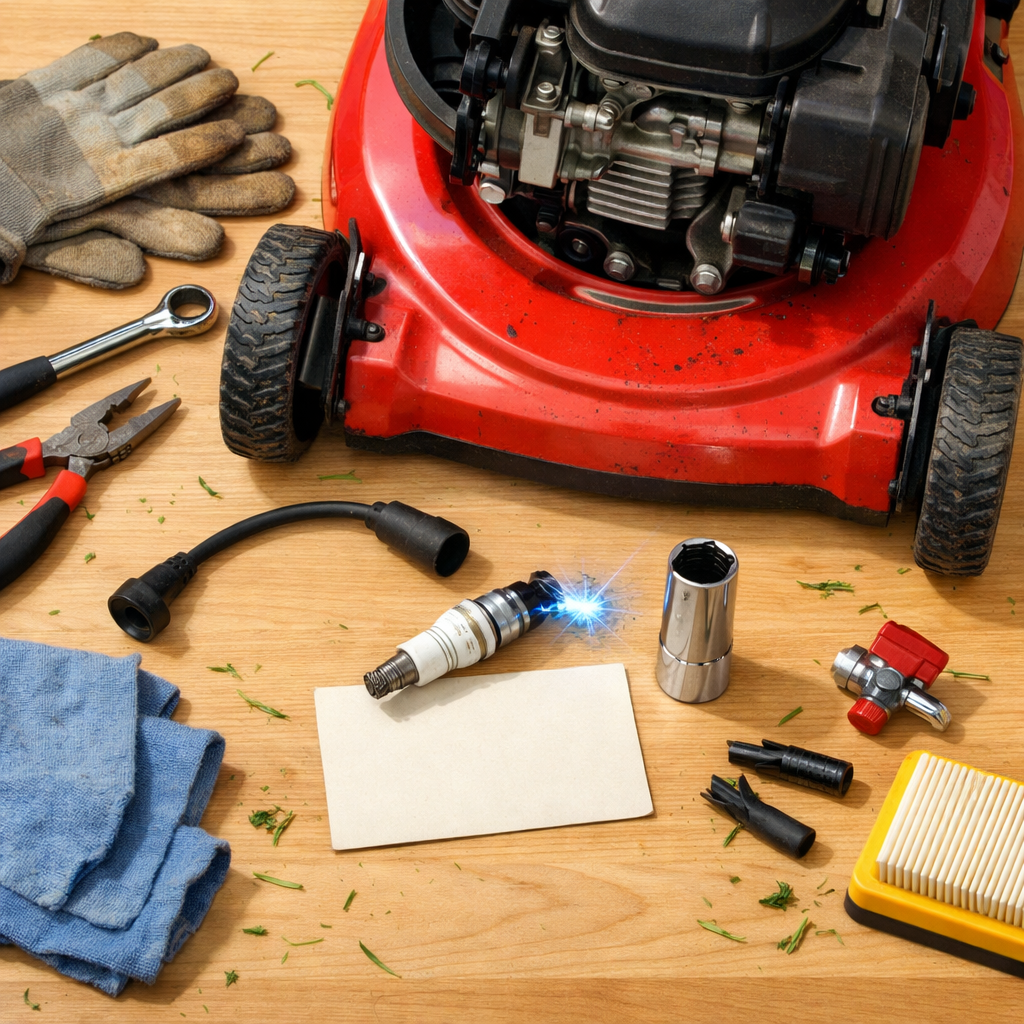
Pull the spark plug wire, then the plug itself, using a spark plug socket. A plug that’s black and wet suggests a flooded engine or bad fuel mixture. One that’s white or crusty means it’s burning too hot or too old. A healthy plug looks light tan or gray on the tip.
Testing for Spark
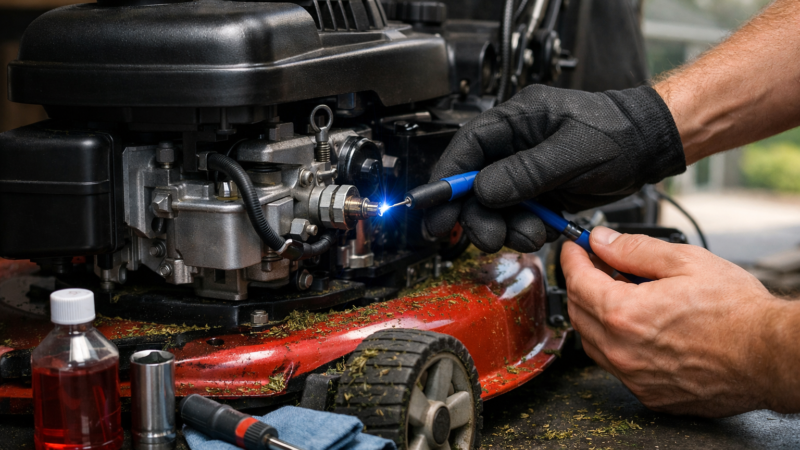
Reconnect the plug to its wire, touch the metal threads to the engine’s metal frame (grounding it), and pull the starter cord while watching for a blue spark. No spark means the plug is dead, the ignition coil has failed, or a connection is corroded. Spark plugs run $3 to $8 and are worth replacing on a schedule anyway — most manufacturers recommend it every 25 hours of use or once a season.
Here’s a fast reference for where you stand cost-wise on the common parts:
Part
Typical Cost
DIY Time
Spark plug
$3 – $8
10 minutes
Air filter
$8 – $12
5 minutes
Fuel stabilizer
$6 – $10
5 minutes
Carburetor cleaner
$6 – $9
20 minutes
Recoil starter rope
$10 – $15
30-45 minutes
Safety Switches and Electrical Problems: What Riding Mowers Add
Riding mowers and lawn tractors have safety interlock switches that a push mower simply doesn’t, and skipping this check is the single biggest mistake homeowners make when troubleshooting a riding unit. These switches are doing exactly what they’re designed to do — refusing to start — not malfunctioning.
The Interlock Chain
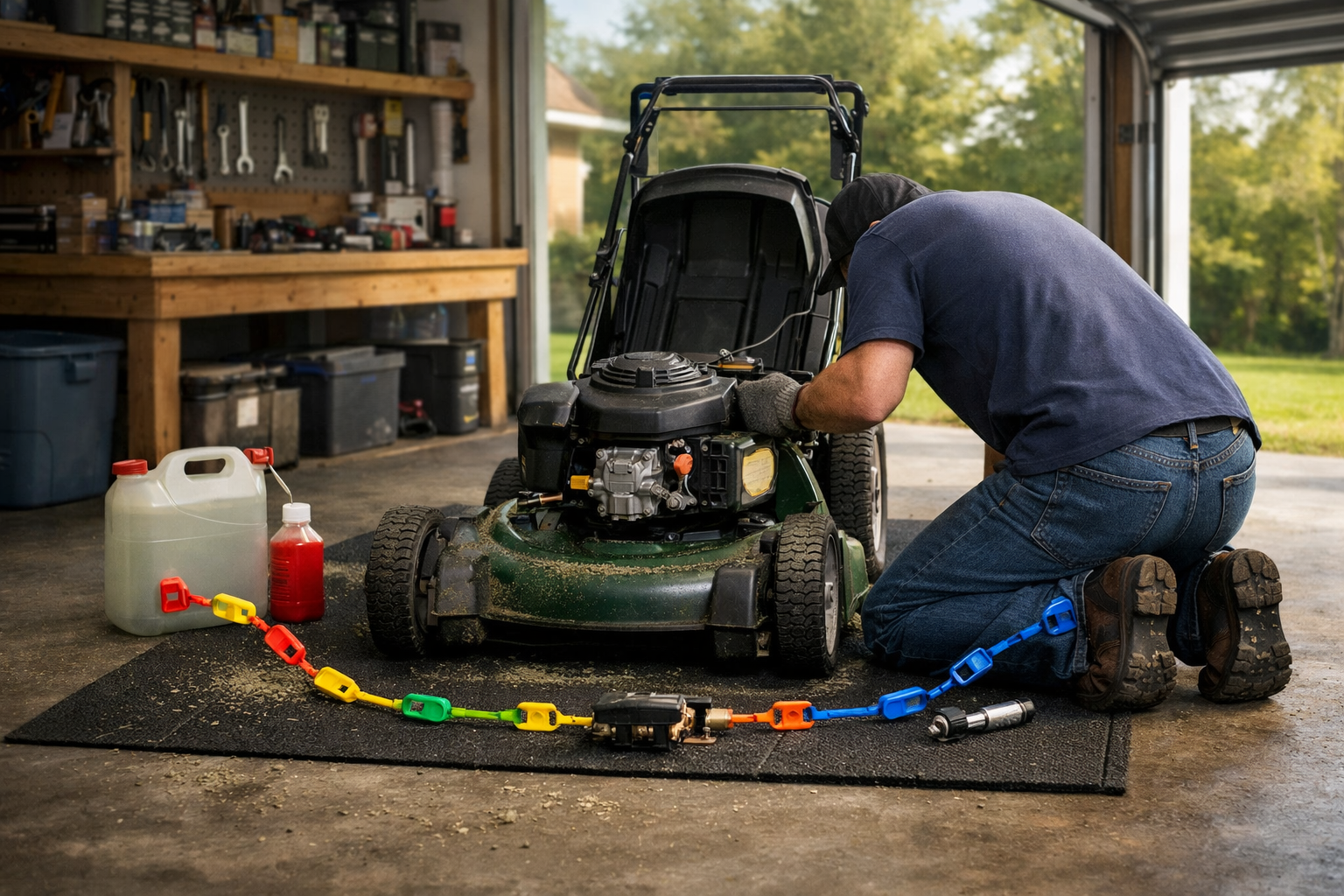
Your riding mower won’t crank unless the seat switch senses a driver, the parking brake is engaged, and the blade (PTO) is disengaged. Skip any one of these and the engine flat-out refuses to turn over, even with a fresh battery and full tank. Sit fully in the seat, confirm the brake pedal is pressed down, and make sure the blade lever is in the “off” position before trying again.
Battery and Wiring
If the interlocks check out and you still get nothing — not even a click — the battery is the next suspect. A riding mower battery reads around 12.6 volts fully charged; anything under 12.2 volts struggles to turn the starter. Corroded battery terminals cause the same symptom as a dead battery, so clean them with a wire brush before spending $60-100 on a replacement.
Push mowers skip almost all of this. Most walk-behind models rely only on a blade-brake control (the bail lever you hold against the handle) — let go of that lever mid-mow, and the engine cuts out immediately by design.
Flooding, Choke, and Starter Cord Issues
An engine that smells like gas and won’t catch is flooded, and the fix is patience, not more pulling. Repeatedly yanking the cord with the choke closed dumps even more fuel into a cylinder that’s already saturated, making things worse each time.
If you suspect flooding, move the choke to “run” (not “choke”), hold the throttle at full, and pull the cord 5-6 times with the plug still out to clear excess fuel from the cylinder. Reinstall the plug and try a normal start. This works on both push and riding mowers, since the flooding mechanism is identical.
Choke and throttle position trips up plenty of people on a cold start. Most engines need full choke when cold and no choke once warm; leaving the choke on for a warm restart is a common flooding trigger.
If the cord itself feels loose, doesn’t retract, or you hear a snap, the recoil starter mechanism has failed. That’s a $10-15 part and a repair that takes most DIYers 30 to 45 minutes with a repair manual open. Beyond that, if you’ve ruled out fuel, spark, filter, and switches and it still won’t turn over or has zero compression when you pull the cord, that’s a sign of a bigger internal problem, and it’s worth a shop’s diagnostic fee before you sink more money into parts.
A small engine with no spark, no fuel delivery, and no compression is not a $10 fix — at that point you’re looking at a carburetor rebuild or worse, and a shop diagnostic (typically $50-90) tells you whether it’s worth fixing at all.
Frequently Asked Questions
Why does my lawn mower turn over but not start?
It’s cranking but not firing, which points to fuel or spark, not the starter. Check for spark at the plug first, then confirm fresh fuel is reaching the carburetor — a clogged fuel line or dead plug are the top two causes.
How do I know if my mower’s carburetor is clogged?
Rough idling, stalling right after starting, or starting only with choke fully on are classic signs. A carburetor cleaner spray ($6-9) flushed through the jets fixes minor clogs; heavy varnish buildup from old fuel usually needs a full teardown.
Is it worth repairing an old mower that won’t start, or should I replace it?
If the fix is under $30 (plug, filter, fuel), always repair. Once you’re looking at a carburetor rebuild or starter motor replacement on a mower over 10 years old, compare that cost against a new mower, which typically starts around $250-300.
Is a zoysia grass lawn worth the work? It depends on your climate and your mower. Zoysia makes a thick, soft-looking turf that crowds out weeds and handles heat and foot...
A quality pole saw costs anywhere from $80 to over $400. Pick the wrong one for your yard and you’ll likely be buying a second one within a year. That gap...
16 July 2026
The Mowers Guide is reader-supported. When you buy through links on our site, we may earn an affiliate commission.






Comments are closed.