Grab a handful of your soil right now and squeeze it. Does it hold a shape but crumble when you poke it? That’s loam, and it’s exactly what grass roots want. If it stays in a hard ball or falls apart into dust, you’ve got clay or sand, and that’s most yards in America. Loam soil for grass isn’t something you usually buy in a bag at Home Depot — it’s something you build over a season or two, and that’s the part nobody tells you upfront.
What Loam Actually Is (And Why “Topsoil” Isn’t the Same Thing)
Loam is a soil texture defined by ratio, not a product you order by name. The classic mix is roughly 40% sand, 40% silt, and 20% clay, which gives you drainage and moisture retention at the same time. Bagged “topsoil” at the store almost never matches that ratio — it’s just whatever screened dirt the supplier had on hand.
The Sand-Silt-Clay Balancing Act
Sand drains fast but holds zero nutrients. Clay holds nutrients but drains slow and compacts like concrete. Silt sits in the middle, which is why the loam ratio works so well for grass — you get water movement without your roots drowning or starving.
Topsoil vs. Loam: Why the Label Fools People
“Topsoil” just means dirt scraped from the top few inches of somewhere, with no guarantee of texture. Loam is a specific balance of particle sizes; topsoil is a location. A bag labeled “premium topsoil” could still be 70% clay. Read the fine print or ask the supplier for a texture breakdown before you buy pallets of it.
Here’s the real issue most guides skip: almost nobody is starting from scratch. You’ve got an existing lawn sitting on existing soil, and it’s either heavy clay, thin sand, or something lopsided in between. The fix isn’t hauling in truckloads of new dirt — it’s nudging what’s already there toward loam over time.
Test Your Soil Before You Buy Anything
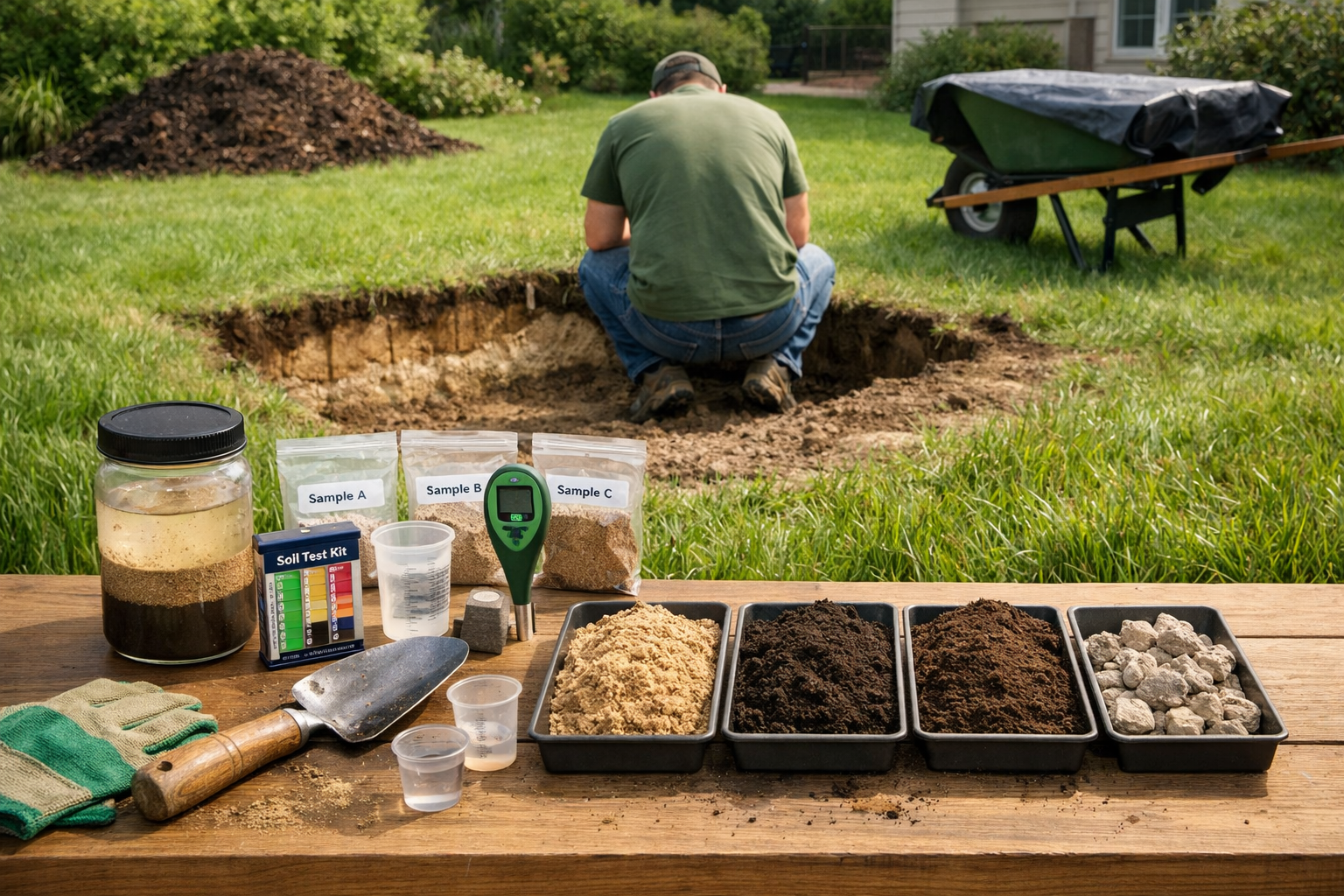
Skipping a soil test is the single most common mistake homeowners make before amending their lawn. A $15-$25 home kit tells you pH and rough nutrient levels in about 10 minutes; a $20-$40 lab test through your county extension office gives you exact numbers plus texture percentages.
The Jar Test (Free and Surprisingly Accurate)
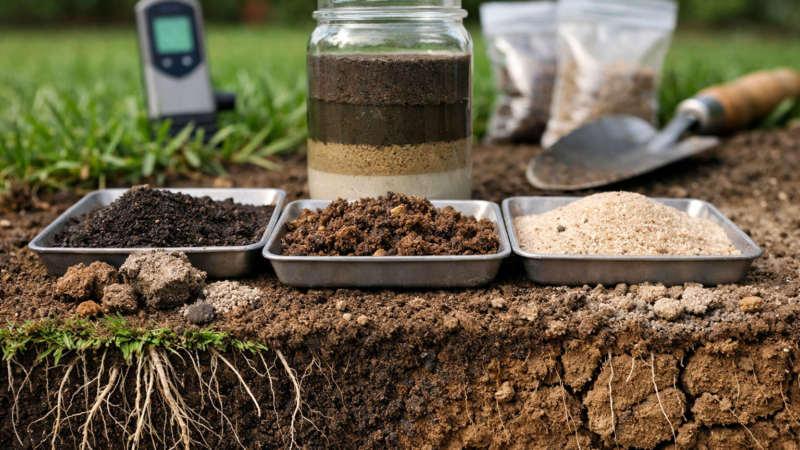
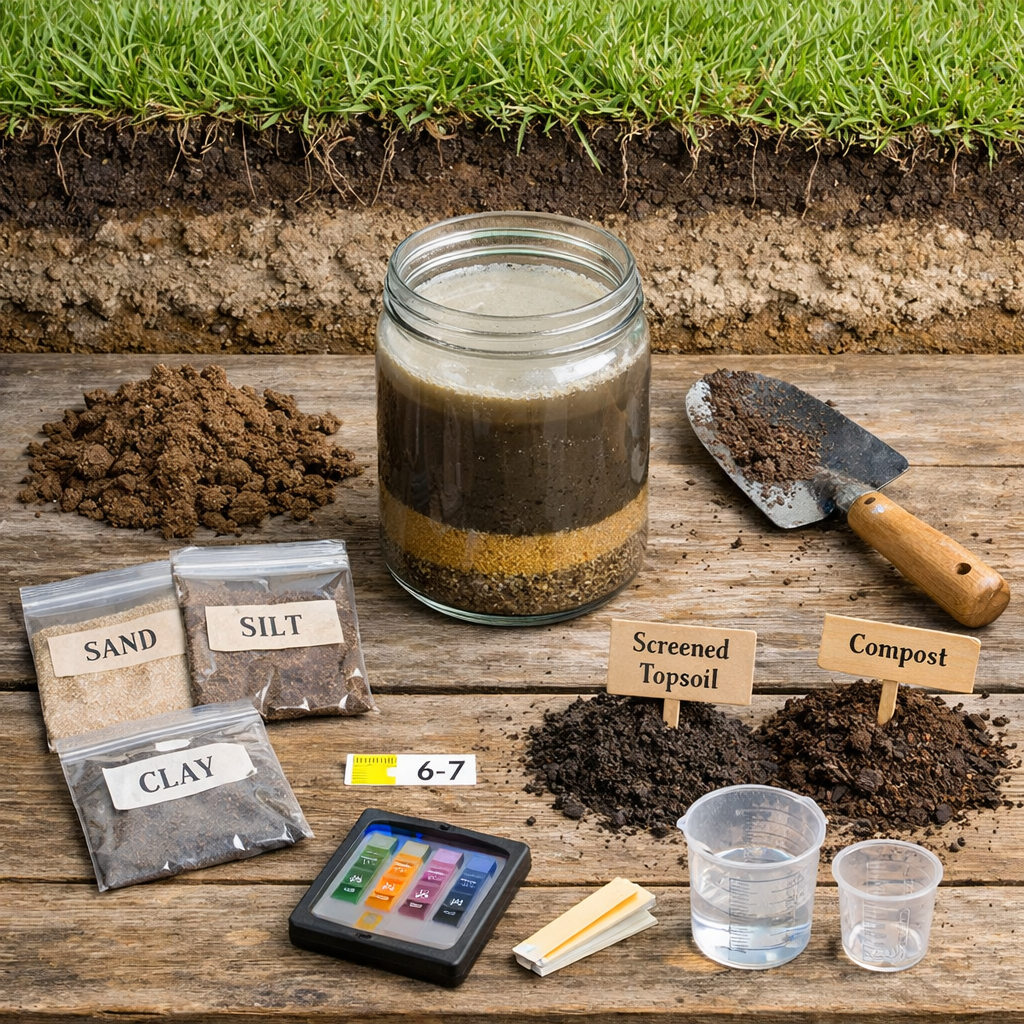
Fill a clear mason jar a third full of soil, add water to near the top, shake hard for a minute, then let it settle for 24 hours. Sand drops first, silt next, clay last — you’ll see distinct layers and can eyeball your ratio without spending a dime.
Reading Your pH Number
Grass wants a pH between 6.0 and 7.0. Below that, nutrients like phosphorus lock up and won’t reach the roots even if they’re in the soil. Above 7.5, iron and manganese become harder for grass to absorb, and you’ll see yellowing that no amount of fertilizer fixes.
Soil pH controls nutrient availability — even a soil packed with nitrogen, phosphorus, and potassium won’t feed grass properly if the pH sits outside the 6.0-7.0 range most turf species prefer.
Skipping this step and just dumping compost or lime on the lawn is a coin flip. You might be correcting a problem that doesn’t exist, or making a real one worse.
Amending What You’ve Got Beats Replacing It
Full soil replacement for an average quarter-acre lot runs into thousands of dollars and usually kills whatever grass is left underneath the new layer. Amending in place costs a fraction of that and works with your existing root system instead of against it.
If You’ve Got Heavy Clay
Work in coarse sand and compost together, never sand alone — sand mixed into pure clay without organic matter can actually make the compaction worse, almost like adding aggregate to concrete. Aim for a 1-inch layer of compost topdressed and raked in every fall for two to three years running.
If You’ve Got Sandy Soil
Sandy soil needs the opposite: organic matter that holds water and nutrients instead of letting them wash straight through. Compost, peat moss, or a quality aged manure blend worked into the top 2-3 inches will slow drainage and feed the grass at the same time.
Topdressing Without Smothering Your Lawn
This is where people mess up. Piling more than half an inch of new soil or compost on an established lawn in one pass can smother the crowns and suffocate the roots underneath. Keep each topdressing pass to ¼ to ½ inch, spread evenly with a rake or a drop spreader, and let the grass grow through it before you do another round.
Test soil pH and texture first (jar test plus a $15-$25 kit).
Mow the lawn short before topdressing so material reaches the soil, not just the leaf blades.
Spread compost or amendment no thicker than ½ inch per pass.
Water it in within 24 hours to settle material into the thatch layer.
Wait 3-4 weeks minimum between topdressing applications.
Re-test pH after one full season to check your progress.
Bagged vs. Bulk: What Actually Makes Sense for Your Yard
For anything under about 500 square feet, bagged soil and compost from a garden center is the practical call — easier to control, easier to mix, no minimum order. Past that size, bulk delivery from a landscape supplier gets cheaper per cubic yard and lets you request a specific blend.
A single cubic yard covers roughly 324 square feet at 1 inch deep, which is worth knowing before you order. Bulk suppliers will often blend loam-ratio soil to order if you ask specifically for it, rather than generic “topsoil.”
Option
Best For
Rough Cost
Texture Control
Bagged topsoil (40 lb)
Small patches, spot repair
$3-$6/bag
Low — often clay-heavy
Bagged compost
Topdressing, amending
$4-$8/bag
Medium — check label ratio
Bulk loam blend
Large lawns, new seeding
$30-$60/cubic yard
High — ask supplier for texture %
Bulk generic fill dirt
Grading, filling low spots only
$15-$25/cubic yard
Very low — not for grass
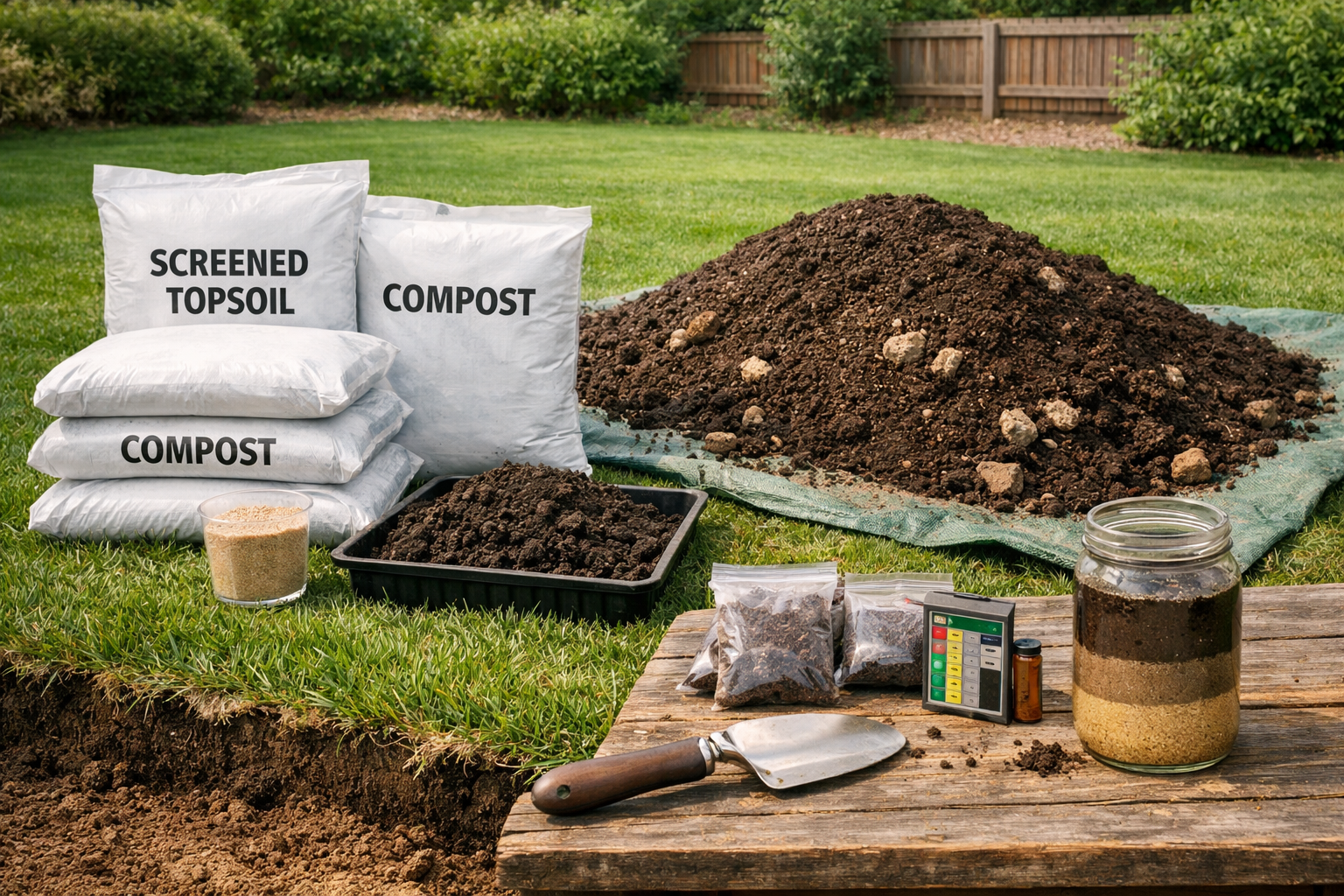
Don’t confuse compost with topsoil, even though bags at the store sit right next to each other. Compost is decomposed organic matter meant to feed and loosen soil; topsoil is bulk mineral material meant to build depth. Using straight compost as your only growing medium under new seed tends to hold too much water and can rot young roots. If you’re planning a full reseed and want a fertilizer program to match your new soil profile, The Mowers Guide has separate breakdowns on soil testing and lawn fertilizer schedules worth checking before you buy seed.
Frequently Asked Questions
Can I just buy pure loam soil in bags at a garden center?
Rarely. Most bagged “topsoil” or “garden soil” doesn’t guarantee the 40/40/20 sand-silt-clay ratio that defines true loam — check the label for a texture breakdown, or ask a bulk supplier to blend it specifically.
How long does it take to turn clay soil into loam-like soil?
Expect two to three growing seasons of fall topdressing with compost and sand, roughly ¼-½ inch per pass. It’s gradual improvement, not a one-weekend fix, but each season the texture gets noticeably better.
Will grass seed germinate in straight clay or sandy soil without amending?
Yes, but poorly — clay crusts over and blocks seedling roots, while sand dries out too fast for consistent germination. Amending even lightly before seeding raises your germination rate significantly compared to seeding bare, unamended soil.
Discover my expert tips for mowing uneven lawns safely and effectively. Learn how to tackle slopes, bumps, and undulating terrain for a perfectly manicured yard.
Pour gas and 2-cycle oil into a Stihl 4 cycle weed eater and you’ll likely kill the engine within a season. That’s the single biggest mix-up owners bring over from older...
19 August 2026
The Mowers Guide is reader-supported. When you buy through links on our site, we may earn an affiliate commission.






Comments are closed.