A tow-behind leaf vacuum can clear an acre of turf in under an hour, while a handheld unit rated at 250 CFM often takes three or four hours to do the same job in stop-and-empty cycles. That gap is the whole story behind buying the right leaf vacuum. It isn’t about raw suction numbers on a box; it’s about matching a machine’s airflow, bag capacity, and mulching ratio to the actual square footage you’re clearing every fall.
Most buying guides rank leaf vacuums by horsepower or CFM alone, which misses the point for anyone with a real yard to clear. The better question is how many total hours a model will cost you across a season, against what you paid for it.
CFM and MPH: What These Numbers Actually Mean for Cleanup Speed
CFM (cubic feet per minute) measures the volume of air a machine moves, while mph measures how fast that air travels out of the nozzle. Neither number alone tells you how fast leaves get picked up — you need both, plus the size of the intake tube, to predict real-world performance.
A leaf vacuum with high mph but low CFM will strip a small patch of leaves violently but struggle with big piles, because there isn’t enough air volume to carry material through the tube. A machine with high CFM but modest mph handles bulk piles better but can leave stragglers on wet grass. Consumer handheld and backpack blower-vacs typically run 150 to 250 CFM, while walk-behind units often reach 400 to 650 CFM, and tow-behind, tractor-pulled vacuums commonly exceed 1,000 CFM.
Why Higher CFM Isn’t Automatically Better
A 1,000+ CFM tow-behind unit is overkill and a poor fit for a quarter-acre lot with a few ornamental trees — it’s heavier to store, costs more upfront, and needs a tractor to pull it. Matching CFM to yard size, not maximizing it, is the goal.
Weight matters just as much as airflow. A backpack vacuum pushing 450 CFM sounds appealing until you’re wearing 22 pounds of engine and fuel for two hours straight. Fatigue is a real performance killer that spec sheets never mention, and it’s the reason many owners with high-CFM handheld units still take longer per yard than expected.
Reading Manufacturer Specs Correctly
Manufacturers test CFM and mph at the tube opening, under ideal lab conditions, with no debris loading the airflow. Real leaf pickup drops those numbers once the tube starts filling with wet oak leaves or pine needles. Treat published specs as a ceiling, not a guarantee, and weigh them against tube diameter — a 3-inch tube moving 400 CFM clears faster than a 2-inch tube rated at the same CFM, because the narrower opening chokes airflow before it reaches the debris.
Matching Vacuum Type to Yard Size and Terrain
Yard size, not budget, should be the first filter when choosing between handheld, backpack, walk-behind, and tow-behind leaf vacuums. Each category has a practical range where it performs well, and pushing a model past that range is where owners end up disappointed.
For lots under a quarter acre with a handful of trees, a handheld or corded electric leaf vacuum handles the job in 30 to 45 minutes per cleanup. These machines are light, usually 7 to 12 pounds, and store in a closet. Past a quarter acre, though, the small collection bag (typically 1 to 1.5 bushels) means constant stopping to empty, and that’s where total cleanup time balloons.
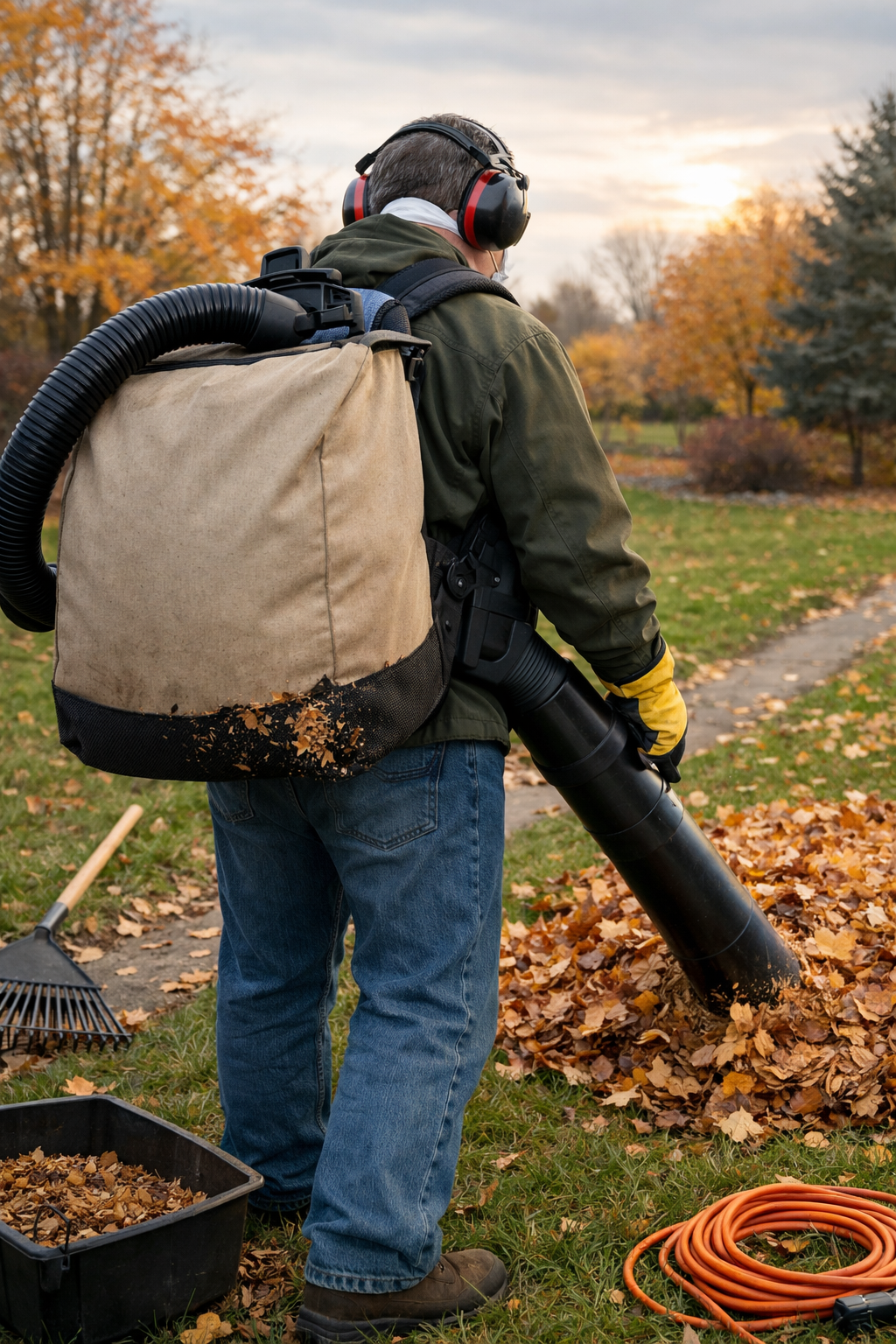
Backpack units bridge the gap for half-acre to one-acre properties with moderate tree cover. They free up both hands for a wand, run on gas for cordless range, and typically move air in the 350 to 500 CFM range. The tradeoff is sustained weight on your shoulders and back for the length of the job, which matters more on hilly or uneven terrain.
Walk-behind leaf vacuums suit one to two acres, especially yards with open lawn rather than tight garden beds. They roll on wheels, so the machine’s weight isn’t on your body, and collection bags scale up to 5 or more bushels, cutting down on empty-and-dump trips.
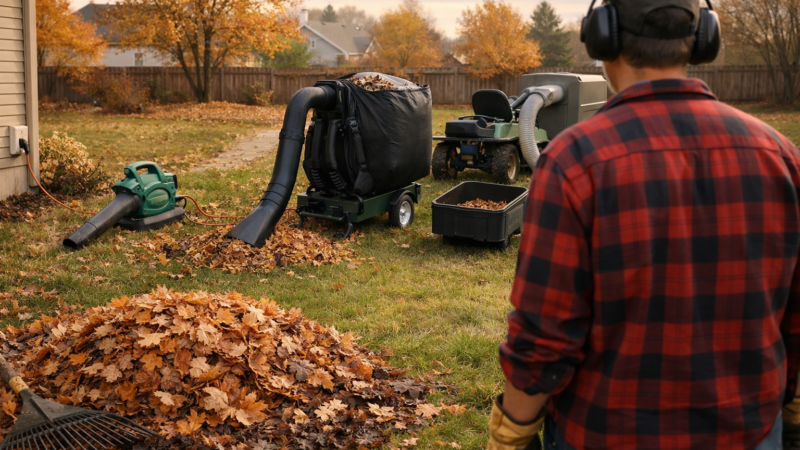
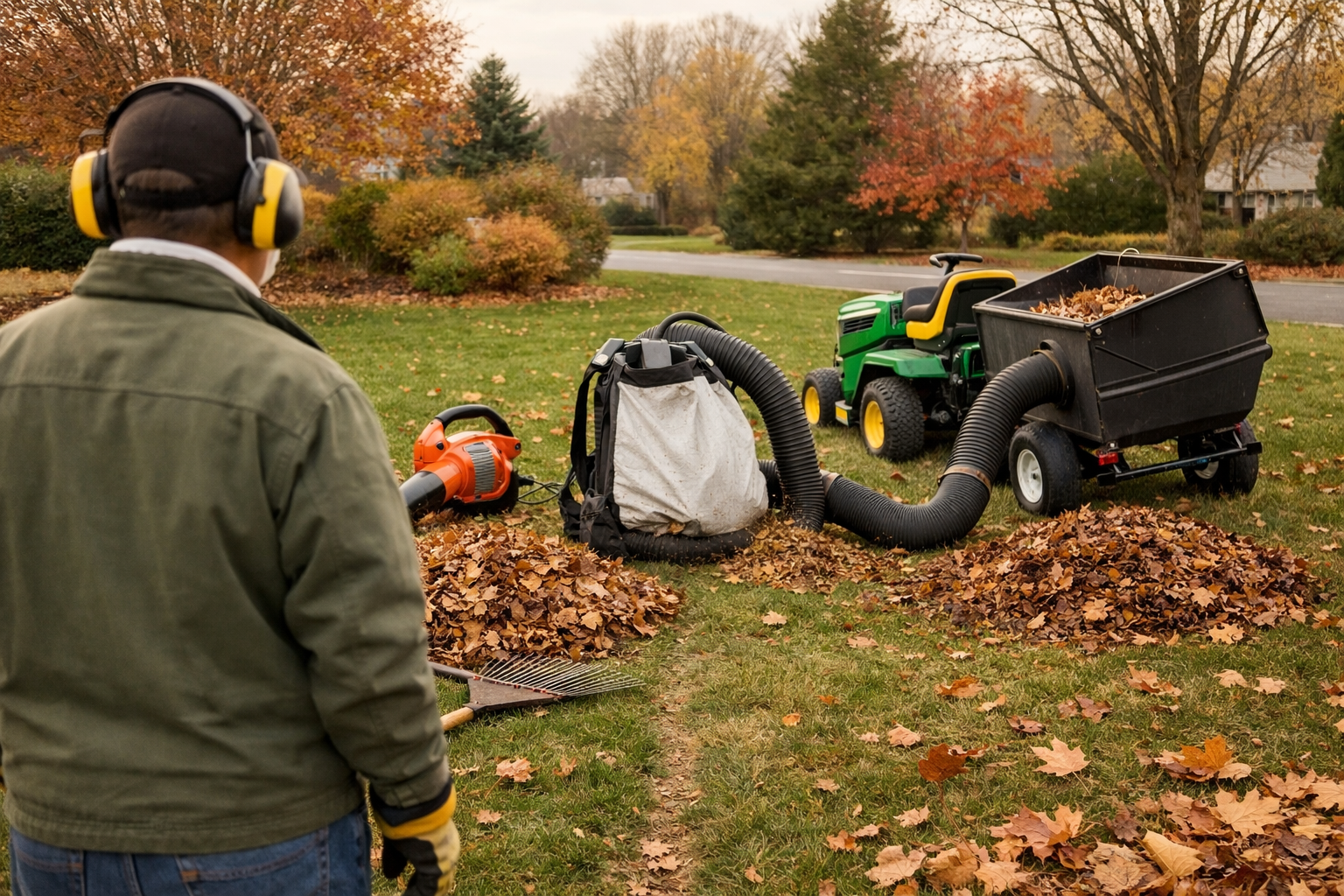
A tow-behind, tractor-pulled leaf vacuum is a wheeled unit with its own suction fan and collection hopper, designed to be pulled behind a riding mower or garden tractor rather than carried or pushed by hand.
Anything over two acres, or a property with a lot of tree density, generally justifies a tow-behind unit if you already own a riding mower or tractor. The math tips heavily in its favor once yard size crosses that line, because you’re covering ground at mowing speed instead of walking speed.
Terrain matters too. Steep slopes favor handheld or backpack units, since walk-behind and tow-behind machines can be hard to control or unsafe on a grade over roughly 15 degrees. Flat, open acreage is where tow-behind units earn their keep.
Handheld vs. Backpack vs. Walk-Behind vs. Tow-Behind: A Direct Comparison
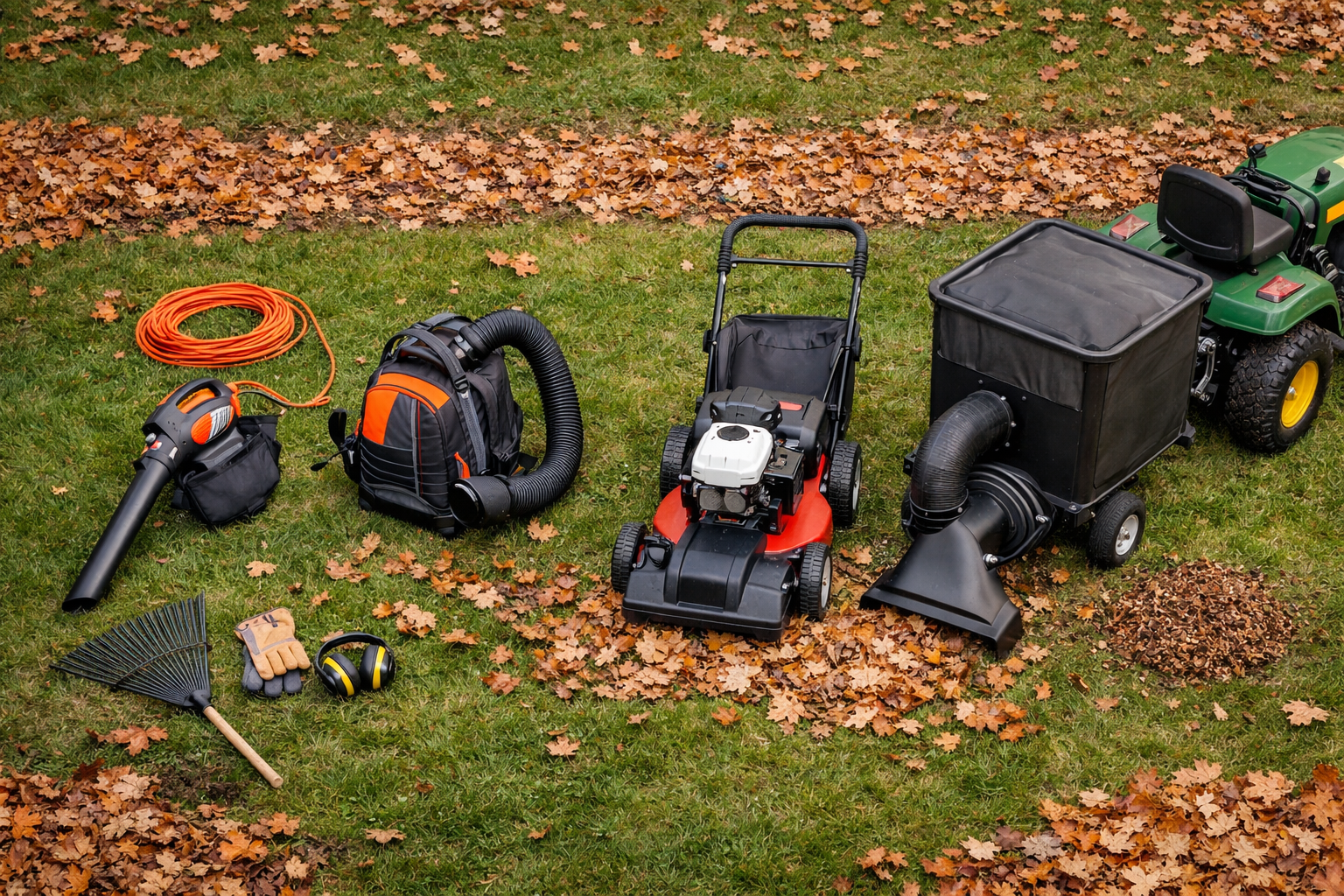
Choosing among the four main leaf vacuum categories comes down to weighing yard size, cleanup time, and cost together rather than any single spec. The table below lines up typical figures for each type so you can see where the real tradeoffs sit.
Type
Typical CFM
Bag Capacity
Best Yard Size
Approx. Price Range
Typical Cleanup Time (1/2 acre)
Handheld (corded/cordless)
150–250
1–1.5 bushels
Under 1/4 acre
$60–$150
3–4 hours
Backpack (gas)
350–500
Wand-fed, no bag (blows to pile) or small collection
1/4–1 acre
$200–$450
1.5–2.5 hours
Walk-behind
400–650
4–6 bushels
1–2 acres
$300–$700
1–1.5 hours
Tow-behind (tractor-pulled)
1,000+
8–20+ bushels (hopper)
2+ acres
$500–$2,000+
30–50 minutes
The cleanup-time column is the one most buying guides skip, and it’s the one that should drive your decision. A $120 handheld vacuum isn’t cheap if it costs you three extra hours every weekend from October through November — across a typical eight-week leaf season, that’s 16 to 24 hours a cheaper machine burns that a $600 walk-behind wouldn’t.
Price alone also hides operating costs. Gas backpack and walk-behind units need fuel and periodic carburetor maintenance; tow-behind units add wear on tractor drivebelts and hitch hardware. None of that shows up in the sticker price, but it shows up in your fall.
Corded Electric, Cordless Battery, or Gas: Picking a Power Source
Gas-powered leaf vacuums deliver the highest sustained CFM and run time without being tethered to an outlet, making them the default choice for anything beyond a small suburban lot. Corded electric units cost less and need zero maintenance, but a 100-foot extension cord limits your range and becomes a tripping hazard around garden beds.
Corded Electric: Low Cost, Low Range
Corded models are the cheapest entry point, often $60 to $100, and start instantly every time with no pull cord, no spark plug, and no carburetor to gum up with old fuel. The catch is obvious: you’re bound to outlet placement and cord length, which makes them impractical for anything beyond a small front yard or a patio cleanup.
Cordless Battery: Convenience with a Runtime Ceiling
Battery-powered leaf vacuums, often built on the same 40V or 56V platforms as cordless mowers, run 20 to 40 minutes per charge depending on the pack size. That’s fine for touch-up work between bigger cleanups, but it’s rarely enough for a full fall leaf-drop across even a modest yard without swapping batteries mid-job. If you already own battery-platform tools from the same brand, buying the bare tool without a battery can cut the price by a third.
Gas Engines: More Power, More Upkeep
Gas backpack and walk-behind units typically run 2-stroke or 4-stroke engines in the 25cc to 200cc range, giving them the CFM headroom that battery and corded models can’t match. In exchange, you’re dealing with fuel stabilizer, annual spark plug checks, and the noise: gas leaf vacuums commonly run 95 to 105 decibels at the operator’s ear, loud enough that hearing protection isn’t optional.
Mulching Ratio and Bag Capacity: The Overlooked Numbers
Mulching ratio tells you how much a vacuum shreds leaves before they hit the bag, and it directly controls how often you’ll stop to empty that bag. A machine advertising a 16:1 mulching ratio reduces 16 bags of loose leaves down to the volume of 1 bag, while a unit with only 8:1 or 10:1 fills up twice as fast for the same amount of raked material.
Skipping this spec is one of the more common mistakes I see in leaf vacuum shopping. Buyers focus on CFM and bag size in isolation, then wonder why a 5-bushel bag on a walk-behind unit is full after ten minutes of vacuuming a heavy leaf drop. The mulching blades, not the bag, are usually the bottleneck.
How Mulching Ratio Changes Your Trip Count
On a half-acre yard with mature oak trees, a 10:1 ratio walk-behind vacuum with a 5-bushel bag might need emptying 4 to 6 times per session. The same yard cleared with a 16:1 machine could cut that to 2 to 3 empties, saving 15 to 20 minutes of walk-to-the-compost-pile time per session.
Bag and Hopper Capacity by Machine Type
Handheld units carry 1 to 1.5 bushels, which sounds small until you realize that’s by design — they’re meant for spot cleanup, not whole-yard collection. Walk-behind machines scale to 4 to 6 bushels, and tow-behind hoppers range from 8 bushels on compact models up to 20 or more bushels on units built for acreage. Bigger capacity only pays off if the mulching ratio is decent — a large bag filled with unshredded whole leaves wastes most of its own volume on trapped air.
Emptying method matters too. Tow-behind hoppers with a dump lever let you empty from the tractor seat in seconds. Walk-behind bags usually unzip or unclip and need to be lifted and dumped by hand, which adds up over a full acre.
Vacuum-Only, Blower-Vac Combo, or Mulcher Attachment?
A dedicated leaf vacuum collects debris into a bag for disposal or composting, while a blower-vac combo switches between blowing (to consolidate piles) and vacuuming (to collect them) using the same motor housing. Choosing between the two depends on whether you bag leaves or leave mulched clippings on the lawn.
When a Combo Unit Makes Sense
Blower-vac combos are the practical choice for most homeowners with under an acre, because leaf cleanup rarely happens in isolation from blowing debris off patios, driveways, and gutters edges. A single handheld or backpack unit that switches modes saves you from owning and storing two separate machines. The downside: combo units compromise on both functions, so the vacuum mode usually has a smaller bag and lower CFM than a purpose-built vacuum-only unit at the same price point.
When a Dedicated Vacuum Wins
Walk-behind and tow-behind units are almost always vacuum-only, built around collection rather than blowing, because at that scale you’re not consolidating small piles by hand — the machine’s intake width does that work as it rolls. If you’re clearing more than half an acre regularly, a dedicated vacuum outperforms a combo unit’s vacuum mode every time, simply because the intake and impeller are sized for volume, not versatility.
Mulching Attachments for Tractors and Mowers
Some tractor owners skip vacuuming altogether and rely on a mulching deck or a mulching mower attachment, which shreds leaves fine enough to leave them on the lawn as a nutrient source rather than collecting them. This works well for light leaf drop, generally under a couple of inches of accumulated leaves, but it can smother turf and encourage fungal issues when leaf cover gets heavier than that. For yards with a lot of mature trees, collection with a vacuum still beats mulch-in-place once leaf depth passes that threshold.
Tow-Behind Compatibility: Towing Capacity and Hitch Fit
A tow-behind leaf vacuum only works if your riding mower or garden tractor has enough towing capacity and the right hitch to run it. Most residential riding mowers are rated for 150 to 250 pounds of tow weight, while a loaded tow-behind vacuum with a full hopper can weigh well past that, especially the larger 15- to 20-bushel models.
Before buying, check two figures: your tractor’s stated towing capacity (usually in the owner’s manual) and the tow-behind vacuum’s dry weight plus a full hopper load. A mismatch here isn’t just a performance problem, it’s a mechanical one — pulling a load beyond rated capacity strains the transmission and drive belt on lawn tractors that weren’t built for towing at all.
Confirm your tractor or riding mower has a factory-installed or dealer-approved hitch receiver, not an aftermarket bracket bolted to plastic body panels.
Check the tow-behind vacuum’s listed dry weight, then add roughly 40 to 60 pounds for a full hopper of wet leaves.
Compare that total against your tractor’s rated towing capacity, usually printed in the operator’s manual under “attachments” or “towing.”
Verify PTO or engine-driven fan requirements — some tow-behind vacuums need a PTO connection for suction power, not just a tow hitch.
Test on flat ground first, checking for tire slip or excessive drag before running it on slopes.
Match hitch pin size; many tow-behind attachments use a 5/8-inch clevis pin, but some imports and off-brand units use different diameters.
Skipping step 4 is a common and expensive mistake. Some tow-behind vacuums use a self-contained gas engine to power the fan, needing only a tow connection, while others rely on your tractor’s PTO shaft to spin the impeller, which means a mower without a PTO output simply can’t run that model regardless of towing capacity. Checking specs on a resource like themowersguide.com before buying can save a return shipment on a unit that turns out to be incompatible with your equipment.
Noise, Weight, and Real-World Comfort Factors
Noise and weight decide whether you actually enjoy using a leaf vacuum or dread pulling it out every October. These two factors get buried at the bottom of spec sheets, but they shape how long you’ll tolerate using the machine each session.
Gas-powered handheld and backpack units commonly hit 95 to 105 decibels at the operator’s ear — loud enough that OSHA guidelines would require hearing protection for that exposure length in a workplace setting. Electric corded and cordless models run quieter, typically 65 to 80 decibels, closer to a vacuum cleaner than a chainsaw. If you’ve got close neighbors or local noise ordinances with time-of-day restrictions, that gap is worth checking before buying gas.
Weight compounds over a session. A gas backpack blower-vac at 20 to 24 pounds doesn’t feel bad for the first 15 minutes, but by hour two, shoulder and lower-back fatigue slows you down and makes the job feel longer than the CFM rating would suggest. Walk-behind and tow-behind units sidestep this entirely, since the machine’s own wheels or the tractor carry the weight instead of your body.
Vibration is the quieter cousin of weight fatigue. Handheld units transmit engine vibration straight into your hands and wrists, which after an hour can leave a lingering numbness — something anti-vibration handle designs help with, but don’t eliminate entirely on budget models.
If you’re buying for a family member with any grip strength or back limitations, weight and vibration should outrank CFM in the decision, full stop. A slightly less powerful machine that someone can actually run for a full session beats a stronger one that gets abandoned after 20 minutes.
Frequently Asked Questions
How much CFM do I need for a leaf vacuum on a half-acre lot?
For a half-acre lot with moderate tree cover, look for 400 to 500 CFM in a walk-behind unit, which clears the area in roughly an hour. Lower CFM handheld units can technically do it but will take three times as long due to bag-emptying stops.
Can I use a handheld leaf vacuum for a full acre of yard?
Technically yes, but expect 3 to 4 hours of cleanup time due to the small 1 to 1.5 bushel bag capacity and frequent emptying. A walk-behind or tow-behind unit cuts that same job to under 90 minutes.
Do tow-behind leaf vacuums work with all riding mowers?
No — your riding mower needs a rated towing capacity above the vacuum’s loaded weight, typically 150 to 250 pounds minimum, plus a compatible hitch and, on some models, a PTO connection for the suction fan.
Is a higher mulching ratio worth paying extra for?
Yes, in most cases. A 16:1 mulching ratio versus an 8:1 or 10:1 ratio roughly doubles how long you can run before emptying the bag, which matters more on larger yards with heavy leaf drop than a small CFM bump.
Pour gas and 2-cycle oil into a Stihl 4 cycle weed eater and you’ll likely kill the engine within a season. That’s the single biggest mix-up owners bring over from older...
Discover the intricate design of lawn mower blades and why they’re crucial for a healthy lawn. Learn about types, maintenance, and how to choose the right blades for your mower.
6 April 2025
The Mowers Guide is reader-supported. When you buy through links on our site, we may earn an affiliate commission.






Comments are closed.