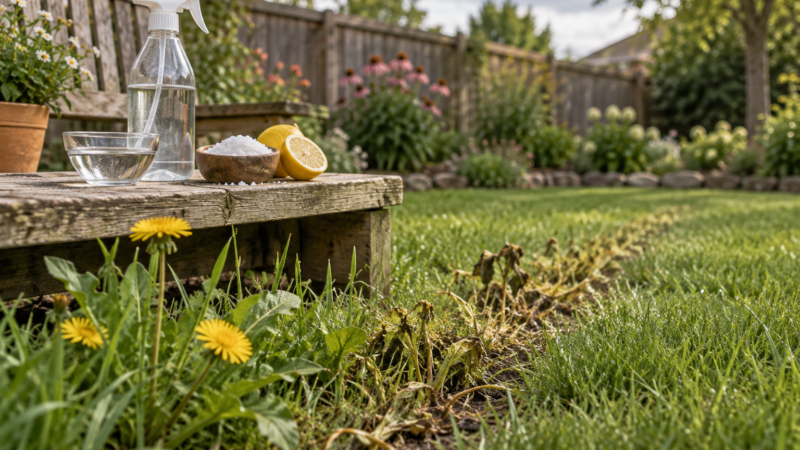
Homemade weed killer will kill your grass too. Vinegar with dish soap, salt with soap, boiling water, and Epsom salt with vinegar and soap are the usual picks, and almost all of them are non-selective, meaning they burn any plant they touch. Salt can also harm soil for years. Spot-treat single weeds on a dry, sunny day, and keep the spray off turf you want to keep.
Before you mix: what “safe for lawns” really means
Homemade doesn’t mean harmless. Here’s how to read the recipes below.
Non-selective means it hits grass too
A non-selective herbicide kills whatever it touches. A selective one targets certain weeds, like broadleaf killers that spare grass. Even 5% household vinegar browns grass blades. Horticultural vinegar (about 20% acetic acid) can kill grass roots after repeated sprays.
Safety for you, pets, and soil
Strong vinegar burns skin and eyes, so wear gloves and goggles. Salt builds up in soil and can stop growth for a long time. Keep pets off wet spray until it dries.
Timing
Spray on a dry, sunny, calm day with no rain for 24 hours. Wind carries the mix onto your turf. Rain washes it off.
1. Vinegar, salt, and dish soap: best all-around spot killer
This is the classic mix, and it works fast on young broadleaf weeds. Leaves wilt within hours and die in a day or two.
Mix 1 gallon of white vinegar (5% acidity), 1 cup of table salt, and 1 tablespoon of liquid dish soap. Stir until the salt dissolves. The soap is a surfactant, so it helps the vinegar cling to waxy leaves. A batch costs roughly $3-5.
Lawn risk: high. Use it only on weeds in cracks, beds, and edges. Spray leaves, never pour it on the ground. Perennial roots often regrow, so expect to repeat.
2. Vinegar and dish soap (no salt): the safest option near turf
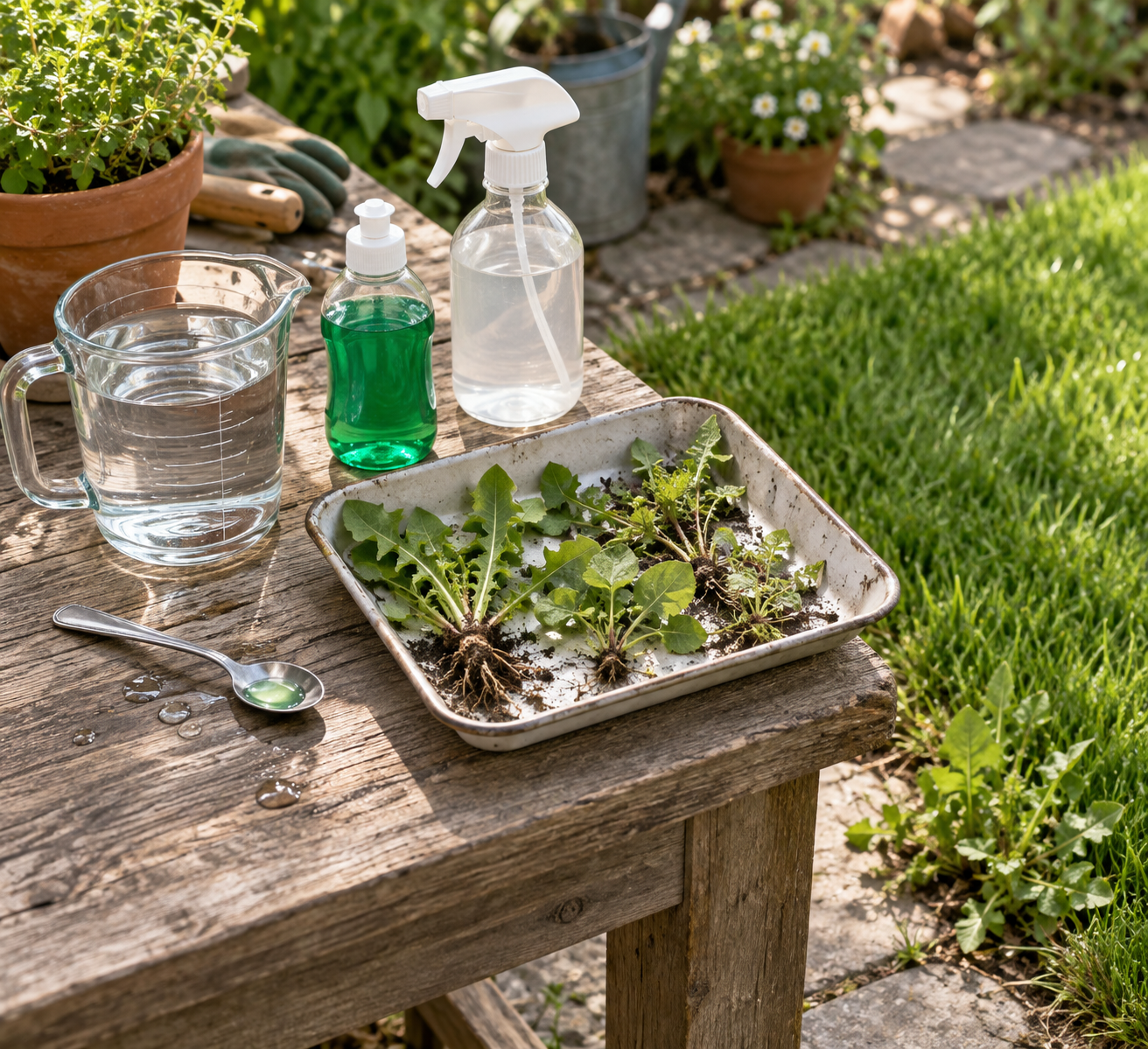
Dropping the salt keeps your soil healthier. Use 1 gallon of white vinegar and 1 tablespoon of dish soap. It’s my pick if weeds sit close to grass.
Apply with a small spray bottle, or paint it on a single dandelion with a brush. A paintbrush keeps drift off the lawn. Grass blades that get hit will brown, but if the roots survive, they usually grow back.
Dense weeds need two or three rounds, spaced a few days apart. Tough, older weeds may not die at all with household vinegar.
3. Boiling water: best for cracks, with no residue
Boiling water leaves nothing behind. Pour it straight from the kettle onto weeds in sidewalk cracks or gravel. Young plants die within a day.
Carry it carefully in a pot with a spout, because scalds are the real danger. It cooks grass roots as well, so keep it away from the lawn edge. Deep taproots, like mature dandelions, often come back.
4. Epsom salt, vinegar, and soap: a gentler soil option
Mix 1 gallon of white vinegar, 2 cups of Epsom salt, and 1 tablespoon of dish soap. Epsom salt is magnesium sulfate, so it’s less harsh on soil than table salt. That’s the idea, though results vary by weed.
The vinegar does the killing. Treat this as a spot mix for garden beds and paver joints. It will still brown any grass it touches.
Recipe
Kills grass?
Soil risk
Best use
Vinegar, salt, soap
Yes
High
Driveway cracks, gravel
Vinegar and soap
Yes (blades)
Low
Spot weeds near turf
Boiling water
Yes
None
Sidewalk cracks
Epsom salt mix
Yes
Low to medium
Beds, pavers
Citrus oil and vinegar
Yes
Low
Single grassy weeds
5. Orange oil, vinegar, and soap: best for stubborn grassy weeds
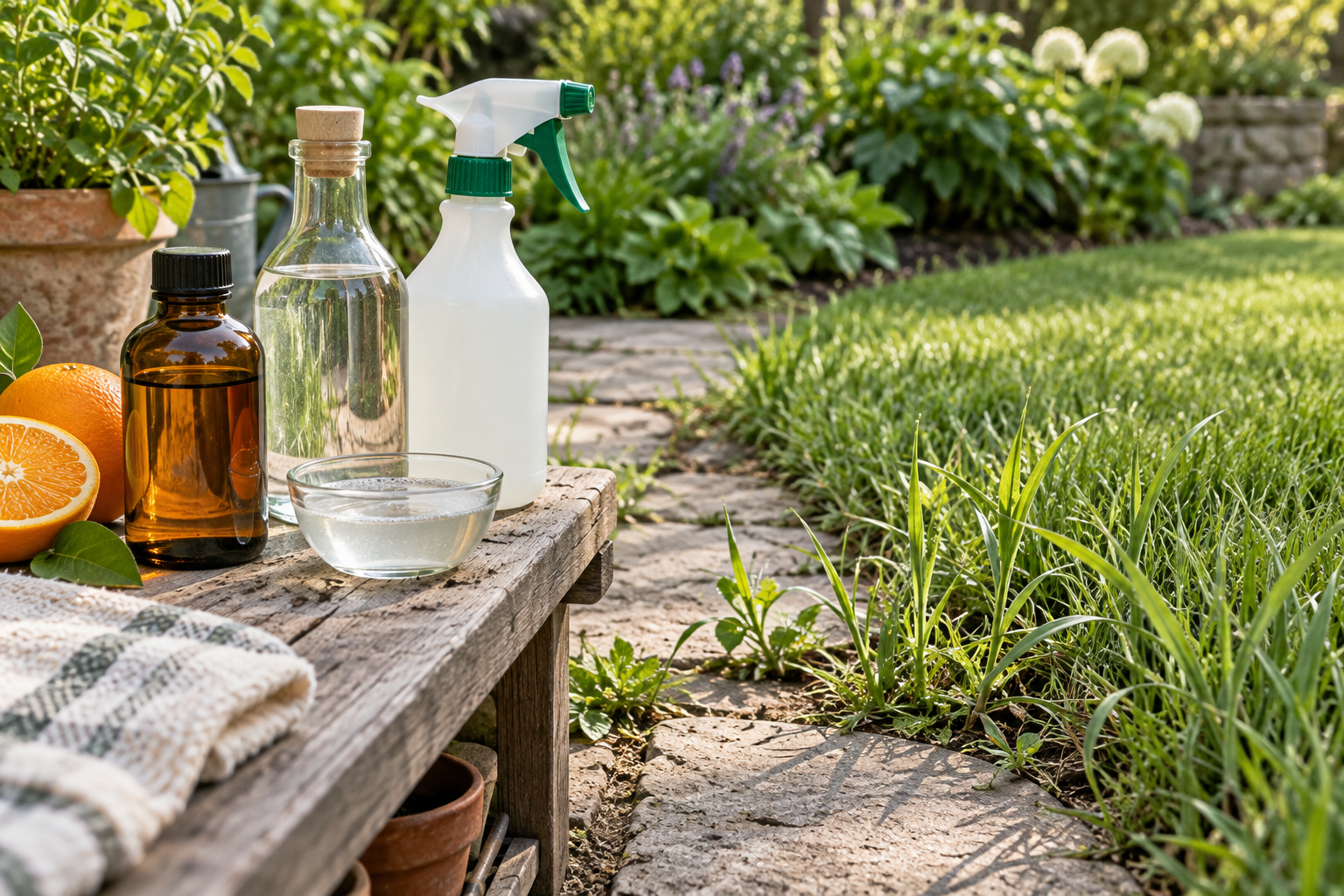
Orange oil strips the waxy coating off leaves, so the vinegar burns deeper. Mix 1 gallon of white vinegar, 4 tablespoons of orange oil, and 4 tablespoons of dish detergent in a bucket. Pour it into a garden sprayer through a funnel.
Spray at the hottest part of the day, then repeat after two days. It suits crabgrass clumps and weeds in mulch beds. It will still kill the lawn grass around them.
When to skip the spray
Sprays can’t fix a thin lawn. These steps stop most weeds before they start:
Mow at 3-4 inches for cool-season grass. Tall grass shades weed seeds.
Pull weeds by hand after rain, when roots slip out.
Dandelions and white clover aren’t always weeds. They feed early pollinators, and clover adds nitrogen to your lawn. (SDSU Extension)
For widespread broadleaf weeds in turf, a selective herbicide beats any kitchen mix. Mowing and overseeding do the rest, and The Mowers Guide has more on mowing height.
Frequently Asked Questions
Will homemade weed killer kill my grass too?
Yes. Vinegar mixes are non-selective, so they brown any grass they touch. Household vinegar usually does only temporary damage, but repeated horticultural vinegar can kill roots. Spot-spray carefully, and reseed any dead patch.
Is salt-based weed killer safe for soil and pets?
No, not for soil. Salt builds up and can keep plants from growing for a long time, so never pour it on the ground. Keep pets off until the spray dries.
How long does homemade weed killer take to work?
Young weeds wilt within hours and die in one to two days. Older perennials with deep roots usually regrow, so plan on repeat sprays every few days.
The right mower for sloped lawns can make all the difference in keeping your yard looking neat and ensuring a safe mowing experience. I had a really hard time when I...
A single snapped mower belt can cost a lawn care crew 90 minutes of billable time, more if the nearest parts store is 20 miles out. A well-stocked toolbox truck closes...
11 July 2026
The Mowers Guide is reader-supported. When you buy through links on our site, we may earn an affiliate commission.






Comments are closed.