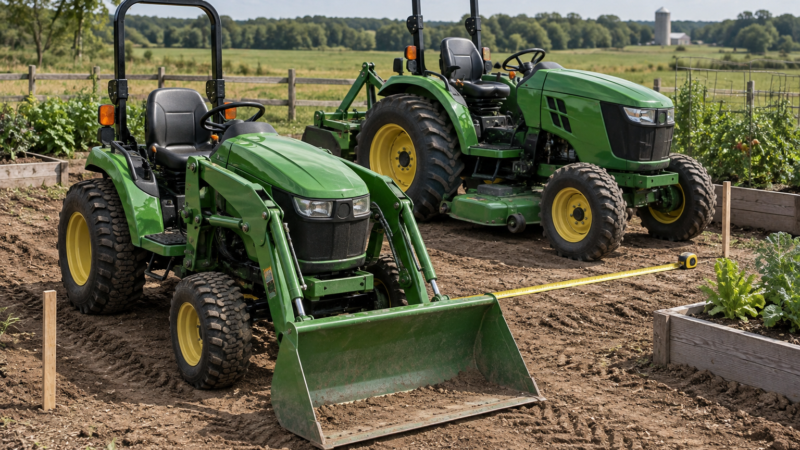
Match the tractor to your acreage, your terrain and your heaviest attachment. Sub compact tractors, typically under 25 horsepower and about 4 feet wide, suit properties up to a few acres with light mowing, loader work and hauling.
Need heavier loader lift, bigger implements or more than a few acres? Step up to a larger compact. Below, you’ll see how the classes differ, how to size one step by step, and when a sub compact is the wrong buy.
What Makes a Tractor “Sub Compact”?
A sub compact tractor is the smallest true tractor class. It usually makes under 25 horsepower, measures about 4 feet wide and weighs roughly 500 to 1,200 pounds. Most come with four-wheel drive, a rear three-point hitch (the arms that lift implements), a rear power take-off and an optional front loader.
Power take-off, or PTO, is a spinning shaft at the back that drives implements like mowers and snowblowers. It matters more than you’d think, and we’ll come back to it.
There’s no official standard. Brands draw the line in different places, and horsepower ranges overlap. Two tractors with the same horsepower can differ a lot in weight, loader strength and hitch capacity.
How It Differs From a Garden Tractor
A garden tractor looks similar, but it’s built around mowing. It has a lighter frame and usually no real hitch or PTO. A sub compact has a tractor frame, a hitch and a loader that can lift real weight.
That’s why the sub compact costs more. You’re paying for the ability to push, lift and pull, not just cut grass.
Sub Compact vs. Compact vs. Utility: The Class Comparison
The classes mostly differ in weight, hitch size and loader strength, not just horsepower. Here’s a typical comparison. Treat the numbers as rough, since brands overlap.
Class
Typical horsepower
Typical width
Typical weight
Best-fit property
Sub compact
Under 25 hp (about 18 to 25)
About 4 ft
About 500 to 1,200 lbs for the smallest; many run heavier
Up to 3 to 5 acres
Compact
25 to 60 hp
About 5 to 6 ft
Roughly 2,000 to 4,000 lbs
5 to 15 acres
Utility
45+ hp, often much more
6 ft and wider
4,000 lbs and up
15+ acres
Some current sub compact models weigh well over 1,200 pounds once they carry a loader and a mower deck. Check the weight with the attachments on.
Why Weight Matters More Than You’d Expect
A heavier tractor holds the ground better. It stays stable when the loader is full, and it pulls a box blade without spinning its tires. Horsepower alone doesn’t tell you this.
Two tractors can both say 24 hp. One weighs 1,500 pounds and the other 2,500. The heavier one will feel far more capable on gravel and slopes.
Hitch Size
Sub compacts use a smaller Category 1 hitch setup. Larger compacts use the standard Category 1, the most common implement size on the market. Implements you buy for a mid-size compact will often still fit a bigger one if you move up later. That makes the hitch a good reason to think about your next tractor before you buy this one.
How Much Acreage Does a Sub Compact Handle?
Acreage gives you a starting range, not the answer. A sub compact fits under 1 acre of mostly lawn at about 18 to 23 hp. For 1 to 3 acres of mowing plus gravel and mulch, think 23 to 26 hp. At 3 to 5 acres with chores, small grading or brush, many buyers move toward 25 to 31 hp.
So what size tractor do you need for 5 acres? Right at the edge. If it’s flat lawn with a little hauling, a strong sub compact works. If you have brush, a gravel drive and a box blade, go to a small compact.
Terrain Changes the Math
Ten acres of flat, mowed pasture is an easier job than three acres of rocky hillside. Slopes, soft soil and gravel all make a tractor work harder. Four-wheel drive helps on all three, and it usually holds resale value better too.
Tight Spaces and Trees
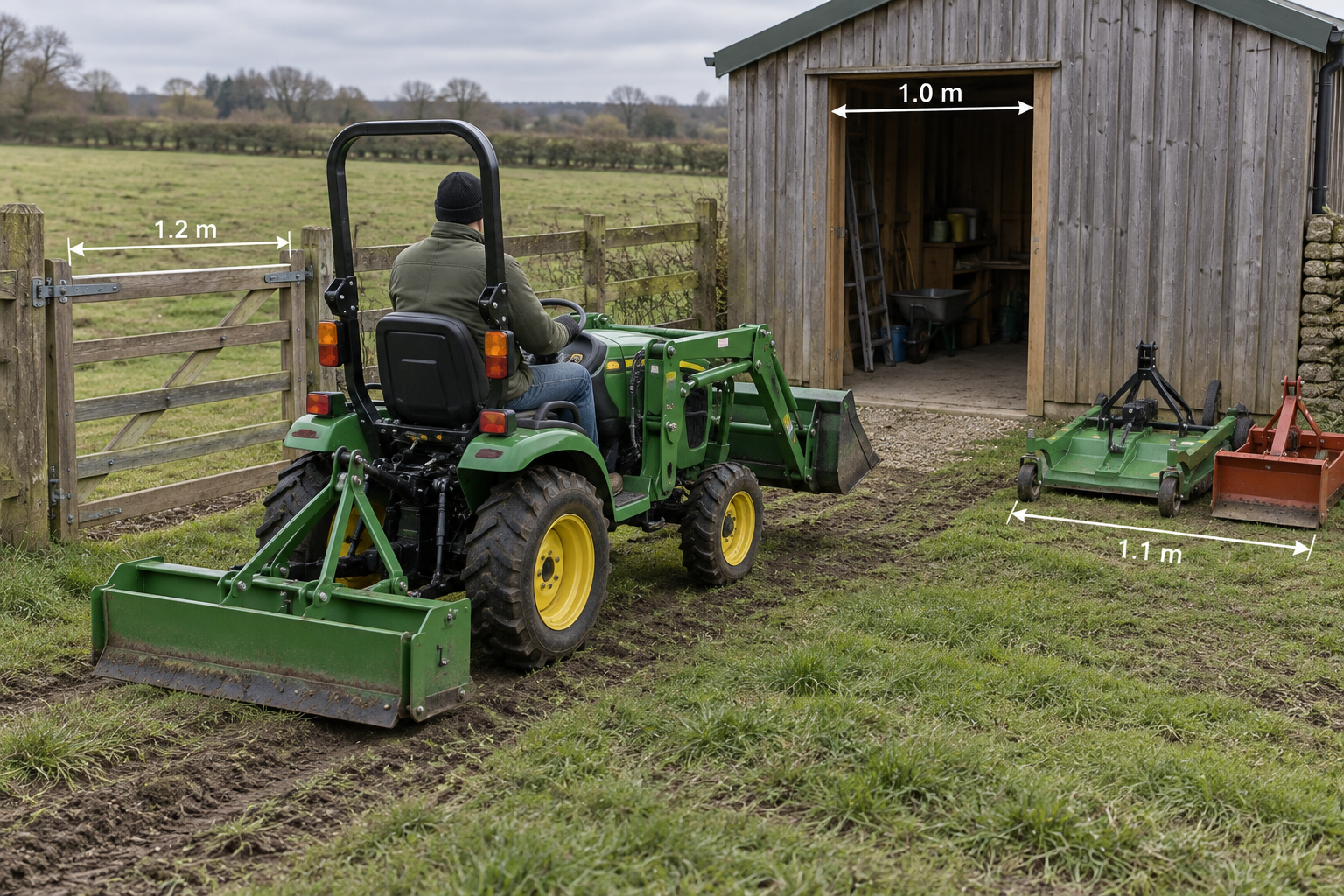
Here a sub compact wins. A narrow machine fits through garden gates, between trees and around sheds. If your tightest gate is 5 feet wide, a 6-foot compact simply won’t get through, whatever its power.
Engine HP vs. PTO HP: Which Number Matches Your Implements?
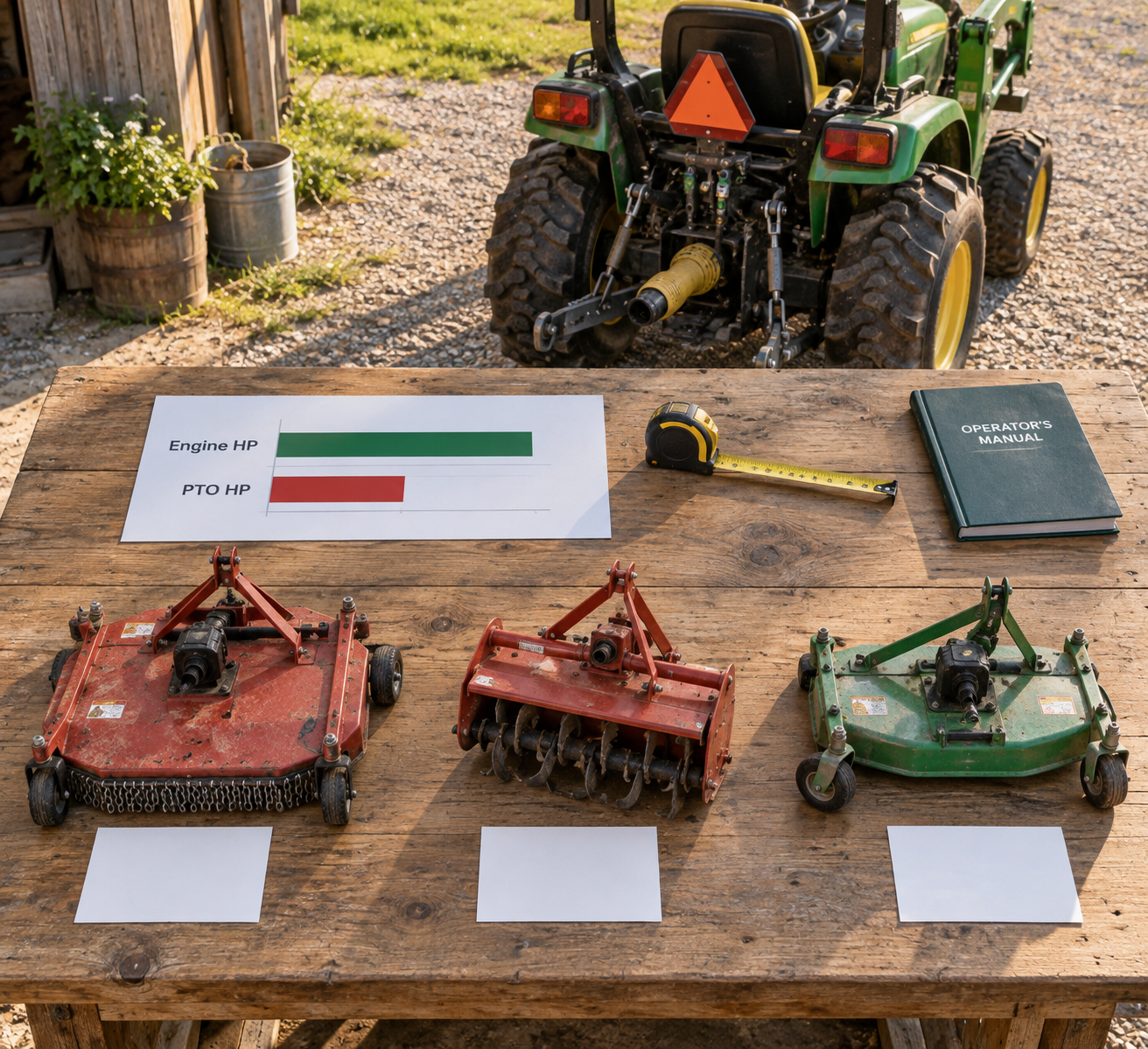
Engine horsepower is what the maker advertises. PTO horsepower is what reaches the implement, and it’s lower, often by about 10 to 20 percent. When you match a mower, snowblower or tiller, use the PTO number.
Why does this trip people up? A tractor listed at 24 hp might deliver only about 20 hp at the PTO. That’s fine for a mid-mount mower but not enough for a 6-foot rotary cutter.
Under 25 horsepower is the usual cutoff for sub compact tractors, while compact tractors run from about 25 to 60 horsepower. — Bobcat, tractor size guide
Some tools don’t use the PTO at all. A box blade and a backhoe rely on tractor weight, draft and hydraulics. That’s why a heavy 23 hp tractor can grade a driveway that a light 30 hp machine can’t.
Attachments: What a Sub Compact Can Really Run
Size the tractor to the heaviest attachment you’ll own in the first two years. Don’t size it for the one big job you do once a year.
A sub compact handles a front loader, a mid-mount mower (the deck hangs under the belly, usually 54 to 60 inches wide), a front snowblower and a rear blade or box blade. Many also run a small backhoe, a post-hole digger and a light tiller.
Here’s a rough PTO guide for common tools. Numbers are typical.
Implement
Typical width
PTO hp wanted
Fits sub compact?
Mid-mount mower
54 to 60 in
15 to 20
Yes
Box blade
48 to 72 in
Draft, not PTO
Yes, smaller widths
Post-hole digger
9 to 12 in auger
20 to 30
Top-end models
5-ft rotary cutter
60 in
25 to 30
Usually no
5-ft rototiller
60 in
30 to 35
No
6-ft rotary cutter
72 in
40 to 45
No
Notice the pattern. Mowing and light grading fit. Brush cutting and tilling at full width push you into a compact.
The Loader Is the Number to Check
Most owners use the loader more than anything else. It moves gravel, mulch, firewood and storm debris. Its lift capacity decides whether the tractor feels capable or frustrating.
Lift ratings use different measuring points, so compare them at the same spot. Also add rear ballast, such as a filled rear tire or a weight box, so the back end stays down under load.
Sizing Your Tractor Step by Step
Follow this order. It keeps you from buying on horsepower alone.
Write down your three heaviest regular jobs, such as hauling gravel, blowing snow and mowing 3 acres.
Measure your tightest gate, shed door and path between trees. Add a few inches of clearance.
Note your steepest slope and your soil. Soft or hilly ground points to four-wheel drive and more weight.
Check the loader’s lift capacity and the weight of your heaviest load, such as a full bucket of wet gravel.
Only now match horsepower. Pick the smallest tractor that handles the largest implement comfortably.
Check the price with the loader and mower deck included, and budget for a trailer if you’ll haul it.
Hydrostatic or Gear?
A hydrostatic transmission works like an automatic. You push a pedal forward or back to change speed, with no clutch. It’s easier for loader work, where you switch direction often. Gear drives cost less and can be tougher under heavy PTO loads, but most homeowners are happier with hydrostatic.
New vs. Used Pricing
Prices vary by model and loader package. Expect roughly $15,000 to $25,000 for a new sub compact with a loader and deck, and more for cab or premium versions. Larger compacts run about $25,000 to $50,000 or more. These are rough market ranges, so confirm at a dealer.
When a Sub Compact Is the Wrong Choice
A sub compact is a bad fit in several cases. Be honest about these before you buy.
Steep slopes. Light tractors can tip or slide on hills. If your slope is steep enough to worry you on foot, a larger, wider, heavier machine is safer. A wide wheelbase matters here.
Heavy loader work. If you move large rocks, full buckets of wet soil or round bales, a sub compact will lift its rear wheels or strain the hydraulics. Don’t treat it like a heavy-duty tractor. Overloading the loader or hitch is the most common way buyers wear one out.
10 acres or more. Mowing that much with a 54-inch deck takes hours. At 10 to 25 acres, a larger compact with a bigger mower or rotary cutter will save you real time.
Big implements. Full-width tillers, 6-foot rotary cutters and balers need more PTO power than most sub compacts make.
When a Garden Tractor or Zero-Turn Is Enough
Do you mostly mow, with a bit of light towing? A garden tractor or zero-turn riding mower will cost less and cut faster. A zero-turn is hard to beat on flat open lawn. It can’t push snow well, lift a pallet or grade a driveway.
If you have a few acres, a drive to plow and a pile of mulch each spring, the sub compact earns its price. If it’s just grass, it probably doesn’t.
Buying advice from a site like The Mowers Guide can help you compare mowers and tractors for your lawn. Still, your own gates, slopes and jobs should decide the final pick.
Brands, Reliability and Buying Used
Kubota is the name most buyers know in this class, and its BX series is a common reference point. John Deere, Yanmar, LS and Massey Ferguson also make sub compacts and larger compacts. Almost nobody buys the wrong brand, but plenty buy the wrong size.
Dealer support matters more than the badge. A brand with a nearby service shop beats a slightly better machine two hours away.
What to Check on a Used Tractor
Look at these before you make an offer:
Hours on the meter (low hours help, but age and storage matter too), and a cold start without smoke or long cranking. Check the loader pins and bushings for slop, and the hydraulic hoses for leaks. Run the PTO and check it engages. Drive it forward and back on a hydrostatic and listen for whining. Look at tire wear and sidewall cracks, and ask for service records.
If you can, bring someone who knows tractors. A bad hydrostatic transmission or worn loader can cost thousands to fix.
Frequently Asked Questions
What size tractor do I need for 5 acres?
For 5 acres, a top-end sub compact or small compact in the 25 to 31 hp range works for mowing and light chores. Add brush, grading or a box blade, and a heavier compact is the better choice.
How much horsepower does a sub compact tractor have?
Most sub compact tractors make about 18 to 25 engine horsepower. PTO horsepower, the power that reaches your implement, is lower, so match mowers and snowblowers to the PTO figure.
What is the difference between a sub compact and a compact tractor?
A sub compact is narrower, lighter and has less hitch and loader strength. A compact is heavier, usually 25 to 60 hp, and lifts more. Brands draw the line differently, so compare weight and loader lift.
Is a sub compact tractor better than a riding mower?
It’s better if you need a loader, snow removal or grading. For mowing alone, a zero-turn or garden tractor costs less and cuts faster. Pick by your heaviest regular job.
A quality electric self-propelled mower from a major brand now costs between $400 and $700, roughly the same as a comparable gas mower, which removes the price premium that kept most...
A tow-behind leaf vacuum can clear an acre of turf in under an hour, while a handheld unit rated at 250 CFM often takes three or four hours to do the...
1 August 2026
The Mowers Guide is reader-supported. When you buy through links on our site, we may earn an affiliate commission.






Comments are closed.