Is the Toro TimeMaster worth about $1,650? For roughly half an acre or more of flat lawn, yes. The 30-inch walk-behind has a 223cc Briggs & Stratton engine, Personal Pace self-propel and a deck that cuts your mowing time sharply. Owners report it running close to a decade. For a small or cramped yard, it is heavy, bulky and too expensive.
This guide shows where the break-even point sits, who should skip it, what goes wrong with age, and how to inspect a used one.
Who the TimeMaster Suits and Who Should Skip It
Do you have a big, mostly flat lawn and a free weekend you would rather spend elsewhere? Then you are the target buyer. The TimeMaster was built to shrink the time between “start the mower” and “sit in the hammock.”
Good fits
The mower works best on open lawns of about 15,000 to 25,000 square feet (roughly a third to half an acre and a bit beyond). Think suburban corner lots, rural lots with a wide front yard, or a long backyard with few beds in the way. One reviewer with a third-of-an-acre lot was spending an hour and a half to two hours with a smaller mower before switching.
It also suits you if you already know basic mowers and want a better cut. The two 15-inch blades overlap to mince clippings finely, and many owners say the cut beats a single-blade 21-inch mower.
Poor fits
Skip it if your lawn is under about 8,000 square feet. You will pay roughly twice the price of a good 21-inch mower and save only a few minutes per mow. Skip it if you have steep slopes, tight side gates or a crowded garage.
Also skip it if you hope it will replace a riding mower on a huge or rough property. It is still a walk-behind. On 1 acre or more, or on bumpy ground, your legs will notice.
The TimeMaster’s commercial sibling is the TurfMaster HDX 30. The TimeMaster is the home-use version, aimed at homeowners with larger yards.
Specs That Matter: Deck, Engine and Drive
The numbers below are the ones you will compare in a store or a listing. Prices are from 2026 and vary by retailer and model.
Feature
TimeMaster 30-inch
Cutting width
30 inches (two 15-inch blades)
Engine
223cc Briggs & Stratton OHV (PXi series)
Gross torque
About 10 ft-lb
Drive
Personal Pace self-propel
Height adjustment
Two-point deck adjustment
Safety
Blade stop system (engine keeps running)
Warranty
3-year guaranteed-to-start
Typical price
About $1,650 to $1,750 new
The deck and the cut
A 30-inch deck covers about 43% more ground per pass than a 21-inch deck. Toro says the mower reduces mowing time by up to 40% versus its 21-inch mowers, and that depends on your lawn. Two blades also mean a longer deck, which is why it is harder to turn in tight spots.
The engine
OHV means overhead valve, a common design that runs cooler and starts easily. The 223cc engine has enough torque to handle thick grass in normal conditions. It is a big mower engine, not a tractor engine, so wet, overgrown grass will still slow it down.
Personal Pace
Personal Pace is the self-propel system. You push the handle forward and the mower senses your walking speed and matches it. There is no speed lever to fiddle with. On uneven ground, the Traction Assist handle helps you keep control.
Features You Will Use Every Week
A premium price should buy small conveniences. Here, a few of them matter more than the spec sheet.
The blade stop system lets you release the safety lever to stop the blades without killing the engine. When you hit a hose or a stick, you walk over, clear it and squeeze the lever again. No restarting each time.
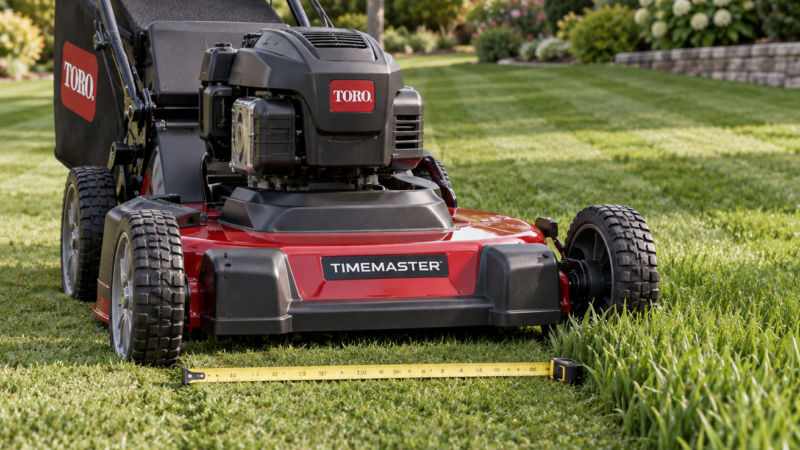
The quick-stow lever folds the handle into one of two storage positions. This helps in a garage, but the folded mower is still wide. Measure your space first.
The wash-out port is where you attach a garden hose to rinse the underside of the deck. That matters because the mower is heavy, and tipping it can leak fuel. If you do tip it, make sure the tank is about half full or less and keep the gas cap side up. Some older models lack the port, so check before buying used.
Two-point height adjustment is simple. You set the front and rear in two moves, which is fast but not as fine as a lever-per-wheel system. Most homeowners keep one height all season, so it rarely gets in the way.
The Time-Versus-Money Math: When It Pays Off
Here is the reality check most reviews skip. A good 21-inch mower costs about $500 to $700. The TimeMaster costs about $1,000 to $1,150 more. Is the extra time worth that?
Take a 20,000 square foot lawn. Mowing at 3 miles per hour with a 21-inch deck (about 18 inches of effective width after overlap) covers roughly 8,000 square feet per hour of pure cutting, so the job takes about 2.5 hours. A 30-inch deck (about 27 inches effective) covers about 12,000 square feet per hour, so it takes about 1 hour 40 minutes. You save about 50 minutes per mow, before turns and trimming. Those are estimates, and your lawn will vary.
Now count mows. In most of the US, about 25 to 30 mows a year is normal, and 35 or more in the humid South. At 28 mows, 50 minutes saved is about 23 hours a year. Over 8 years, that is about 186 hours. The extra $1,100 works out to about $5.90 per hour saved. If your weekend hour is worth more than that, it pays for itself.
For a 7,500 square foot lawn, the saving is about 20 minutes per mow, or roughly 9 hours a year. The cost per hour saved jumps to about $15. That is a hard sell.
The rule of thumb: below about 10,000 square feet, buy a 21-inch mower. Between 10,000 and 15,000, it is a judgment call. Above 15,000, the TimeMaster starts to make financial sense.
Common Problems and How Long It Lasts
What breaks first on a TimeMaster? Not the engine, usually. It is the small stuff, and most of it is preventable.
Known weak spots
The most repeated complaint is fuel leaking through the gas cap, especially on early models. One owner of a 2014 version said Toro replaced the tank and the leak stayed. Never tip the mower with a full tank, and store it level.
The drive belt is another wear item. If the mower stops pulling itself, it is often the belt or the traction cable adjustment. Toro publishes video guides for both on its help center. Blades also need sharpening or replacing yearly if you mow often.
Heavy use is the other concern. Reviewers note some people worry about durability under constant hard work. It is a homeowner machine, not a landscaper’s tool.
Lifespan
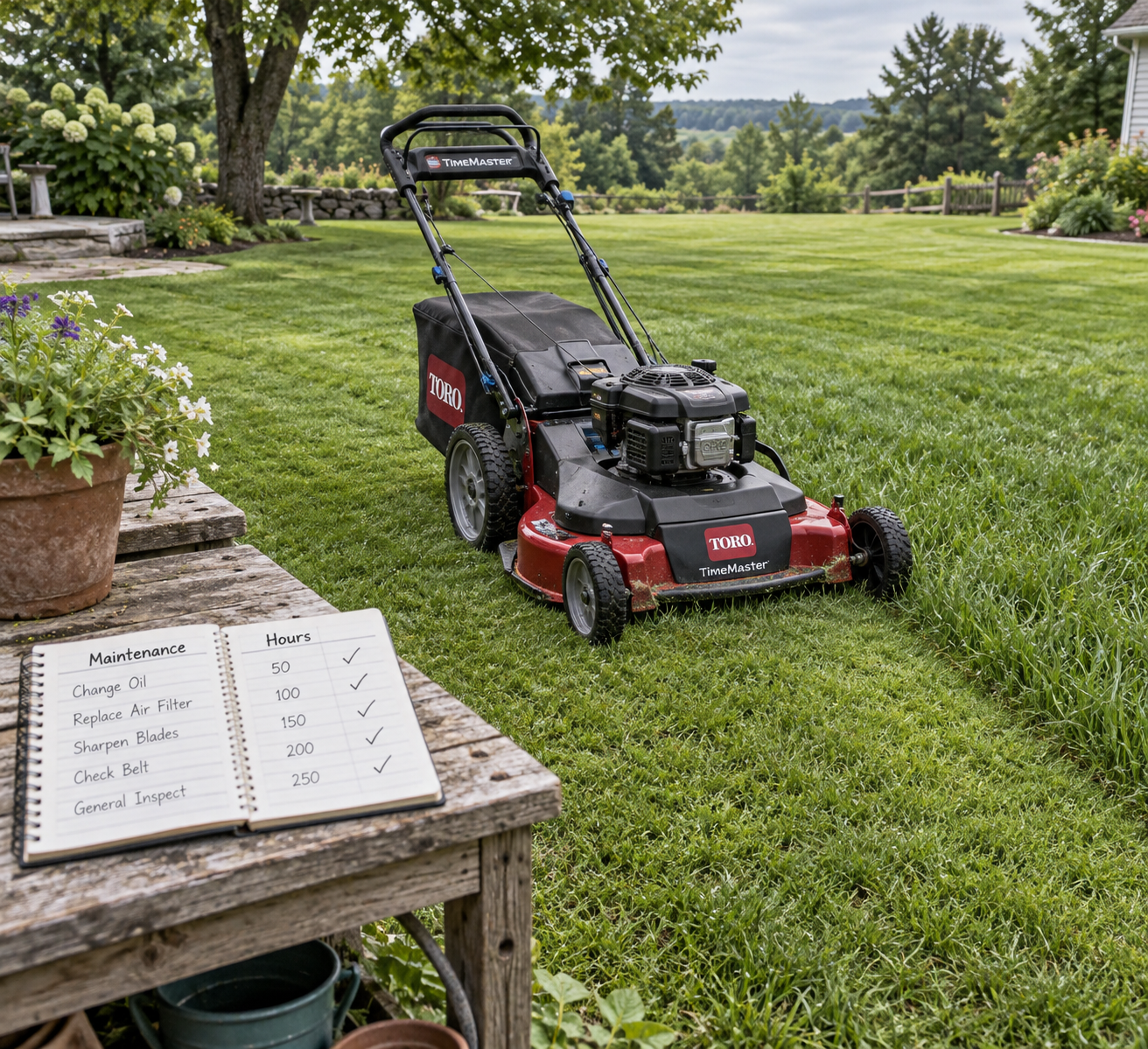
Expect 8 to 10 years with decent care. One owner reported using a 30-inch model for nine years after paying just under $1,200. Maintenance makes the difference: change the oil each season, clean the deck after mowing, replace the air filter and spark plug on schedule, and use fresh fuel with a stabilizer in the off-season.
Skip the maintenance and you can shorten that to four or five years. That is the most common mistake with any premium mower.
Weight, Slopes, Gates and Storage
Does a 30-inch deck fit your yard? Check these four things before you pay.
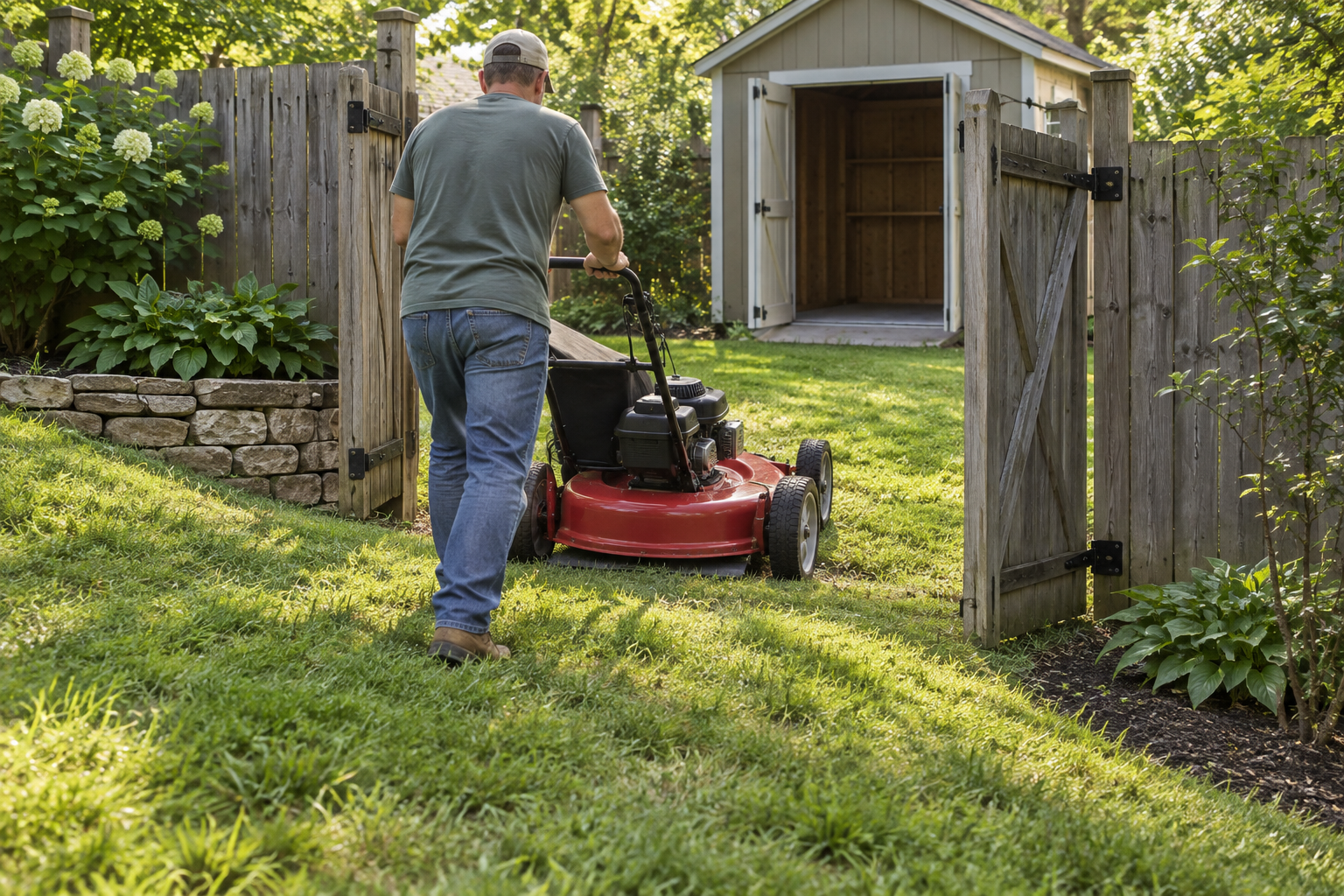
First, gates. The mower is about 30 inches wide at the deck, and the wheels stick out slightly farther. A standard 36-inch gate works, but a 32-inch gate is tight. Measure your narrowest opening.
Second, corners and beds. A wide deck turns in a bigger arc. Expect to trim more by hand around curved beds, trees and fences. If your lawn is a maze of landscaping, the time saved shrinks.
Third, slopes. Self-propel helps on gentle grades, but the machine is heavy, and a long deck is awkward on steep ground. A hillside above about 15 degrees is a no. Mow across gentle slopes only if you feel steady, and never pull the mower toward you downhill.
Fourth, storage. Folded, it still needs a floor space about 30 inches wide and a bit over 5 feet long. Check your shed or garage before the delivery truck shows up.
One more warning from lawn forums: mowing very short (below about 2.5 inches) with a long wheelbase can scalp the grass over bumps. Keep the height up on uneven turf.
Used TimeMaster Inspection Checklist
A used TimeMaster can save you several hundred dollars. It can also hide a lot of trouble. Here is how to check one in about 20 minutes.
Before you go
Ask for the model number and year. Then look up any open recall on the Toro site with the serial number (the dealer recall lookup is also an option). Ask whether it has ever been serviced and where the receipts are.
At the mower
Start it cold. It should fire in one or two pulls, since the warranty promise is “starts in one or two pulls.” Hard starting means old fuel, a dirty carburetor or worse. Look for smoke after a minute of running. Blue smoke points to oil burning.
Check the gas cap area for stains or a gas smell. Then look under the deck for cracks, heavy rust or a bent blade. A thick crust of old clippings suggests it was never washed.
Test the drive. Push it on level ground. Personal Pace should pull smoothly, with no slipping or jerking. Engage the blade stop lever and make sure the blades stop while the engine runs.
Fold the handle with the quick-stow lever, then unfold it. Loose or broken parts here are cheap to fix but signal rough treatment. Expect to pay about $700 to $1,100 for a good one, depending on age. If the seller wants near-new money for an old mower, walk away.
Alternatives: TurfMaster, 21-Inch Super Recycler and Others
The TimeMaster is not the only way to cut your mowing time. Compare these choices.
TurfMaster HDX 30
The TurfMaster is the commercial version. It costs more and is built for daily landscaper use. One owner with 7,500 square feet of turf loves his, but said that with 20,000 he would look at a 36-inch commercial machine. If you want longer life under heavy use, it may be worth it. If you mow once a week, the TimeMaster is enough.
21-inch Super Recycler
The 21-inch Super Recycler is lighter, easier to store and much cheaper, typically about $500 to $700. It handles small to medium yards well. It has a single blade, so the cut is not as fine, and it takes longer on big lawns. Buy it if your lawn is under about 10,000 square feet.
Bigger machines
Over about half an acre, think about a commercial walk-behind in the 36-inch range, or a riding mower or zero-turn. They cost more but can save far more time. A walk-behind with a 48-inch deck was the pick of one forum user with 13,000 square feet. For a lawn that large, the TimeMaster is the middle step, not the top.
Where to Buy, Parts and Manuals
Where do you find one? Ace Hardware, Lowe’s, Tractor Supply and independent dealers carry it, and prices run about $1,650 to $1,750 for new 2026 models. Compare those figures, because dealers offer sales and some sell electric-start versions for a bit more. Local dealers also handle warranty questions.
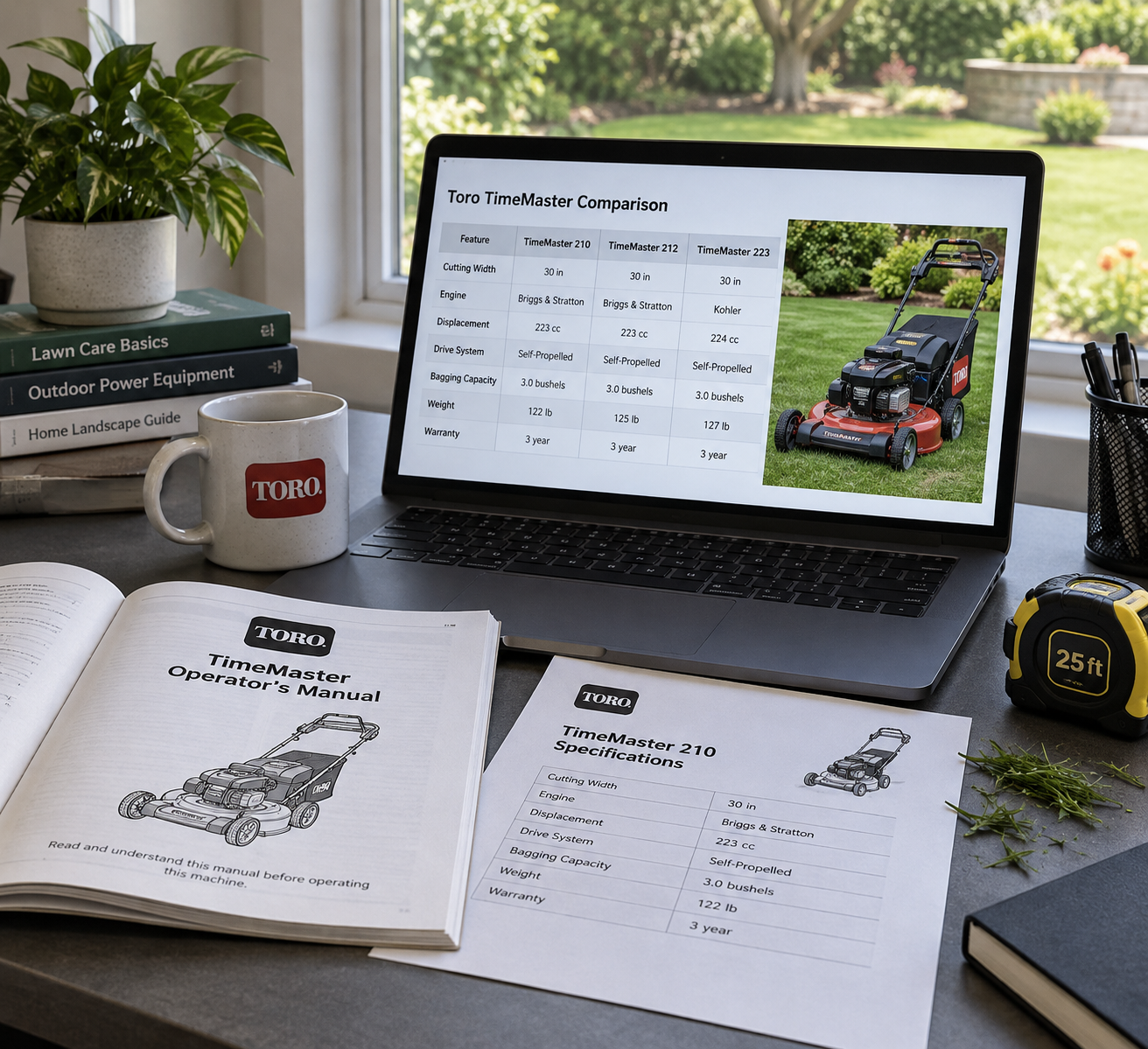
Parts are easy to find. Blades, belts, filters and spark plugs are stocked widely, because the 223cc Briggs & Stratton engine is common. Enter your model number on Toro’s help center to get the owner’s manual, parts diagrams and how-to videos. Keep the serial number handy.
The Mowers Guide covers more mower comparisons if you are still weighing options, and a few evenings of research is cheap compared with a $1,650 mistake. Pick the right size and your weekends will thank you!
Frequently Asked Questions
Is the Toro TimeMaster 30 worth the money?
Yes, if your lawn is about 15,000 square feet or more and mostly flat. It saves about 40 minutes or more per mow versus a 21-inch mower. On lawns under 10,000 square feet, the cheaper mower is the better buy.
How long should a Toro TimeMaster last?
Plan on 8 to 10 years with regular maintenance. Some owners report nine years or more. Oil changes, a clean deck, sharp blades and fresh fuel make the biggest difference.
Is a 30-inch TimeMaster too big for my yard?
It is too big if you have gates under about 34 inches, steep slopes, tight beds or a small garage. Measure your narrowest gate and your storage space before buying.
Is the TimeMaster good for a 20,000 square foot lawn?
Yes, it is a good match. Expect roughly 1 hour 40 minutes per mow on flat ground. Above about 25,000 square feet, a larger commercial walk-behind or a riding mower may serve you better.
A quality hedge trimmer can cost anywhere from $40 for a basic corded model to over $300 for a professional-grade battery unit. Picking the wrong price point often means buying twice....
A Husqvarna dealer will tell you the same thing most spec sheets leave out: a $2,500 lawn tractor running daily on a hilly, half-acre lot with tree roots and drainage ditches...
30 July 2026
The Mowers Guide is reader-supported. When you buy through links on our site, we may earn an affiliate commission.






Comments are closed.