A zero turn rider mower can cut mowing time on a half-acre lot by 40% or more compared to a standard riding mower, and that time savings compounds every single week of the growing season. If you’re comparing models before buying, that efficiency gap is exactly what justifies the price difference. Understanding what drives it will help you pick the right machine for your specific yard.
The key is not just speed. It’s how the mower moves, how the deck size fits your obstacles, and how the price tier aligns with what your lawn actually demands.
How a Zero Turn Rider Mower Actually Works
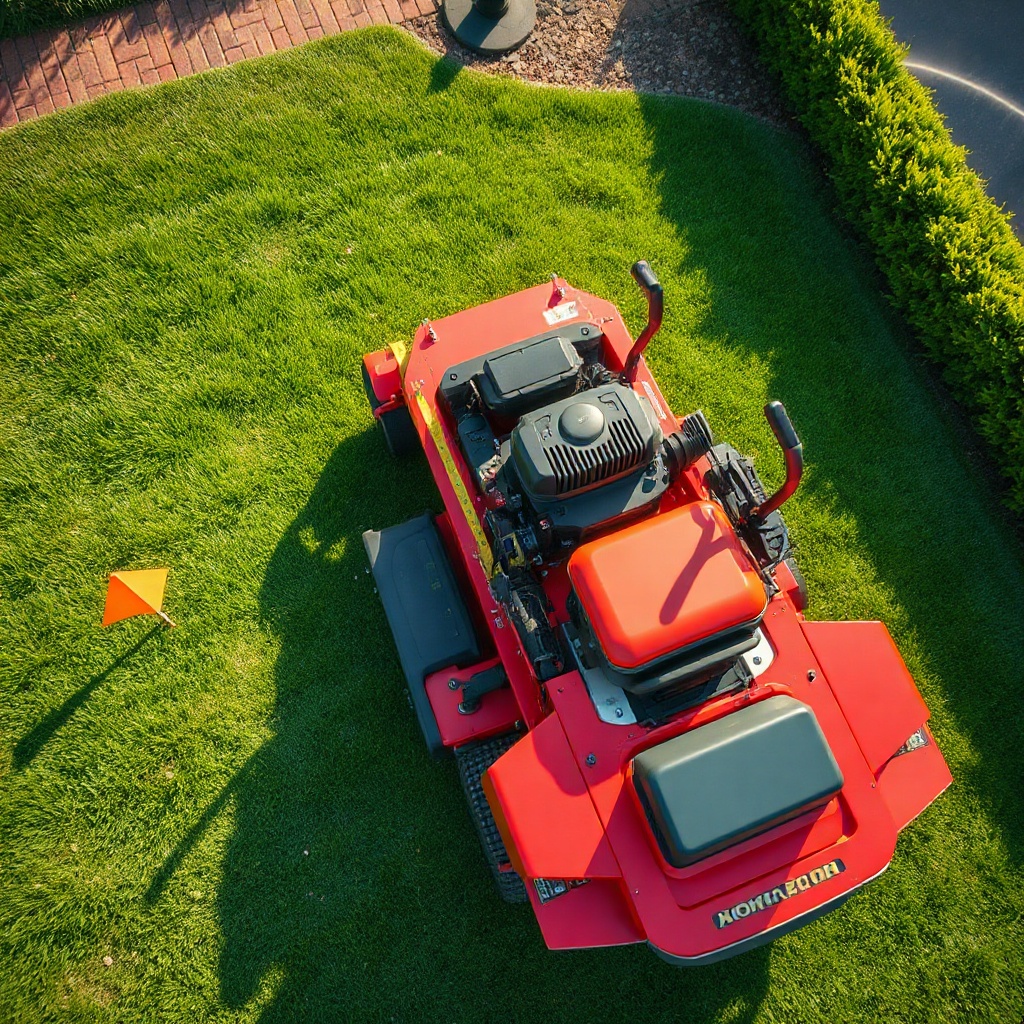
A zero turn rider mower steers by controlling two rear drive wheels independently, with no traditional steering linkage connecting them. Each wheel has its own hydrostatic transmission, which converts engine power into hydraulic fluid pressure to drive that wheel forward or backward. This is what makes true zero-radius turns possible.
Zero turning radius (ZTR) is defined as the ability of a mower to spin on its own axis by driving one wheel forward while the other reverses — producing a turn with effectively zero forward travel.
The Dual Hydrostatic Drive System
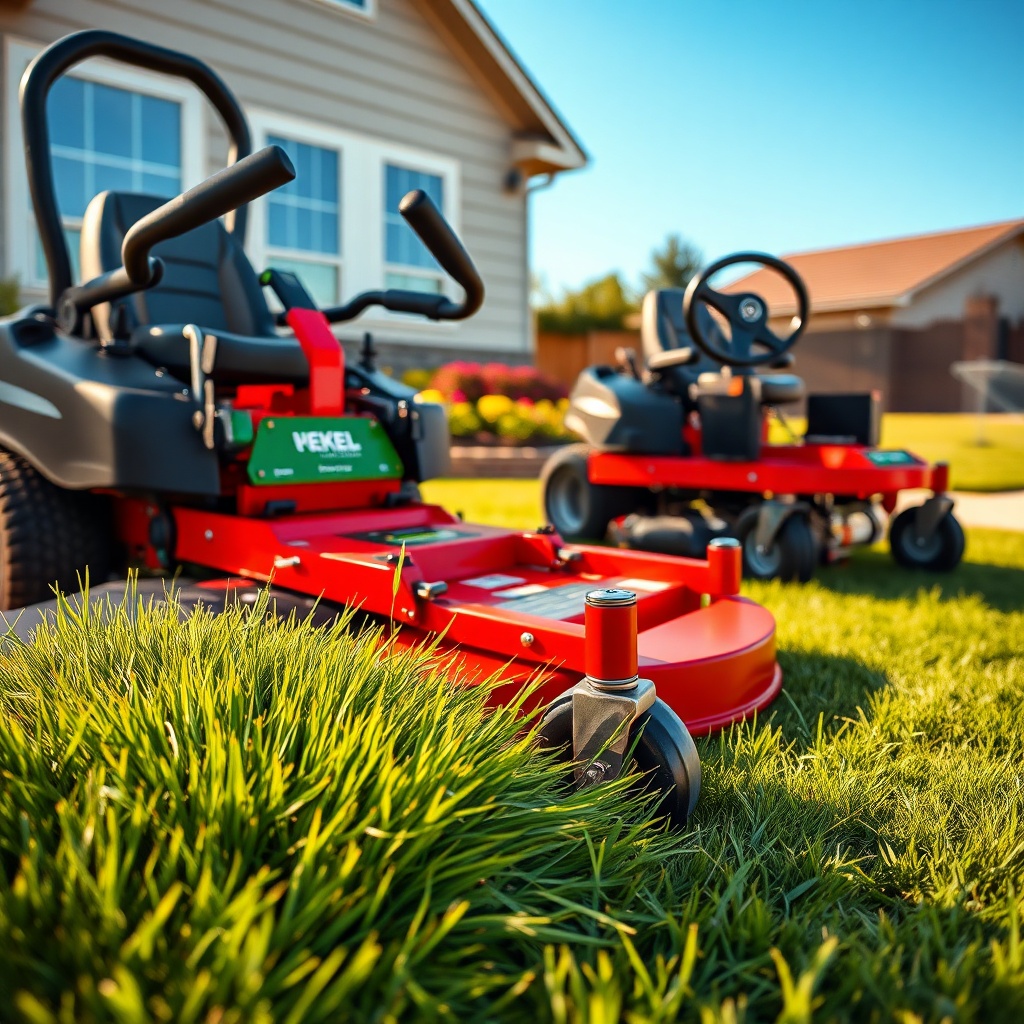
Each side of the mower has its own pump and motor paired together. Push both lap bars forward equally and you go straight. Push one forward while pulling the other back and the mower pivots in place. This independent drive setup is what separates a zero turn from every other riding mower class. The front caster wheels follow passively — they have no drive or steering function.
Why Turning Radius Matters More Than Speed
Most zero turns top out around 7–8 mph in cutting mode, which is not dramatically faster than a garden tractor. The real gain is in eliminating the wide three-point turns a tractor needs at every pass end. Fewer turns means fewer uncut strips, less time repositioning, and cleaner stripes.
Top Zero Turn Rider Mowers by Price Tier
Price determines more than brand badge — it determines frame construction, spindle quality, engine sourcing, and how long the hydrostatic pumps will last under regular use. The table below maps the major tiers to realistic specs and representative models.
Price Tier
Deck Width Range
Typical Engine
Representative Models
Best For
Under $3,000
42–46 in
18–22 HP
Husqvarna Z142, Cub Cadet ZT1 42
Flat lawns under 1 acre
$3,000–$5,500
48–54 in
22–26 HP
Toro TimeCutter 5000, Ariens IKON XD 52
1–2.5 acres, mixed terrain
$5,500 and up
54–72 in
25–35 HP
John Deere Z530M, Husqvarna Z560X
2.5+ acres, commercial use
Budget Models: Under $3,000
At this price point, you’re getting a residential-grade frame, a single-cylinder or small V-twin engine, and lighter fabricated or stamped decks. The Husqvarna Z142 runs a 42-inch deck with an 18 HP Kawasaki engine and retails around $2,500–$2,700 depending on dealer. It handles flat lawns under an acre without complaint.
Don’t expect commercial durability from a budget model. The hydrostatic pumps in this tier are integrated transaxle units — serviceable but not designed for daily professional use. For a homeowner mowing once a week, they’ll last many seasons with proper maintenance.
Mid-Range Models: $3,000–$5,500
This is where most homeowners with 1–2.5 acres get the best return. The Ariens IKON XD 52 uses a fabricated 52-inch steel deck and a 23 HP Kawasaki FR engine — a meaningful step up in blade tip speed and deck rigidity over budget stamped decks. The Toro TimeCutter 5000 series adds Smart Speed control, which lets you dial cutting speed independently of transport speed.
The mid-range tier is where deck quality makes a measurable difference in cut quality on uneven ground. Fabricated decks hold their shape under stress; stamped decks can flex and produce an uneven cut on bumpy terrain.
Premium Models: $5,500 and Up
The John Deere Z530M starts around $5,800 and uses a 24 HP V-twin with a 54-inch Accel Deep deck designed to handle heavy grass loads without clumping. At this level, you also get better seat suspension, higher-capacity fuel tanks (typically 3–5 gallons), and commercial-grade pump and wheel motor assemblies rather than integrated transaxles.
Buying commercial-grade for a small flat lawn is unnecessary spending. But if your property runs 3 acres or more, or if you’re cutting on a schedule that puts 200+ hours per year on the machine, the premium tier pays back in longevity.
Matching Deck Size and Engine Power to Your Yard
Deck size and engine horsepower are not interchangeable specs. They serve different functions, and getting either one wrong for your yard creates real problems every time you mow.
Cutting Deck Width: When Bigger Hurts You
A wider deck cuts more grass per pass, which sounds like a pure win. On an open, obstacle-free lawn it is. But a 60-inch deck on a yard with garden beds, trees, and fence lines forces constant repositioning that erases every efficiency gain the extra width provides.
The practical rule: measure the narrowest gate or gap the mower must pass through, then subtract 4–6 inches for comfortable clearance. A 48-inch deck fits through a standard 52-inch double gate; a 54-inch deck does not. For yards with multiple obstacles or tight areas, a 48-inch deck on a zero turn rider mower will outperform a 60-inch deck in total mowing time.
Horsepower and Displacement: What the Numbers Mean in Practice
Engine displacement (measured in cubic centimeters, or cc) is a more reliable indicator of power than the horsepower rating alone, since horsepower figures can be measured at different RPMs. A 725cc Briggs & Stratton Commercial Series engine and a 726cc Kawasaki FR series both produce around 23–24 HP, but the Kawasaki runs at a higher RPM range and typically shows better blade tip speed under load.
For residential use, 22 HP paired with a 48-inch deck is the practical floor for cutting through thick fescue or wet grass without bogging. Go up to a 54-inch deck and you want at least 24 HP to maintain consistent blade speed. Under-powering a wide deck is one of the most common spec mismatches buyers make. The engine lugs under load, cut quality drops, and belt wear accelerates faster than it should.
Yard Complexity Decides Your Class, Not Just Acreage
Acreage alone is a poor guide for choosing a zero turn rider mower class. A half-acre yard with a dozen trees, curved garden beds, and a fence line running through it demands more maneuverability than a flat, open two-acre lot. Match your mower class to yard complexity first, then confirm acreage fits within that class’s range.
Here are the four complexity factors that should drive your class decision:
Count the fixed obstacles — trees, beds, posts, and structures — that require a direction change within 10 feet.
Measure your narrowest passage, including gates and gaps between beds, and subtract 6 inches for your maximum deck width.
Note whether your terrain is flat, gently rolling, or has any slope steeper than 10 degrees.
Estimate your mowing frequency — once a week during peak season puts roughly 40–50 hours per year on a residential machine.
Open Flat Lawns vs. Tree-Dense or Obstacle-Heavy Yards
On open, flat ground, a larger deck pays off immediately. A 54-inch or 60-inch zero turn rider mower cuts wide swaths with minimal overlap, and the reduced pass count is real. A 60-inch deck covers roughly 30% more ground per pass than a 46-inch deck at the same speed.
A yard with 15 or more fixed obstacles per acre is a different situation. Every obstacle requires a turn, and a wider deck means more repositioning after each one. A compact zero turn with a 48-inch deck will finish that yard faster than a 60-inch model that keeps clipping obstacles and backing up to correct its line. The Ariens IKON XD 48 is a practical fit for this scenario: enough deck for efficiency, compact enough to thread through tight spots.
Terrain and Slope Limits You Cannot Ignore
Most residential zero turn rider mowers carry a manufacturer slope rating of 15 degrees maximum. This is not a conservative suggestion. It’s a stability limit based on the mower’s center of gravity and the way rear-wheel-drive traction behaves on inclines. On a slope steeper than 15 degrees, the front caster wheels can lift, and steering response becomes unreliable.
If your yard includes slopes above 10 degrees, look at models with a lower center of gravity and wider wheel stance, or consider whether a traditional riding mower with four-wheel traction is the safer tool for those sections.
Lap Bar vs. Steering Wheel Controls: Which Setup Fits You
Lap bars are the standard control interface on nearly every zero turn rider mower, and they give you the most direct, responsive steering. A steering wheel zero turn trades some precision for a more familiar feel. The right choice depends on how quickly you adapt to new equipment and how tight your yard’s maneuvering demands are.
How Lap Bars Work and Who Adapts Fastest
Lap bars, also called control levers, sit on either side of the operator seat and connect directly to the hydrostatic pump inputs. Push both forward to go straight; ease one back to steer. Most operators reach comfortable control within two to three mowing sessions.
Lap bars reward deliberate, smooth inputs. Jerky movements produce wavy cut lines until muscle memory develops. Operators who already use skid-steer loaders or similar equipment adapt in one session.
Steering Wheel Zero Turns: The Trade-Off in Precision
Steering wheel zero turns — models like the Cub Cadet Ultima ZT2 series — use a wheel-and-pedal system that feels closer to a car. The trade-off is a slightly larger effective turning radius compared to true lap-bar zero turns, because the steering geometry introduces a small amount of forward travel in each turn. For operators with limited hand strength or joint issues, the wheel setup is worth that trade-off.
Zero Turn Rider vs. Traditional Riding Mower: When the Upgrade Pays Off
A zero turn rider mower outperforms a traditional garden tractor on any lawn where repeated end-of-row turns eat into mowing time. On a one-acre flat lot, switching from a garden tractor to a zero turn can cut mowing time by 30–40%. That’s not because the zero turn moves faster. It’s because it eliminates the wide three-point turns at each pass.
The upgrade pays off when your lawn is at least three-quarters of an acre and has defined mowing lanes. Those are long runs where the zero turn’s efficiency advantage compounds with each pass. Below that size, a quality garden tractor in the $2,000–$2,500 range handles the job without the higher upfront cost or the learning curve.
The case against upgrading is straightforward. If your yard is under half an acre, heavily sloped, or broken into small irregular sections, a zero turn rider mower’s speed advantage largely disappears. A Husqvarna TS 354XD garden tractor with a 54-inch deck covers small-to-medium yards efficiently and handles slopes up to 20 degrees more safely than most zero turns. For those yards, the extra $1,000–$2,000 a zero turn costs doesn’t return a meaningful time saving.
Total Cost of Ownership: Blades, Belts, and Hydrostatic Fluid
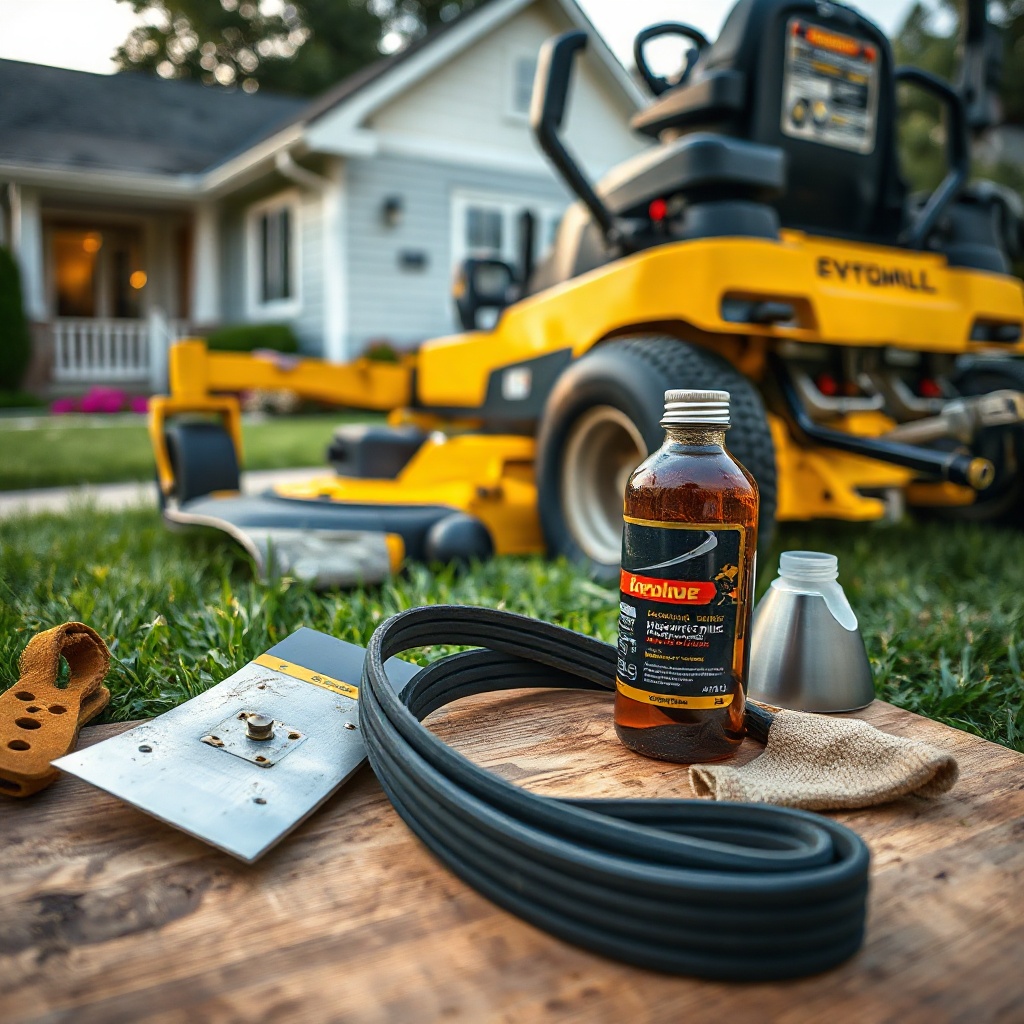
A zero turn rider mower costs more than its sticker price once you account for consumables and fluid maintenance. Budget roughly $300–$500 per year for a residential machine running 40–50 hours annually. That figure covers the parts most owners overlook until something fails.
Here are the recurring costs to plan for:
Replacement blades run $15–$40 each depending on deck size; a 54-inch deck uses three blades, so a full set costs $45–$120 per replacement cycle.
Deck drive belts typically need replacement every 100–200 hours of use. Expect to spend $25–$60 per belt, and most decks use one or two.
Hydrostatic fluid (often a 20W-50 motor oil or a manufacturer-specified hydraulic fluid) should be changed every 200–400 hours. A full fluid and filter service runs $30–$60 in parts.
Blade sharpening costs nothing if you do it yourself with a bench grinder, or $10–$20 per set at a shop.
Air filters and spark plugs add another $20–$40 per season.
Skipping hydrostatic fluid changes is the single most expensive maintenance mistake on a zero turn rider mower. Worn fluid accelerates pump wear, and a replacement hydrostatic pump costs $400–$800 installed.
Frequently Asked Questions
How many acres can a residential zero turn rider mower handle?
Most residential zero turn rider mowers are rated for up to 3–4 acres per session before heat and runtime become a concern. A 54-inch deck at 7 mph covers roughly 2 acres per hour. For lawns above 3 acres mowed weekly, step up to a commercial-grade model with a larger fuel tank.
Are zero turn mowers safe on hills?
Most residential models are rated for slopes up to 15 degrees. Beyond that, front caster wheels can lose contact with the ground, making steering unreliable. If your yard has steep grades, check the specific model’s slope rating in its operator manual before purchase. Do not assume all zero turns share the same limit.
What is the difference between a zero turn rider and a stand-on zero turn?
A stand-on zero turn (like the Toro GrandStand series) has no seat; the operator stands on a rear platform. Stand-ons are more compact and suit commercial crews moving between multiple properties. A zero turn rider mower is seated, more comfortable for long residential sessions, and generally less expensive at the entry level.
How often should I sharpen zero turn mower blades?
Sharpen blades every 20–25 hours of use, or any time you notice torn grass tips instead of clean cuts. Torn tips turn brown within a day and signal that blade edges are dull. A sharp blade also reduces engine load, which extends belt life.
TruGreen wins for most homeowners who want nationwide coverage, broad plans and low introductory prices. Lawn Doctor wins if you want a locally owned franchise and a more customizable, personal service....
Spray the wrong lawn weed killer on Zoysia or St. Augustine and you won’t just miss the weeds. You’ll kill patches of your own grass and spend the next two months...
20 August 2026
The Mowers Guide is reader-supported. When you buy through links on our site, we may earn an affiliate commission.







Comments are closed.