Stop mowing the second you see white smoke pouring out of the muffler. Before you assume the engine is dying, know this: white smoke from lawn mower engines is almost always oil burning off inside the combustion chamber, and in most cases it’s caused by too much oil in the crankcase, not a blown engine. That’s a fix you can do yourself in five minutes, for free.
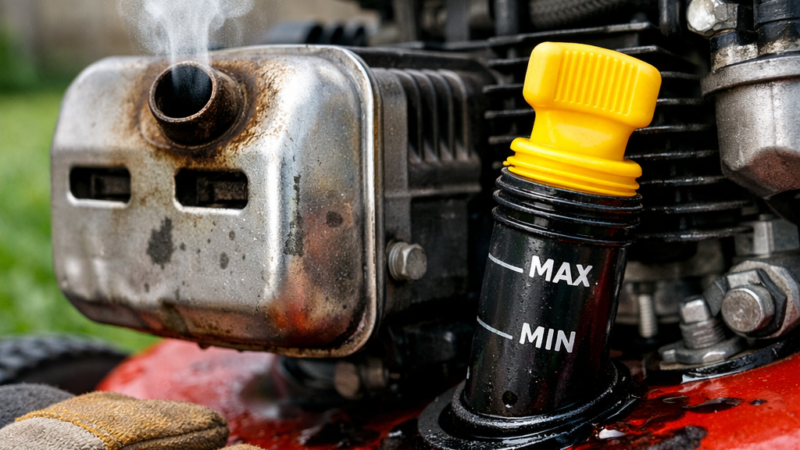
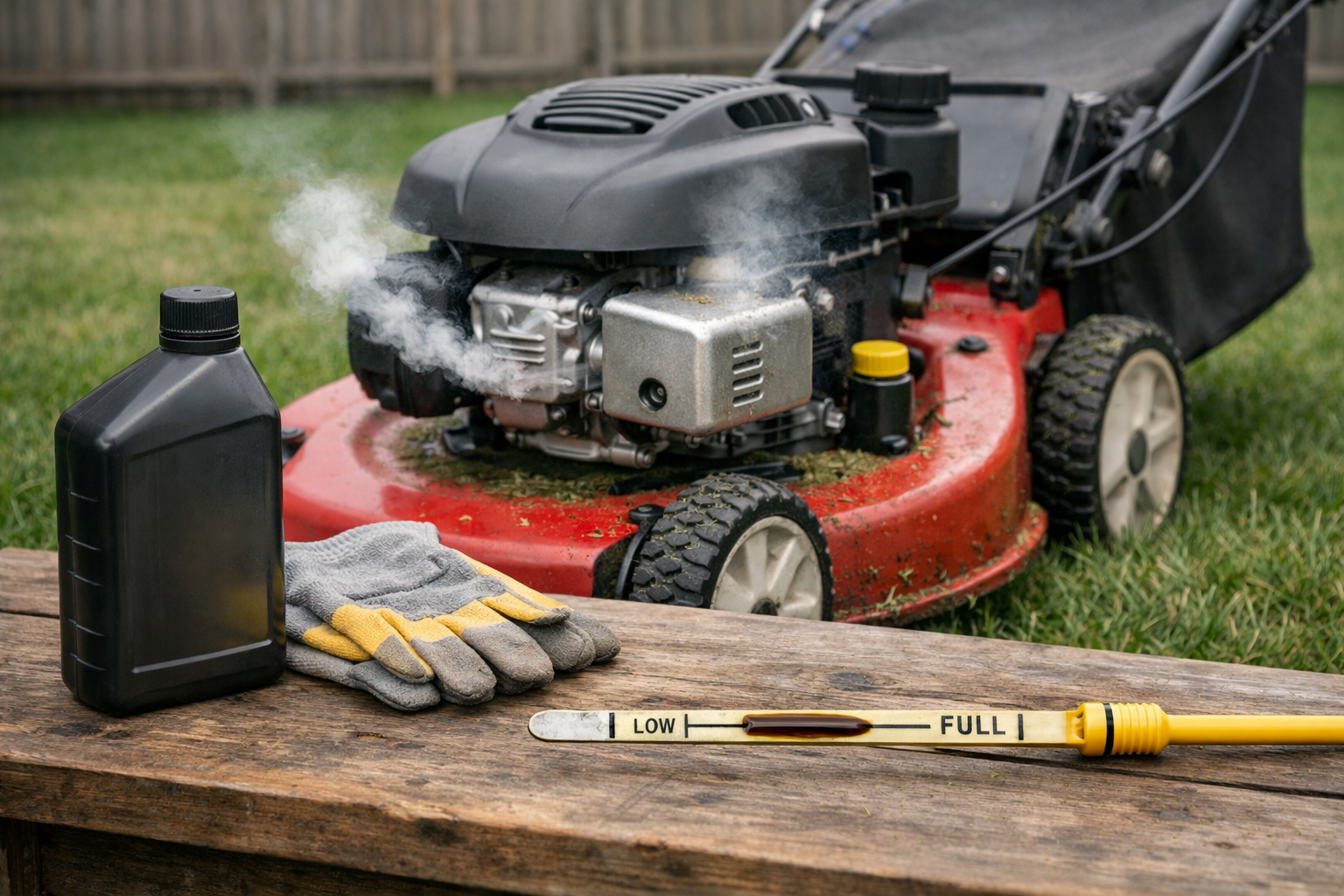
The trap most homeowners fall into is panicking and either shutting the mower down for good or, worse, adding more oil because they assume it’s running low. Both reactions skip the one step that actually matters: checking the dipstick correctly before touching anything else.
Why Is My Mower Smoking? The Overfill Problem Explained
The number one cause of white smoke from lawn mower engines is simple: too much oil in the crankcase. When oil sits above the fill line, the crankshaft churns it into a mist that gets pulled into the combustion chamber and burned along with the fuel-air mixture. That burning oil is what you’re seeing as white smoke.
How Overfilling Happens
It’s easier than you’d think. Someone tops off the oil without checking the dipstick first, or a “quick oil change” leaves in more than the manual calls for. A typical push mower engine, like a Briggs & Stratton 140cc, holds around 18 to 20 ounces of oil total. Go even a couple ounces over, and you’ll see smoke within minutes of starting it.
The Fix Takes Five Minutes
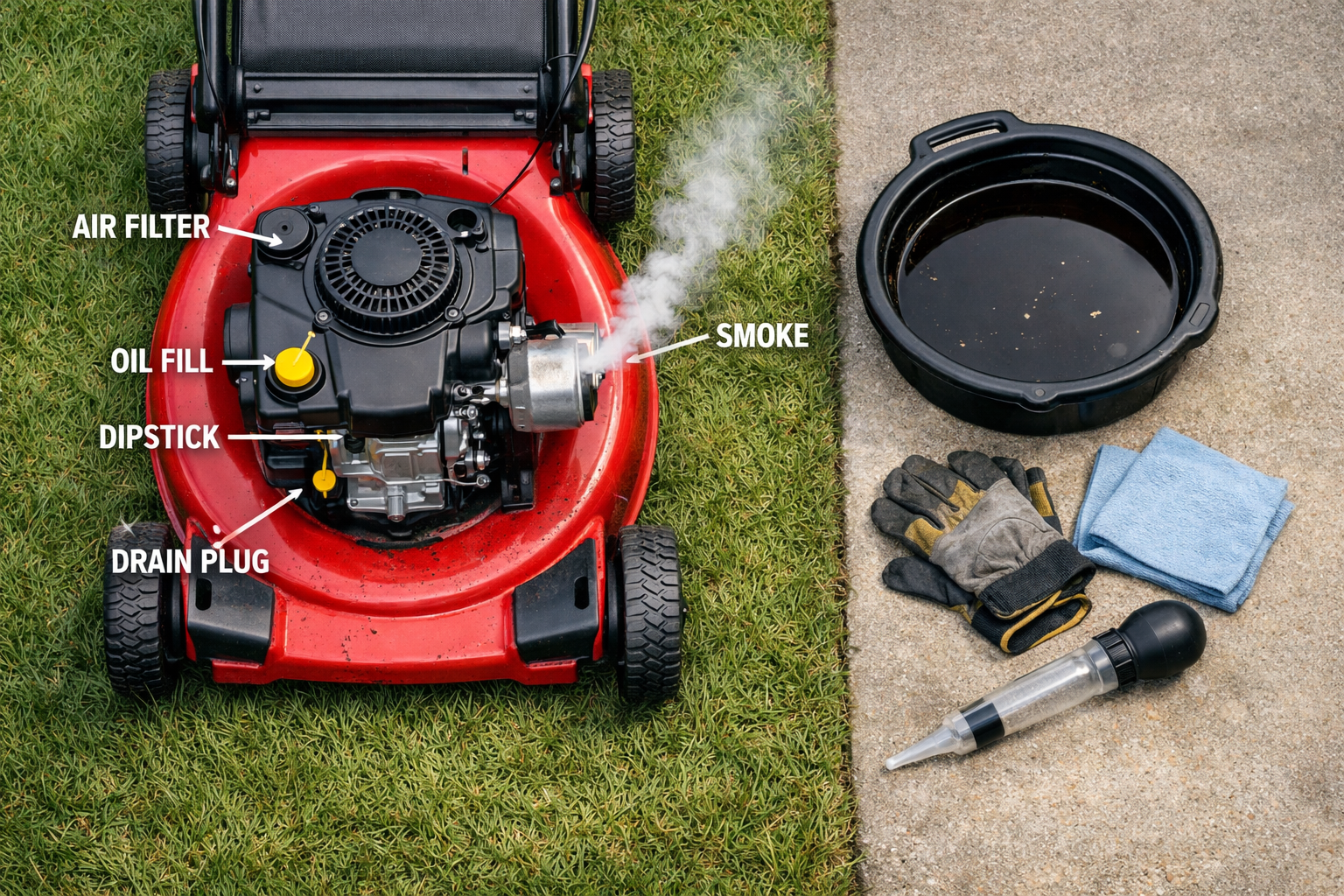
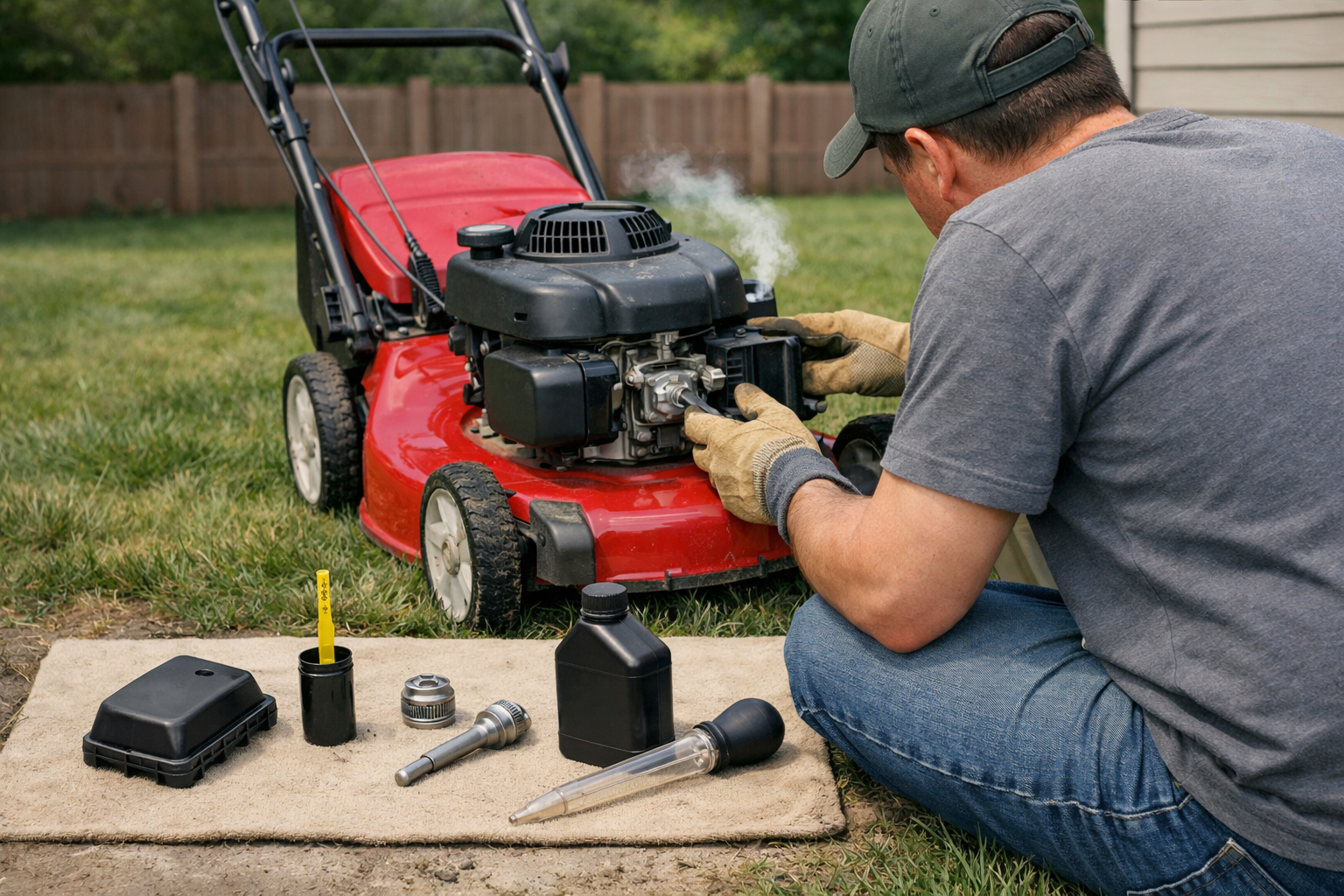
Tip the mower with the air filter side up (never carburetor side up), pull the drain plug or use a turkey baster through the fill hole, and remove the excess oil until it reads correctly on the dipstick. Run it again. If the smoke clears up in a minute or two, you just saved yourself a repair bill.
An overfilled crankcase is oil that has nowhere to go but into the cylinder, where it burns instead of lubricates.
This is the differentiator worth remembering: most “my mower is smoking, is it dying?” situations end with a $0 repair, not a $150 small-engine shop visit. Shops see this constantly, and plenty of owners pay for diagnostics on a problem that a dipstick check would’ve solved.
Beyond Overfill: When Smoke Signals Real Engine Trouble
If draining the oil doesn’t stop the smoke, or it comes back within a few mows, you’re looking at something mechanical. This is where the difference between a $0 fix and a $200+ repair really shows up.
Worn Piston Rings or Valve Seals
Piston rings and valve seals keep oil in the crankcase where it belongs. Once they wear out, oil seeps past them into the cylinder and burns constantly, not just after a topping-off mistake. You’ll notice smoke on every start, oil consumption that keeps climbing, and maybe a slight loss of power. This is a job for a small-engine mechanic, and depending on the mower’s age, it might not be worth fixing.
A Blown Head Gasket
A failed head gasket lets oil (and sometimes coolant on liquid-cooled engines) leak into the combustion chamber. Expect thicker, more persistent white-gray smoke, plus rough idling or a mower that struggles to hold RPMs. Head gasket jobs run in the $80 to $250 range in parts and labor depending on the engine, and on a mower worth less than $300, that’s a real financial call to weigh.
A Stuck-Rich Carburetor or Choke
If the choke sticks closed or the carburetor is dumping too much fuel, you’ll get smoke that smells more like unburned gas than oil, often paired with a rough-running engine. Cleaning or rebuilding the carburetor (a $20 to $40 part on most residential mowers) usually clears it up.
Mowing on a Slope: The Habit That Makes Smoking Worse
Running your mower on a steep hill lets oil slosh past the rings and into the cylinder, even on an engine with a correct oil level. It’s a mechanical reality of how these small four-stroke engines are built, not a mystery.
Most walk-behind mower engines are only rated to handle slopes up to about 15 to 20 degrees before oil control becomes unreliable. Push a mower past that consistently, and you’ll see smoke even with a textbook-perfect oil fill.
If you’ve got a sloped yard, mow across the slope, not up and down it, and keep an eye on oil level more often than you would on flat ground. Continuing to run a mower on a steep tilt after you’ve already seen smoke just accelerates wear on rings and seals that were fine a month ago.
Smoke vs. Vapor: Reading the Signal Correctly
Not all white stuff coming out of your mower is smoke. Cold, damp mornings produce condensation vapor that looks a lot like smoke but disappears within 10 to 15 seconds and has no smell.
Actual white smoke from burning oil has a burnt, oily smell, lingers longer, and usually gets thicker as the engine warms up rather than fading. If you’re not sure which one you’re dealing with, run the mower for two full minutes. Vapor clears fast. Smoke doesn’t.
Signal
Vapor (Normal)
White Smoke (Problem)
Duration
Clears in 10-15 seconds
Continues or worsens
Smell
None
Burnt, oily
Weather trigger
Cold, damp mornings
Any temperature
Engine behavior
Runs normally
Often rough or low on power
Here’s the practical sequence I’d run through anytime smoke shows up, before assuming the worst:
Shut off the mower and let it cool for a few minutes.
Set it on level ground and check the dipstick or oil level window.
If oil is above the “full” mark, drain the excess and recheck.
Restart and run it for two minutes, watching for smoke and smell.
If smoke persists, check for a stuck choke or fuel smell at the carburetor.
If it’s still smoking with correct oil and a clean carb, suspect rings, seals, or a head gasket and get it inspected.
Keeping a basic maintenance log, checking oil level monthly and after every oil change, is the kind of habit sites like themowersguide.com push hard on for a reason: most of these smoke calls trace back to a missed five-second check.
Frequently Asked Questions
Can I keep mowing if I see white smoke?
No. Shut the mower off right away. Running it while it smokes lets oil keep burning in the cylinder, which glazes the piston rings and turns a free fix into a real repair.
Does white smoke mean my mower’s engine is about to die?
Not usually. Most cases are an oil overfill, fixed by draining to the correct level. Persistent smoke after that points to worn rings or a gasket, but that’s the exception, not the rule.
Is white smoke different between two-stroke and four-stroke mowers?
Yes. Four-stroke mowers (most push mowers) smoke from crankcase oil burning in the cylinder. Two-stroke trimmers and some mowers mix oil with fuel, so smoke there usually means a wrong fuel-to-oil ratio, not an overfilled crankcase.
A zero turn rider mower can cut mowing time on a half-acre lot by 40% or more compared to a standard riding mower, and that time savings compounds every single week...
Brown patches after mowing? Weeds creeping into thin spots? Before you blame fertilizer or bugs, check your lawnmower blade height. Most lawn problems that homeowners chase for weeks trace back to...
1 September 2026
The Mowers Guide is reader-supported. When you buy through links on our site, we may earn an affiliate commission.





Comments are closed.