Won’t start? Runs rough, dies at idle, or surges under load? Before you touch the carburetor or drain the fuel tank, pull the spark plug. A fouled plug mimics half the fuel-system problems people spend money fixing, and checking it costs nothing but ten minutes and the right spark plug socket lawn mower owners actually need on hand.
Most guides skip straight to “replace the plug” without mentioning that a quick visual check often solves the mystery for free. Here’s how to check, clean, and replace it correctly, without cracking the porcelain or dropping a socket into your cylinder.
Which Spark Plug Socket Fits Your Mower?
Small engines almost always use one of two spark plug socket sizes: 5/8 inch for most standard mower plugs, or 13/16 inch for the larger plugs found on some Briggs & Stratton and older engines. Guessing wrong strips the hex or won’t seat at all, so check before you buy.
Why a Regular Socket Won’t Work
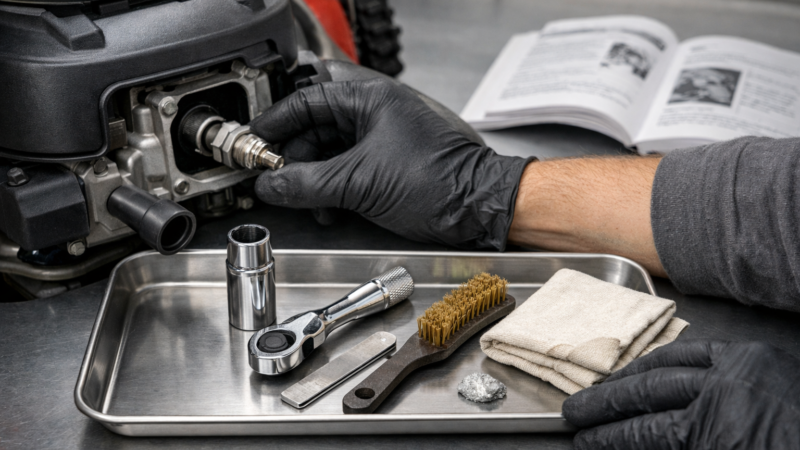
A dedicated spark plug socket has a rubber sleeve or spring insert inside that grips the plug’s porcelain body and keeps it from rattling loose. A standard socket has no insert. Use one and you risk cracking the insulator or dropping the plug straight into the cylinder as you lift it out, which turns a five-minute job into an engine teardown.
Confirming Fit Before You Buy Anything
Don’t assume every mower takes the same plug. Check your owner’s manual or the plug’s stamped part number first. Common mower plugs include the Champion RJ19LM and the NGK BPR6ES, and each brand’s cross-reference chart will tell you the correct socket size and gap.
Plug Brand/Model
Common Use
Socket Size
Gap Spec
Champion RJ19LM
Older Briggs & Stratton engines
13/16 in
0.030 in
Champion RC12YC
Common walk-behind mowers
5/8 in
0.030 in
NGK BPR6ES
Honda and Kohler small engines
5/8 in
0.028-0.031 in
Signs the Plug Is the Problem, Not the Carburetor
A bad plug usually causes hard starting, rough idle, or a mower that runs fine for a minute then dies. If you’re chasing a “fuel problem” that never quite gets fixed, pull the plug before you buy a carburetor rebuild kit.
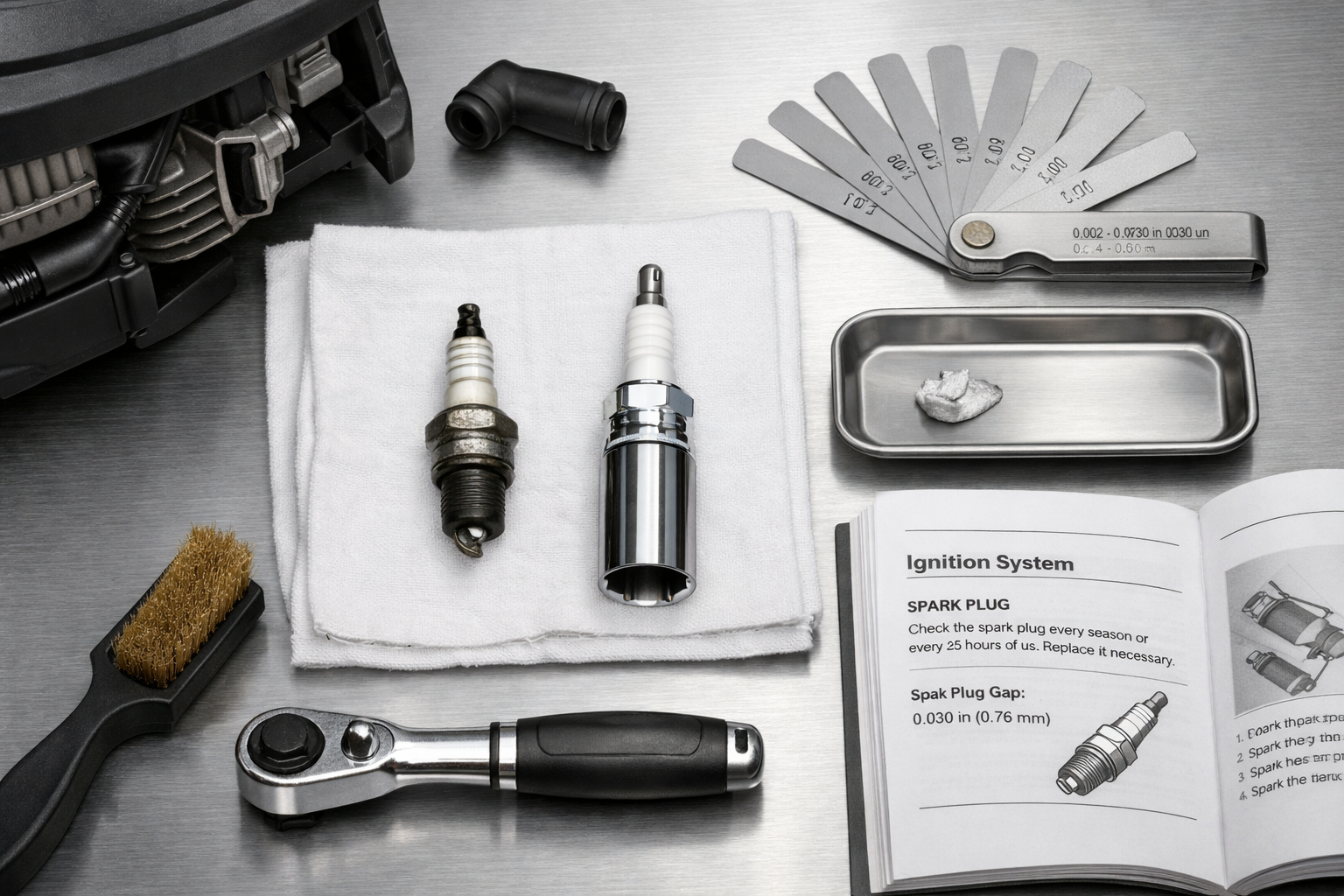
Look at the electrode tip once it’s out. Black, dry soot means a rich fuel mixture or too much idling at low load. Oily, wet fouling points to worn piston rings or an over-filled crankcase. A white, blistered look means the engine’s running too hot, often from a wrong plug heat range. A wide, worn gap on an otherwise clean plug just means it’s old and needs replacing on schedule.
A spark plug’s job is to ignite the compressed air-fuel mixture at exactly the right moment; anything that changes its gap, tip temperature, or spark quality changes how the whole engine runs.
Here’s the money-saving part: pulling the plug takes less time than researching carburetor symptoms online, and it costs you nothing since you already own the tools. Skip this step and you might spend $40 on parts you didn’t need.
Safety Steps Before You Remove Anything
Disconnect the spark plug wire before doing anything else, even if the mower is already off. Small engines can fire from a hand-pulled recoil rope, and a stray spark with fuel vapor nearby is a real hazard, not a theoretical one.
Shut off the engine and let it cool for at least 10 minutes if it’s been running.
Disconnect the spark plug wire by pulling the rubber boot straight off the plug, not the wire itself.
Clean debris from around the plug base with a small brush so dirt doesn’t fall into the cylinder.
Fit the correct spark plug socket (5/8 inch or 13/16 inch) onto a 3/8-inch drive ratchet or breaker bar.
Turn the plug counterclockwise to loosen, keeping steady pressure so the socket doesn’t slip off the hex.
Lift the plug straight out once it’s free-threading.
Inspect the tip before deciding whether to clean or replace.
Grounding the wire boot against bare metal before you start (if you’re doing other work nearby) is a habit worth building, even though for a simple plug check it isn’t strictly required.
Clean It or Replace It? Making the Call
Clean a plug that’s lightly sooted with normal wear; replace one that’s oily, cracked, or worn past its gap spec. A plug typically lasts one full mowing season under normal use, so if you can’t remember the last time it was changed, just replace it.
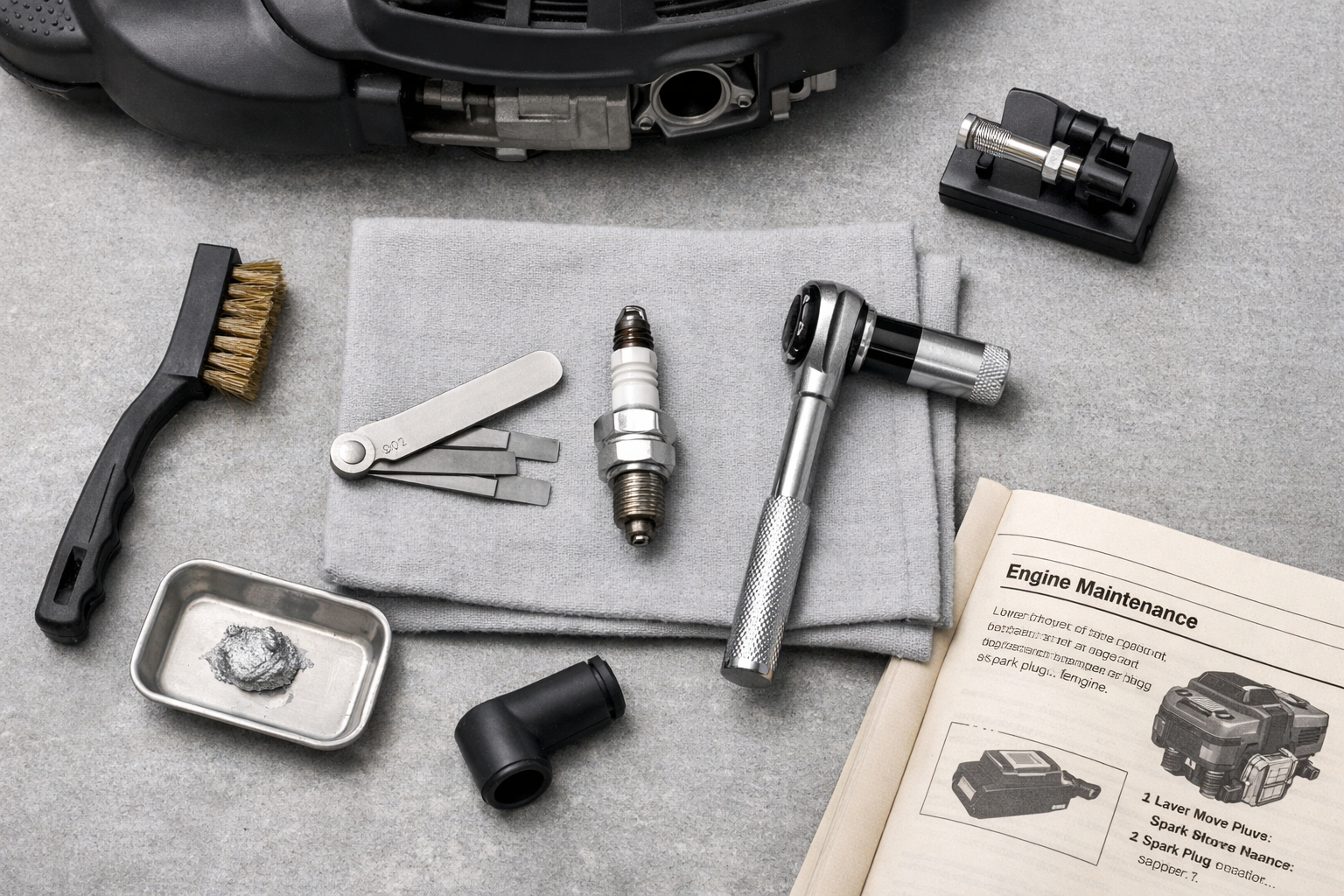
To clean it, use a wire brush gently, or better, a spray-on electrical contact cleaner and a soft brass brush. Scrubbing hard with a wire brush can round off the electrode edge, which actually hurts spark quality instead of restoring it. Wipe the porcelain clean with a rag; don’t scrape it with a screwdriver or knife.
After cleaning, always recheck the gap. This step gets skipped constantly, and it’s the reason a “cleaned” plug still runs rough. Use a wire-style gap gauge, not a flat feeler gauge, since the electrode is curved. Set it to spec, generally 0.030 inch for most Champion mower plugs, and confirm the gauge drags slightly as you pull it through.
If the plug shows heavy oil fouling, cracked porcelain, or a badly worn electrode, don’t bother cleaning it. A new plug costs $3 to $8 at most hardware stores, and it’s cheap insurance against a rough-running engine.
Reinstalling: Torque, Not Muscle
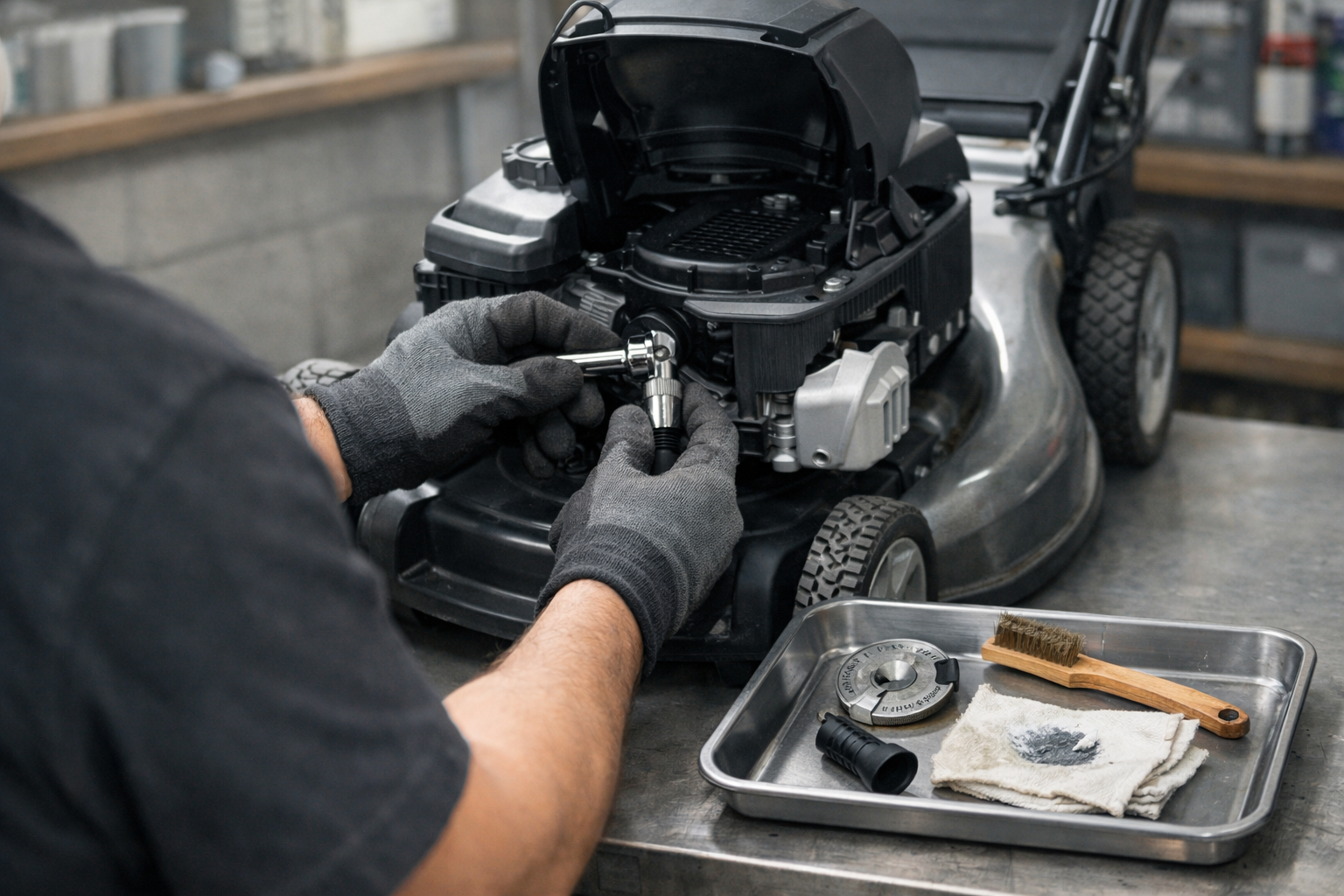
Hand-thread the new or cleaned plug in first, then snug it with the ratchet, roughly a quarter to half turn past finger-tight for a gasketed plug. Overtightening is one of the most common mistakes here, and it can crush the gasket or strip the aluminum threads in the cylinder head, which is a far more expensive repair than any spark plug.
If you have a torque wrench, most small engine manufacturers spec around 12-15 ft-lbs for gasketed plugs. Most homeowners don’t own one, and that’s fine. Snug plus a quarter turn is the practical rule mechanics use in the field.
Reattach the plug wire boot firmly until it clicks or seats fully. A loose boot causes intermittent misfires that look exactly like ignition problems, which sends people chasing the wrong repair all over again.
Working a full seasonal tune-up? A site like themowersguide.com keeps model-specific maintenance checklists handy if you want to pair this plug check with oil, air filter, and blade service on the same afternoon.
Frequently Asked Questions
What size socket do I need for a lawn mower spark plug?
Most mowers use a 5/8-inch spark plug socket; some older or larger Briggs & Stratton engines use 13/16 inch. Always confirm against your plug’s part number since guessing can strip the plug’s hex corners.
Can I clean a spark plug instead of replacing it?
Yes, if it’s just lightly sooted and the electrode isn’t worn or cracked. Use a soft brass brush or contact cleaner, then recheck the gap afterward, since cleaning alone doesn’t fix a gap that’s drifted out of spec.
How often should I replace my mower’s spark plug?
Roughly once per mowing season under normal use, or every 25-100 hours depending on the engine. Replace it sooner if you notice hard starting, rough idle, or visible electrode wear during a check.
Did you know some commercial reel mowers have up to 55 blades? These machines are just one of the many amazing lawn care innovations. Choosing between a manual and a powered...
Discover the pros and cons of gas, electric, and battery-powered lawn mower engines. I’ll help you choose the perfect engine for your yard maintenance needs.
3 May 2025
The Mowers Guide is reader-supported. When you buy through links on our site, we may earn an affiliate commission.





Comments are closed.