
Stihl 4 Cycle Weed Eater: Use and Maintenance Guide

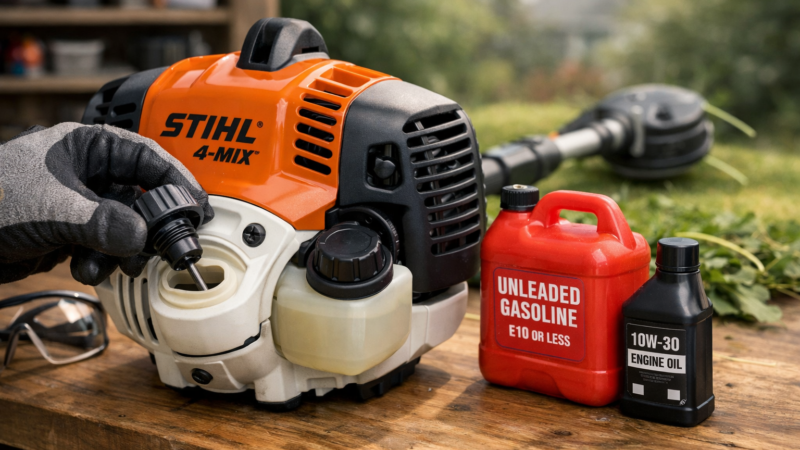
Pour gas and 2-cycle oil into a Stihl 4 cycle weed eater and you’ll likely kill the engine within a season. That’s the single biggest mix-up owners bring over from older Stihl trimmers, and it’s an easy one to avoid once you know the difference. A 4-cycle Stihl runs on straight gasoline with its own separate oil reservoir, just like a car engine, and skipping the oil check is what actually shortens its life.
What Makes a 4-Cycle (4-MIX) Stihl Different From a 2-Cycle Trimmer
Stihl’s 4-MIX engine is a true four-stroke design, meaning it has separate intake, compression, power, and exhaust strokes, and it needs engine oil sitting in a dedicated sump the same way your car does. A 2-cycle Stihl trimmer, by contrast, gets its lubrication from oil mixed directly into the fuel. Confuse the two and you’re in trouble fast.
Fuel Requirements
Run unleaded gasoline with no ethanol above E10, and never add 2-cycle oil to the tank. Stihl recommends 89 octane minimum for 4-MIX engines. Adding oil to the gas on a 4-cycle unit fouls the spark plug and gums up the combustion chamber pretty quickly.
Oil Requirements
Use a 10W-30 or SAE 30 small-engine oil, checking the reservoir before every single use, not just once a month. This is the habit most owners skip, and it’s the top reason 4-cycle Stihl engines wear out early. The oil fill is separate from the fuel fill, usually marked with its own cap near the base of the engine housing.
Recommended Stihl 4-Cycle Trimmer and Brushcutter Models
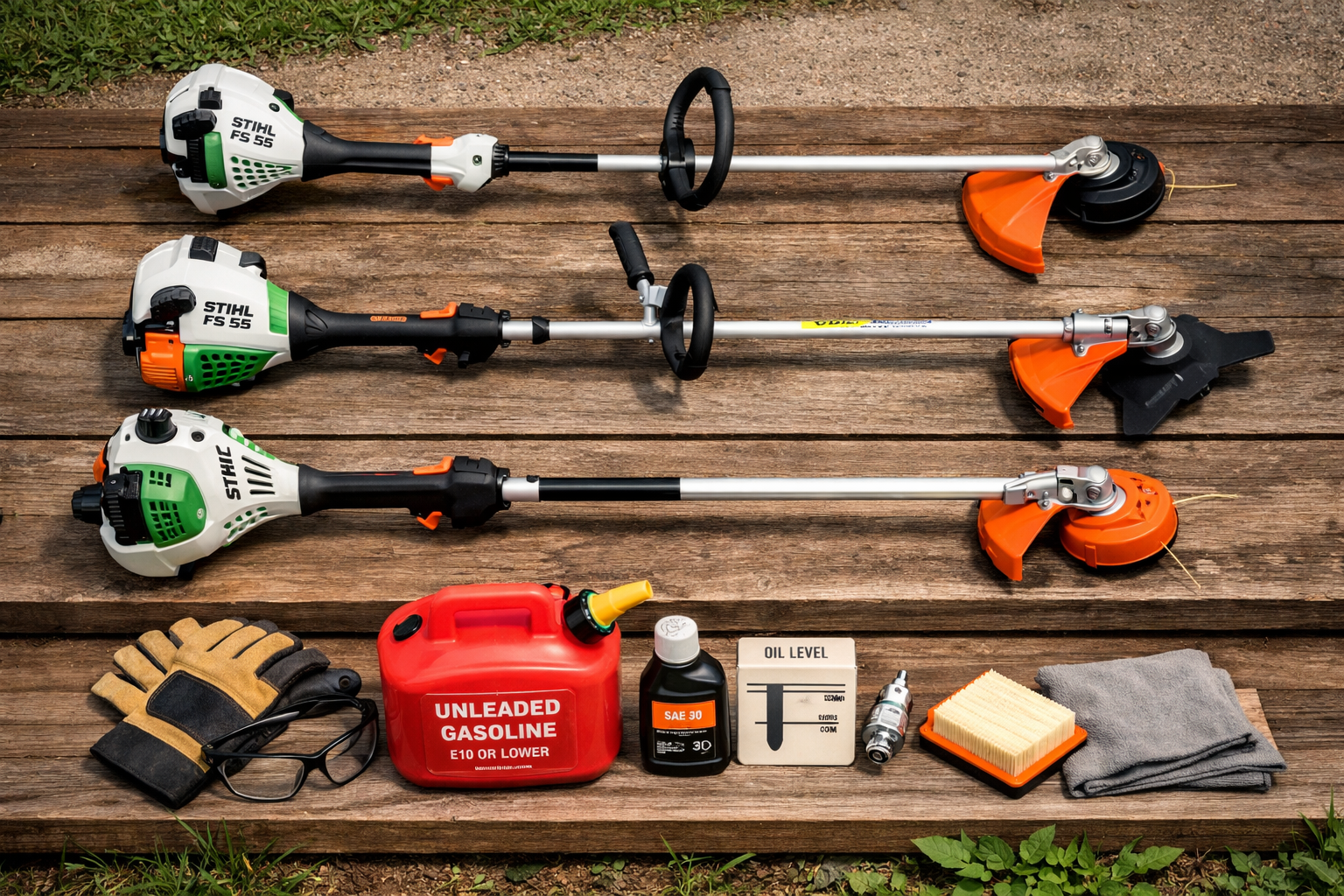
Stihl builds a handful of 4-MIX trimmers, and the lineup covers light homeowner jobs up through heavier brush clearing. Picking the right one matters more than most buyers think, since the FS 38 and the KM 94 aren’t remotely interchangeable in what they can handle.
The FS 38 is Stihl’s entry-level 4-MIX style trimmer, good for small yards and trimming around flower beds. The FS 55 steps up in engine size and is a common choice for a half-acre lot with moderate weeds and grass. The KM series is a kombi system, meaning one power head accepts different attachments like edgers, hedge trimmers, and pole saws.
Model | Engine Size | Best For | Approx. Weight |
|---|---|---|---|
FS 38 | 0.75 cu in (27.2 cc) | Small yards, light trimming | 8.8 lbs |
FS 55 | 0.79 cu in (27.2 cc, 4-MIX) | Medium yards, mixed weeds | 10.4 lbs |
KM 94 R | 0.94 cu in (31.4 cc, 4-MIX) | Multi-tool use, larger properties | 11.9 lbs |
I’d point a first-time buyer with under half an acre toward the FS 55. It’s got enough power for thicker weeds without the extra weight of the KM series, though if you already own a blower or edger attachment, the kombi system pays for itself over time.
Routine Maintenance That Actually Prevents Engine Failure
Most 4-cycle maintenance guides treat these trimmers like tiny cars, and technically that’s fair, but the real-world failure point is almost always neglect. Owners who treat the oil check like an afterthought are the ones calling a repair shop by the second season.
Oil Changes
Change the oil after the first 5 hours of use on a brand-new unit, then every 25 hours or once per season after that. Run the engine for a minute first to warm the oil, tip the trimmer to drain it into a pan, then refill to the mark on the dipstick or sight glass. Overfilling causes smoking and rough idle just as much as running it dry does, so match the fill line exactly rather than guessing.
Air Filter and Spark Plug Care
Pull the air filter every 25 hours of use and tap out debris, washing foam filters in warm soapy water when they look gray or clogged. Replace the spark plug annually, usually an NGK or Stihl-branded plug gapped around 0.020 inches. A fouled plug is one of the most common no-start complaints on these units.
Trimmer Line and Cutting Head
Stihl 4-cycle trimmers typically use a bump-feed or fixed-line head depending on the model, and most take 0.080- to 0.095-inch diameter line. Running line that’s too thick for your head puts extra load on that 4-MIX engine, which is already heavier than a 2-cycle equivalent. Stick to Stihl’s own line spec listed in the owner’s manual rather than whatever’s cheapest at the hardware store.
Starting Procedure and What to Do When It Won’t Start

Cold starts on a 4-MIX Stihl follow a set order: flip the ignition switch on, press the primer bulb 5 to 6 times until you see fuel, set the choke to closed, then pull the starter cord until the engine fires once. Move the choke to the half-open (run) position and pull again to get it running, then let it idle a few seconds before opening the choke fully.
If it won’t start at all, work through it in order rather than guessing:
Check the fuel — old gas past 30 days can gum up the carburetor.
Confirm the oil reservoir is filled to the correct line; some 4-MIX models have a low-oil shutoff that prevents starting.
Pull and inspect the spark plug for fouling or a wet, flooded tip.
Clean or replace the air filter if it’s visibly clogged.
Check the carburetor adjustment screws, though on most consumer Stihl models these are fixed and rarely need touching.
Inspect the fuel line and filter for cracks or clogs if the unit is more than 3 years old.
A four-stroke engine completes intake, compression, power, and exhaust in four separate piston strokes per cycle, which is why it needs its own oil sump instead of oil mixed into the fuel.
For anyone learning small engine repair as a hobby, working through this list on a 4-cycle Stihl teaches you most of what you need for small engine troubleshooting in general, and resources like themowersguide.com’s repair guides can walk you through model-specific quirks if the basic checklist doesn’t fix it.
Seasonal Storage: Draining Fuel Matters More Than You Think
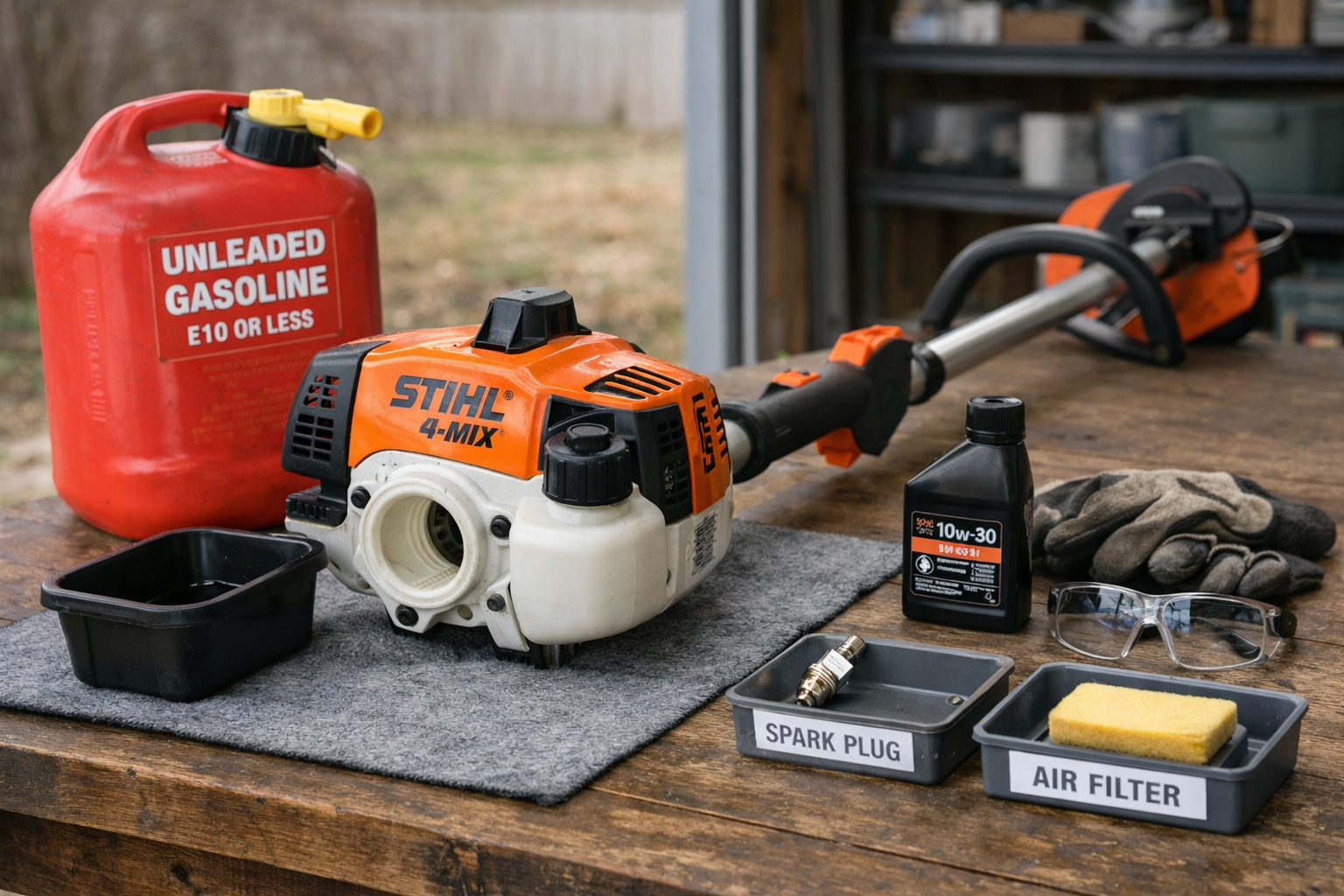
Storing a Stihl 4-cycle trimmer over winter without draining the tank is asking for a gummed-up carburetor come spring. Run the tank dry or add a fuel stabilizer if you’re storing it for more than 30 days, then run the engine for a couple minutes to circulate the stabilized fuel through the carburetor.
Change the oil before storage too, not after. Old oil sitting in the crankcase all winter holds moisture and acids that slowly corrode internal parts. It only takes 10 minutes and a fresh quart of 10W-30 costs under $8.
Store the trimmer somewhere dry, ideally off the ground, with the cutting head covered. A quick wipe-down of the air filter and a fresh spark plug in spring gets it running on the first pull most years.
Frequently Asked Questions
Can I use regular 2-cycle oil mix in a Stihl 4-cycle weed eater?
No. Mixing 2-cycle oil into the gas fouls the spark plug and clogs the combustion chamber. Use straight gasoline for fuel and add 10W-30 or SAE 30 oil only to the separate oil reservoir.
How often should I check the oil on a Stihl 4-MIX trimmer?
Check it before every use, not monthly. Low oil is the leading cause of early engine wear on these units since the 4-MIX engine is heavier and less forgiving than a 2-cycle equivalent.
Why won’t my Stihl FS 55 start after sitting all winter?
Old fuel is the usual culprit, since gas left over 30 days without a stabilizer gums up the carburetor. Drain the tank next fall, and check the oil level and spark plug before trying again.


Comments are closed.