Spray the wrong lawn weed killer on Zoysia or St. Augustine and you won’t just miss the weeds. You’ll kill patches of your own grass and spend the next two months reseeding. That’s the part most buying guides skip. Lawn weed killers herbicides aren’t one-size-fits-all products, and the “best” one on a list of nine might be the worst choice for your specific yard.
This roundup sorts products by grass compatibility first, then by what weed problem you’re actually fighting, whether that’s crabgrass in spring, broadleaf weeds in a fescue lawn, or clover taking over a warm-season yard. Get the match right, and even a mid-priced herbicide will outperform the “best-rated” one applied to the wrong turf.
Match the Herbicide to Your Grass Before Anything Else
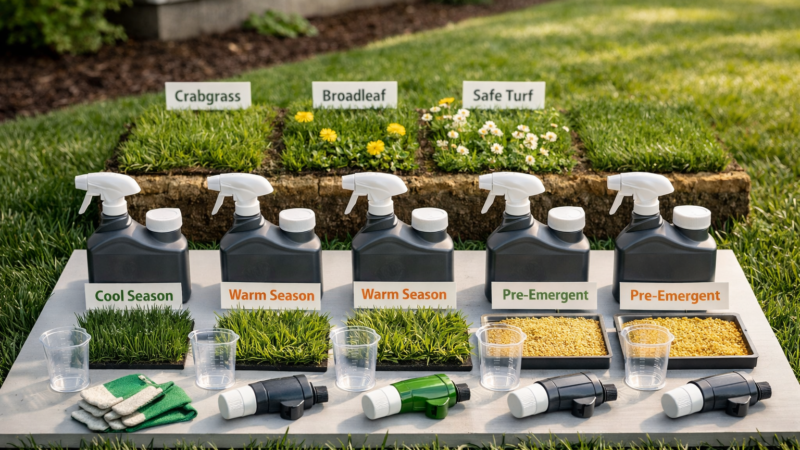
Grass type is the single biggest filter, and it comes before price, brand, or weed target. Cool-season lawns (fescue, bluegrass, ryegrass) tolerate a different chemical lineup than warm-season lawns (Bermuda, Zoysia, St. Augustine, centipede). Get this backwards and you’ll burn your own turf while the weeds shrug it off.
Cool-Season Lawns
Fescue and Kentucky bluegrass handle most three-way broadleaf herbicides (mixes of 2,4-D, mecoprop, and dicamba) without issue. Triclopyr-based spot treatments also work well here for tougher weeds like ground ivy. Avoid high concentrations of sulfentrazone on newly seeded fescue — wait at least 4 weeks after germination.
Warm-Season Lawns
St. Augustine and centipede grass are sensitive to 2,4-D at high rates and can yellow or die back if you spray during summer heat above 90°F. Zoysia and Bermuda are more forgiving but still react badly to atrazine overuse. Always check the product label for your exact grass species listed by name — not just “warm-season” as a category.
Pre-Emergent vs. Post-Emergent: Timing Decides Which One You Need
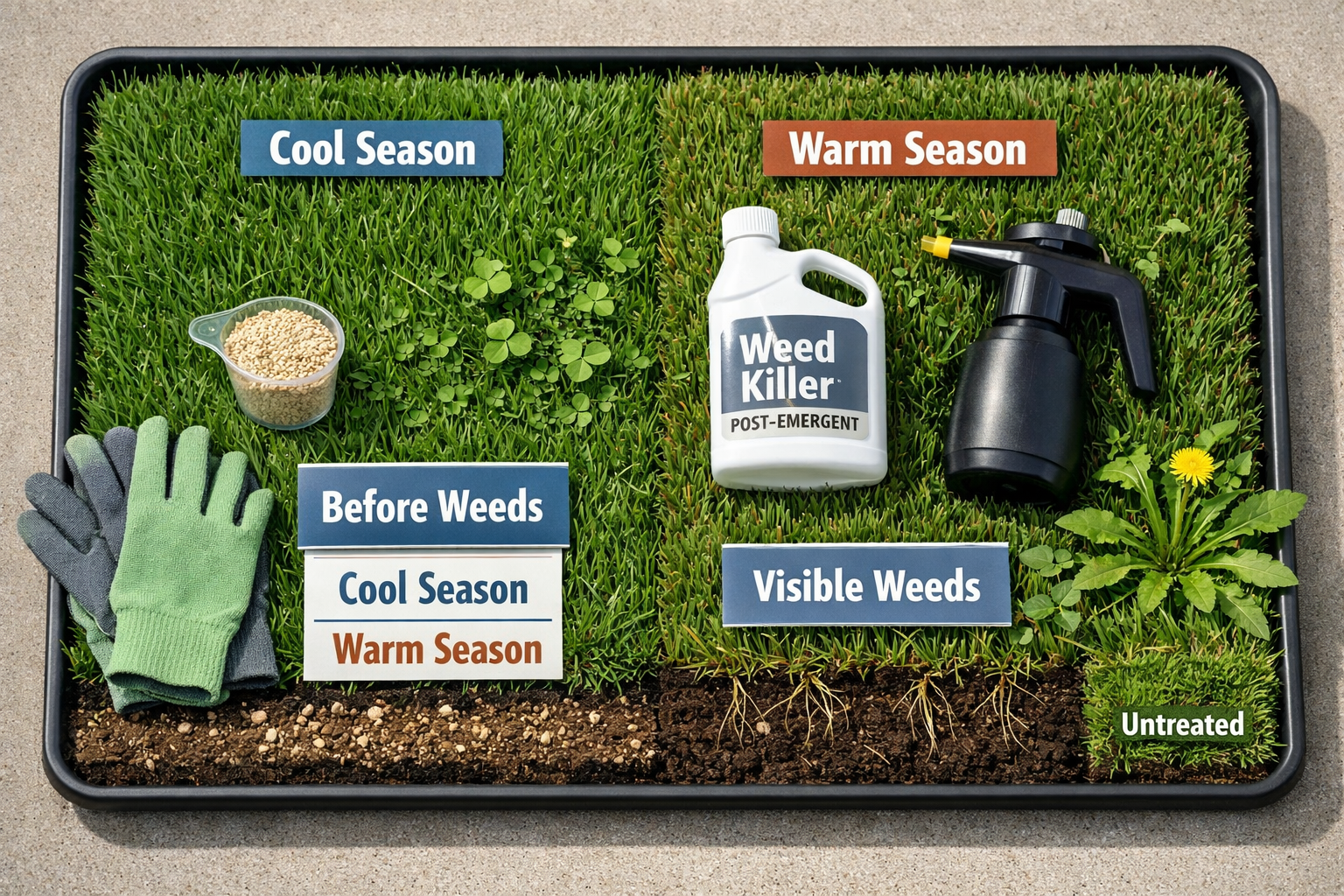
Pre-emergents stop weed seeds from sprouting; post-emergents kill weeds that are already growing. Using the wrong one at the wrong time is probably the most common mistake homeowners make, and it wastes an entire application cycle.
Pre-emergent herbicides like prodiamine or dithiopyr need to go down before soil temperatures hit around 55°F for 3-5 consecutive days, which is typically late February to early April across most of the country. Miss that window and crabgrass seeds have already germinated, making pre-emergent useless for the season.
Post-emergents target weeds you can already see: dandelion, clover, chickweed, and grassy invaders. Selective post-emergents kill the weed and spare your lawn grass; non-selective ones (like glyphosate) kill everything green, so they’re only for spot-treating driveway cracks or full renovation projects, not established turf.
A pre-emergent herbicide creates a chemical barrier in the top layer of soil that prevents germinating weed seeds from developing past the seedling stage — it does nothing to weeds already growing above ground.
The 9 Best Lawn Weed Killers by Yard Type
Here’s how nine solid options stack up once you sort them by grass safety and application type. Prices are approximate retail for a standard homeowner-size container as of 2024-2025.
Product Type
Best For
Grass Safety
Form
Approx. Price
Triclopyr spot spray
Ground ivy, wild violet
Safe on fescue, Bermuda; avoid on St. Augustine
Liquid concentrate
$20-$30
Prodiamine granular
Crabgrass prevention
Safe on all major turf types when timed right
Granular
$35-$55
Three-way broadleaf mix (2,4-D/mecoprop/dicamba)
Dandelion, clover, chickweed
Best on cool-season; caution on St. Augustine
Liquid concentrate
$15-$25
Atrazine-based product
Warm-season broadleaf and grassy weeds
Bermuda, Zoysia, St. Augustine safe at label rate
Liquid or granular
$18-$28
Glyphosate concentrate
Full kill, driveway/patio weeds
Not selective — kills all vegetation
Liquid concentrate
$15-$40
Iron-based (chelated iron) organic option
Broadleaf weeds, pet/kid areas
Safe across most turf types
Liquid
$25-$35
Fatty-acid soap herbicide
Organic spot treatment
Safe on all grasses, non-selective on contact
Ready-to-use spray
$12-$20
Sulfentrazone combo
Nutsedge, wild onion
Caution on new fescue seedings
Liquid concentrate
$30-$45
Dithiopyr pre-emergent
Crabgrass with some post-emergent activity
Safe on cool and warm-season established turf
Granular or liquid
$30-$50
The organic options (chelated iron, fatty-acid soap) won’t match synthetic herbicides for lasting control, and you’ll likely need to reapply every 2-3 weeks during active weed growth. That’s the honest tradeoff for skipping synthetic chemicals around kids and pets.
Granular or Liquid, and Spot Spray or Full Coverage?
Granular herbicides are easier for beginners: spread with a broadcast spreader, water in (or rely on morning dew), and you’re done. Liquid concentrates need a pump sprayer, but they act faster and let you target specific patches without treating the whole yard.
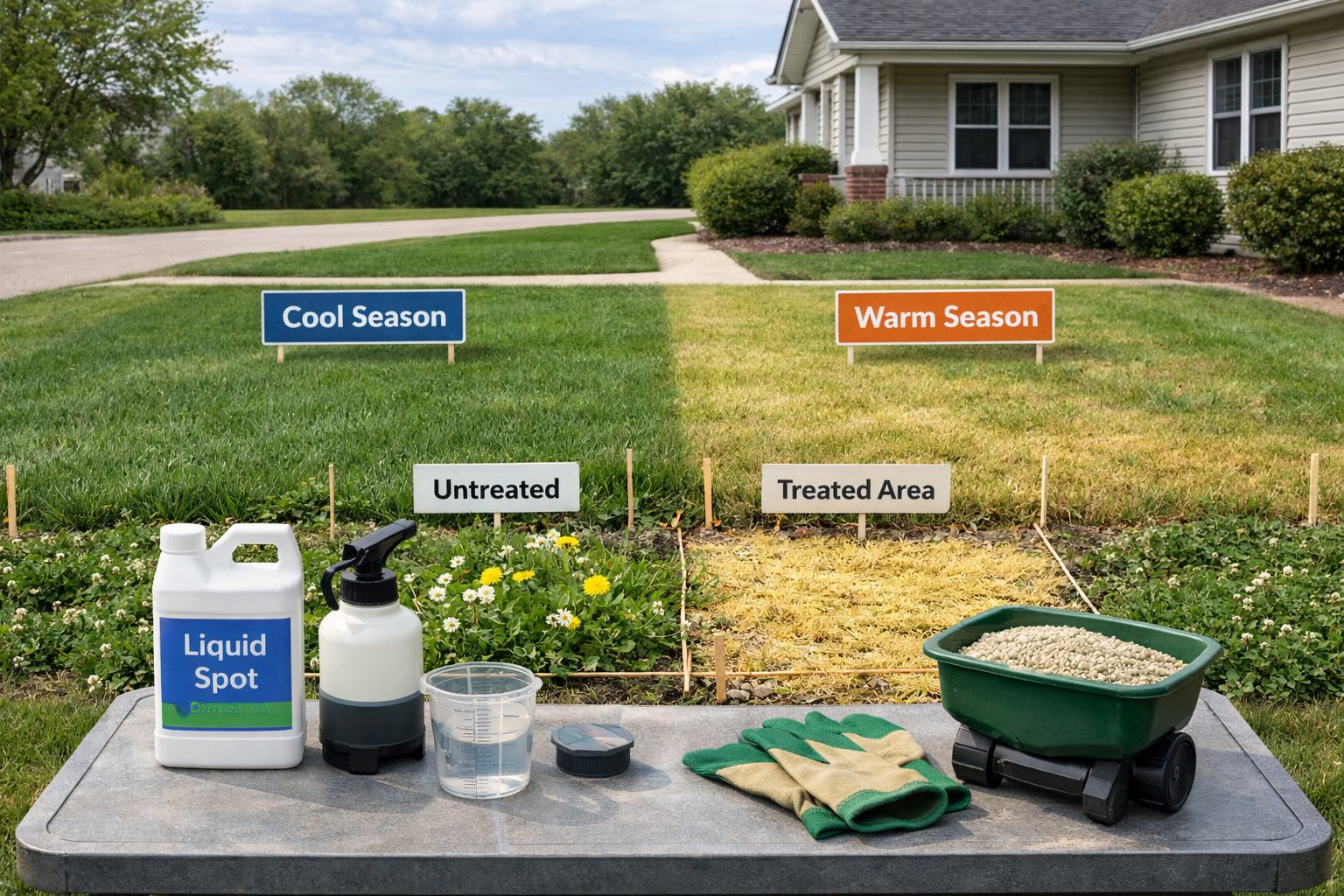
For a lawn with scattered weeds — a few dandelions here, some clover there — spot spraying with a 1- or 2-gallon pump sprayer wastes less product and less money than a full-lawn application. Full coverage makes sense when weeds cover more than roughly 20% of the yard, at which point a backpack sprayer or a hose-end sprayer attachment saves your arm and your afternoon.
Identify the weed and confirm your grass type before buying anything.
Choose pre-emergent (before germination) or post-emergent (weeds visible) based on timing.
Pick granular for whole-yard prevention, liquid for targeted kills.
Apply when air temperature is between 60°F and 85°F, with no rain forecast for 24-48 hours.
Avoid mowing for 2-3 days before and after application so leaf surfaces absorb the chemical.
Keep kids and pets off the treated area until it dries completely, usually 4-6 hours.
Water normally after 24-48 hours — watering too soon washes the herbicide off before it works.
Spraying during a heat wave or drought stress is one of the fastest ways to damage a lawn without actually controlling the weeds. The grass is already stressed, and adding herbicide on top can push it into dormancy or worse. Wait for a stretch of mild weather instead.
Pet Safety, Resistance, and the Mower Connection
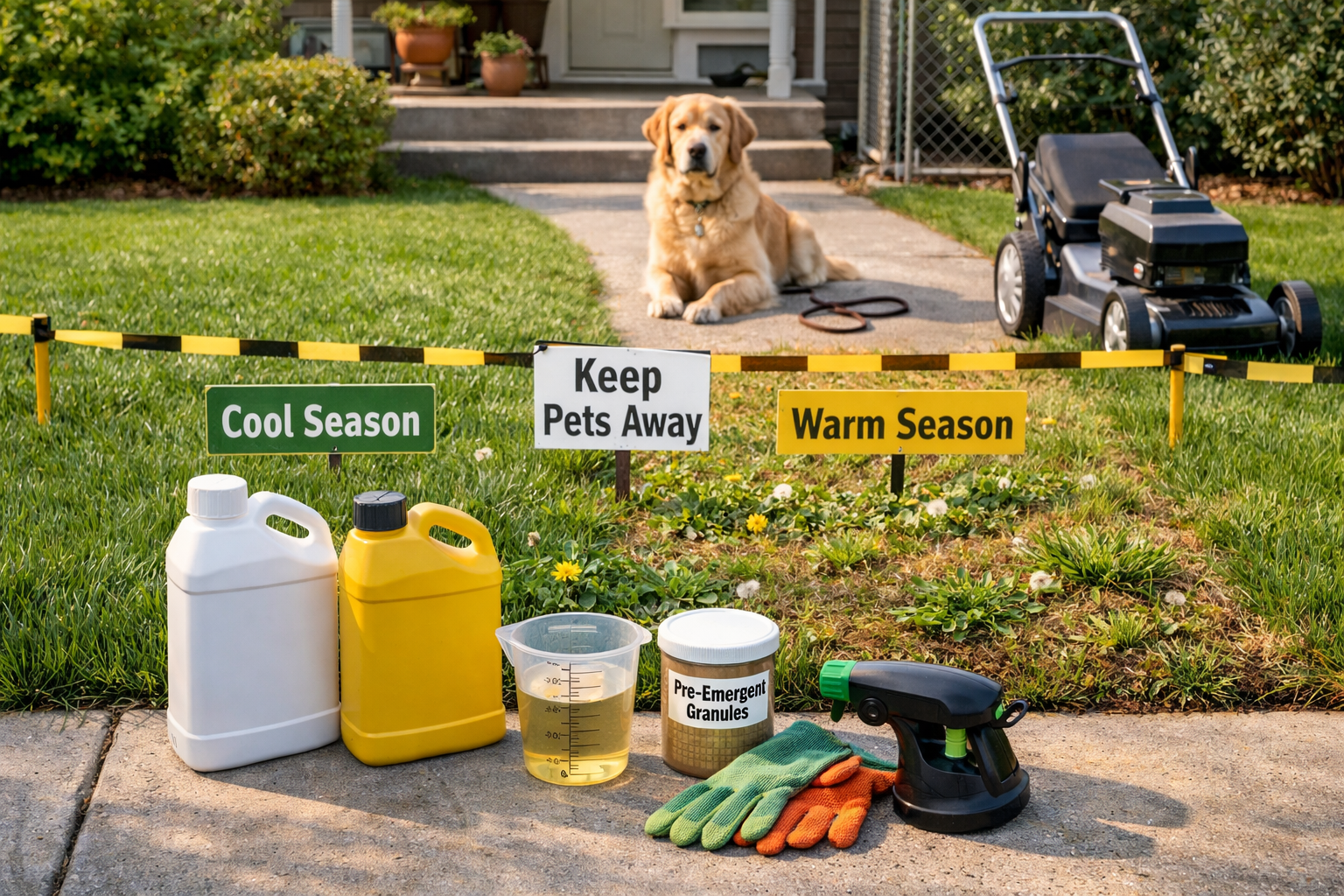
Herbicide labels list re-entry times for a reason, and ignoring them is the most common safety mistake. Most selective post-emergents are labeled safe for pets and kids once the spray has dried, generally 4-6 hours, but granular pre-emergents should be watered in and left to settle for at least 24 hours before anyone walks on the lawn barefoot.
Herbicide resistance is a real problem, especially with crabgrass and annual bluegrass that get hit with the same product year after year. Rotating between different active ingredients (say, alternating prodiamine one year with dithiopyr the next) slows down resistance buildup in a way that using the same bottle every spring won’t.
One thing nobody mentions: weed seeds and herbicide residue build up in your mower deck over a season, especially if you’re mowing right after treating. Clean the deck out regularly — a quick check on themowersguide.com‘s mower maintenance guides covers how to clear packed clippings and residue without damaging the blade housing.
Skip the temptation to double up on a weak-looking application. More product doesn’t mean better results — it usually just means more lawn damage and a longer wait before you can reseed thin spots.
Frequently Asked Questions
Can I use the same weed killer on my whole yard if I have mixed grass types?
No, not safely. If your lawn has both a fescue front yard and a Zoysia backyard, treat them as two separate projects with two different products matched to each grass’s tolerance.
How soon after applying herbicide can I mow the lawn?
Wait at least 2-3 days after a liquid post-emergent application, and check the label since some products specify up to a full week for maximum absorption before the first cut.
Is it cheaper to buy pre-mixed spray or concentrate?
Concentrate costs less per treated square foot, often half the price of ready-to-use bottles, but you’ll need a pump sprayer (around $15-$25) to apply it correctly.
Bermuda grass seed needs soil temperatures of 65°F or higher at a 2-inch depth before it will germinate reliably, and full germination can take 21 to 28 days compared to the...
Two-stroke or four-stroke? That’s the question every buyer asks before spending $5,000 or more on a commercial mower. Here’s the twist: if you’re shopping a true two cycle lawn mower from...
1 October 2026
The Mowers Guide is reader-supported. When you buy through links on our site, we may earn an affiliate commission.




Comments are closed.