Is a push mower still cutting it, or are you standing there on a Saturday morning wondering if there’s a better way? A grass cutting tractor is the answer for a lot of homeowners, but not for the reason most buying guides tell you. It’s not about horsepower bragging rights. It’s about whether your lawn is big enough to make the math work.
Most articles on this topic just throw specs at you: deck width, horsepower, hydrostatic versus manual transmission. Useful stuff, sure. But the real question is simpler: at what point does a riding tractor actually save you enough time and hassle to justify the price tag, the garage space, and the extra maintenance? For a lot of people, that breakeven point is bigger than they think.
What Lawn Size Actually Justifies a Riding Tractor?
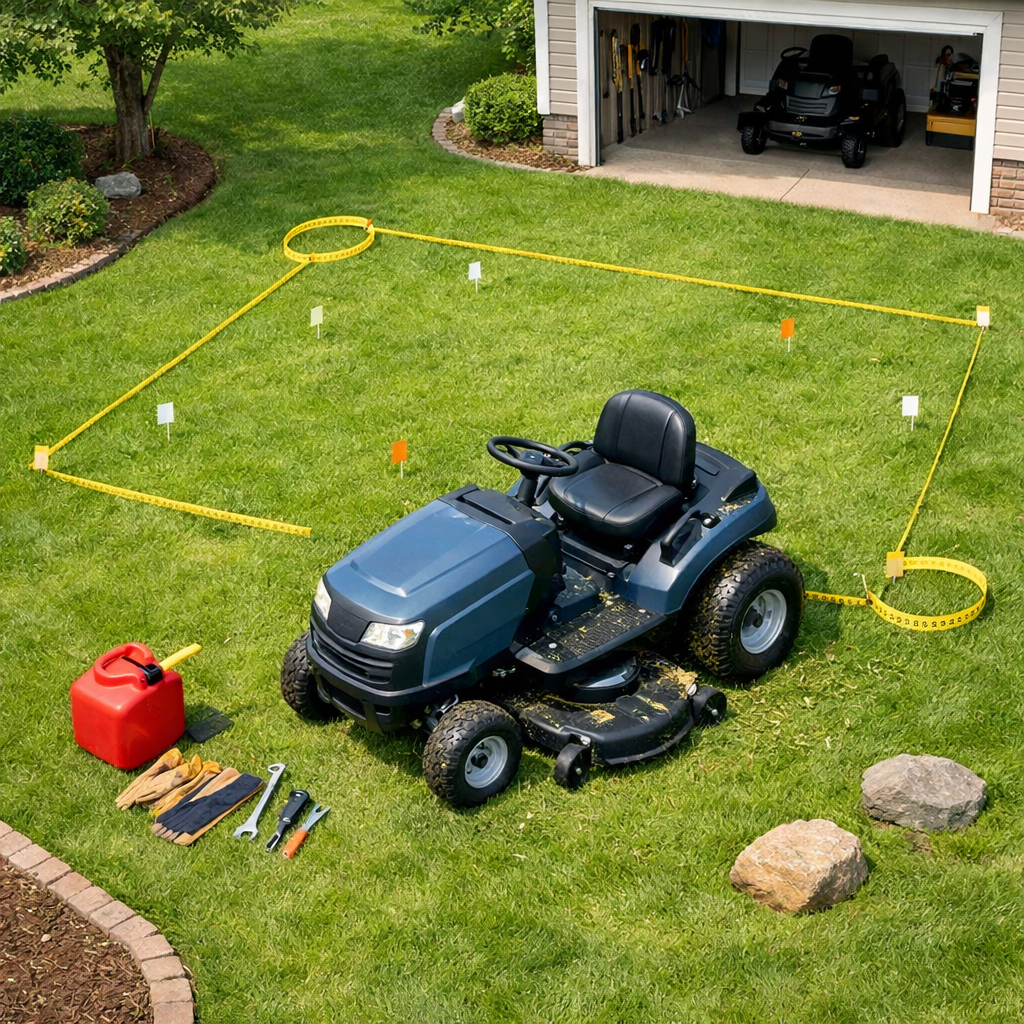
The rough rule of thumb: if your mowable lawn is under half an acre, a push mower or a self-propelled walk-behind is still your best bet. Once you cross half an acre to an acre, a lawn tractor starts paying for itself in time saved. Above an acre and a half, you’re in tractor territory for sure, and a zero-turn starts making sense too.
Here’s the math nobody spells out. A push mower covers roughly 21 inches per pass. A lawn tractor with a 42-inch deck covers double that width, and moves faster to boot. On a half-acre lawn, that might only save you 10-15 minutes. On a 1.5-acre lawn, you’re looking at saving 45 minutes to an hour every single cutting, which adds up over a 25-30 cutting season.
But time saved isn’t the whole equation. A tractor costs $1,800 to $4,500 depending on brand and deck size, versus $300 to $600 for a quality self-propelled push mower. You’ve also got to store it somewhere, a tractor needs a shed or garage bay, not a corner of the basement. And maintenance costs more too: oil changes, belts, blades, and battery upkeep run higher on a riding machine.
If your lot is under half an acre and full of flower beds, trees, and tight corners, a tractor might actually take longer than a push mower once you factor in all the maneuvering. That’s the trap a lot of buyers fall into.
Lawn Tractor vs. Garden Tractor vs. Zero-Turn: Know the Difference
These three get lumped together, but they’re built for different jobs. A lawn tractor is designed mainly for cutting grass on lawns up to about 2 acres. A garden tractor is heavier-duty, built to pull attachments like tillers, plows, and carts. A zero-turn mower trades attachment versatility for cutting speed and tight maneuverability.
Lawn Tractor: The All-Around Choice
Most homeowners land here. Lawn tractors typically run 15-24 horsepower, with deck widths from 38 to 48 inches, and handle mild slopes fine. They’re the right pick if mowing is your main task and you might occasionally tow a small cart or spreader.
Garden Tractor: Built to Work, Not Just Mow
If you’ve got a big property with real landscaping work, think a large vegetable garden, gravel driveway needing occasional grading, or snow to plow, a garden tractor’s beefier frame and higher-torque engine (often 20+ horsepower) handles attachments a lawn tractor can’t. You’ll pay more, usually $3,500 and up, and it’s overkill if mowing is all you need.
Zero-Turn: Fast, But Not for Tight Yards
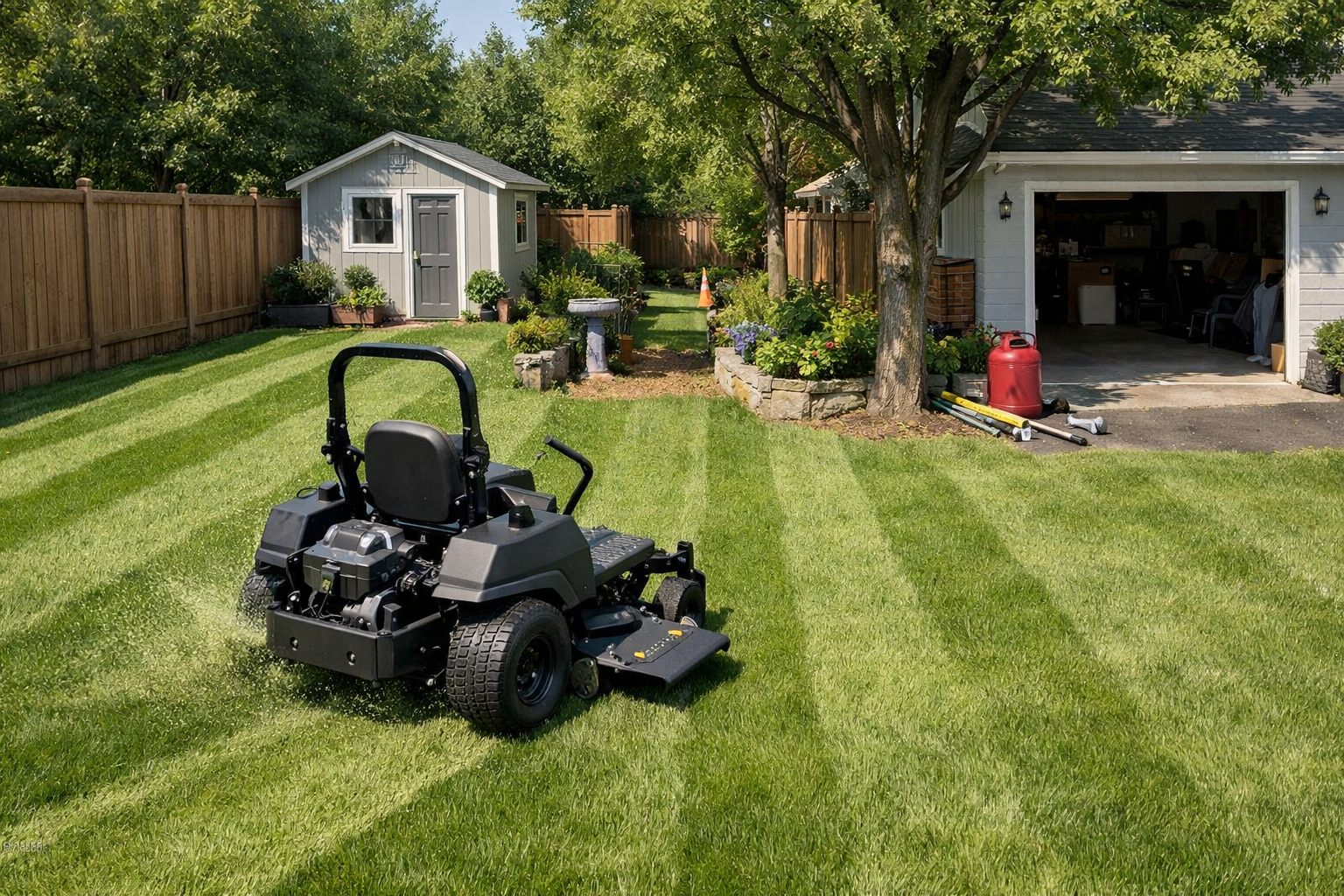
Zero-turns cut mowing time dramatically on open lawns thanks to their tight turning radius and higher ground speeds (often 7-8 mph versus a lawn tractor’s 4-5 mph). But here’s the catch a lot of buying guides skip: on a small, obstacle-heavy yard with lots of trees, beds, and fencing, a zero-turn’s steering setup makes precision work around obstacles harder, not easier. Save the zero-turn for open acreage.
Engine Power and Deck Width: What the Numbers Actually Mean
Bigger horsepower doesn’t automatically mean a better cut. A 24-horsepower engine on a small lawn is just burning extra fuel and adding weight you don’t need. What actually matters is matching horsepower and deck width to your terrain and lawn size, not maxing out the spec sheet.
Deck width controls how many passes you make, and it directly affects mowing time and blade maintenance. A wider deck (48-54 inches) means fewer passes on open ground, but it’s harder to maneuver around trees and garden beds, and the extra spindles mean more parts to grease and replace over time. A narrower deck (38-42 inches) is slower on big open lawns but far easier to sharpen, clean under, and maneuver.
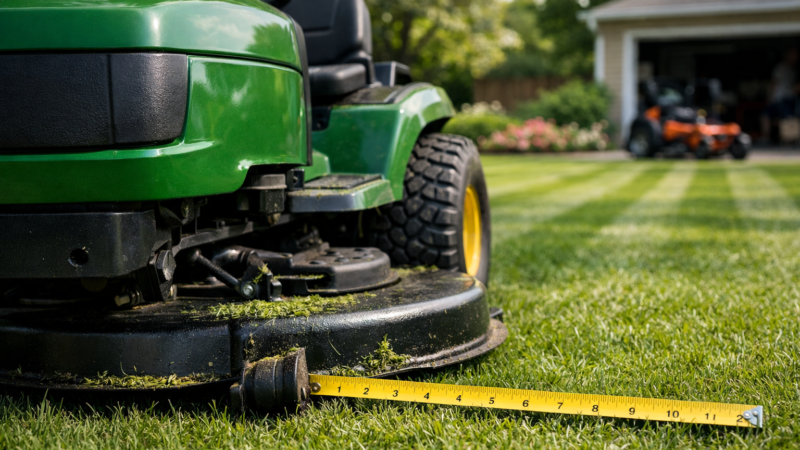
A cutting deck is the housing under the tractor that holds the blades and directs grass clippings. Deck width, measured in inches, determines how wide a strip you cut per pass.
Here’s a quick comparison of common configurations:
Lawn Size
Recommended Deck Width
Typical Horsepower
Mower Type
Under 0.5 acre
N/A (push mower)
N/A
Self-propelled push mower
0.5-1 acre
38-42 inches
15-18 hp
Lawn tractor
1-2 acres
42-46 inches
18-22 hp
Lawn tractor
2-4 acres, open
48-54 inches
22-26 hp
Zero-turn or garden tractor
2+ acres, with attachments
42-48 inches
20-25 hp
Garden tractor
Slopes change this equation too. Anything steeper than a 15-degree grade calls for four-wheel-drive traction or a lower center of gravity, which most standard lawn tractors don’t have. If your yard has real hills, look at models specifically rated for slope work rather than assuming any tractor will do.
Transmission, Fuel Type, and Attachments Worth Paying For
Hydrostatic transmission is worth the extra $200 to $400 over a manual gear-drive system, full stop. It lets you adjust speed with a pedal instead of shifting gears, which matters when you’re weaving around trees or backing up to fix a missed strip. Manual transmissions are cheaper and simpler to repair, but they’re a hassle on a lawn with lots of turns.
Gas engines still dominate this category, and for good reason: they refuel in seconds and handle multi-hour mowing sessions without a battery dying halfway through. Battery-electric riding mowers exist now, and they’re quieter with lower maintenance, but battery life on most models tops out around 1-2 hours of continuous mowing, which isn’t enough for anyone with more than an acre.
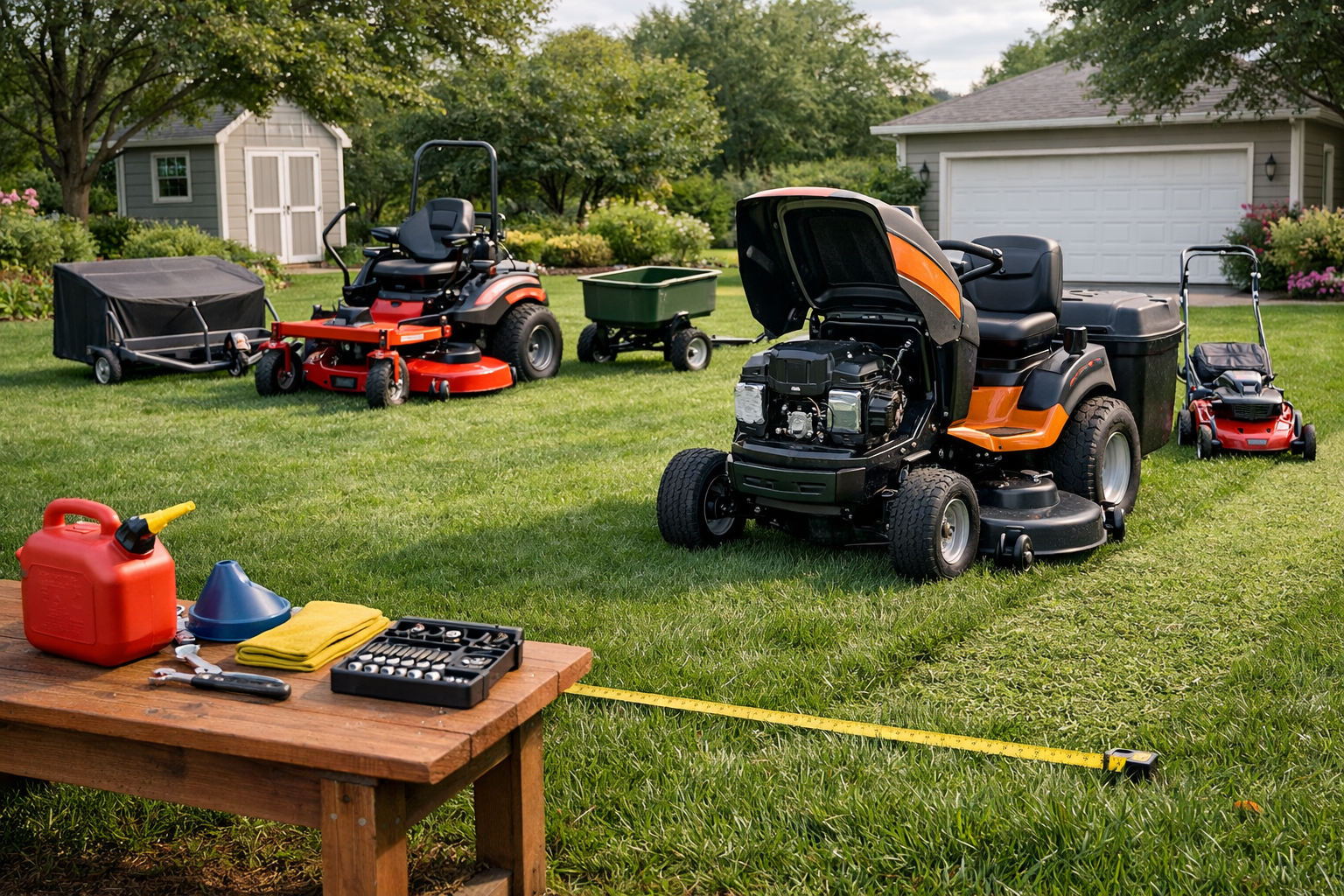
Attachments are where a tractor earns its keep beyond mowing. Here’s a rundown of what’s worth considering, roughly in order of usefulness for the average homeowner:
Bagger attachment – collects clippings for a cleaner finish, useful if you compost or have HOA rules about clipping buildup.
Tow-behind cart – hauls mulch, leaves, or tools around the property.
Front blade or plow – handles light snow removal in northern climates.
Aerator or dethatcher – improves soil health on compacted lawns.
Tiller attachment – breaks ground for garden beds, mainly a garden tractor feature.
Spreader – applies fertilizer or seed evenly across larger areas.
Total cost of ownership matters more than the sticker price. Between fuel, blade sharpening twice a season, annual oil changes, and belt replacement every few years, budget roughly $150 to $300 a year in upkeep on top of the purchase price. For a deeper walkthrough on keeping a tractor running well past its warranty, themowersguide.com has maintenance guides worth checking before you commit to a brand.
Frequently Asked Questions
How much does a decent grass cutting tractor cost?
Expect $1,800 to $4,500 for a quality lawn tractor from a mainstream brand, with garden tractors and larger zero-turns running $3,500 to $7,000 or more depending on deck size and attachments.
What’s the difference between a riding mower and a lawn tractor?
A riding mower is usually a lighter, rear-engine machine built just for cutting grass on smaller lots. A lawn tractor has a front-mounted engine, more horsepower, and can handle attachments like carts or spreaders.
How long does a grass cutting tractor typically last?
With regular oil changes, blade sharpening, and belt replacement, a well-maintained lawn tractor runs 10-15 years or roughly 500-800 engine hours before major components need rebuilding.
Your riding mower doesn’t care what month it is. It cares how many hours are on that engine and whether you drained the fuel before it sat for four months in...
Pour gas and 2-cycle oil into a Stihl 4 cycle weed eater and you’ll likely kill the engine within a season. That’s the single biggest mix-up owners bring over from older...
19 August 2026
The Mowers Guide is reader-supported. When you buy through links on our site, we may earn an affiliate commission.






Comments are closed.