Most small engine repair shops report that ethanol-related fuel damage is one of the top reasons mowers won’t start after sitting all winter. That single fact tells you more about picking the right gasoline for lawn mower use than any octane debate ever will. Your mower’s carburetor has no computer to compensate for bad fuel, so the choice you make at the pump directly affects whether it starts next spring.
Getting this right isn’t complicated, but it does mean unlearning a few habits carried over from filling up the car.
Octane Rating: Why 87 Is Already Enough
Regular 87-octane gasoline is what nearly every walk-behind mower, push mower, and most riding mowers are designed to run on. Octane measures a fuel’s resistance to pre-ignition (knocking), not how much power it delivers. Small engines run low compression ratios compared to car engines, so they don’t need the extra resistance premium fuel provides.
Buying premium for your mower is money down the drain. There’s no meaningful gain in horsepower, fuel economy, or engine life. The only reason to reach for a higher octane is if your owner’s manual specifically calls for it, which is rare outside of a few high-compression commercial engines.
Check your manual before assuming, though. A handful of larger displacement zero-turn and commercial-grade engines from manufacturers like Kohler or Briggs & Stratton do recommend higher octane fuel for specific models. That’s the exception, not the rule.
Octane rating measures a fuel’s resistance to knocking under compression, not its energy content or cleaning power.
Ethanol Content: The Real Decision That Affects Your Warranty
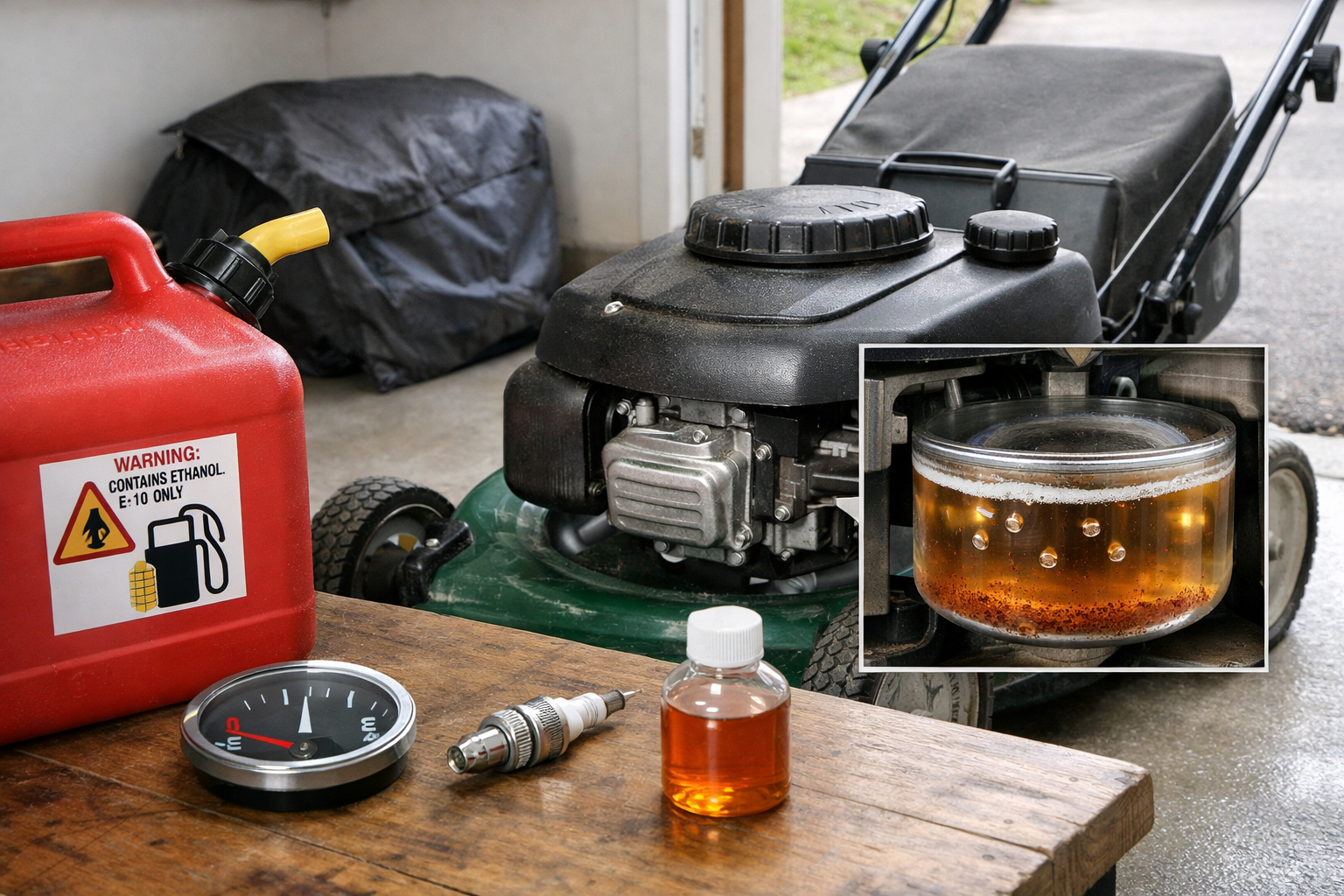
This is the part that actually matters. E10 gasoline (10% ethanol) is the maximum most small engine manufacturers approve, and even that comes with caveats about storage. E15 and E85 are built for flex-fuel cars and can damage small engine fuel systems within a season or two of regular use.
Why Ethanol Attacks Small Engines Specifically
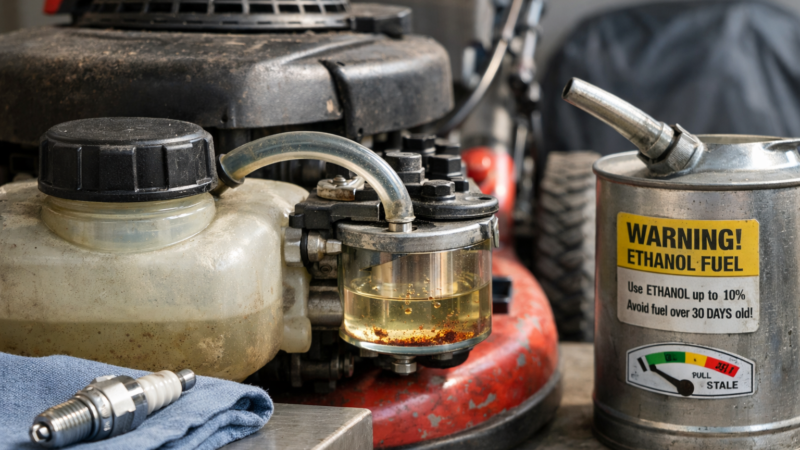
Ethanol is hygroscopic, meaning it absorbs moisture from the air. In a car’s sealed, computer-managed fuel system, that moisture gets processed and burned off routinely. A mower’s fuel system is vented and often sits idle for weeks. Absorbed water settles to the bottom of the tank, and ethanol itself breaks down rubber gaskets, fuel lines, and carburetor float components not rated for it.
What E15 or E85 Actually Does to a Carburetor
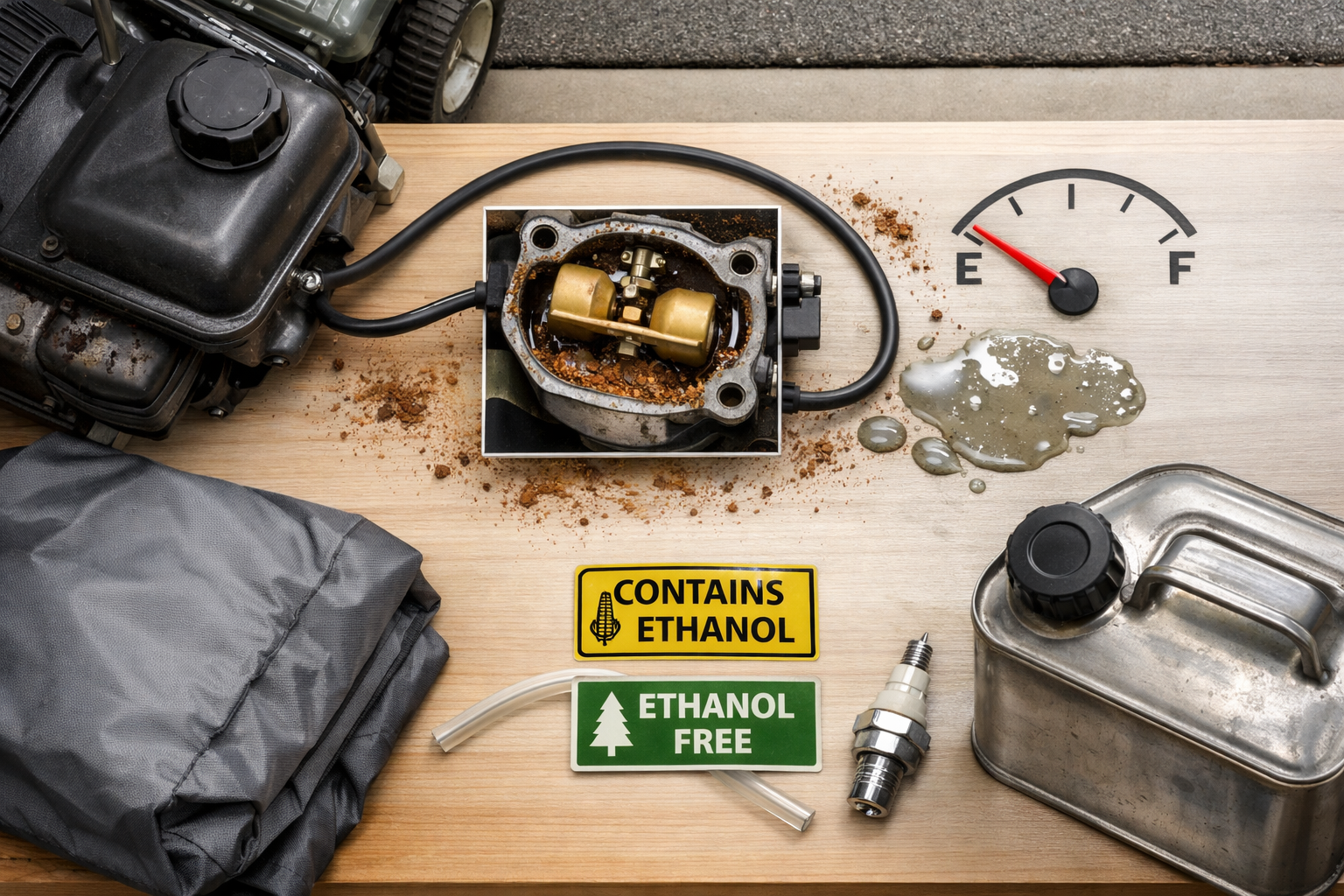
Running E15 or E85 through a small engine carburetor accelerates corrosion of aluminum and pot metal parts, causes gaskets to swell or crack, and leaves gummy residue as the ethanol evaporates faster than gasoline. Many manufacturers, including Briggs & Stratton and Honda Power Equipment, explicitly void small engine warranties if E15 or higher blends caused the failure. That’s not a minor footnote. It’s the single most common way owners accidentally void coverage on a mower that’s otherwise still under warranty.
Ethanol-Free Gasoline Is Worth the Extra Cost
Ethanol-free gasoline (sometimes labeled “rec fuel” or pure gas) typically costs $0.50 to $1.00 more per gallon than regular E10. For a mower that burns maybe 15-20 gallons a season, that’s a $10-20 difference. Given the corrosion risk, it’s worth paying for, especially for equipment you plan to store over winter.
Matching Fuel to Engine Type: 2-Stroke and 4-Stroke Are Not Interchangeable
Most riding mowers, push mowers with a single fill spout, and tractors run 4-stroke engines that take straight gasoline with no oil mixed in — the oil goes in a separate crankcase reservoir. String trimmers, some leaf blowers, and older 2-stroke mowers need gasoline pre-mixed with 2-stroke oil, usually at a 50:1 ratio.
Putting straight gas in a 2-stroke engine destroys it within minutes because there’s no oil lubricating the piston and cylinder walls. Putting pre-mixed fuel in a 4-stroke engine causes excess carbon buildup and fouled spark plugs over time. Check the engine housing or owner’s manual; it’s almost always printed right on the machine.
Confirm whether your equipment is 2-stroke or 4-stroke (check the manual or the label near the fuel cap).
Buy fresh E10 or ethanol-free gasoline, no older than 30 days from the pump.
For 2-stroke engines, mix fuel and oil at the ratio specified (commonly 50:1) using a marked mixing container.
Add fuel stabilizer at the recommended dose if the fuel won’t be used within a few weeks.
Fill the tank to the manufacturer’s specified level, avoiding overfilling that leaves no room for expansion.
Store extra fuel in an approved container, away from heat, for no longer than 60-90 days.
Fuel Storage and Shelf Life: Why Stabilizer Matters More Than Brand
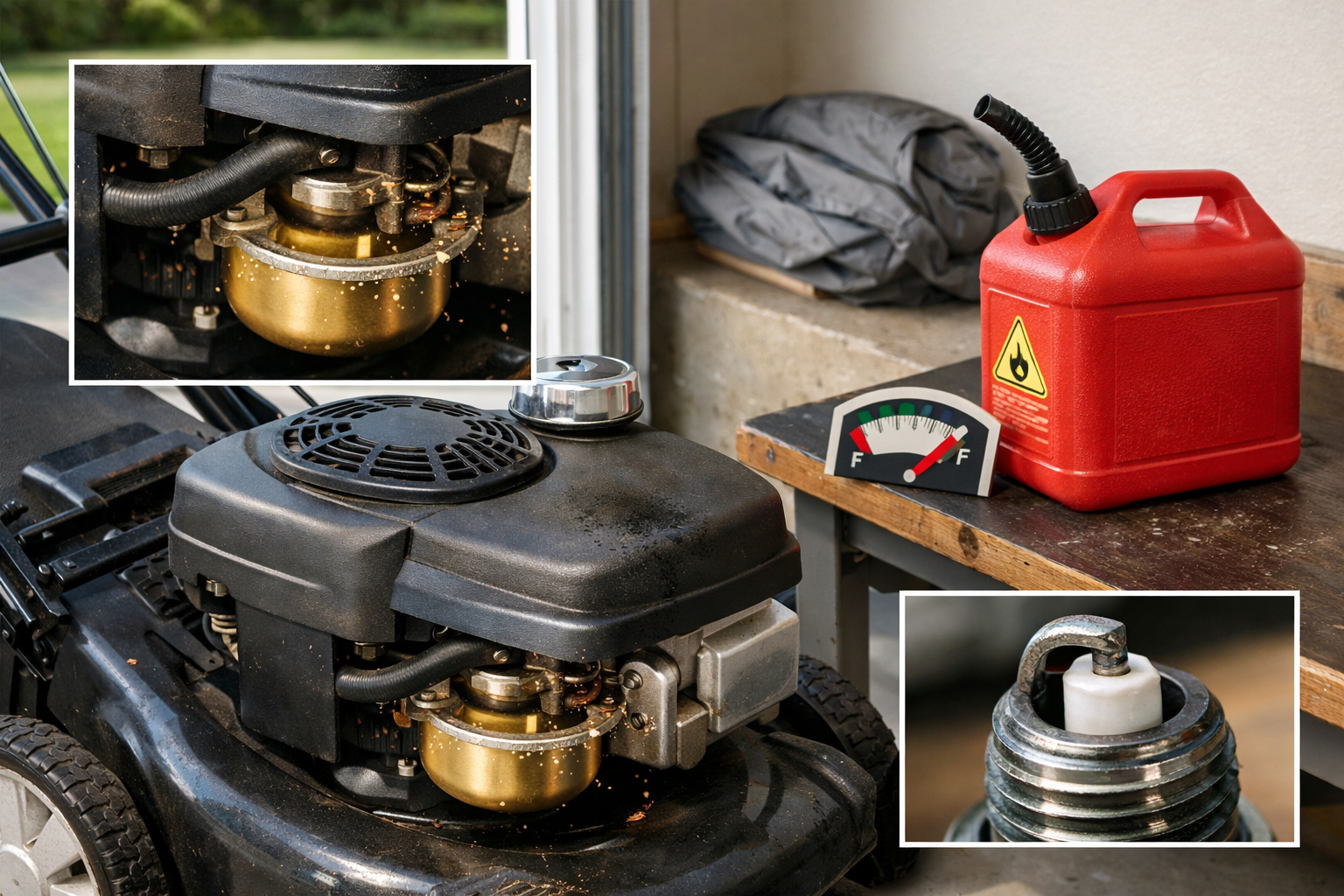
Gasoline starts degrading within 30 days, and ethanol-blended fuel degrades faster than ethanol-free gasoline. Left in a tank over a winter without treatment, it forms a varnish-like residue that clogs carburetor jets, the single most common reason a mower won’t start in spring after sitting since fall.
A fuel stabilizer, added at the recommended ratio (commonly 1 ounce per gallon for products like STA-BIL), slows oxidation and keeps ethanol from separating from the gasoline. Run the engine for a few minutes after adding stabilizer so treated fuel reaches the carburetor, not just the tank.
For a mower going into off-season storage, the safest approach is running the tank down to near-empty and adding fresh fuel with stabilizer at the next mow, rather than trying to guess how old the leftover gas is. Seasonal maintenance routines like this are covered in more detail across themowersguide.com if you want a full pre-storage checklist.
Frequently Asked Questions
Can I use E15 gasoline in my lawn mower if that’s all the gas station has?
No. E15 isn’t approved for small engines and can void your warranty. If E15 is the only option at a station, look for a pump labeled E10 or find a marina or hardware store that sells ethanol-free fuel.
How long can gasoline sit in a mower before it goes bad?
Untreated E10 gasoline starts losing quality within 30 days and can cause starting problems within 2-3 months. With fuel stabilizer added at the correct dose, it can stay usable for up to a year.
Does premium gasoline clean the carburetor better than regular gas?
No, octane rating doesn’t affect detergent content or cleaning ability. Any performance or cleaning claims come from additive packages, which regular 87-octane fuel from major retailers already includes.
Spray the wrong lawn weed killer on Zoysia or St. Augustine and you won’t just miss the weeds. You’ll kill patches of your own grass and spend the next two months...
Look at the leaf first. Wide leaves with net-like veins mean broadleaf weeds, like dandelion and clover. Narrow clumping blades mean grassy weeds, like crabgrass. A triangular stem means sedge, like...
23 October 2026
The Mowers Guide is reader-supported. When you buy through links on our site, we may earn an affiliate commission.





Comments are closed.