Roughly 90% of pre-emergent herbicides work by blocking the cell division that lets a seedling push through the soil, according to how these products are formulated to target weed germination. That’s the trap: the same mechanism that stops crabgrass will just as easily stop the grass seed you just spread. So can you fertilize and seed at the same time? Yes, but only with the right kind of fertilizer, and “the right kind” is where most DIY lawns go wrong.
The Real Question Isn’t “Can I” — It’s “Which Product”
Fertilizing and seeding at the same time is a normal, recommended practice. The catch is that “lawn fertilizer” covers several product categories that behave nothing alike once seed is in the ground.
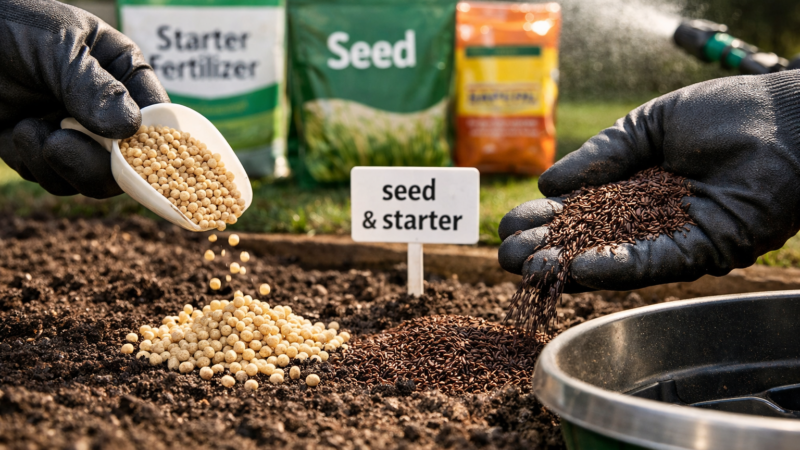
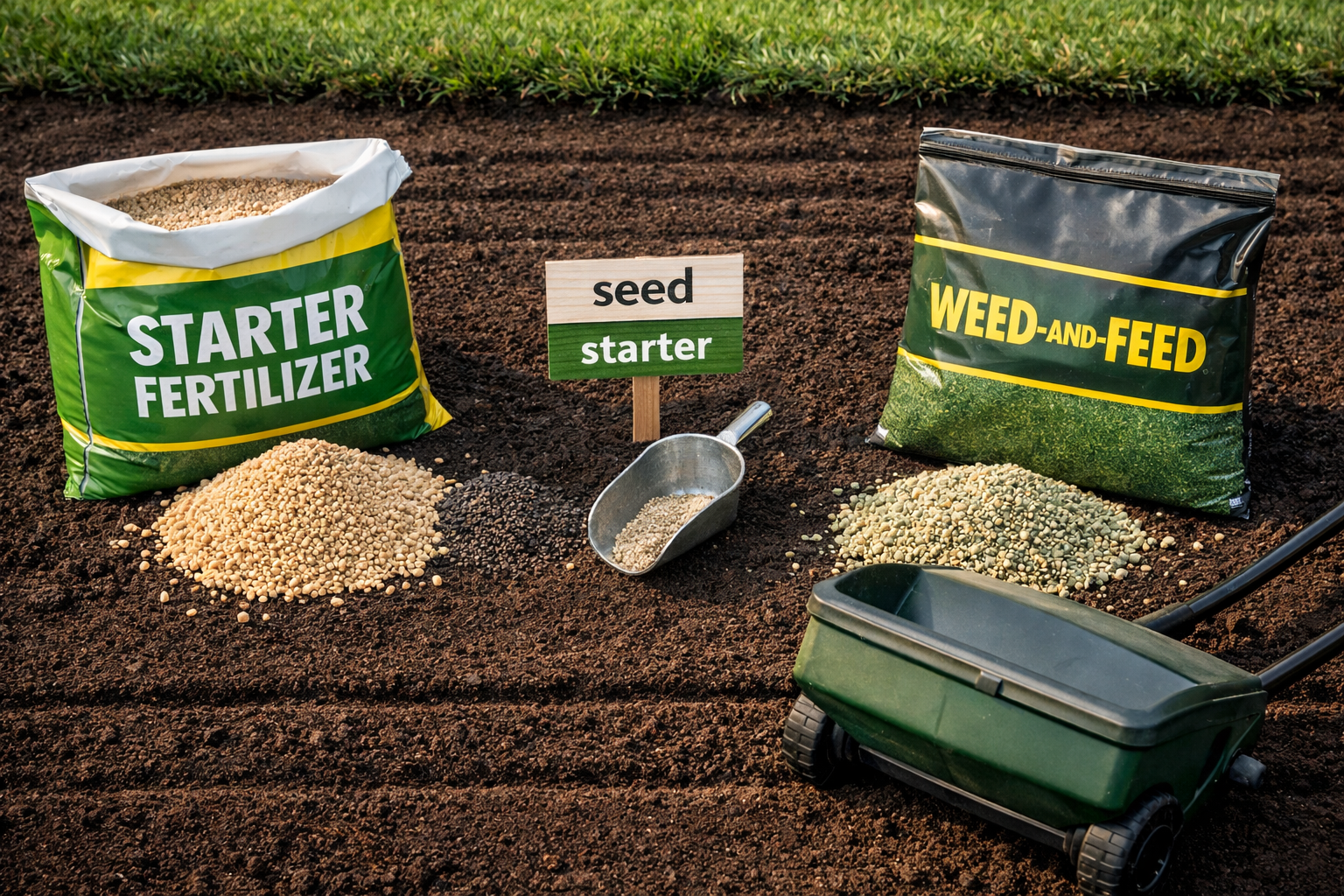
Starter fertilizer is built for this exact job. It’s formulated with a higher phosphorus ratio (something like a 5-10-5 or 10-10-10 N-P-K blend) to support root development in seedlings, and it carries no pre-emergent or broadleaf herbicide. This is the only category actually designed to go down alongside seed.
Weed-and-feed and pre-emergent products are a different animal entirely. These are built to stop seeds from germinating, full stop. It doesn’t matter whether the seed belongs to a dandelion or the Kentucky bluegrass you just paid for. Grabbing whatever fertilizer bag is already in the garage is the single most common reason overseeding projects fail to show any new growth after three or four weeks.
The fix is simple in concept: read the front of the bag before the back. If it mentions crabgrass control, weed prevention, or a pre-emergent ingredient like prodiamine or dithiopyr, it does not belong anywhere near new seed for at least 6 to 12 weeks, depending on the product’s residual activity.
Starter Fertilizer vs. Weed-and-Feed: A Side-by-Side Look
The difference between these two categories isn’t subtle once you line up what’s actually in the bag. The table below shows why one supports germination and the other actively prevents it.
Product Type
Main Purpose
Effect on New Seed
Typical N-P-K Range
Starter fertilizer
Feed roots, support germination
Safe, seed-safe by design
10-10-10 to 5-10-5
Weed-and-feed
Kill existing broadleaf weeds
Unsafe — herbicide can harm seedlings too
20-0-3 to 30-0-4
Pre-emergent herbicide
Block weed seed germination
Unsafe — blocks grass seed too
Varies, herbicide-based
High-nitrogen lawn fertilizer
Rapid green-up of established turf
Risky — can scorch tender seedlings
25-0-4 to 30-0-3
Notice the nitrogen numbers on that last row. A high-nitrogen product intended for a mature, established lawn can scorch young grass seedlings, whose root systems aren’t developed enough to handle a heavy feed. Starter fertilizer keeps nitrogen moderate for exactly this reason.
When to Apply: Soil Temperature Decides More Than the Calendar
Fertilizer and seed timing depends less on the date and more on soil temperature, and getting this wrong wastes both the seed and the fertilizer. Cool-season grasses like tall fescue and Kentucky bluegrass germinate best when soil temperature sits between 50°F and 65°F, which usually lines up with late summer into early fall in most of the U.S., or early spring as a secondary window.
Checking Soil Temperature the Simple Way
A basic soil or meat thermometer pushed 2 to 3 inches into the ground gives a usable reading. Check it at the same time each morning for three or four consecutive days; a single reading can be thrown off by an unusually warm or cold day.
Overseeding vs. New Lawn Seeding
Overseeding an existing lawn and starting one from bare dirt aren’t the same job, and they don’t call for the same fertilizer strategy.
Mow the existing lawn shorter than usual (around 1.5 to 2 inches) before overseeding so seed reaches the soil.
Rake or aerate to expose soil contact points — seed sitting on thatch rarely germinates.
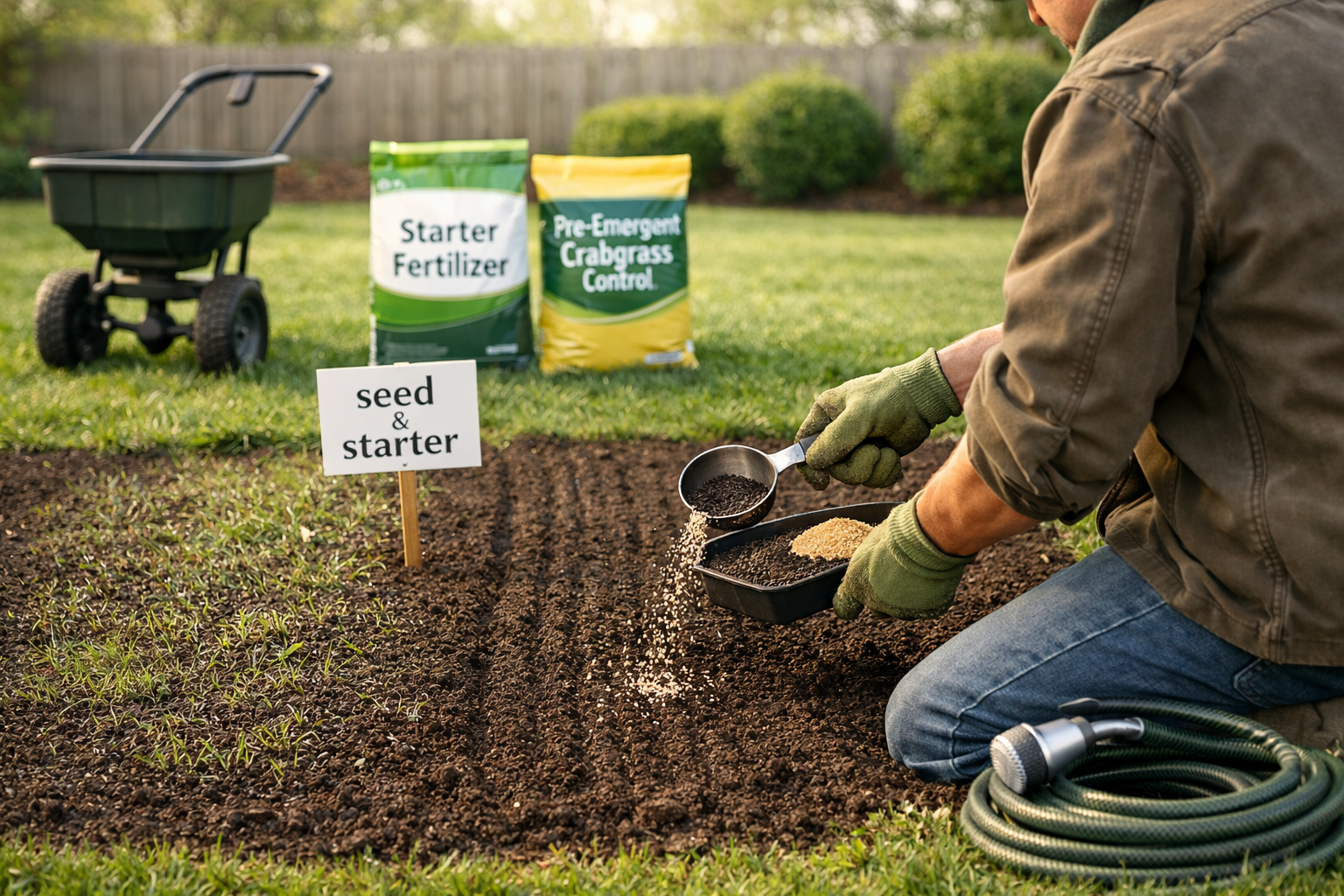
Apply starter fertilizer and seed in the same pass, or seed first and follow immediately with fertilizer.
For bare-dirt seeding, till or loosen the top 2 to 3 inches of soil before either product goes down.
Water lightly and frequently (once or twice daily) rather than one heavy soak, since seed depth is shallow and dries out fast.
Hold off on any broadleaf weed control for at least 6 weeks, sometimes longer per the label.
Resume a normal fertilizing schedule with an established-lawn product once the new grass has been mowed 3 to 4 times.
Watering and Follow-Up Feeding After Seeding
New seed and starter fertilizer both depend on consistent moisture in the top inch of soil, not a deep soak. Light, frequent watering — often twice a day for 10 to 15 minutes — keeps the seed bed damp without washing seed or fertilizer granules into low spots.
Letting the surface dry out even once during the first week can stall germination that’s already begun, forcing the seed to restart the process. This is the stage where a lot of home lawns lose ground, usually because watering gets treated like a chore instead of a daily requirement for two to three weeks straight.
Once grass reaches mowing height (roughly 3 inches for most cool-season blends) and has been cut two or three times, watering can shift to the normal deep-and-infrequent schedule of about 1 inch per week. That’s also the point to switch off starter fertilizer and move to a standard lawn feeding program, since the phosphorus-heavy starter blend has done its job and ongoing high phosphorus use isn’t necessary — some states even restrict it outside of new seeding.
Starter fertilizer is a fertilizer formulated with higher phosphorus content specifically to support root establishment in new grass seedlings, and it contains no herbicide.
For anyone spreading seed and fertilizer with a broadcast or drop spreader, getting the spreader setting dialed in matters as much as picking the right bag — a setting made for granular weed-and-feed will dump starter fertilizer too heavy or too light, and themowersguide.com has calibration guides that walk through matching spreader settings to specific product weights.
Frequently Asked Questions
Is it OK to put grass seed and fertilizer down on the same day?
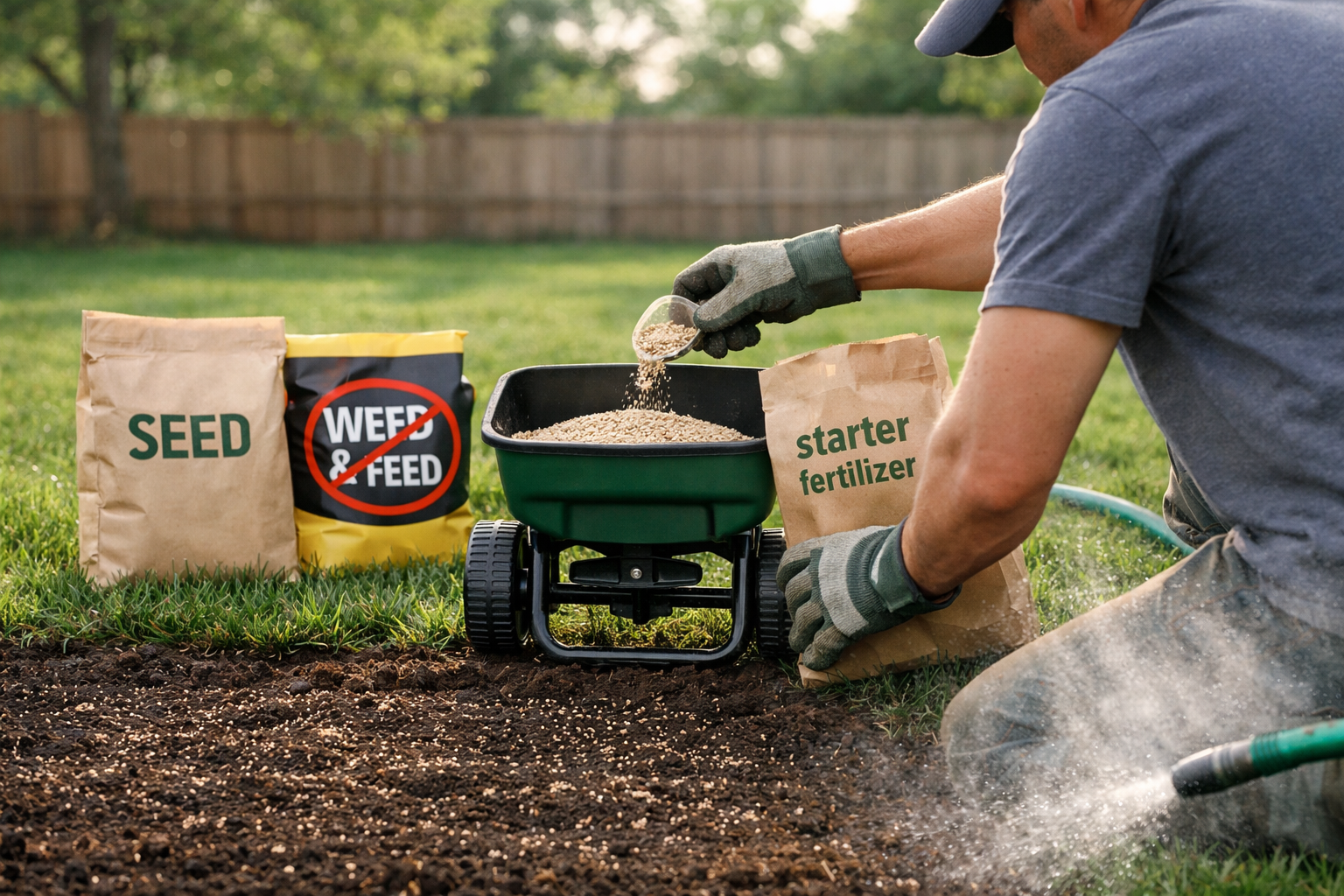
Yes, as long as the fertilizer is a starter formula without pre-emergent herbicide. Applying seed and starter fertilizer in the same session, or within a day of each other, is standard practice and often saves a trip with the spreader.
Will regular lawn fertilizer kill new grass seed?
It won’t necessarily kill it, but high-nitrogen lawn fertilizer (25-0-4 range or higher) can scorch tender seedlings and stunt early root growth. Stick to a starter blend with moderate nitrogen until the new grass has been mowed a few times.
How long after using weed-and-feed can I seed my lawn?
Most labels call for a 6 to 12 week wait, though some pre-emergents stay active in soil even longer. Check the specific product label for its residual timeframe before spreading any seed.
Grubs can destroy a lawn in as little as two to three weeks once populations cross the damage threshold, and most homeowners don’t notice until the turf is already peeling back...
Is a push mower still cutting it, or are you standing there on a Saturday morning wondering if there’s a better way? A grass cutting tractor is the answer for a...
18 August 2026
The Mowers Guide is reader-supported. When you buy through links on our site, we may earn an affiliate commission.




Comments are closed.