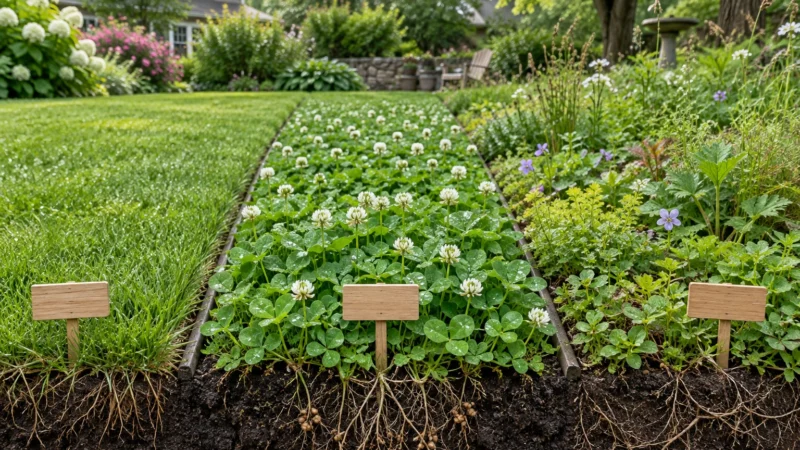
Clover is the easier, cheaper pick if you want a soft, green lawn that grows fast, handles some foot traffic and stays green in drought. Native groundcovers win where you want low water use, habitat value and little or no mowing, but they usually take less traffic. The right choice depends on your climate, sun and how much your yard gets walked on.
Neither option means you can put the mower away for good. Here is how each one changes your mowing, and where a small patch of turf still earns its place.
The Quick Verdict: Which Option Wins for Whom
Do you want green and soft by next month, or a planting that matures over three years? That one question sorts most yards.
Clover wins on speed, price and play-area toughness. It sprouts in a couple of weeks, costs little per square foot, and feeds itself with nitrogen. Native groundcovers win on habitat, water savings and a look that fits your region. They take patience, and some need weeding for a full season or two.
A mix beats both for many yards. Keep a small turf patch where the kids and dog run. Plant clover in the middle zones. Use natives in shade, on slopes and along borders.
Side-by-Side: Clover vs. Native Groundcovers
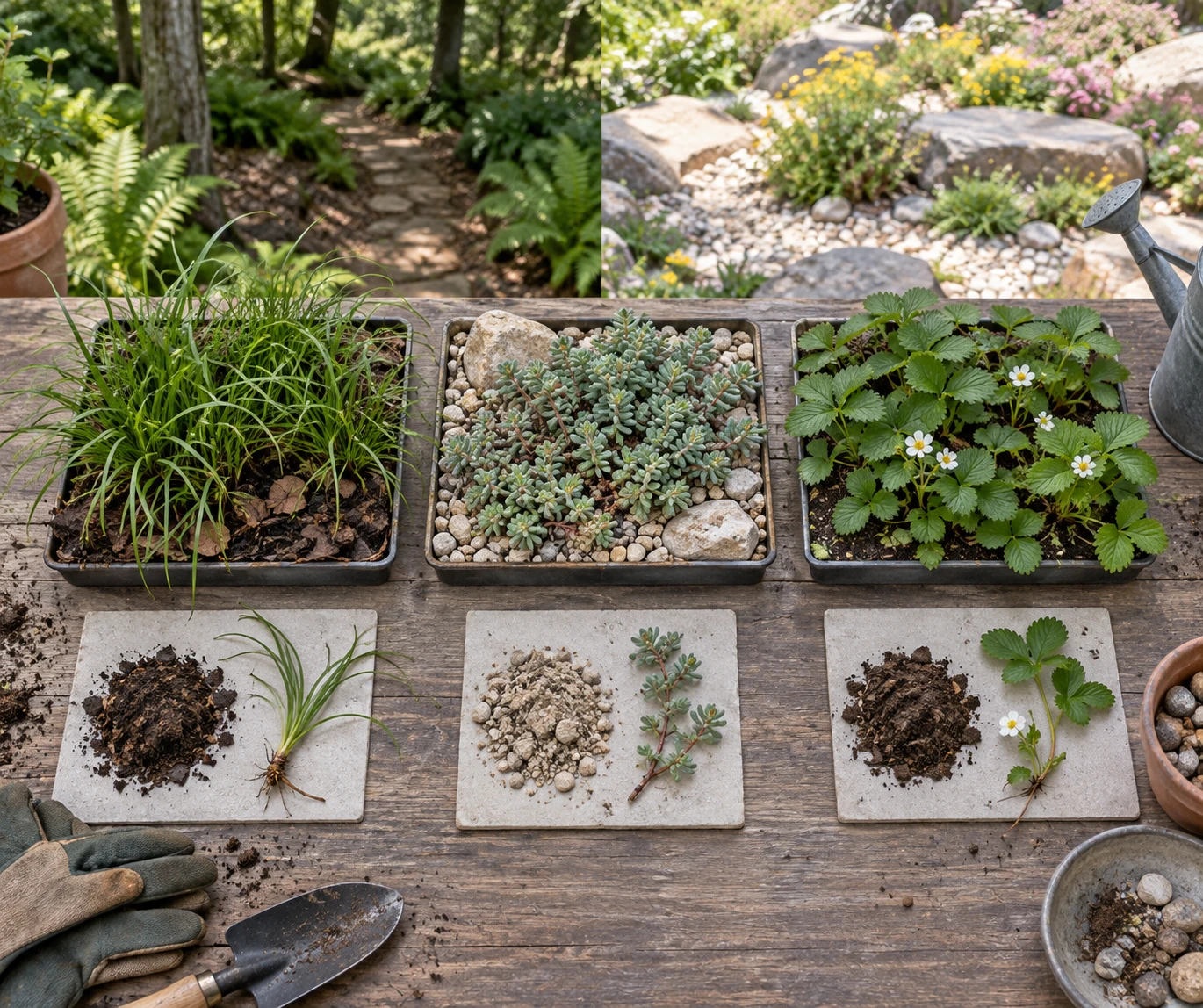
The table below compares the two on the points that decide the choice. “Native groundcovers” here means plants such as Pennsylvania sedge, wild ginger and green-and-gold, plus native lawn seed mixes with buffalograss. Exact results vary by region and soil.
Criteria
White clover / microclover
Native groundcovers
Foot traffic
Moderate; wears faster than tough turf
Low to moderate; sedges and native lawn mixes take light use
Mowing
None to 3-4 trims a year
None to 2 trims a year; some mixes need more
Water once established
Low; stays green in dry spells
Low; adapted to local rainfall
Dogs and urine
Recovers fast; tolerates urine better than most turf
Varies; clumping plants can scar
Cost to establish
Low; seed is cheap
Moderate to high; plugs and seed mixes cost more
Speed
Weeks
One to three growing seasons
Pollinators
Blooms feed bees (microclover blooms less)
Strong habitat value, especially flowering types
Regions
Most of the U.S., from cold to mild
Best when chosen for your local region
Winter
Dormant in cold areas; can leave bare soil
Often evergreen or semi-evergreen
Read the table as a starting point, not a ruling. A shady, damp yard in Maryland and a hot, dry one in Texas need different plants, even within the same column.
Clover Lawns: What You Get and What Annoys People
White clover (also called Dutch white clover) is the standard seed for lawn use. It stays under about 6 inches tall, spreads by creeping stems and grows in full sun to part shade. It does well in low-fertility, well-drained soil. Microclover is a smaller-leafed version that blends neatly with grass.
Why people love it
Clover is a legume, so it pulls nitrogen from the air and stores it in root nodules. That means little or no fertilizer. It stays bright green through dry summer weeks, when a fescue or bluegrass lawn turns tan. It also crowds out many weeds.
Why people don’t like it
Ask why people don’t like clover in the yard, and you hear the same few complaints. The flowers draw bees, which matters on a play lawn with bare feet. The leaves can leave green stains on light clothes and pet fur. In cold climates, clover goes dormant and disappears for winter, leaving bare soil until spring. And it wears faster than many cool-season grasses.
You can fix the bee problem. Mow when it blooms, or pick microclover, which flowers far less. Plan on a few bees if you choose regular white clover, and keep a bee-free zone for play.
Native Groundcovers: Matching the Plant to Your Region
Native means the plant grew in your region before settlers arrived. That is why natives handle your rain, soil and winter with little help. Pick from what grows near you rather than from a general list.
Good groundcovers to use instead of grass
In the Mid-Atlantic, the University of Maryland Extension lists wild ginger, alumroot and green-and-gold as native groundcovers. It also names several sedges (grass-like plants that rarely need mowing), including Wood’s sedge, Eastern star sedge and white-tinged sedge. In the Midwest, Pennsylvania sedge, wild strawberry and creeping thyme are common choices. Barren strawberry, hardy in zones 3 to 8, handles slopes and shade if the soil stays moist.
Lawn-style native mixes
Some seed mixes act more like a lawn. One native lawn mix built around buffalograss and poverty grass keeps its leaves at about 4 to 8 inches. Seedheads can reach knee height. You can mow it as often or as little as you like. Expect different leaf shapes and shades of green, not a uniform carpet.
Plants to skip
Avoid invasive groundcovers. Periwinkle (Vinca major and Vinca minor), Japanese spurge and carpet bugleweed spread past your yard and into woods. Check your state’s invasive plant list before you buy.
Foot Traffic, Kids and Dogs
Which grass alternatives can you walk on? Clover and microclover handle everyday walking, barefoot play and a few games. Sedges and some native lawn mixes handle light to moderate use. Most flowering natives do not like regular stomping. None of them match tough turf for a soccer game.
Match the plant to the path your family actually takes. Walk your yard for a week and note the worn lines. Those lines show where you need turf, pavers or stepping stones.
Groundcovers differ widely in how much walking they tolerate, and not every part of your yard needs a plant that can be walked on. — High Country Gardens
Is clover better than grass for dogs?
Mostly yes. Clover tolerates dog urine better than most turf, and it often recovers fast after a spot burns. It is also soft on paws. The drawbacks are stains on light-colored fur and bees in bloom. Dogs that dig or run the same path every day will wear it down, just like any lawn.
Native groundcovers and pets
Clumping sedges and perennials can flatten or tear when a dog bolts across them. Give the dog a mulched or turf path through the planting. Check each plant before you buy, because a few common ornamentals can upset a dog that chews them.
Mowing: When to Keep the Mower
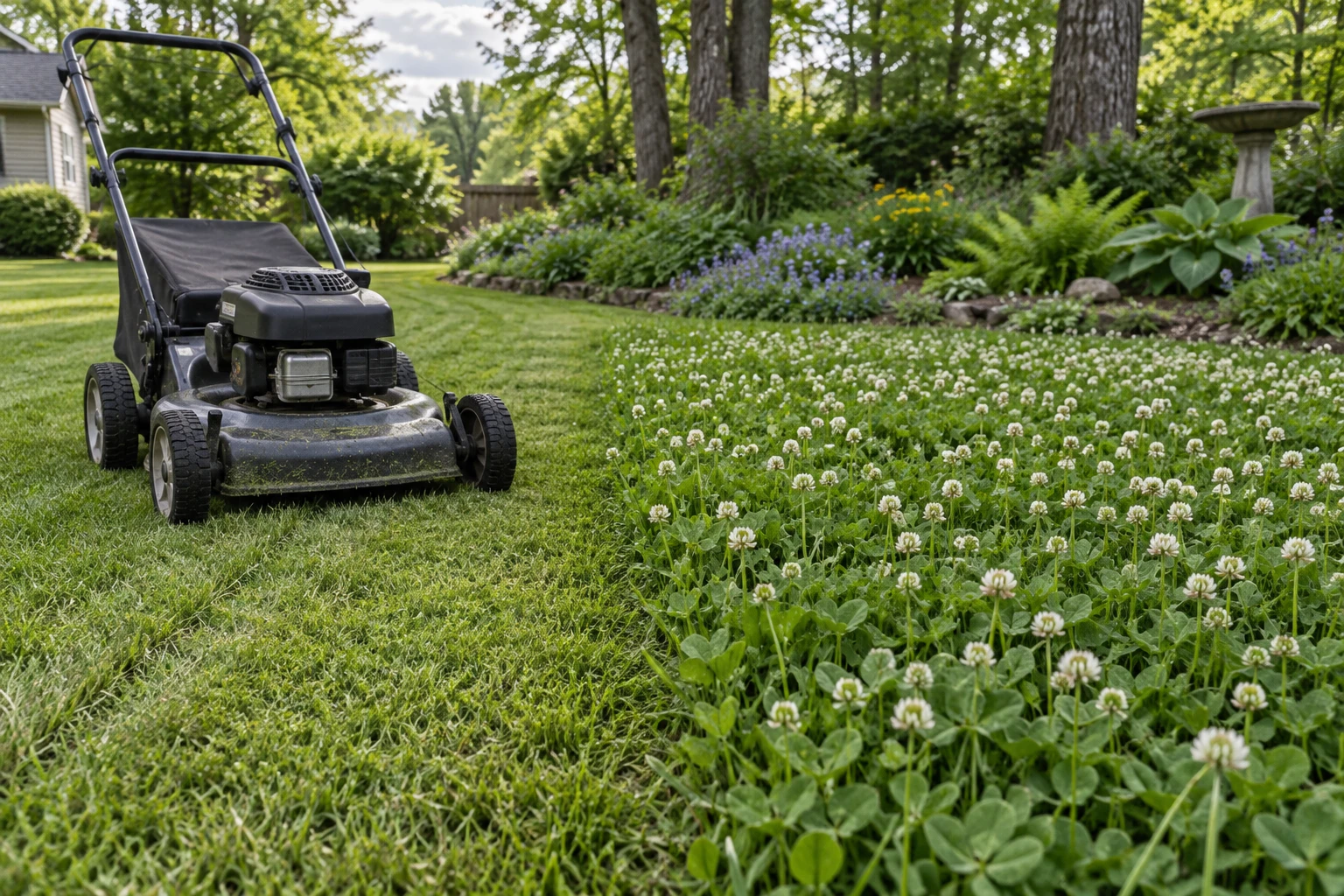
Do clover lawns need mowing? Not much. Clover stays low, so many owners mow only a few times a year. A trim in early summer before the blooms open keeps bees away from bare feet. Microclover tolerates regular mowing and stays neater.
Native groundcovers need even less in many cases, but “no mow” is not “no work.” You still weed and mulch until the plants fill in. Use an edging barrier to keep spreaders in their bed. Native lawn mixes may need two or three cuts a year to look tidy.
Here is the mower question in plain terms.
Keep your mower if you have a play area, a dog run or a front yard with strict neighborhood rules. A small push mower or battery mower handles a 500-square-foot turf patch in minutes. Drop to a string trimmer if you only want to tidy clover edges or cut seedheads on native mixes.
If your entire yard becomes groundcover, you may use the mower three times a year or not at all. Set the deck high, around 3 to 4 inches, so you trim the tops and don’t scalp the plants.
Water, Fertilizer and Weed Control
Established clover needs little watering and no fertilizer. Native groundcovers need water in the first season, then rely on rainfall. Both save you the weekly sprinkler routine you know from turf.
Fertilizer and nitrogen
Clover makes its own nitrogen, so skip high-nitrogen lawn feed. Too much of it helps grass outcompete the clover. Natives generally prefer lean soil too, and extra fertilizer mostly feeds weeds.
Weeds and herbicide
Broadleaf weed killers kill clover and many groundcovers. Most “weed and feed” products fall in this group. Keep them off any area you plant. Check the label before you spray near a neighbor’s mixed lawn, because drift travels.
New plantings do get weeds. Annual weeds show up strongly in year one, since the soil already holds weed seeds. Pull or cut them before they set seed, and expect the planting to fill in by year three. This is the biggest surprise for first-timers.
How to Start: Seeding, Overseeding and Mixed Lawns
Can you mix clover into an existing lawn? Yes. Overseeding is the easiest way in, and it works best in early fall or spring. Mow low, rake the thatch, and scatter the seed so it touches soil. Keep it damp until it sprouts, usually in one to three weeks.
Replacing turf
To replace a large area, scalp the grass to about an inch, spread a thin layer of compost, and sow the seed. A light cover of straw holds moisture. Fall planting gives perennials time to root before winter. Native plugs (small starter plants) cost more than seed but fill in more reliably.
Why a mixed lawn often wins
A mixed-species lawn holds up better than one plant alone. One example from the South combines St. Augustine grass, clover, native basket grass and liriope, along with a dozen species in total. If one plant struggles in a drought or a shady corner, another fills the gap. Clover in a turf lawn also stays green when the grass goes dormant, and it feeds the grass with nitrogen. If you want help planning mowing and feeding for the mixed result, The Mowers Guide has lawn care routine guides that cover the basics.
Choose Clover If… Choose Natives If…
Choose clover if you want a green lawn quickly, have kids or a dog, and want a low budget. It is also the better pick if your yard gets full sun to part shade and you can accept some bees.
Choose native groundcovers if your yard has shade, slopes or poor soil, and you care about habitat and low water use. They also suit you if you are patient and your yard sees light foot traffic.
Choose a mix if you need a play area plus a low-effort border. Keep turf where people run, clover in the middle and natives at the edges.
Choose neither if your yard gets heavy traffic every day, like a sports field. Fine fescue, which tolerates moderate foot traffic, drought and shade, needs mowing no more than twice a year. It is a grass, but a far lazier one. Also consider moss for deep shade, or mulch and pavers for the worst-worn paths.
Your weekends will thank you, whichever way you go!
Frequently Asked Questions
What are some good groundcovers to use instead of grass?
Good choices include white clover, microclover, fine fescue, Pennsylvania sedge, wild strawberry, creeping thyme and wild ginger. Pick based on your region, sun and traffic. Avoid invasive spreaders such as periwinkle and carpet bugleweed.
Can clover be used as ground cover instead of grass?
Yes. White clover grows well as a full lawn replacement in zones 3 to 10 when you choose the right type. It needs little mowing and no fertilizer. In cold regions it goes dormant in winter, so expect brown or bare ground until spring.
Why do people not like clover in their yard?
People complain about bees in bloom, green stains on clothes and pets, winter dieback in cold areas and faster wear than turf. Microclover and an occasional mow during bloom solve most of those problems.
What can I substitute for clover?
Try fine fescue, creeping thyme, wild strawberry or Pennsylvania sedge. Choose fescue for traffic, thyme for sunny, dry spots and sedge for shade. Native plants adapted to your region usually perform best.
A toolbox truck keeps lawn care pros running between stops. Learn the best setup, must-carry parts, toolbox types, and organization tips for your service truck.







Comments are closed.