Two-stroke or four-stroke? That’s the question every buyer asks before spending $5,000 or more on a commercial mower. Here’s the twist: if you’re shopping a true two cycle lawn mower from a brand like AS-Motor, you’re shopping a smaller slice of the lineup than you think. Most of their current walk-behinds and slope mowers run four-stroke engines, and that changes how you should be comparing models.
The real decision isn’t two-stroke versus four-stroke anymore. It’s matching the engine type to your slope, terrain and how much maintenance you’re willing to do.
What a Two-Cycle Engine Actually Is
A two-stroke (or two-cycle) engine completes its power cycle in one crankshaft revolution, mixing oil directly into the fuel instead of running a separate oil reservoir. That’s the whole story in one sentence, and it’s why these engines are lighter and simpler than four-stroke equivalents.
Why Weight Matters on a Mower
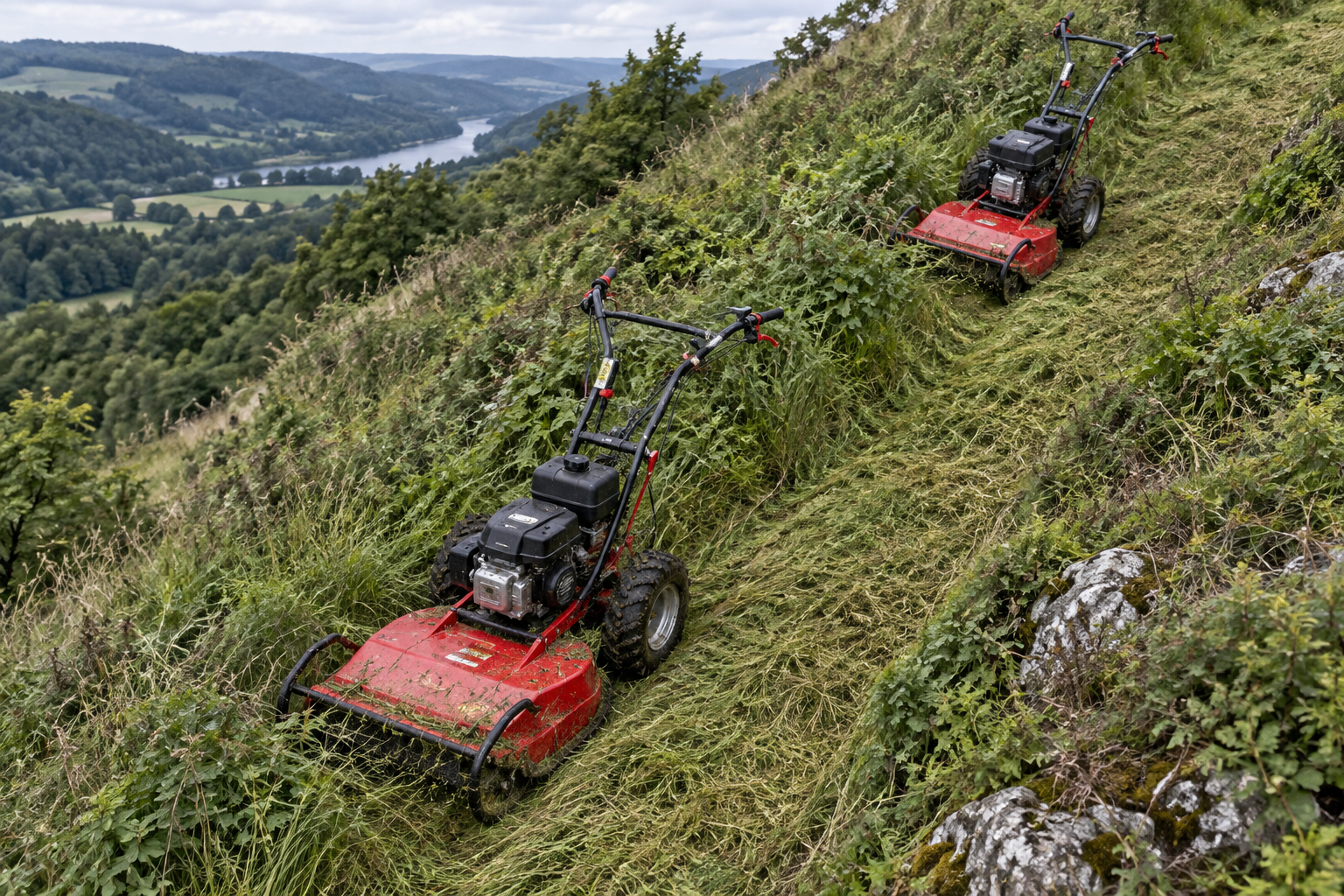
Less weight means better power-to-weight ratio, which is why two-stroke engines still show up on brush mowers and steep-slope units where every pound counts. A lighter deck is easier to winch, easier to maneuver on a 30-degree grade, and less punishing on an operator’s back over an eight-hour day.
Why They Fell Out of Favor
Four-stroke engines got cleaner, quieter and more fuel-efficient over the past two decades, and emissions rules pushed manufacturers that direction. EPA Phase 3 standards for small off-road engines tightened hydrocarbon limits, and two-stroke engines struggle to meet them without extra engineering. That’s the main reason they’re rare in new professional lineups now, not because they stopped working well.
AS-Motor’s Lineup: Where Two-Stroke Still Earns Its Keep
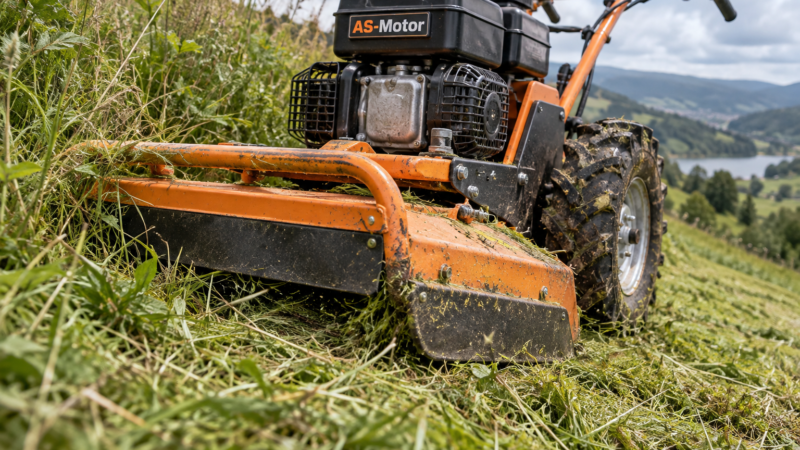
AS-Motor, the German manufacturer known for slope mowers and brush cutters, builds most of its current range around four-stroke engines from Honda, Kohler and Briggs & Stratton. But a handful of specialty brush and rough-terrain mowers still spec two-stroke power because the terrain demands it.
A two-stroke engine delivers more power per pound of engine weight than a four-stroke of the same displacement, which is why it persists in applications where weight is the limiting factor.
If you’re clearing brush on a hillside nobody wants to mow with a riding unit, that power-to-weight edge is the whole reason you’d pick two-stroke over four-stroke at all.
Commercial vs Residential: Where the Line Actually Falls
Commercial mowers aren’t defined by engine type — they’re defined by duty cycle, steel gauge and how many hours they’re built to survive. A residential four-stroke mower might run 50 hours a year; a commercial AS-Motor unit can clock 500 hours or more in a single season.
Slope rating is the number that separates the two categories fastest. AS-Motor’s Sherpa line is built specifically for terrain most residential mowers can’t touch safely.
Fuel, Oil Ratios and Keeping the Engine Alive
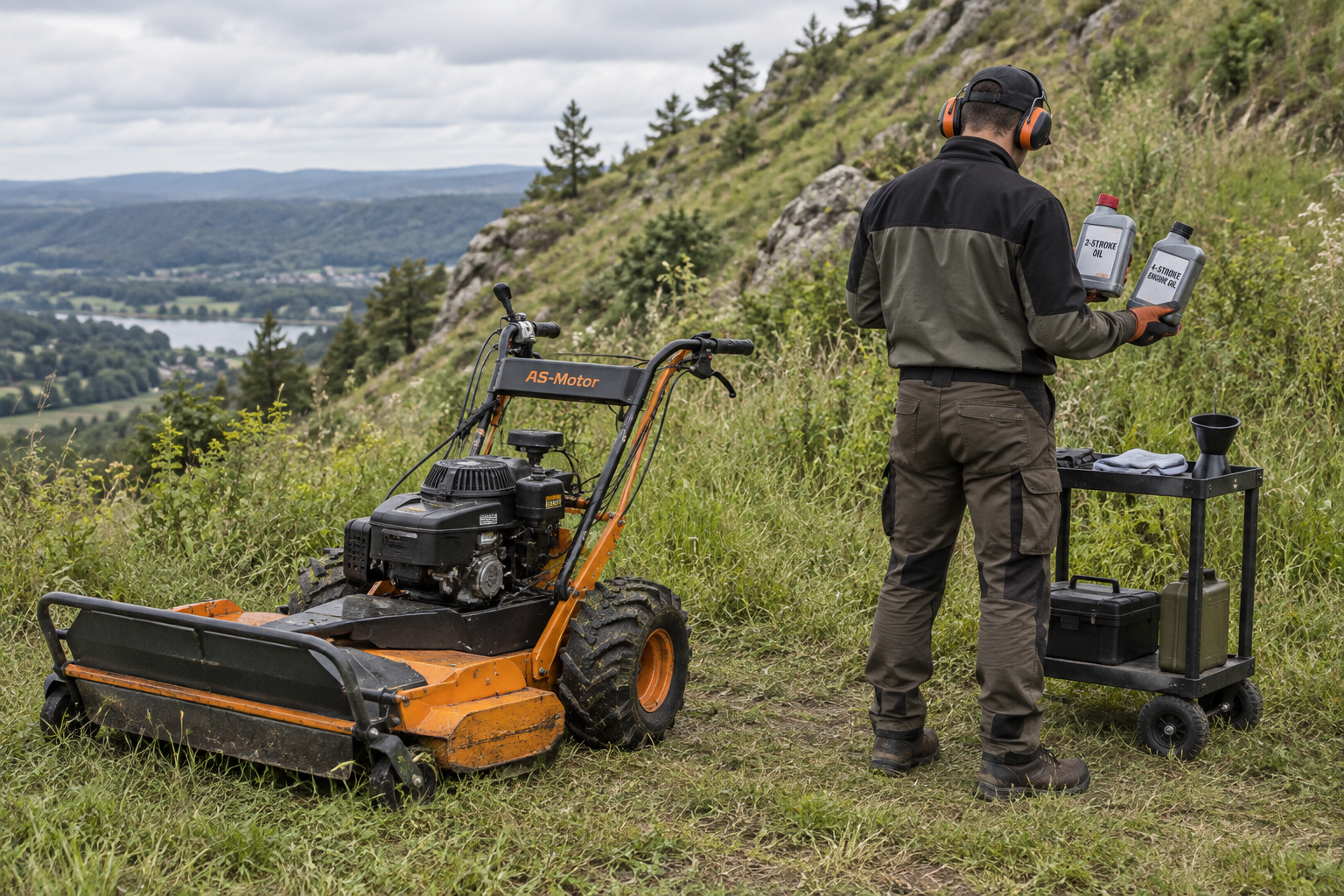
Get the fuel-oil ratio wrong and you’ll kill a two-stroke engine fast — this is the single most common mistake homeowners make moving from four-stroke equipment. Most two-cycle outdoor power equipment runs a 50:1 mix, but check your specific AS-Motor manual because some brush units specify 40:1.
Picking the Right Oil
Use a TC-W3 or JASO FD-rated two-stroke oil formulated for air-cooled engines, not the TC-W3 marine oil meant for water-cooled outboards. Mixing the wrong oil type causes carbon buildup and spark plug fouling within a season.
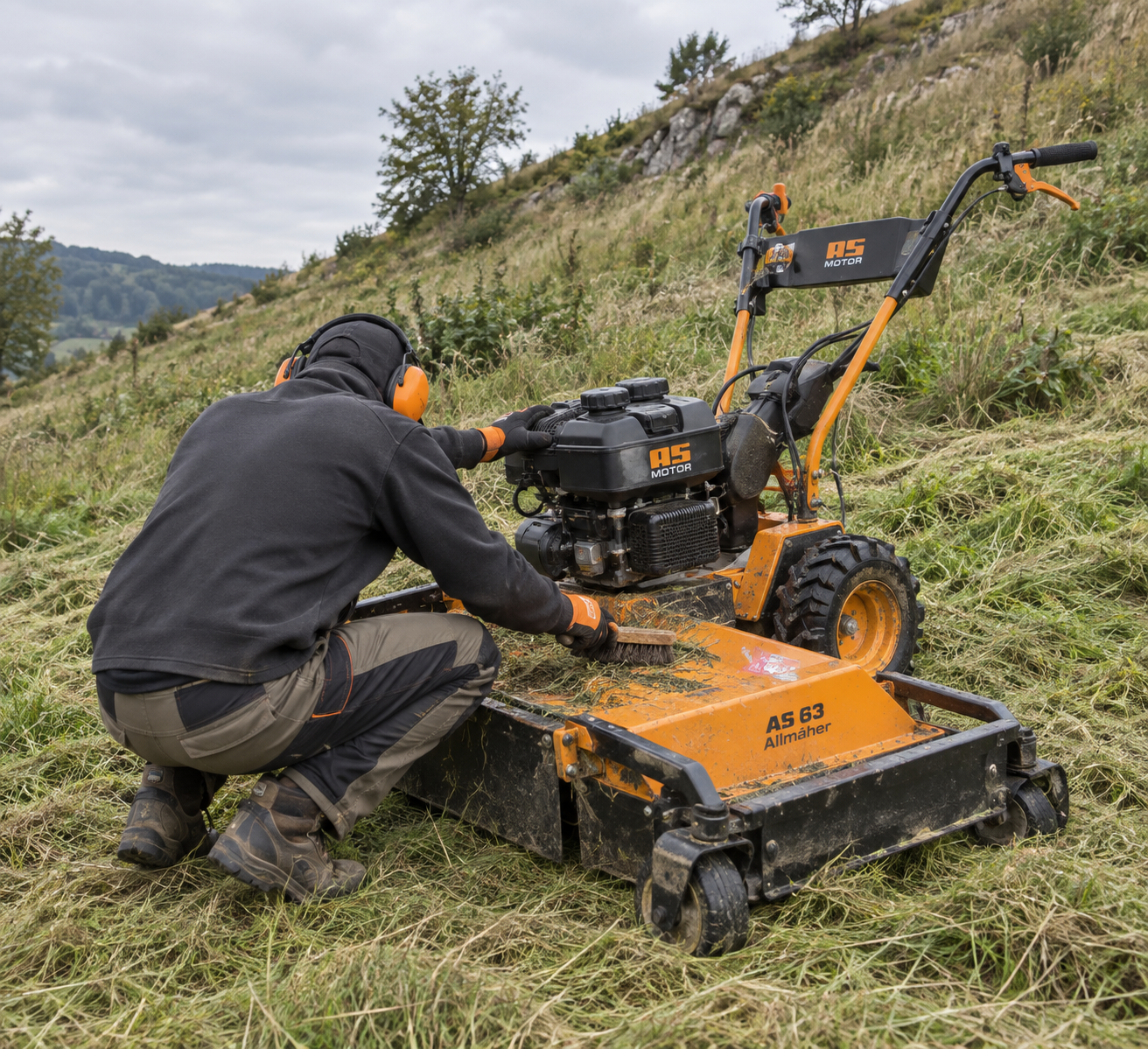
Check the spark plug every 25 hours for fouling or excess carbon.
Clean or replace the air filter every 25-50 hours depending on dust conditions.
Inspect the fuel lines annually for cracking, since ethanol blends degrade rubber faster.
Run the carburetor dry before off-season storage to prevent gumming.
Four-stroke engines need separate oil changes every 50-100 hours instead, which is less frequent but adds a maintenance task two-stroke owners never deal with. Neither engine type is “easier” overall — they just trade chores differently, and a buying guide on a site like themowersguide.com can help you weigh that trade-off against your own mowing schedule before you commit to a model.
Frequently Asked Questions
Is a two-stroke mower more fuel-efficient than a four-stroke?
No, four-stroke engines are generally more fuel-efficient because they burn fuel more completely and don’t lose oil-laden exhaust out the muffler. Two-stroke engines also produce higher hydrocarbon emissions per gallon burned.
Can I run a four-stroke oil mix in a two-cycle engine by mistake?
Don’t — straight gas with no oil mixed in will seize a two-stroke engine within minutes of running under load. Always confirm the ratio on the engine’s own label, since it can differ between an AS-Motor brush unit and a standard trimmer.
Are AS-Motor mowers good for steep residential yards?
Yes, the Sherpa series is rated for slopes up to 55 degrees, well beyond what most homeowners encounter, but that capability comes at a commercial price point most residential buyers won’t need.
John Deere’s E100 series starts at around $1,700, while a comparable X350 runs closer to $3,200. That $1,500 gap is exactly where most homeowners make the wrong call. Deere tractors span...
Two brands, one driveway, and a decision that’ll cost you real money for the next decade. Cub Cadet vs John Deere isn’t about which name sounds more trustworthy on a tractor...
27 September 2026
The Mowers Guide is reader-supported. When you buy through links on our site, we may earn an affiliate commission.






Comments are closed.