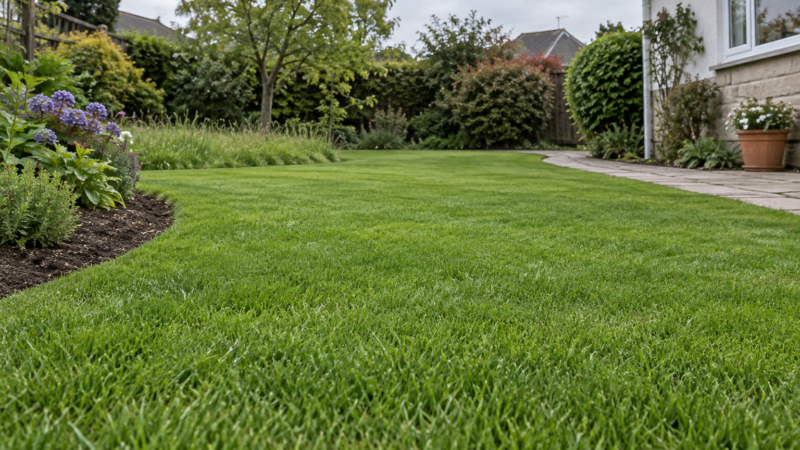
A lawn is an area of ground planted with grass and kept short by regular mowing. That is the plain answer. What turns plain grass into a lawn is intention: someone planted it, and someone keeps cutting it.
Searching for the lawn meaning usually means you want one of three things: a clean definition, the legal angle, or the difference between a lawn, grass and a yard. You’ll get all three below, plus the odd history of the word.
Lawn vs. Grass vs. Yard: The Quick Comparison
Are these three words the same thing? No. Grass is a plant, a lawn is a managed area made of that plant, and a yard is the whole piece of outdoor space around a building. Mixing them up is the most common mistake people make with this word.
Term
What it means
Who decides what it looks like
Example
Grass
The plant itself, wild or planted
Nature, unless someone plants it
A ditch full of tall fescue
Lawn
Grass that was planted on purpose and is kept short
You, through mowing, watering and feeding
The front strip of Kentucky bluegrass you cut on Saturdays
Yard
All the outdoor ground around a house, including lawn, beds, patio and driveway edges
You and local zoning rules
The whole space inside your fence
Think of grass as the ingredient and the lawn as the finished dish. The yard is the whole kitchen.
Why a Lawn Is More Than Grass
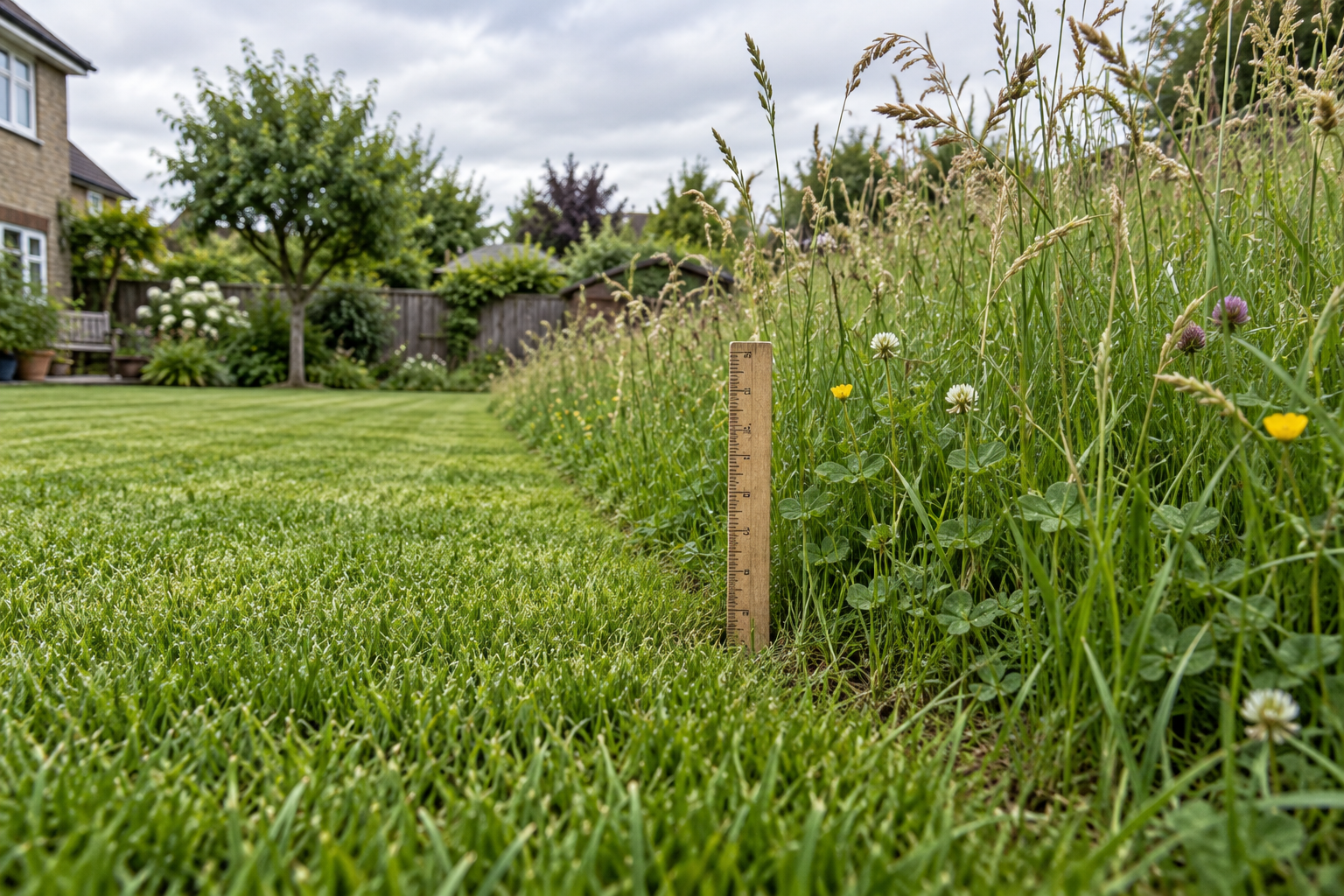
A lawn includes the grass, the soil under it and the care that keeps it even. Take away the care and you still have grass, but you no longer have a lawn. After a few months without mowing, most people would call it a field, especially once weeds and wildflowers move in.
Why a Yard Is Bigger Than a Lawn
Your yard might hold a lawn, a vegetable bed, a deck and a shed. Only the grassy part is the lawn. A small city yard can have no lawn at all if it is all gravel and pots.
What Qualifies as a Lawn? Upkeep Is the Test
Here is the angle most definitions skip. You can describe a lawn by its plants, but the real test is upkeep. Mowing height, mowing schedule and the equipment you use are what separate a lawn from a patch of grass.
Dictionaries agree on the basics. A lawn is a stretch of open, grass-covered ground, usually mowed close, near a house, on an estate or in a park. Britannica’s dictionary describes it as ground around a house, in a garden or in a park covered with short grass. Notice the word short. It shows up in nearly every definition.
The Three Things That Make a Lawn
First, the grass is planted on purpose, from seed, sod (rolled strips of grass with roots attached) or plugs. Second, it is cut on a schedule. Third, it is managed for looks or use, such as a play area, a picnic spot or curb appeal.
Skip any one of these and the label gets shaky. A meadow of native grass has plants but no schedule. A mowed vacant lot has a schedule but nobody planted it.
Common Lawn Grass Types
The plants vary by region. Cool-season grasses such as Kentucky bluegrass, perennial ryegrass, tall fescue and fine fescue do best in the North and the Pacific Northwest. Warm-season grasses such as Bermuda, zoysia and St. Augustine suit the South. Fine fescue also handles shade better than most.
The species does not change the definition. A Bermuda lawn in Georgia and a bluegrass lawn in Minnesota are both lawns because of how they are kept.
How Tall Can Grass Get Before It Stops Being a Lawn?
Is there a magic number? Not in everyday language, but cities often set one. Most municipal codes land somewhere between 6 and 12 inches. Past that, you are no longer keeping a lawn in the eyes of the law, and you can be cited.
Everyday use is looser. If it looks tended and you cut it regularly, people call it a lawn. If it reaches your knees and goes to seed, people call it a field.
Typical Mowing Heights
Most home lawns are cut between about 2 and 4 inches, depending on the grass. Bermuda and zoysia usually run lower, around 1 to 2.5 inches. Tall fescue and Kentucky bluegrass do better at about 3 to 4 inches. These are typical ranges, so check your own grass type.
The Schedule Matters Too
During fast spring growth, you will usually mow about once a week. In a dry summer, every two weeks may be enough. The “one-third rule” is a good habit: never remove more than a third of the blade height in one cut. Cutting more stresses the grass and leaves a brown, ragged look.
That schedule is exactly what makes your yard read as a lawn. When you stop, the clock starts on the shift from lawn to field. A few weeks is a lazy lawn. A season is a meadow.
The Legal Definition of a Lawn
Does the law define a lawn? Sometimes it does, and the definition follows the same logic as above. Some legal codes say a lawn is an open space or grassy ground that is generally kept mowed or required to be kept mowed.
Lawn: an open space between woods, or ground covered with grass, that is generally kept mowed or required to be kept mowed.
That wording is the one Law Insider records for legal use, and it shows how law borrows the mowing test.
Where Local Rules Come In
There is no single national definition in the United States. Cities, counties and homeowners associations (HOAs) write their own. Common rules include a maximum grass height, a deadline to cut after a notice, and a ban on letting a front lawn go to seed.
Water rules matter too. In May 2026, Charlotte, North Carolina moved to mandatory water restrictions because of dry conditions. Starting May 15, 2026, customers could irrigate lawns no more than two days a week, between 6 p.m. and 6 a.m. The city also asked residents to keep lawn watering to no more than one inch per week, rainfall included. A lawn can be defined in law, but it can also be limited by it.
When a Lawn Stops Counting
Say you stop mowing for a summer to save water. Legally, your grass may have crossed the height limit in a few weeks. A notice often comes first, then a fine if you do not cut. Natural yards and native meadows are often allowed if you register them or keep clear edges, but rules differ by town.
Call your city’s code enforcement office before you let anything grow. Ask for the height limit and whether native plantings are exempt. It takes five minutes and can save you a fine.
Yard vs. Lawn: Fixing the Other Confusion
Why do people mix up yard and lawn? Because both describe the space outside a house. In American speech, “the yard” means the grounds around a building, while “the lawn” means only the grass part. You mow the lawn, but you clean up the yard.
There is a second trap. A yard is also a unit of length, equal to 3 feet or 36 inches (0.9144 meters). Football fields, fabric and golf all use it. A “yard of lawn” would mean a strip of grass 3 feet long, not a garden.
In zoning and property law, yard refers to the open space around a building. A yard rule might set how far a fence must sit from your lot line or how high it can be. Lawn rules are about the grass itself. Your front yard can contain a lawn, but the two are never the same thing.
Why Is It Called a Lawn? Word Origin and Other Meanings
Where does the word come from? The answer is a long way from a mowed front yard. In the 1500s, English speakers wrote it as laune or laund, meaning an open space between woods, a glade. It came from Old French lande, meaning heath, moor or clearing.
Over time, the meaning shifted from a clearing in the woods to a grassy patch, and eventually to the trimmed turf we know. The clearing idea lingers today. A lawn is still a cleared, open area of grass.
Lawn as a Fabric
Is there a second word spelled the same? Yes. Lawn is also a fine, light linen or cotton cloth, and it has a separate origin. It is thought to come from Laon, a city in northern France known for linen. Lawn fabric is thin and smooth, and it has been used for handkerchiefs and fine shirts. If a clothing or quilting site says “lawn,” it means cloth, not grass.
The Old Glade Meaning
Dictionaries still list the glade meaning as archaic, meaning old and rarely used. You may see it in old poems or novels. In modern speech, nobody calls a woodland clearing a lawn.
Why Lawns Exist: Purpose and Benefits
Why keep a lawn at all? Because it gives you a soft, open space for kids, pets and parties. A lawn party, a backyard game of catch and a picnic all need one.
Lawns also have practical uses. Grass cools the ground on hot days compared with bare pavement, and its roots hold soil in place during heavy rain. A lawn also gives a house a neat frame, which many buyers notice first.
There is a cost side. Lawns need water, mowing and often fertilizer, and in dry places that bill adds up. That is why the maintenance side is part of the definition: a lawn is a commitment, not just a plant cover. If you want the basics of cutting, feeding and watering, The Mowers Guide has lawn care guides that walk you through each step.
“In the Lawn” or “On the Lawn”? Pronunciation Too
Which preposition is right? Use on the lawn for almost everything. You sit on the lawn, play on the lawn and park a chair on the lawn. The lawn is a surface, so “on” fits.
In the lawn works when you mean something sunk into it or growing from it. You find weeds in the lawn, holes in the lawn or a sprinkler head in the lawn. It treats the lawn as a layer with things inside.
Pronunciation is simple. Say it like “lawn” rhyming with “dawn.” In some American accents, “lawn” and “Lon” sound alike, but the spelling is always l-a-w-n.
Frequently Asked Questions
What qualifies as a lawn?
An area qualifies as a lawn when grass was planted on purpose and is kept short by regular mowing. Wild grass that nobody planted or cuts is a field or meadow, not a lawn.
What is the legal definition of a lawn?
There is no single national definition. Some codes call a lawn grass-covered ground that is generally kept mowed or required to be kept mowed. Many cities add a maximum height, often 6 to 12 inches, so check your local rules.
Is grass the same as a lawn?
No. Grass is the plant, while a lawn is a deliberately planted and maintained area of that plant. The soil and the mowing routine are part of the lawn, which is why neglected grass stops counting.
What does lawn mean in fabric?
In fabric, lawn is a fine, lightweight cotton or linen cloth with a smooth, crisp feel. It is a separate meaning of the word, and it has nothing to do with grass. Enjoy your well-kept lawn, whichever meaning you were after!






Comments are closed.