Which hoe do you grab when weeds pop up between your tomato rows? The wrong one wastes your morning. A hoe garden tool is a long-handled tool with a flat or angled blade that slices weeds just under the soil surface. Pick the blade shape that matches the job, keep it sharp, and a weeding session shrinks to minutes. Here’s how to choose, use, and care for one.
What a Hoe Does and Which Type Fits Your Weeding
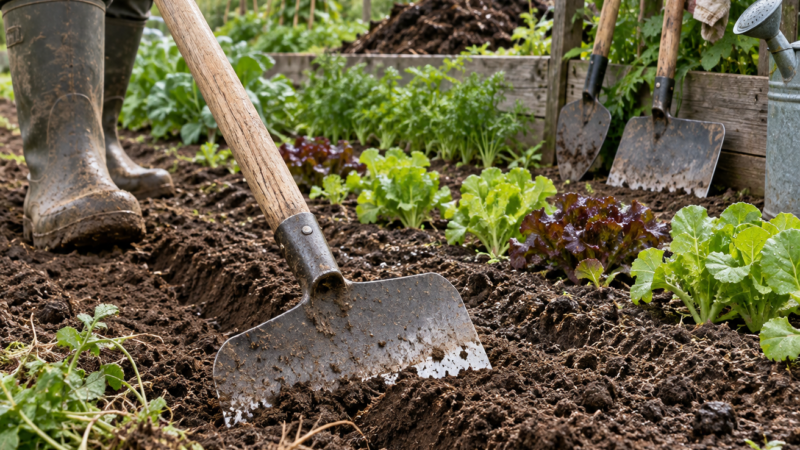
A hoe works by cutting. You slide or pull the blade just under the surface, and it severs the weed from its roots. Weeding is the main job, but hoes also loosen crusted soil (cultivating) and dig shallow trenches (furrowing) for seeds.
Push-Pull and Stirrup Hoes
The Dutch hoe (push-pull hoe) has a flat blade angled forward. You walk backward or forward and slide it just under the surface. It’s great for open beds with tiny weeds.
The stirrup hoe (oscillating hoe) has a hinged, loop-shaped blade that cuts on both the push and the pull. It’s quick on long rows, but it clogs in thick, damp growth.
Draw, Collinear, and Warren Hoes
The draw hoe (swan-neck hoe) has a blade set at nearly a right angle. You chop and pull toward you. It handles tougher weeds, hilling soil, and furrows.
The collinear hoe has a thin blade that sits flat to the ground. It’s built for precise work between closely spaced plants like lettuce and carrots.
The Warren hoe has a heart-shaped blade. The point cuts a seed trench and the wings pull soil back over it.
Hoe type
Motion
Best job
Drawback
Dutch (push-pull)
Slide
Open beds, tiny weeds
Weak on thick stems
Stirrup
Slide, both directions
Long rows
Clogs in damp growth
Draw (swan-neck)
Chop and pull
Tough weeds, furrows
Easy to dig too deep
Collinear
Slide flat
Tight spacing
Poor on big weeds
Warren
Pull
Seed trenches
Not a weeding specialist
If you only buy one, I’d get a stirrup hoe for weeding. Add a draw hoe if you also plant in rows.
How to Hoe: Timing Beats Effort
You don’t need muscle. You need good timing. A sharp hoe passed lightly over dry soil on a sunny morning, while weeds are still tiny, takes minutes. The sun then wilts the cut weeds before they can re-root.
Weed on a schedule, about every 7 to 10 days in peak growth. Hoeing seedlings the size of a pea is far easier than fighting knee-high crabgrass in July.
A Simple Routine
Wait for dry soil and a sunny, breezy morning.
Stand upright and hold the handle like a broom.
Slide the blade about 1 inch deep under the surface.
Work backward so you don’t step on cut weeds.
Rake or leave tiny weeds to dry; remove any that have flowers.
Clean the blade before you put it away.
Common Mistakes
Hoeing too deep is the big one. It damages shallow roots and brings dormant weed seeds up to the light, so you get a fresh crop. Skip wet soil too. Cut weeds in damp ground often re-root, and you’ll compact the dirt under your boots.
Don’t wait for weeds to set seed. Cutting a seeding weed just spreads the seed.
When Not to Hoe
Hoes aren’t for everything. Keep one out of your lawn. It tears turf and leaves bare patches that invite more weeds. For lawn weeds, a mower set at the right height and a proper weeding tool do the job better.
Also skip it near shallow-rooted plants. Strawberries, onions, and many perennials have roots in the top inch or two. Hand-pull close to them.
Finally, avoid hoeing after rain or heavy watering. Wait until the surface crumbles when you touch it.
Handles, Blades, and Choosing a Hoe
Handle length decides how your back feels. Pick a handle that reaches about your armpit to shoulder height, so you stand tall. Most run 54 to 60 inches. Ash and hickory are tough and absorb shock, while fiberglass shrugs off moisture.
Blades come in two main materials. Carbon steel takes a keen edge and sharpens easily, but it rusts if neglected. Stainless steel resists rust and costs more, though it’s harder to sharpen to a razor edge. I’d pick carbon steel if you’ll wipe it down after use. One drawback: it needs that routine.
Hoe vs. other tools? A hoe slices weeds at the surface. A cultivator (claws) breaks up deeper soil. A rake smooths and gathers. A shovel digs and moves soil. Use a hoe when weeds are small and the ground is loose.
Sharpening, Cleaning, and Storage
A dull hoe bruises weeds instead of cutting them, and it makes your arms tired. Sharpen it a few times a season.
Sharpening Steps
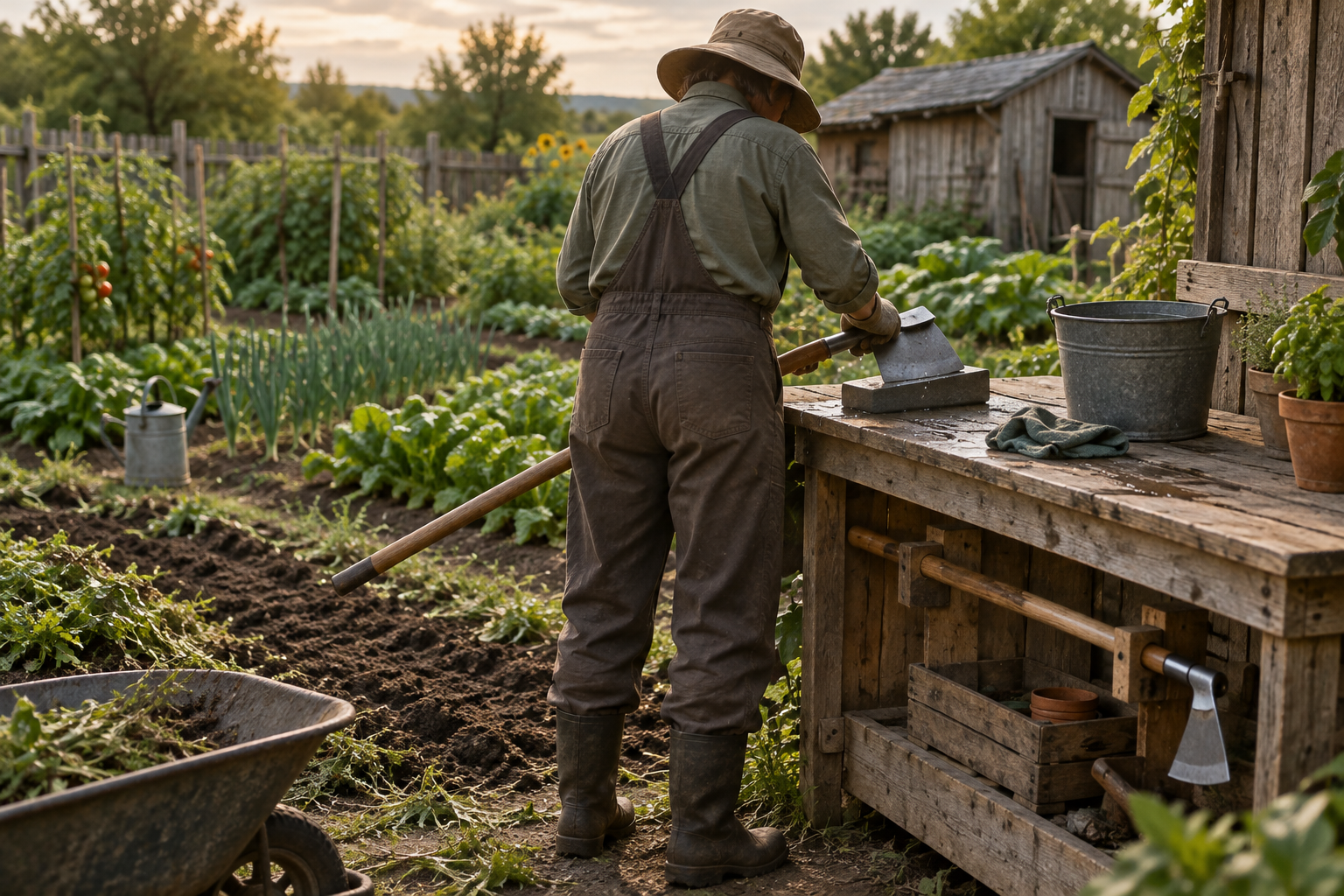
Clamp the blade. Use a mill bastard file, and follow the existing bevel, usually the underside edge on a draw hoe. Push the file away from the cutting edge in one direction, about 10 to 15 strokes. Stop when you see a clean, bright edge. A razor edge isn’t needed, since the soil dulls it fast.
Cleaning and Storage
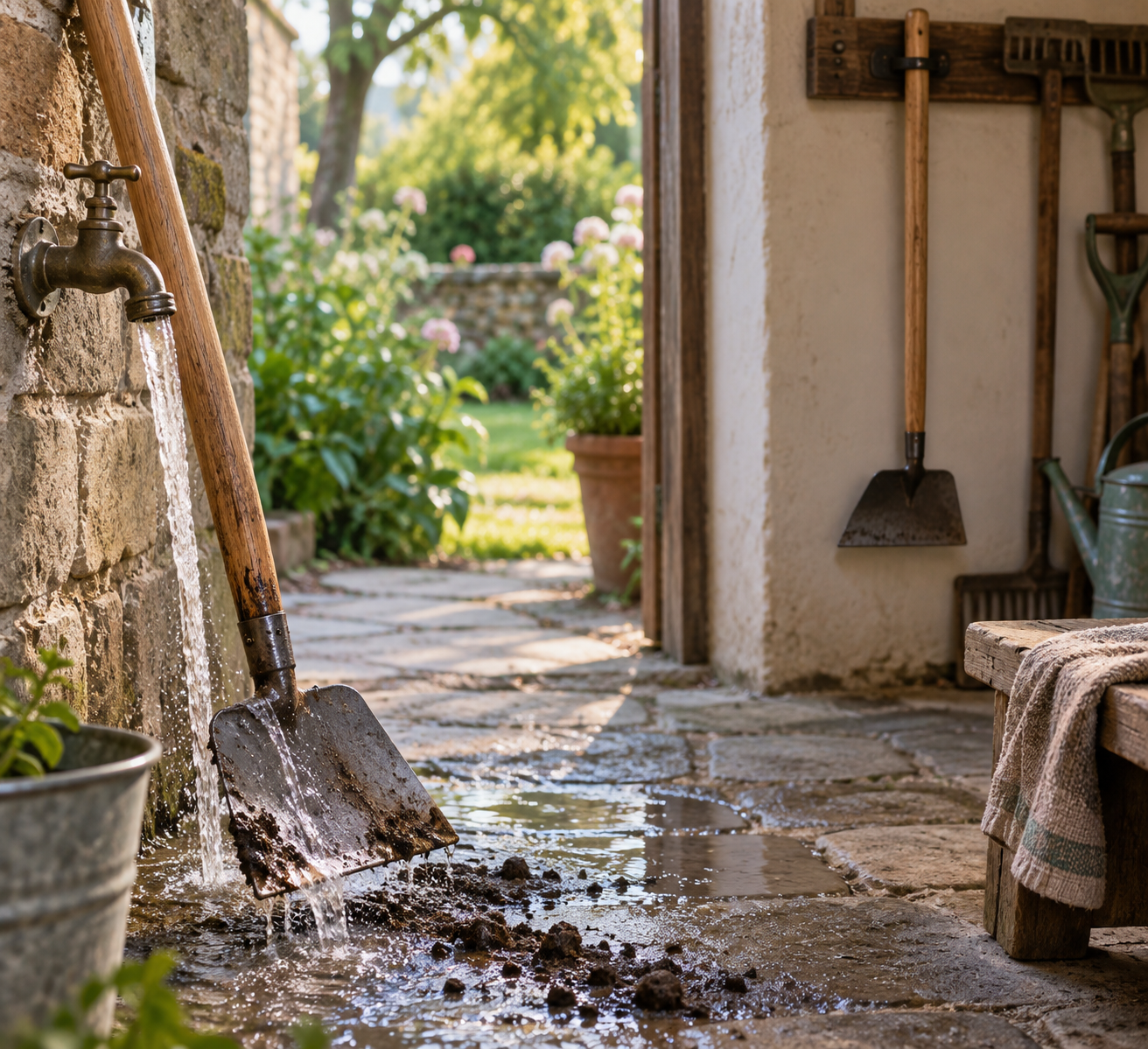
Knock off dirt with a stiff brush after each use. Wipe the blade with an oily rag (a little 3-in-1 oil or motor oil works) to stop rust. Don’t put it away dirty and wet, because rust and a swollen, loose handle follow.
Hang it blade-up or blade-in on a wall hook, off the floor. Once a year, sand rough spots on a wooden handle and rub in boiled linseed oil. If the head wobbles, tap in a new wedge or retighten the screw.
If you’re also tuning up mowers this season, themowersguide.com has maintenance guides for the rest of your gear.
Frequently Asked Questions
How deep should I hoe?
Stay about 1 inch deep, or less on very fine soil. Deeper cuts bring dormant seeds to the surface and clip shallow roots. The goal is to sever the weed just below the soil line, not to dig.
Can I use a hoe on wet soil?
No. Wet soil compacts, sticks to the blade, and lets cut weeds re-root. Wait a day or two after rain until the top layer crumbles in your hand.
How often should I sharpen a garden hoe?
Touch up the edge two or three times a season, or any time it starts dragging instead of slicing. Heavy use in rocky or sandy soil may call for more frequent filing.
Which one breaks new ground: a cultivator or a tiller? The tiller does, and the gap between them decides whether you waste $400 or not. A cultivator tiller search usually means...
Your lawn shouldn’t feel like a parking lot. If you can push a screwdriver into your soil less than 2 inches deep without leaning on it, you’ve got compaction, and that’s...
8 September 2026
The Mowers Guide is reader-supported. When you buy through links on our site, we may earn an affiliate commission.





Comments are closed.