Which one breaks new ground: a cultivator or a tiller? The tiller does, and the gap between them decides whether you waste $400 or not. A cultivator tiller search usually means you’re staring at two similar machines with very different jobs. Here’s how they differ, what to match to your garden, and when you shouldn’t buy either.
Cultivator vs. Tiller: Where the Difference Actually Sits
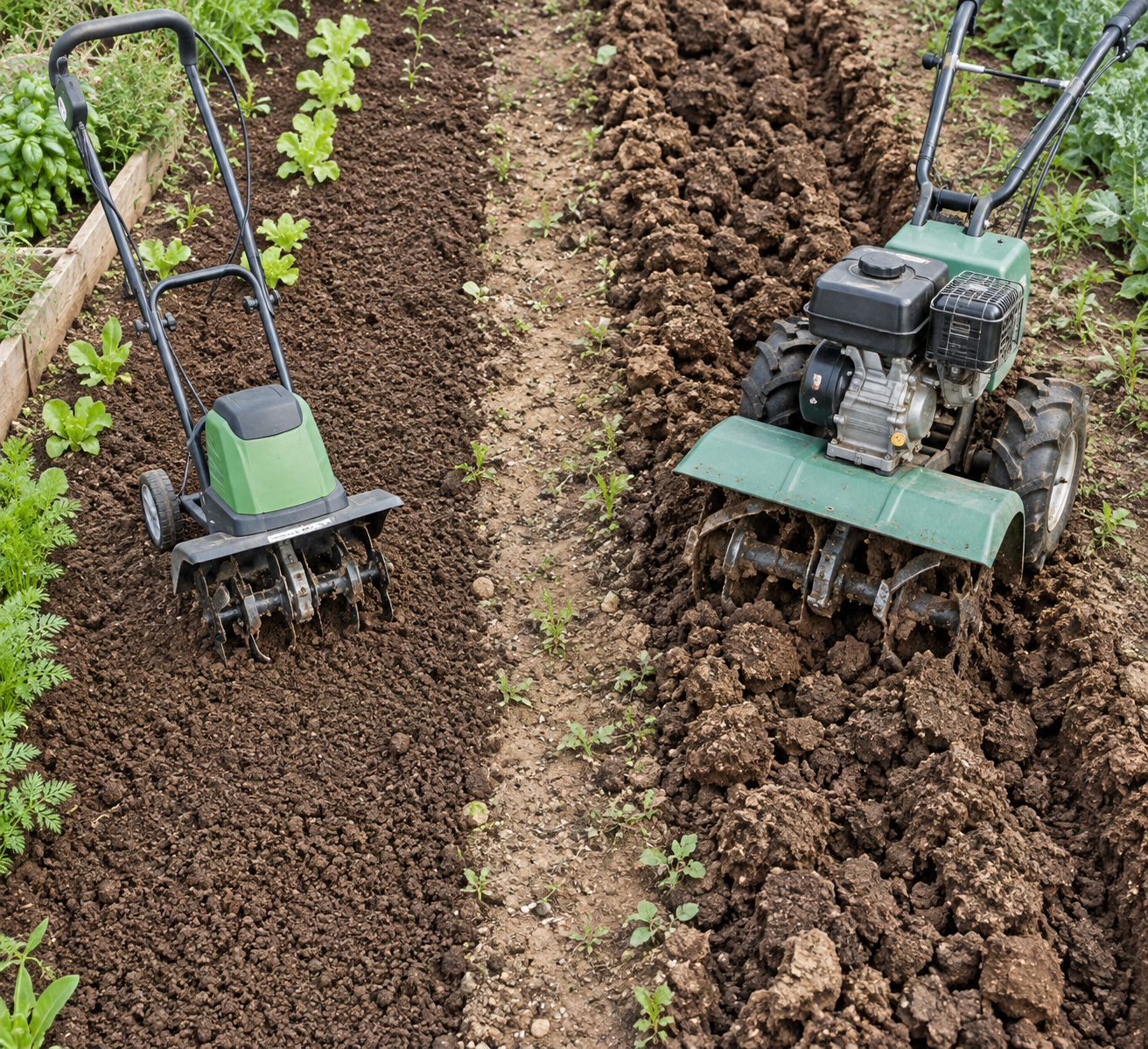
People use the words interchangeably, and that’s the first mistake. A cultivator is a lighter machine that loosens the top 3 to 6 inches of soil that’s already workable. A tiller is heavier, digs deeper, and breaks ground that hasn’t been turned in years.
Power and depth
Cultivators usually run 1 to 2 horsepower (hp) and weigh 20 to 60 pounds. Most front-tine tillers run 2.5 to 5 hp and weigh 80 to 150 pounds. Rear-tine models go higher, with 5 to 8 hp engines and 200+ pounds, and they dig 6 to 10 inches deep.
Where mini-tillers fit
Mini-tillers sit between the two. They weigh 20 to 30 pounds, cut a 6 to 10 inch swath, and handle established beds well. Don’t expect them to break sod.
Tine Types, Rotation, and What Each Handles
Tine layout tells you what a machine can do. Get this wrong and you’ll fight the machine all afternoon.
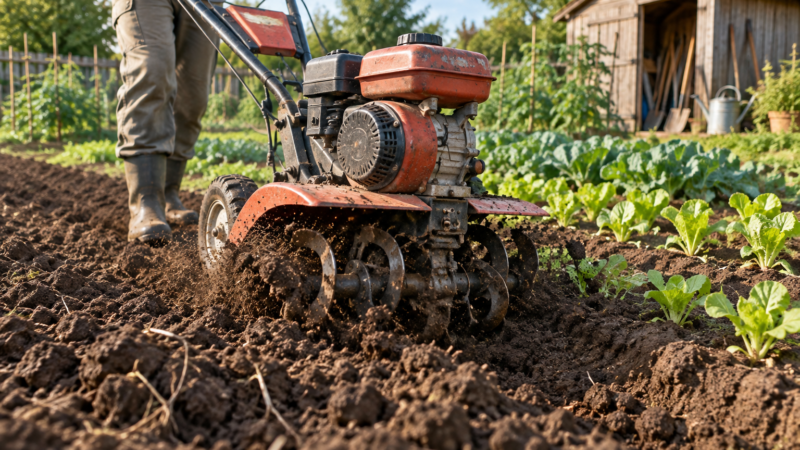
Front-tine: tines sit ahead of the wheels and pull the machine forward. They’re good for seedbed prep in loose to medium soil, but they bounce in hard ground.
Rear-tine: the wheels drive and the tines trail behind. They’re steadier and better for compacted soil.
Counter-rotating: tines spin against wheel direction, which bites into hard clay and sod. They cost more and are harder to steer.
Working width runs from about 6 inches on mini-tillers to 16 to 26 inches on full-size units. A wider swath saves time on big plots but is a pain to turn in tight raised-bed rows.
Power source matters too. Gas gives you the most torque and unlimited run time, but it needs fuel, oil and a spring tune-up. Corded electric suits a 10 by 10 foot bed near an outlet. Cordless battery units are quiet and start every time, though a typical charge runs about 30 to 60 minutes.
Type
Typical hp
Depth
Best for
Hand/mini cultivator
0.5-2
3-6 in.
Established beds, weeding
Front-tine tiller
2.5-5
5-8 in.
Seedbeds, mixing compost
Rear-tine tiller
5-8
6-10 in.
New ground, clay, sod
Counter-rotating
5-8+
8-10 in.
Hard, compacted soil
Match the Machine to Your Soil and Garden
Start with soil, then size. A light cultivator will not break sod or hard clay. It skips across the surface and rattles your wrists.
For a bed under about 200 square feet that you’ve already planted, a mini-tiller or cultivator is plenty. For 200 to 1,000 square feet of mixed soil, a front-tine fits. Past that, or for first-time ground breaking, go rear-tine.
Buying a big tiller for a small bed is the most common waste. It’s heavy, awkward to lift into a truck, and takes up garage floor you’ll want back.
Moisture matters as much as the machine. Grab a handful of soil and squeeze. If it forms a wet ball that doesn’t crumble when poked, wait. Tilling wet soil makes clods that dry like brick and compacts the layers below.
Rent, Buy, or Skip the Tiller Altogether
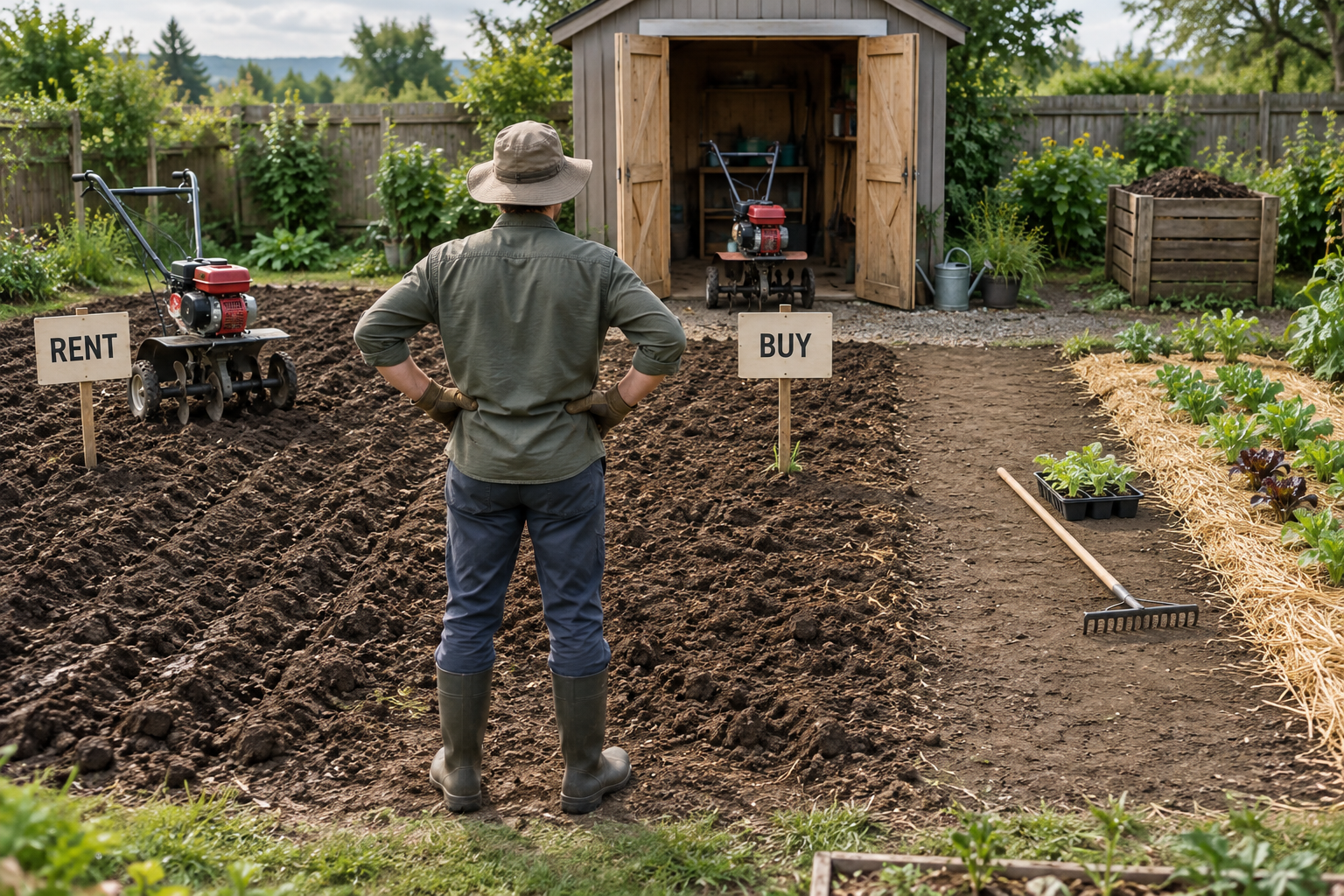
Tilling once or twice a year? Rent. Home improvement stores such as Home Depot commonly rent front-tine tillers for roughly $50 to $90 for four hours, and rear-tine units for about $80 to $120 (rates vary by store). Two rentals a year cost less than owning.
Buying makes sense when you till three or more times a year, or your beds exceed about 1,000 square feet. New gas front-tines run roughly $300 to $600, and rear-tines $700 to $1,500. Add storage space, fuel stabilizer, and a spring service.
Here’s my rule:
Bed under 100 square feet and soil already loose: use a hand cultivator.
Loose beds up to 400 square feet, a few times a year: buy a mini-tiller.
New ground once: rent a rear-tine.
Large garden, tilled every season: buy front- or rear-tine.
Tired of tilling: try no-till.
No-till gardening means leaving soil structure intact and adding 2 to 4 inches of compost on top each year.
Over-tilling every year wrecks soil structure and drags buried weed seeds to the surface. Sheet mulching with cardboard and compost can turn a lawn patch into a bed without any engine. Its drawback is time: expect a few months before planting.
Upkeep and Safety Basics
Maintenance is lighter than a mower’s, but skip it and the machine quits in spring. After each use, knock soil off the tines and wipe the housing.
Change engine oil yearly (typically SAE 30 in four-stroke gas models).
Use fresh fuel or stabilizer.
Check drive belts on rear-tine models for cracks.
Sharpen or replace worn tines when they round off.
If you already service your own mower, the same small-engine habits apply, and themowersguide.com has maintenance guides for that routine.
On safety, wear closed-toe boots, eye protection and hearing protection. Call 811 before digging new ground so you don’t hit buried utility lines. Never clear jammed tines with the engine running. Rear-tine models can also kick back on rocks, so walk slowly and keep your grip firm.
Frequently Asked Questions
Can I use a cultivator to break new ground?
Not on sod or hard clay. A cultivator only loosens soil that’s already workable. For lawn conversion, rent a rear-tine tiller, or smother the grass under cardboard and compost for a few months.
How deep should I till a vegetable garden?
Aim for 6 to 8 inches for most vegetables. Root crops like carrots do better near 10 inches. Going deeper rarely helps and can bring up weed seeds, so till only as deep as your crop’s roots need.
How often should I till?
Once a year at most for most gardens, and less if you add compost on top. Tilling only when you break new ground or fix compaction protects soil structure and keeps weed seeds buried.
A Husqvarna dealer will tell you the same thing most spec sheets leave out: a $2,500 lawn tractor running daily on a hilly, half-acre lot with tree roots and drainage ditches...
Honda doesn’t make lawn mowers for the U.S. residential market anymore, so every “Honda mower” you see is really another brand’s deck bolted to a Honda engine. That distinction matters more...
29 August 2026
The Mowers Guide is reader-supported. When you buy through links on our site, we may earn an affiliate commission.






Comments are closed.