Kneel down and look close. Is that blade wide and coarse, or thin and wiry? Does it feel rough between your fingers, or almost slick? That’s step one in sorting through the various types of grass growing in yards across the country, and it matters more than most people think. Get the ID wrong, and you’ll mow it wrong too — cutting it too short, too often, or at the wrong time of year, which stresses the roots and invites disease.
This isn’t just a naming exercise. Your mower deck height, your cutting schedule, even whether you should be mowing at all this week, all depend on knowing what’s actually in your yard.
Cool-Season vs. Warm-Season: The First Split That Matters
Every lawn grass falls into one of two camps, and figuring out which one determines almost everything else. Cool-season grasses grow best in spring and fall when temps sit between 60-75°F, while warm-season grasses peak in summer heat, thriving from 80-95°F. Plant the wrong type for your climate zone, and you’re fighting a losing battle no matter how good your mower is.
Cool-Season Grasses
These dominate the northern half of the U.S., roughly from the Mason-Dixon line up through New England, the upper Midwest, and the Pacific Northwest. Kentucky bluegrass, fescue varieties, and perennial ryegrass all fall here. They green up early, go a little dormant in the hottest weeks of July and August, then bounce back in fall.
Warm-Season Grasses
Bermuda grass, zoysia, St. Augustine, and centipede grass belong to this group, and they’re the default across the Deep South, Texas, Florida, and the Southwest. They go brown and dormant once temps drop below 50-55°F, which can alarm homeowners who think their lawn died. It didn’t — it’s just sleeping.
Plant Bermuda in Minnesota, or Kentucky bluegrass in central Florida, and you’ll spend years fighting bare patches and disease no fertilizer schedule can fix.
How to Actually Identify What’s Growing in Your Yard
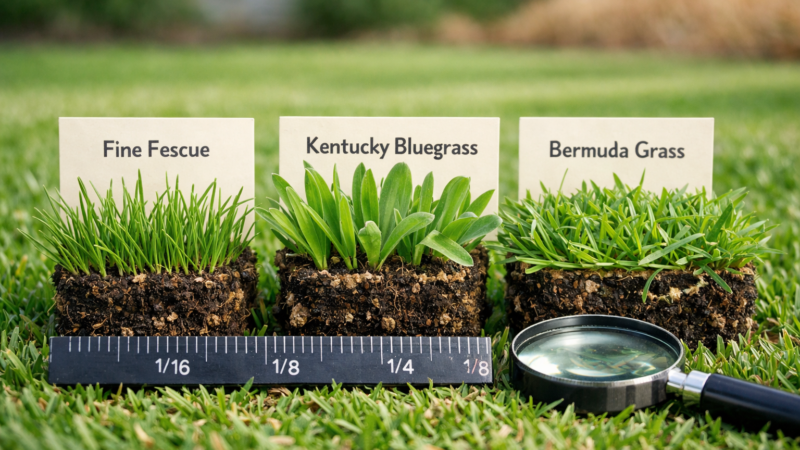
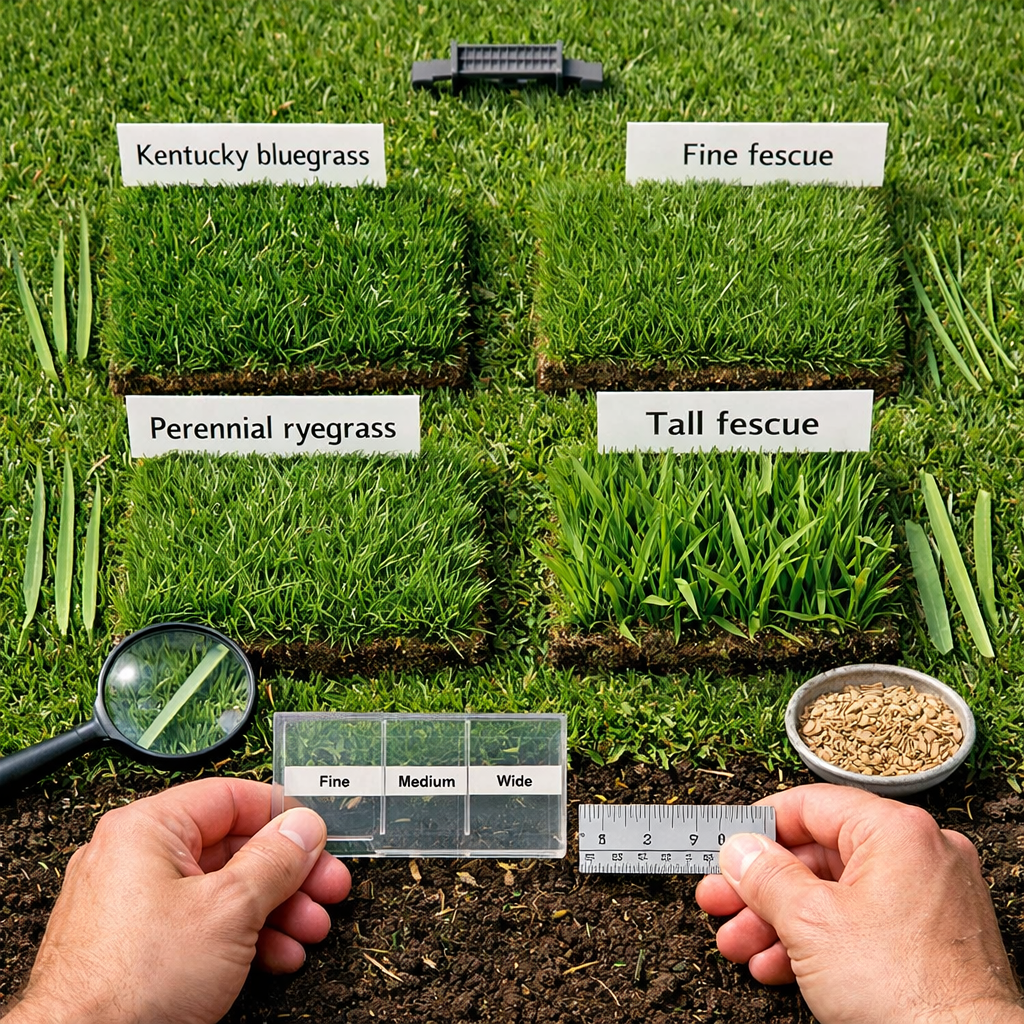
Grass ID comes down to four things: blade width, growth pattern, color, and texture. Most homeowners can narrow it down in under ten minutes with nothing more than a magnifying glass and a patient eye.
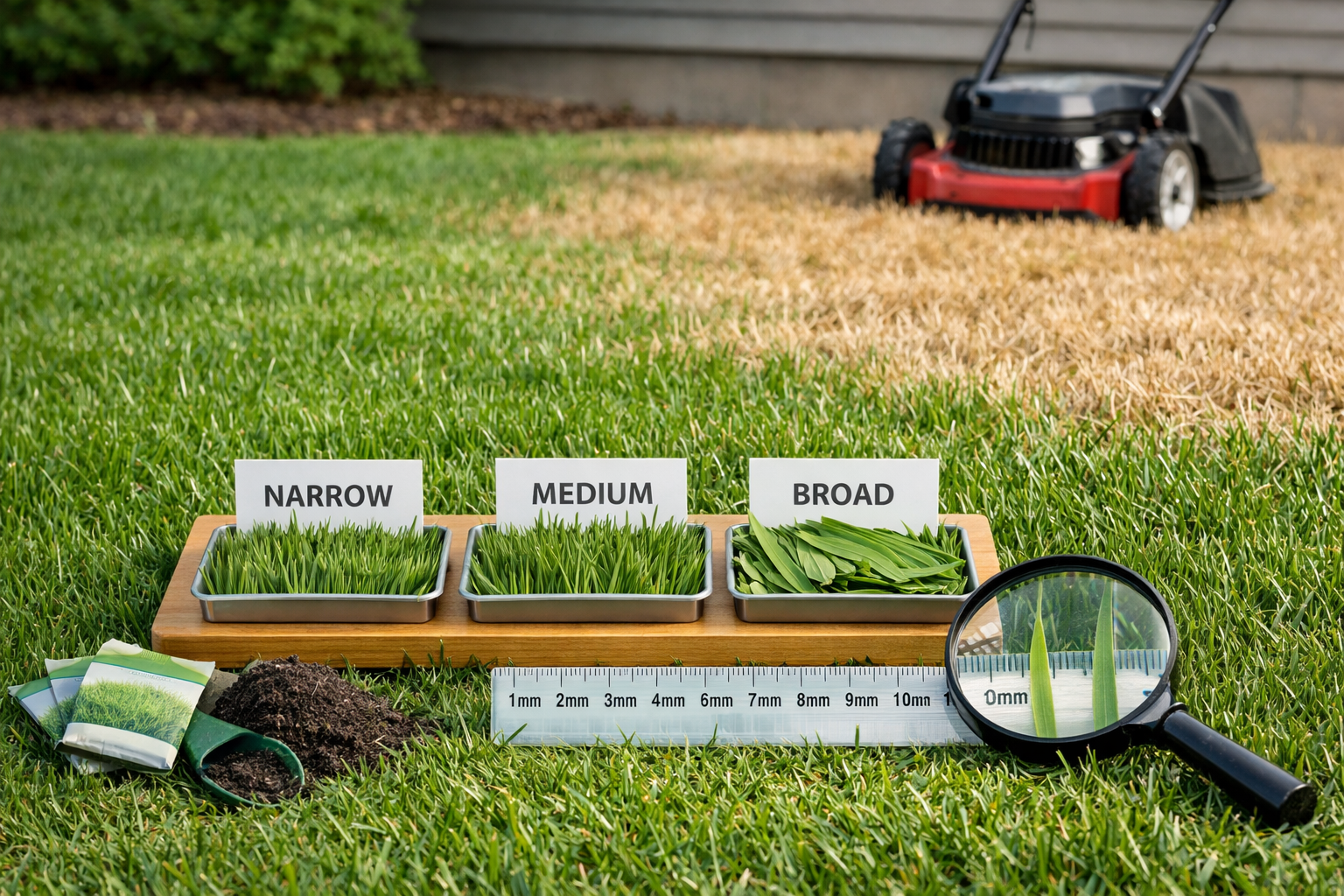
Start with blade width. Kentucky bluegrass has a narrow, boat-shaped tip and a soft feel — it’s the classic “lawn grass” look, dark green with a slight blue cast. Tall fescue is coarser and wider, often with visible parallel veins running the length of the blade. St. Augustine has broad, blunt-tipped blades and spreads by thick above-ground stems called stolons that you can actually see snaking across bare soil.
Growth habit tells you a lot too. Bermuda and zoysia spread aggressively by both stolons and underground rhizomes, which is why they choke out weeds well but also invade flower beds. Centipede grass grows low and slow, rarely needing more than an occasional trim, and it hates heavy foot traffic.
A lawn described as “a grass type” is often a blend — many cool-season lawns are actually a mix of Kentucky bluegrass, perennial ryegrass, and fine fescue sown together because each compensates for the others’ weaknesses.
Don’t confuse actual turf grass with grassy weeds. Crabgrass looks superficially similar to some fescues but grows in a low, sprawling star pattern and dies with the first frost — a real turf variety won’t do that. If a patch disappears every winter without going dormant first, it was probably never grass you planted.
Matching Mower Settings to Grass Type
This is where identification actually pays off. Cutting height isn’t a matter of taste — it’s tied directly to how each grass type grows its root system and stores energy.
Grass Type
Season
Mowing Height
Mowing Frequency
Kentucky Bluegrass
Cool
2.5-3.5 in
Every 5-7 days
Tall Fescue
Cool
3-4 in
Every 7-10 days
Perennial Ryegrass
Cool
2-3 in
Every 5-7 days
Bermuda Grass
Warm
1-2 in
Every 3-5 days (peak season)
Zoysia Grass
Warm
1-2.5 in
Every 7-10 days
St. Augustine
Warm
2.5-4 in
Every 5-7 days
Centipede Grass
Warm
1.5-2 in
Every 10-14 days
Notice the pattern: warm-season grasses like Bermuda generally get cut shorter and more often during their growing season, while cool-season types like tall fescue need more height left standing to shade their own roots. Cut fescue down to 1.5 inches in July and you’ll likely see brown, stressed patches within a week.
Why the Wrong Height Causes Real Damage
Scalping — cutting off more than a third of the blade in one pass — shocks the plant and forces it to burn root energy just to regrow leaf tissue. Do that repeatedly to St. Augustine, and you’ll open the door to gray leaf spot and other fungal problems. On Bermuda, though, a lower cut is exactly what keeps it dense and weed-resistant, since it’s built to handle it.
Matching Mower Type to the Job
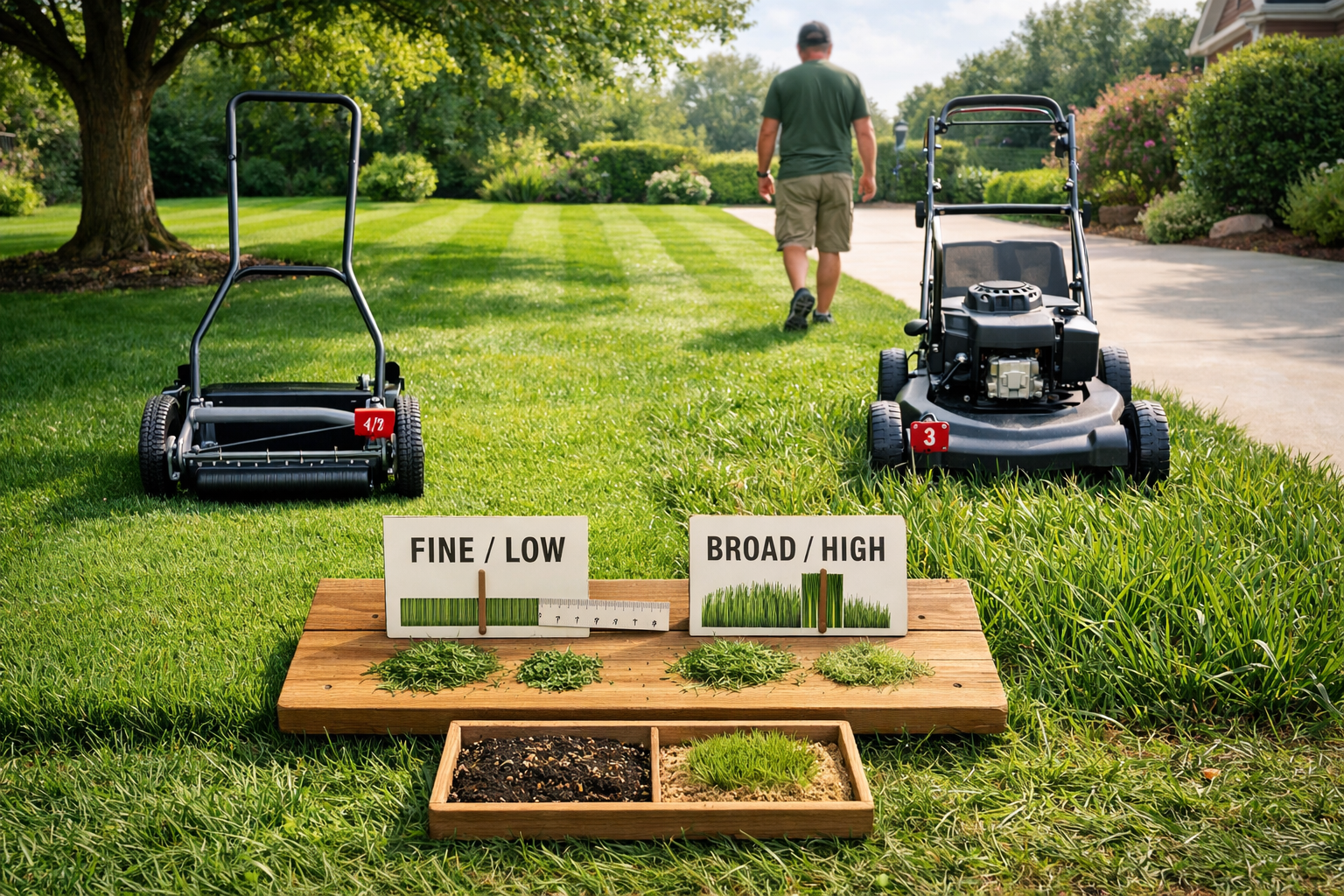
A reel mower gives the cleanest, healthiest cut for low-growing warm-season grasses like Bermuda and zoysia, since it shears rather than rips the blade tip. For fescue and bluegrass lawns cut above 3 inches, a rotary mower with a sharp blade works better and handles uneven terrain more easily. If you’re not sure which setup fits your yard, a quick browse through mower reviews on themowersguide.com can help match deck type and blade height adjustment range to whatever grass you’ve identified.
A Quick Reference for Sorting Out Your Lawn
If you’re still not sure what’s underfoot, work through it in order rather than guessing:
Check your climate zone first — cool-season grasses dominate north of Tennessee, warm-season south of it, with a transition zone in between where both can survive.
Look at blade width and tip shape under good light or a magnifying glass.
Check whether it spreads by visible stolons, underground rhizomes, or stays in a tight clump.
Note when it goes dormant — brown in winter points to warm-season, brown in the dead of summer heat points to cool-season stress.
Pull a small plug and inspect the root depth; fescue roots run deep, St. Augustine’s are shallower and closer to the surface.
Compare against a state extension office photo guide, since local university agriculture programs publish free regional turf ID charts.
When in doubt, bag a sample and ask at a local garden center — they see the region’s common lawns daily.
Once you’ve got a real answer instead of a guess, the mowing height and frequency decisions basically make themselves.
Frequently Asked Questions
Can my lawn have more than one type of grass?
Yes, and it’s common. Many bagged seed blends mix Kentucky bluegrass, perennial ryegrass, and fescue on purpose, since each handles shade, wear, or drought differently within the same yard.
What happens if I mow warm-season grass at cool-season height?
Letting Bermuda or zoysia grow to 3-4 inches thins the turf and invites weeds, since these grasses are bred to stay dense at 1-2 inches. You’ll lose the tight, carpet-like texture that makes them worth planting in the first place.
Is crabgrass a type of lawn grass?
No — crabgrass is a weed, not a turf variety, even though it can look like a coarse grass at a glance. It grows low and sprawling, dies completely with the first hard frost, and won’t respond to normal lawn mowing schedules the way real turf does.
Your mower won’t start, the deck’s cutting uneven, and the manual isn’t helping. So you type the problem into Google and land on a lawn forum thread from three years ago...
A single snapped mower belt can cost a lawn care crew 90 minutes of billable time, more if the nearest parts store is 20 miles out. A well-stocked toolbox truck closes...
11 July 2026
The Mowers Guide is reader-supported. When you buy through links on our site, we may earn an affiliate commission.






Comments are closed.