Grass clippings left on your lawn after mulching can return the equivalent of roughly one pound of nitrogen per 1,000 square feet per growing season. That’s a meaningful supplement to your fertilizer budget. Lawn mower mulching sounds simple, but the mechanics behind it are specific enough that doing it wrong produces clumps instead of nutrients. This guide breaks down exactly how a mulching mower works, when to use it, and when to switch modes.
A Mulching Mower Cuts Grass Twice — Here’s What That Actually Means
A mulching mower doesn’t just cut grass and drop it. It cuts the clippings multiple times inside a sealed deck until the pieces are fine enough to fall between the grass blades and decompose on the soil surface. That repeated cutting is what separates a true mulching mower from a standard mower with a plug blocking the discharge chute.
Mulching, in lawn care terms, is the practice of finely re-cutting grass clippings and returning them to the turf surface, where they decompose and release nutrients back into the soil — Purdue University Extension, Turf Science Program
The Sealed Deck and Blade Design That Make It Work
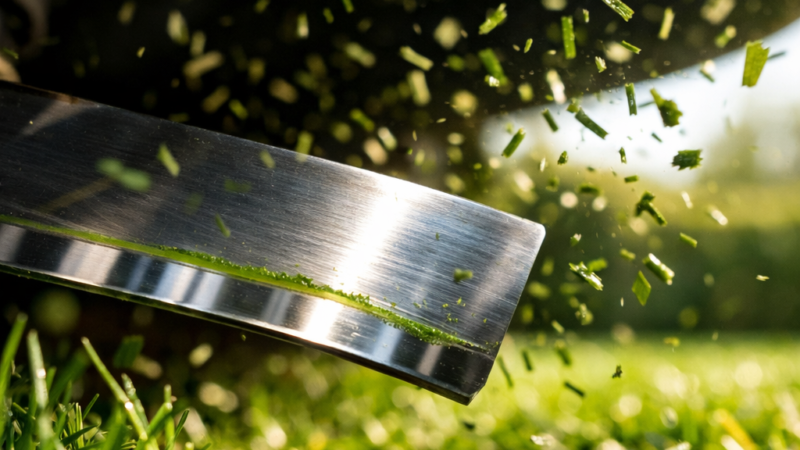
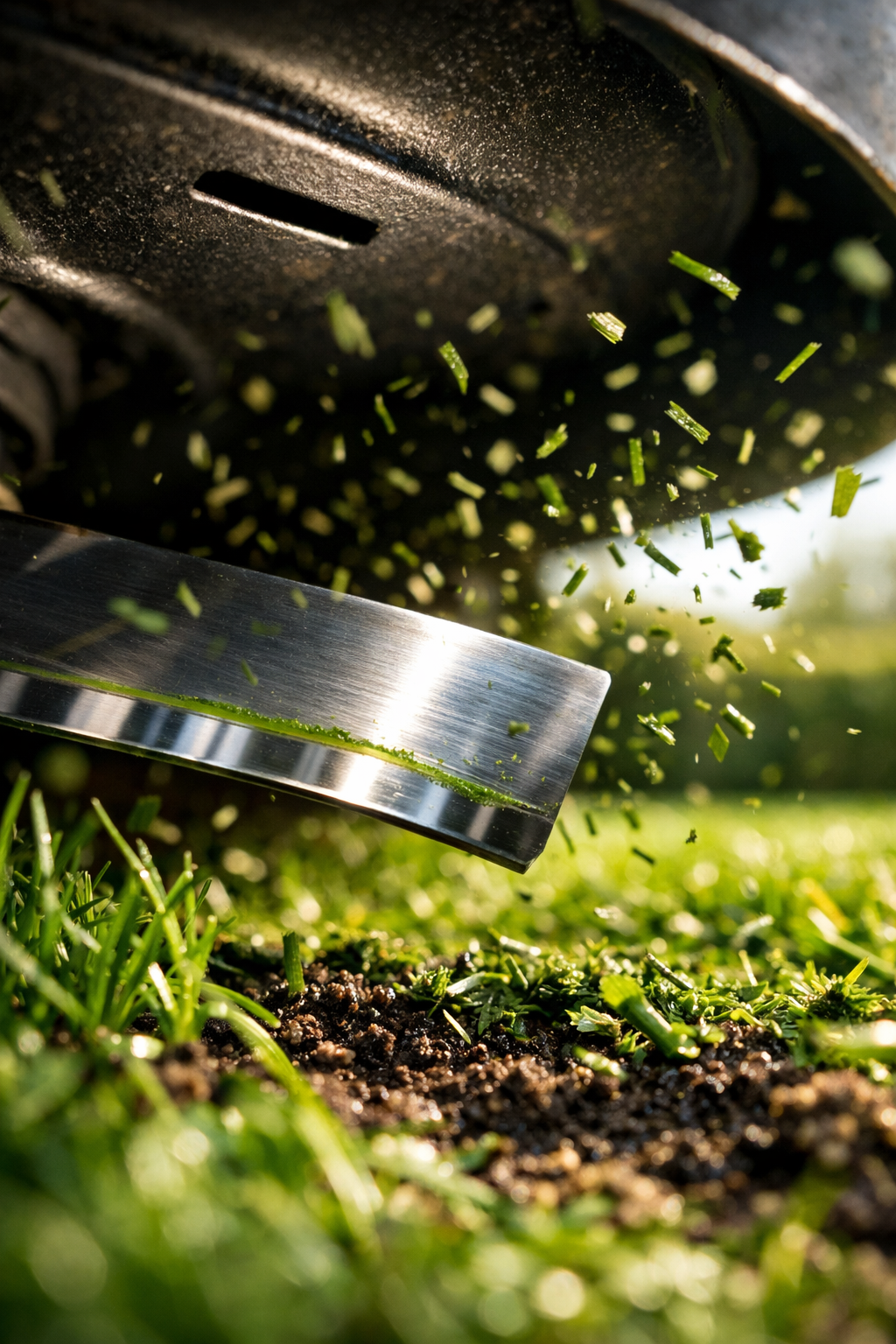
The deck on a dedicated mulching mower is deeper and fully enclosed, with no side discharge opening. This shape forces air and clippings to circulate inside the deck rather than exit immediately. The blade itself is the other half of the equation. A mulching blade (also called a high-lift or curved blade) has extra cutting edges along its length and a more aggressive curve than a standard blade. That curve keeps clippings airborne longer so they pass through the cutting zone two or three times before dropping.
A standard blade on a blocked-discharge mower is not the same as a true mulching setup. The blade geometry matters as much as the deck shape. Many 3-in-1 mowers sold at home improvement stores include a mulching plug and a basic blade. They mulch adequately in good conditions, but they don’t match the performance of a purpose-built mulching deck.
How Clippings Break Down and Feed the Soil
Fresh grass clippings are roughly 80 to 85 percent water by weight. Because of that high moisture content, finely cut clippings break down within one to two weeks under normal conditions, much faster than leaves or woody material. As they decompose, they release nitrogen, potassium, and phosphorus back into the soil through microbial decomposition, the same process that drives compost breakdown.
The nitrogen return is the most practical benefit. Regular mulching over a full season can reduce your fertilizer applications by one or two rounds, depending on your grass type and mowing frequency. That’s a real cost saving, not a theoretical one.
Mulching vs. Bagging vs. Side-Discharge: Which Mode Does What
Each mowing mode moves clippings differently. The right choice depends on your grass condition at the time of mowing, not just personal preference.
Mode
Where Clippings Go
Best Condition
Main Drawback
Mulching
Recut and dropped into turf
Dry grass, mowed frequently, under 4 inches tall
Clumps in wet or overgrown grass
Bagging
Collected in a rear or side bag
Overgrown, wet, or before overseeding
Removes nutrients; bag needs emptying
Side-discharge
Ejected to the side in a wide swath
Large areas, tall grass, fast mowing
Leaves visible clipping rows on lawn
Bagging is the cleanest option visually, but it removes all the clipping material that would otherwise feed the soil. If you bag every mow, you’re hauling away nutrients and then buying fertilizer to replace them. Side-discharge moves fast and handles tall grass without bogging down the engine, but it leaves clipping rows that can smother grass underneath if left to dry in thick mats.
For most homeowners mowing on a weekly schedule in dry conditions, mulching is the most efficient mode. It saves time because there’s no bag to empty, it returns nutrients, and it leaves the lawn looking clean when done correctly. The catch is that it requires consistent mowing. Skip a week during a growth flush and you’re better off side-discharging or bagging that session.
A 3-in-1 mower (one that switches between all three modes) is worth considering if your schedule isn’t perfectly consistent. The flexibility to bag after a rainy week and mulch the rest of the time is more practical than a dedicated mulcher for many homeowners.
The Real Conditions Where Lawn Mower Mulching Performs Well
Lawn mower mulching works well when three factors line up: the grass is the right height, the turf is dry, and you’re mowing on a consistent schedule. Miss any one of those and you’ll get clumps, not fine clippings.
Grass Height: Why the One-Third Rule Isn’t Optional
Never remove more than one-third of the grass blade in a single mow. If your lawn is set to a 3-inch mowing height, cut before it reaches 4.5 inches. That’s not a guideline — it’s the threshold where clipping volume exceeds what the deck can recut finely. Above that volume, the mower produces chunks instead of particles, and those chunks sit on top of the turf, blocking sunlight and airflow.
If you’ve let the lawn go too long, raise your deck height for the first pass, then lower it back down after a few days. Two passes at a higher height beats one mulching pass that leaves clumps.
Dry Conditions and Mowing Frequency
Wet grass sticks together. Inside a mulching deck, clumped wet clippings don’t circulate — they pack against the blade and deck walls, reducing cutting efficiency and often causing the engine to work harder than it should. Wait until mid-morning at the earliest after a dew, and avoid mowing within 24 hours of significant rainfall.
Mowing frequency ties directly into this. During peak spring growth, cool-season grasses like Festuca arundinacea (tall fescue) can grow 2 to 3 inches in a week. At that rate, a weekly mow barely keeps pace with the one-third rule. Mowing every five to six days during growth flushes keeps clipping size manageable for mulching.
Grass Type and Growth Rate Considerations
Fine-bladed grasses mulch more easily than coarse ones. Bermudagrass and zoysia, both warm-season grasses with dense, fine growth, respond well to mulching and show visible greening from the nitrogen return within a few weeks. St. Augustinegrass has a broader blade and produces heavier clippings — it still mulches, but needs sharper blades and more frequent mowing to avoid clumping.
Cool-season grasses mulch well through spring and fall but can grow fast enough during mild, wet periods that even a dedicated mulching deck struggles. In those windows, switching to side-discharge for a session or two keeps the lawn looking clean without sacrificing the mulching routine long-term.
Does Mulching Cause Thatch? Clearing Up the Biggest Misconception
Mulching does not cause thatch. This is the most persistent myth in lawn care, and it’s worth settling directly. Grass clippings are 80 to 85 percent water. They break down within one to two weeks through microbial activity and add no meaningful material to the thatch layer.
Thatch is a dense mat of dead stems, roots, and crowns that builds up between the soil surface and the green grass above. That material is woody and lignin-rich, which makes it decompose slowly. Grass clippings share none of those properties.
The real thatch culprits are over-fertilizing with nitrogen and infrequent aeration, both of which accelerate stem growth faster than soil organisms can break it down. If your lawn has a thatch problem, the fix is dethatching and aerating, not switching from mulching to bagging.
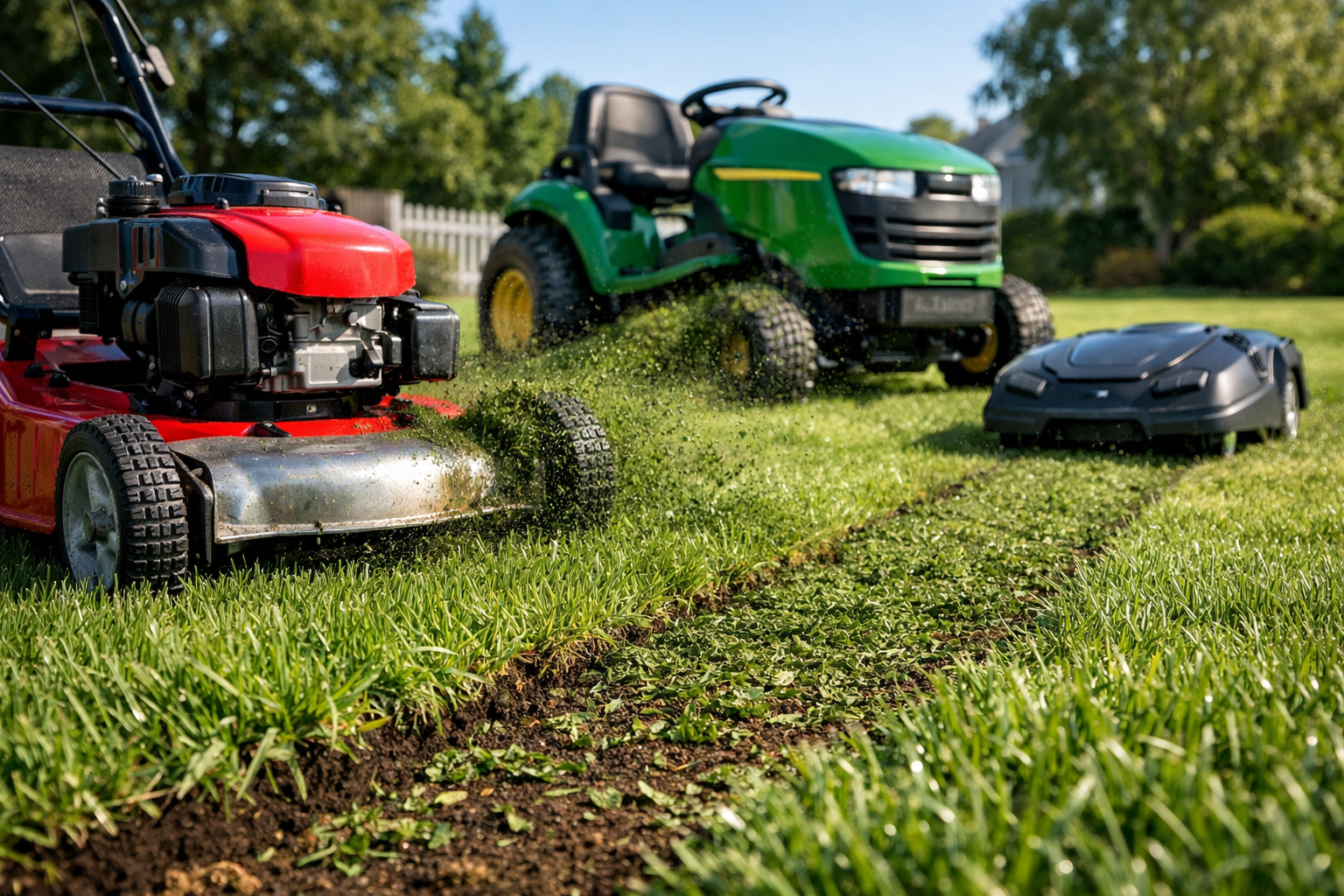
Mulching Mower Types: Walk-Behind, Riding, and Robotic Options
Each mower type handles lawn mower mulching differently, and the right fit depends on your lawn’s size and your mowing schedule.
Dedicated walk-behind mulching mowers are the most common starting point for homeowners. Models like the Honda HRX217 use a purpose-built twin-blade deck that recuts clippings more aggressively than a single-blade setup. They work well on lawns up to about half an acre.
3-in-1 walk-behind mowers offer mulch, bag, and side-discharge modes on one machine. They’re the practical choice for homeowners who can’t mow on a perfectly consistent schedule. Switch to bag after a rainy week, mulch the rest of the time.
Riding mowers and lawn tractors with mulching kits cover larger properties efficiently. Most require a separate mulching blade set and a deck plug or baffle kit to convert. Expect to spend $50 to $150 on a conversion kit for a standard riding deck.
Zero-turn mowers with mulching decks handle an acre or more per session and are common in professional use, but purpose-built mulching zero-turns cost significantly more than comparable side-discharge models.
Robotic mowers (brands like Husqvarna’s Automower line) mulch continuously by design, cutting tiny clippings every day or two. Because they never let grass grow long, clipping size stays small enough that no collection system is needed at all.
Converting a Standard Mower to Mulch: What a Kit Actually Includes
A mulching conversion kit typically includes two components: a replacement blade and a deck plug (sometimes called a block-off plate). Together, they cost anywhere from $20 for a basic walk-behind kit to $150 for a riding mower setup with baffles.
Mulching Blade Replacement and Deck Plug
The replacement blade has the curved, multi-edge profile that keeps clippings recirculating inside the deck. The deck plug blocks the discharge chute so clippings can’t exit sideways. Both parts together are what make the conversion work. Installing only the plug without changing the blade leaves you with a mower that bogs down and clumps badly. One without the other doesn’t cut it.
Some riding mower kits also include internal deck baffles that redirect airflow, getting closer to a purpose-built mulching deck’s performance. These baffle kits, sold by manufacturers like Husqvarna and Toro for their own deck platforms, are worth the extra cost if you plan to mulch regularly.
What a Conversion Kit Can’t Fix
A conversion kit improves a standard mower’s mulching capability, but it can’t change the deck’s depth or overall shape. A shallow deck designed for side-discharge won’t circulate clippings as efficiently as a deep mulching deck, even with the right blade installed. If your mower has a flat, wide deck profile, expect adequate mulching under ideal conditions (dry grass, mowed frequently) but reduced performance when conditions aren’t perfect.
Blade Maintenance Keeps Mulching Working — Dull Blades Ruin It
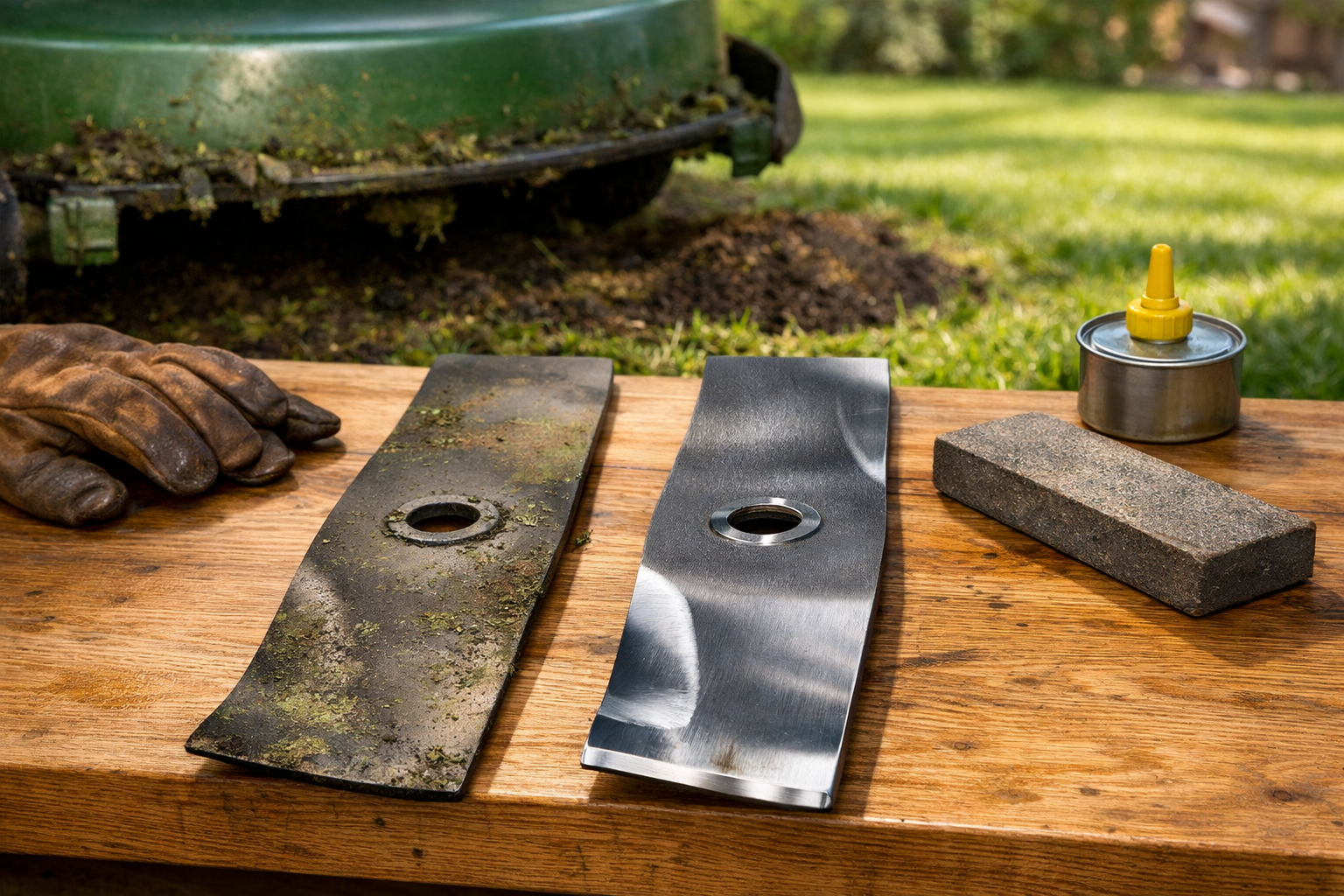
Sharpen your mulching blade every 20 to 25 hours of mowing — that’s roughly every four to six weeks during an active season. A dull blade tears grass instead of cutting it, and torn clippings are ragged and slow to decompose. Inside a mulching deck, that ragged material clumps rather than circulates, undoing everything the deck geometry is designed to do.
The tool you need is a bench grinder or an angle grinder with a metal grinding disc. Remove the blade, secure it in a vise, and grind at the original bevel angle — typically between 30 and 45 degrees. Maintain even material removal across the full cutting edge. After sharpening, check blade balance using an inexpensive blade balancer (under $10 at most hardware stores). An unbalanced blade causes vibration that wears out the spindle bearings over time.
Inspect the blade while it’s off. Look for nicks deeper than about 1/8 inch, cracks near the center hole, or a bent tip. Any of those mean replacement, not sharpening. A replacement mulching blade for a standard walk-behind mower runs $15 to $30 depending on the deck size and brand.
Dull blades also stress the engine. If your mower sounds like it’s laboring on grass that should be easy, check the blade before assuming a carburetor or fuel problem.
Frequently Asked Questions
Can I mulch wet grass in an emergency?
You can, but expect clumps. Wet clippings stick together and don’t recirculate properly inside the deck. If you have no choice, raise the deck one notch higher than normal and mow slowly to reduce the volume of material entering the deck at once. Clean the underside of the deck afterward — wet clippings pack hard when they dry.
Does lawn mower mulching replace fertilizer completely?
No. Mulching supplements fertilizer by returning nitrogen to the soil, but the amount varies with grass type, mowing frequency, and how quickly clippings decompose. Think of it as reducing your fertilizer needs by roughly 25 percent over a season, not eliminating them. A standard fertilization schedule still applies.
How do I know if my mower has a true mulching deck or just a plug?
Check the blade. A true mulching mower has a curved, high-lift blade with multiple cutting edges along the trailing surface. A standard mower with only a discharge plug installed has a flat or low-lift blade that won’t recut clippings effectively. If you’re comparing specific models, themowersguide.com covers deck and blade specs in its mower reviews.
Will mulching work on a lawn with mixed grass types?
Yes, though results vary by section. Fine-bladed areas mulch cleanly; coarser patches may need more frequent passes. Keep the blade sharp and stick to the one-third rule across the whole lawn, and the mixed results even out over a full season.
Skip the phosphorus unless a soil test tells you otherwise. That’s the short answer for most lawns in 2026, and it surprises a lot of homeowners who grew up thinking N-P-K...
Scag mowers carry a commercial-grade price tag that starts around $5,000 for entry-level zero-turns and climbs past $15,000 for top-tier models. That gap matters because paying for a commercial machine on...
13 July 2026
The Mowers Guide is reader-supported. When you buy through links on our site, we may earn an affiliate commission.





Comments are closed.