A quality hedge trimmer can cost anywhere from $40 for a basic corded model to over $300 for a professional-grade battery unit. Picking the wrong price point often means buying twice. If you already own a cordless lawn mower, that decision gets a lot simpler. The battery platform you’re already invested in should factor heavily into which hedge trimmer you buy.
This guide focuses on matching the right hedge trimmer to your yard size, hedge type, and existing equipment, not just ranking specs on a spreadsheet.
The Best Hedge Trimmers Right Now: Top Picks by Type and Yard Size
The right hedge trimmer depends on three things: your power source preference, how much hedge you’re cutting, and how thick the stems get. The picks below cover the most practical options across all three power types, with real model names so you can compare prices and availability before buying.
Model
Power Type
Blade Length
Cutting Capacity
Approx. Price
EGO HT2411
Battery (56V)
24 in
1 in
$179 (tool only)
DEWALT DCHT820B
Battery (20V MAX)
22 in
3/4 in
$99 (tool only)
BLACK+DECKER HH2455
Corded Electric
24 in
3/4 in
$55
Husqvarna 122HD60
Gas (21.7cc)
23.6 in
3/4 in
$299
Cordless Battery-Powered: EGO HT2411 and DEWALT DCHT820B
The EGO HT2411 is the stronger performer of the two battery options. Running on EGO’s 56V Arc Lithium platform, it delivers cutting power that competes with many corded models. The 24-inch dual-action blade (where both blade edges move simultaneously) reduces vibration and produces cleaner cuts on most ornamental hedges. If you already own an EGO mower or blower, the battery swaps directly — no extra charger needed.
The DEWALT DCHT820B runs on the 20V MAX platform, which is one of the most widely owned battery systems in North America. At around $99 for the bare tool, it’s a strong value pick for homeowners who already have DEWALT batteries from a drill or circular saw. Cutting capacity tops out at 3/4 inch, so it’s best suited for softer growth and regularly maintained hedges.
Corded Electric: BLACK+DECKER HH2455 for Smaller Yards
At roughly $55, the BLACK+DECKER HH2455 is the most affordable full-size option on this list. It runs on 4 amps of corded power, which is enough for boxwood, privet, and other common residential hedges trimmed on a regular schedule. The 24-inch blade handles most standard hedge widths without requiring multiple passes.
The obvious trade-off is the cord. For a front yard hedge within 50 feet of an outlet, it’s a non-issue. For a backyard with obstacles or a hedge run longer than 100 feet, the cord becomes a real management problem.
Gas-Powered: Husqvarna 122HD60 for Heavy-Duty Work
The Husqvarna 122HD60 uses a 21.7cc two-stroke engine and a 23.6-inch blade. It’s built for overgrown hedges, rural properties, and situations where you can’t run an extension cord or don’t want to manage battery charge across a long session. Expect to pay around $299, which is more than any battery option here, but you get unlimited runtime and no power drop-off as the tank drains.
Gas models require more maintenance — air filter cleaning, spark plug checks, fuel stabilizer in the off-season — but for heavy-duty seasonal work, the Husqvarna 122HD60 is the practical choice.
Buying Criteria That Actually Matter Before You Pick One
Most buyers fixate on price and blade length, then end up with a trimmer that either fatigues them after 20 minutes or can’t handle their hedge’s stem thickness. Before you pick a model, run through these four factors in order.
Blade Length and Cutting Capacity: Match the Tool to Your Hedge Width
Blade length determines how many passes you need to trim a given hedge width. A 22-inch blade on a 4-foot-wide hedge face means you’re working in two passes minimum. A 24-inch blade covers more in a single sweep and reduces fatigue on longer runs. For most residential hedges under 3 feet wide, a 20- to 22-inch blade is sufficient. Go to 24 inches if your hedges are wider or if you’re trimming a long continuous run.
Cutting capacity — the maximum branch diameter the blade can handle — is listed in the specs and matters more than most buyers realize. Most residential trimmers are rated at 3/4 inch to 1 inch. Exceeding that rating bends or chips blade teeth, sometimes in the first session.
Single-Action vs. Dual-Action Blades: Which One Cuts Cleaner
Single-action blades move only one blade against a fixed counter-blade. They’re lighter and cheaper to manufacture, but they produce more vibration and can push stems sideways before cutting, leaving ragged edges on softer growth. Dual-action blades move both edges in opposing directions simultaneously, which cancels out much of the vibration and produces a noticeably cleaner cut.
For anyone trimming more than 20 minutes at a time, dual-action is worth the small price premium. The EGO HT2411 uses dual-action; the DEWALT DCHT820B also uses dual-action at its price point, which makes both solid picks over single-action budget alternatives.
Weight, Balance, and Ergonomics Over Long Sessions
A hedge trimmer that weighs 7 pounds feels fine for the first 10 minutes. After 30 minutes of holding it at shoulder height, that weight translates directly into uneven cuts and sore forearms. The Husqvarna 122HD60 weighs about 10.8 pounds, which is manageable for experienced users but tiring for occasional homeowners.
Look for a rear handle that rotates or pivots — this lets you angle the blade for top cuts without twisting your wrist. Some models, including certain EGO configurations, include a rotating rear handle as standard. That single feature makes a meaningful difference on long flat-top hedges.
Matching Your Trimmer to the Battery Platform You Already Own
If you own a cordless lawn mower, there’s a good chance you already have a battery platform worth building on. Buying a hedge trimmer in the same system (EGO, DEWALT, Greenworks, or another) means your existing batteries and charger do double duty. That’s real money saved before you even start comparing blade specs.
Battery platform compatibility is defined by voltage and proprietary cell design — a DEWALT 20V MAX battery will not charge or fit an EGO 56V tool, even if both claim “lithium-ion.”
Why Staying in One Ecosystem Saves Money and Simplifies Charging
A compatible bare-tool purchase can save $50 to $100 compared to buying a kit with a redundant battery and charger. The DEWALT DCHT820B, for example, sells for around $99 as a bare tool. The kit with battery and charger runs closer to $169. If you already own two or three DEWALT 20V MAX batteries from other tools, the bare tool is the clear buy.
Beyond cost, fewer chargers means fewer cords, fewer storage headaches, and one less thing to track down when you’re ready to work.
When It Makes Sense to Start a New Platform Instead
If you only own gas-powered equipment, or if your current battery platform has a weak hedge trimmer option, starting fresh with EGO’s 56V system is worth considering. EGO’s platform covers mowers, blowers, chainsaws, and hedge trimmers, all sharing the same batteries. The upfront cost of a starter kit (battery plus charger plus tool) runs roughly $250 to $280, but you’re buying into a full outdoor power system, not just one tool. The performance difference between EGO 56V and a basic 20V trimmer is noticeable on dense hedges.
Corded vs. Cordless vs. Gas: The Real Trade-Offs for a Residential Yard
Each power type makes a real trade-off, and the right one depends on your yard’s layout more than your budget.
Corded electric gives you unlimited runtime at the lowest price (around $55 for the BLACK+DECKER HH2455), but you’re tethered to an outlet. Practical only within roughly 100 feet of one.
Cordless battery fits most residential yards well. Modern 56V platforms like EGO have closed the power gap with corded models significantly, and you’re free to move without cord management.
Gas delivers the most raw power and unlimited runtime, but the Husqvarna 122HD60 weighs 10.8 pounds and requires seasonal carburetor maintenance that cordless tools skip entirely.
Noise and emissions matter in dense neighborhoods. Gas trimmers are noticeably louder than either electric option, which affects when you can run them.
For a typical suburban lot with hedges within 150 feet of the house, cordless battery is the practical default. Gas makes sense only when hedges are large, overgrown, or far from power.
What a Hedge Trimmer Cannot Do: Branch Thickness Limits and Common Damage
A hedge trimmer is not a pruning tool for woody stems. It’s designed for soft new growth and light shaping, and using it outside that range causes real, sometimes irreversible damage to both the plant and the tool.
Rated Cutting Capacity and Why Exceeding It Breaks Blades
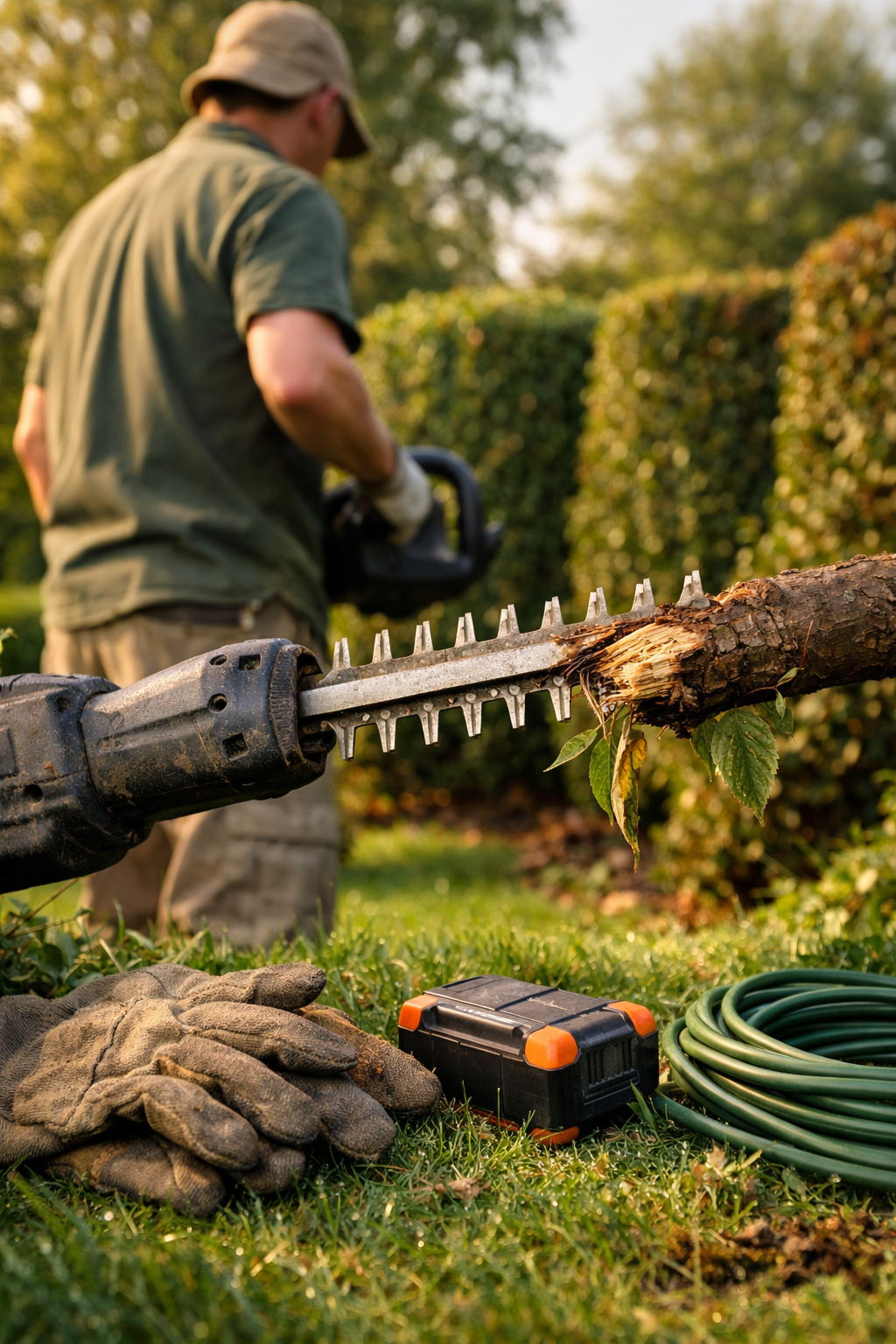
Every hedge trimmer has a rated cutting capacity, typically printed in the spec sheet. Most residential models cap out at 3/4 inch to 1 inch in branch diameter. When you force a blade through a stem thicker than that rating, the reciprocating blade mechanism absorbs the excess load. Teeth chip, bend, or jam. On battery models, the motor controller may cut power to prevent burnout, but the blade damage is already done.
A single session on overgrown privet with 1.5-inch stems can dull a new blade set enough to require sharpening or replacement. Replacement blade sets for mid-range trimmers run $25 to $60 depending on the model.
When to Reach for a Pruning Saw or Loppers Instead
If a stem is thicker than your thumb, switch tools. Bypass loppers handle stems up to roughly 1.75 inches cleanly, and a folding pruning saw handles anything beyond that. Neither tool is expensive. A decent pair of bypass loppers costs around $30 to $40.
The practical workflow: use loppers or a pruning saw first to remove thick interior stems, then follow with the hedge trimmer to shape the outer surface. Trying to shortcut that sequence with the trimmer alone is what bends teeth and burns out motors.
Maintenance That Keeps Blades Sharp and Motors Running Longer
Skipping post-use maintenance is the fastest way to shorten a hedge trimmer’s life. Two habits cover most of it: clean and lubricate after every session, and sharpen blades once or twice per season.
Cleaning and Lubricating After Every Use
Sap, plant debris, and moisture collect on the blade bar after every cut. Left overnight, sap hardens and acts like an abrasive on the next pass. Wipe the blade down with a rag dampened with a solvent like mineral spirits, then apply a light coat of blade lubricant or bar and chain oil before storage.
This takes under five minutes and directly extends blade life. For battery models, also check that the battery terminals are dry before reinserting the pack.
How and When to Sharpen Hedge Trimmer Blades
Most homeowners need to sharpen once at the start of the season and again mid-season if they’re trimming regularly. You’ll know it’s time when the trimmer tears or bends stems instead of cutting cleanly.
Use a flat mill bastard file (a 6-inch or 8-inch file works for most blade tooth profiles) to dress each tooth at its original bevel angle — typically around 45 degrees. File in one direction only, away from the cutting edge. The whole job takes 15 to 20 minutes on a standard 22- to 24-inch blade. If teeth are chipped rather than just dull, a professional sharpening service or blade replacement is the better call.
Pole Extensions and Attachments Worth Considering
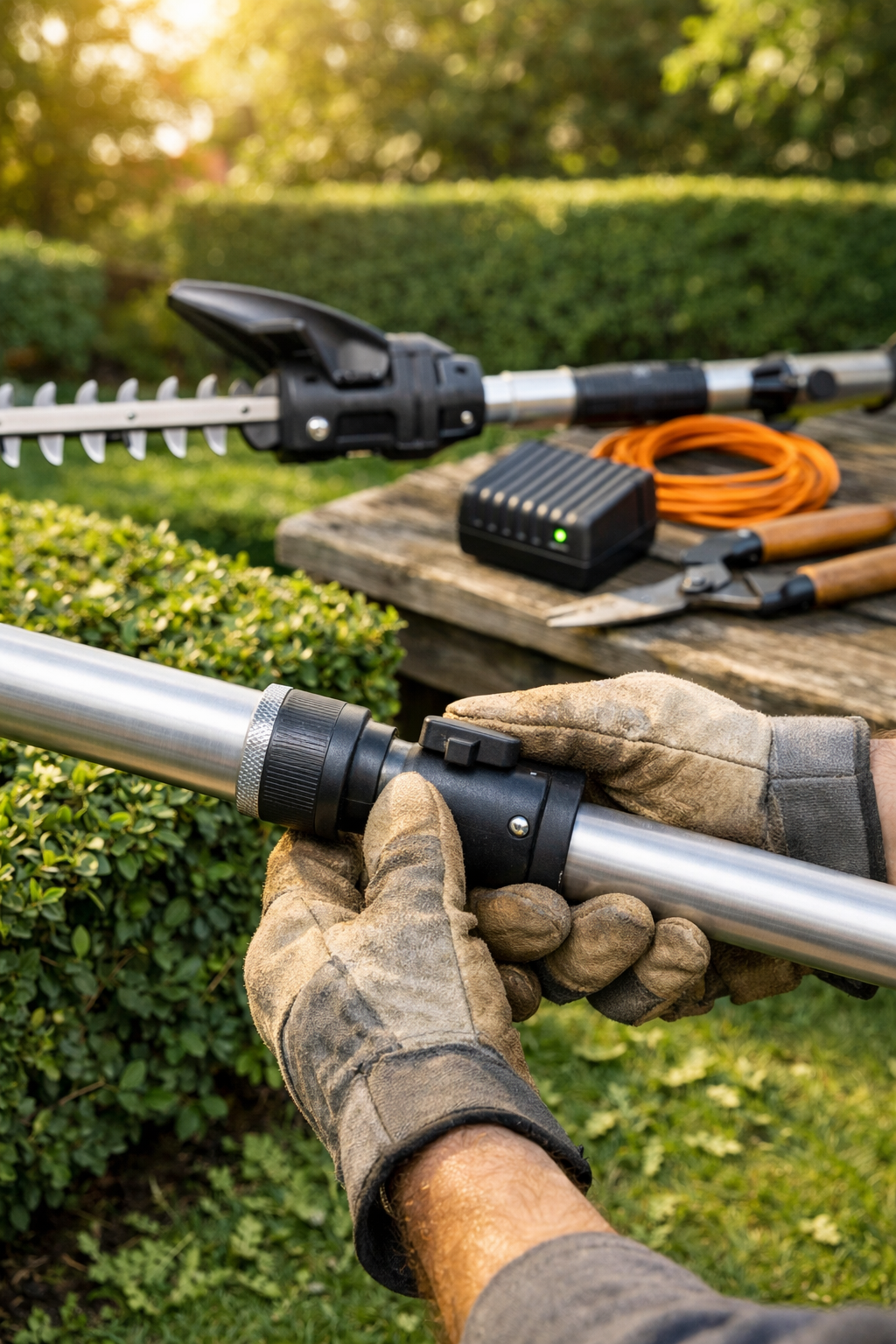
A pole hedge trimmer attachment extends your reach by 5 to 7 feet without requiring a separate dedicated tool. If you have tall formal hedges or arborvitae that top out above shoulder height, this is worth knowing about before you buy.
The most practical option is a multi-attachment system like the DEWALT DCPH820 or the EGO Multi-Head system. You buy one power head and swap attachments (hedge trimmer, string trimmer, blower) using the same battery. That setup costs more upfront but replaces several single-purpose tools.
Not every hedge trimmer accepts a pole extension, so check compatibility before purchasing the trimmer itself. Some bare-bar designs allow aftermarket extensions; others are sealed units with no attachment point.
Here are the attachment categories worth evaluating:
Articulating pole heads — the blade pivots up to 135 degrees, which lets you cut the top of a hedge while standing upright instead of reaching overhead.
Fixed-angle pole extensions — cheaper than articulating heads (often $30 to $50 less), and rigid enough for straight flat-top cuts.
Multi-tool power heads — the most cost-efficient route if you already plan to buy two or more yard tools in the same platform.
Reach extender sleeves — simple aluminum tubes that add 18 to 24 inches to a standard trimmer; useful for occasional overhead work without the cost of a full pole system.
Pole setups add weight at the tip, which changes balance significantly. Plan for shorter sessions until you’re used to the feel.
Frequently Asked Questions
How long does a hedge trimmer battery last on a single charge?
Runtime depends on battery size and hedge density. A 2.5Ah, 20V battery typically gives 30 to 45 minutes of active cutting. A 5.0Ah, 56V EGO battery can run 60 minutes or more on lighter hedges. Battery capacity matters more than voltage alone when estimating how much you can finish in one session.
Can I use a hedge trimmer on boxwood or other dense ornamental shrubs?
Yes, as long as stems stay within the tool’s rated cutting capacity — usually 3/4 inch for most residential models. Boxwood (Buxus sempervirens) has fine, dense branching that trimmers handle well. The problem comes with older, woody interior growth; remove thick stems with loppers first, then shape with the trimmer.
Is a 20-inch blade long enough for a standard residential hedge?
For most homeowners, yes. A 20-inch blade covers a wide swath per pass and is easier to control than a 24-inch bar. Go with 22 to 24 inches only if your hedges are wide, flat-topped, and require long, sweeping cuts to stay level.
Do I need a hedge trimmer if I already own a string trimmer?
They do different jobs. A string trimmer cuts grass and edges — it won’t shape a hedge cleanly or safely. A hedge trimmer’s rigid blade bar is what produces a flat, even surface. If you want shaped hedges, the string trimmer won’t substitute.
Honda doesn’t make lawn mowers for the U.S. residential market anymore, so every “Honda mower” you see is really another brand’s deck bolted to a Honda engine. That distinction matters more...
Ten days. That’s roughly how fast perennial rye grass pokes through soil under good conditions, compared to 14-30 days for Kentucky bluegrass. That speed is the whole reason lawn owners reach...
21 July 2026
The Mowers Guide is reader-supported. When you buy through links on our site, we may earn an affiliate commission.







Comments are closed.