Is the Scag Zero Turn Liberty Z worth the money over a Craftsman or Cub Cadet from Lowe’s? Depends on your lawn. This is Scag’s entry point into commercial-grade equipment, built for homeowners with real acreage who mow often but don’t need a full-blown landscaping rig.
The Liberty Z sits in a weird spot: priced above residential zero-turns but below Scag’s actual commercial line. That gap is exactly what this article sorts out.
What the Scag Liberty Z Actually Comes With
The Liberty Z is Scag’s residential-facing zero-turn, built with a lighter version of the fabrication techniques used on their commercial mowers. It’s not a stripped-down toy, but it’s also not a Turf Tiger in disguise. Think of it as the bridge model: commercial DNA, homeowner price tag.
Deck and Cutting Specs
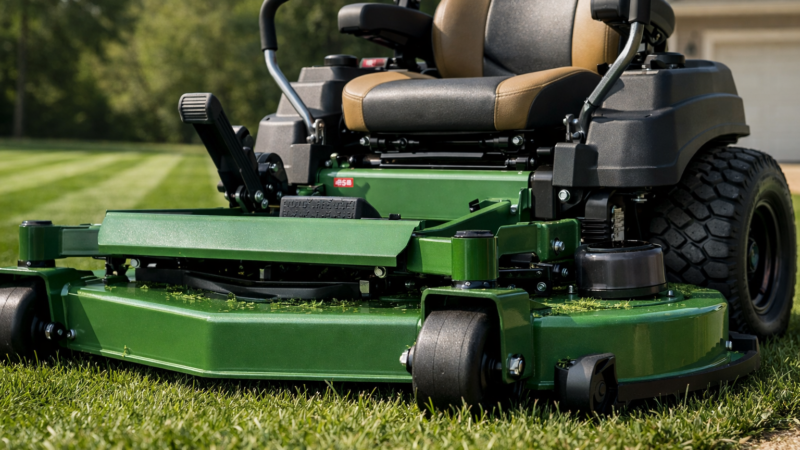
Decks come in 42-inch, 48-inch, and 52-inch widths, all fabricated (not stamped) 7-gauge steel. That matters because fabricated decks are welded from flat steel plate, giving them more rigidity and a longer service life than the stamped decks you’ll find on most big-box mowers. Cutting speed on the Liberty Z runs up to roughly 8 mph, with ground/transport speed reaching around 9 mph depending on tire and engine spec.
Engine and Drive System
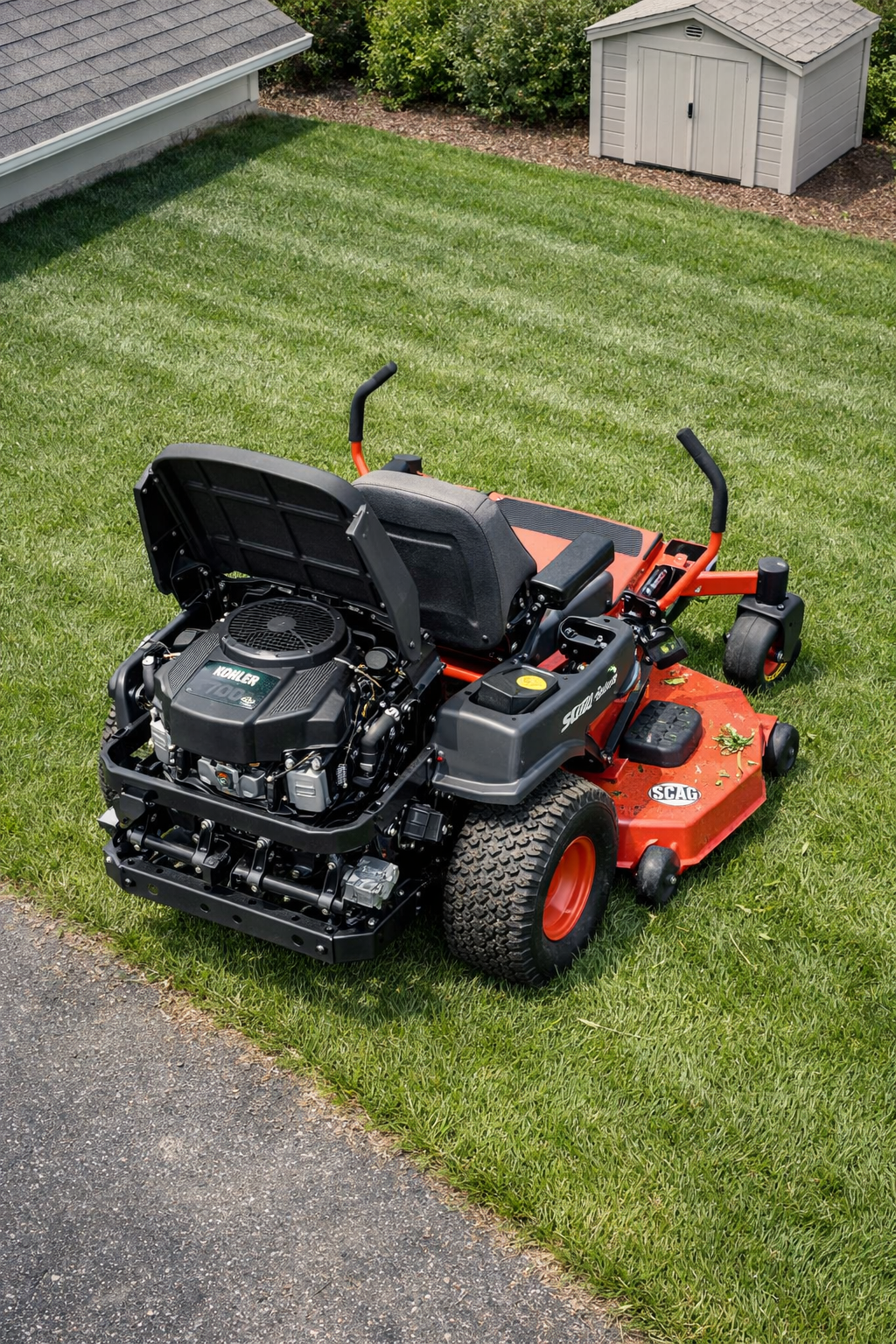
You get a choice between a Kohler 7000 series V-twin (around 22-24 hp) or a Briggs & Stratton commercial-grade engine in similar horsepower ranges. Power goes through a Hydro-Gear ZT-2800 or ZT-3100 transaxle system, which is the same family of components used on a lot of mid-tier commercial machines. That’s a real point in its favor: the transaxles aren’t a downgrade, even if the deck gauge is lighter than Scag’s top-tier line.
Seat, Fuel, and Comfort Features
The seat is a suspension-style bucket seat, not the flat vinyl pan you’d find on entry residential units. Fuel capacity sits around 8 to 10 gallons depending on deck size, enough for several hours of continuous mowing on a couple of acres. Foot-operated deck lift and adjustable armrests round out the comfort package, small details that matter after two hours in the seat on a hot Saturday afternoon.
How the Liberty Z Compares to Scag’s Tiger Cat and Turf Tiger
The Liberty Z is not a substitute for the Tiger Cat or Turf Tiger if you’re mowing five-plus days a week or running a lawn care route. Those commercial models use heavier-gauge decks (10-gauge or thicker), bigger engines, and components rated for daily 8-hour duty cycles. The Liberty Z is rated for lighter, homeowner-frequency use.
Here’s how the specs actually stack up:
Feature
Liberty Z
Tiger Cat II
Turf Tiger II
Deck gauge
7-gauge fabricated
7-gauge fabricated (heavier reinforcement)
7-gauge fabricated, commercial reinforced
Deck sizes
42″, 48″, 52″
48″-61″
52″-72″
Engine options
Kohler/Briggs, 22-24 hp
Kawasaki/Kohler, 24-37 hp
Kawasaki, 25-37 hp
Ground speed
~9 mph
~13 mph
~16 mph
Typical duty rating
Homeowner/light-duty
Commercial daily use
Heavy commercial daily use
Approx. price range
$6,500-$9,500
$10,000-$14,000
$13,000-$18,000
If you’re mowing three acres twice a week, the Liberty Z is plenty. If you’re mowing forty properties a week, buy the Tiger Cat and don’t look back.
Which Lawn Size and Terrain Actually Justify This Price
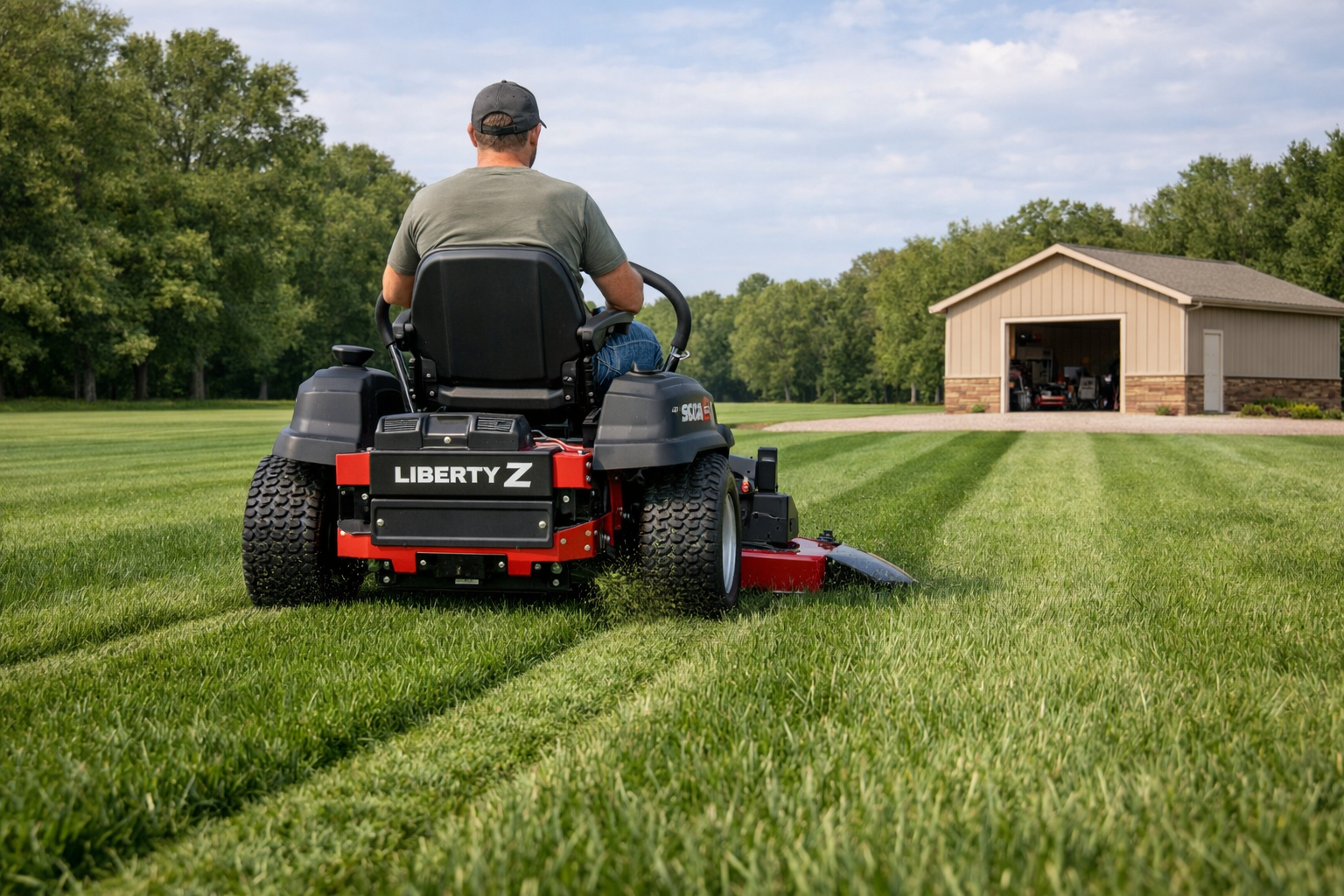
A one-acre lawn with a couple of trees doesn’t need this mower. A three-to-five-acre property with slopes, tree lines, or fence obstacles is where the Liberty Z earns its keep. It’s built for people who mow weekly or twice-weekly on real acreage, not folks doing a quick pass around a quarter-acre suburban lot.
When the Liberty Z Makes Sense
If your yard has rolling terrain, drainage ditches, or you’re mowing around a pole barn and a couple of outbuildings, the fabricated deck and Hydro-Gear transaxles will outlast a residential machine by years. Homeowners running 3-8 acres, mowing at least once a week during the growing season, are the sweet spot.
When You’re Overpaying
Don’t buy a 52-inch Liberty Z for a tight quarter-acre yard full of flower beds and a narrow side gate. You’ll spend more time backing up and re-angling than actually cutting grass. A 42-inch residential zero-turn, or even a quality riding mower, handles that job for half the price.
A fabricated deck is welded from flat steel plate rather than pressed into shape from a single sheet, giving it more structural rigidity and a longer working life under repeated stress.
Maintenance Costs and Parts You’ll Actually Deal With
Owning a Scag means owning a dealer relationship, not a big-box return counter. Parts run a bit higher than what you’d pay for a Toro TimeCutter or Cub Cadet, but they’re also more available through Scag’s dealer network, which matters when a belt snaps mid-mowing-season.
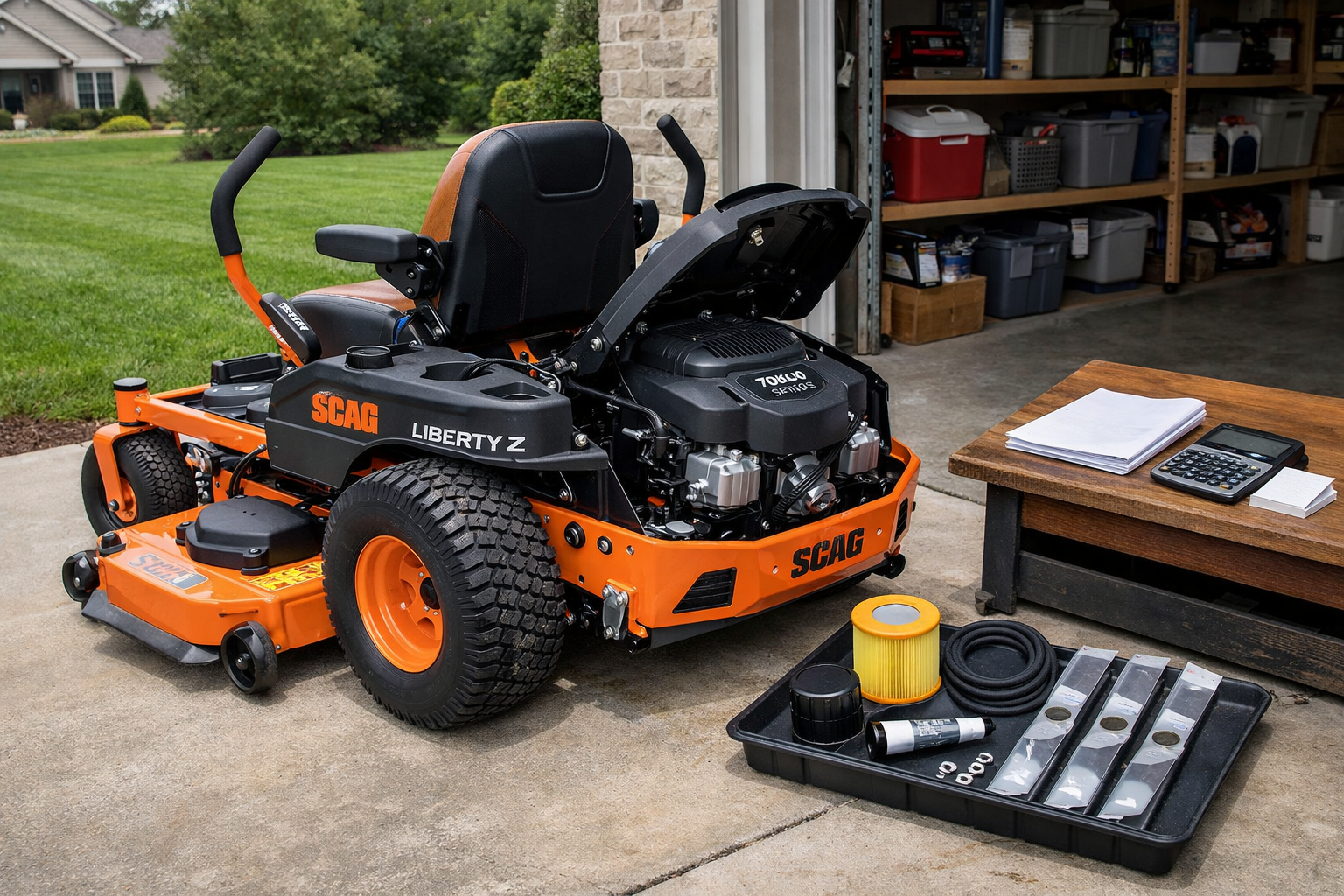
Expect these recurring costs and tasks over a typical season:
Blade sharpening or replacement every 25-40 hours of use, roughly $15-25 per blade.
Hydraulic fluid and filter checks on the Hydro-Gear transaxles once per season, around $40-60 in parts.
Air filter replacement every 100-150 hours, about $15-20.
Drive belt inspection twice a season, replacement typically every 2-3 years at $50-80 per belt.
Oil and spark plug changes every 50-100 hours depending on engine spec.
Scag backs the Liberty Z with a standard warranty of three years for residential use, which is solid compared to most homeowner-grade zero-turns capping out at two years. Commercial use drops that coverage to one year, so if you’re using it for paid mowing jobs, read the fine print before you buy. A resource like The Mowers Guide is a good place to cross-check warranty terms across brands before you commit to any zero-turn purchase.
Frequently Asked Questions
How much does a Scag Liberty Z cost new?
Expect to pay between $6,500 and $9,500 depending on deck size and engine choice, with the 42-inch Kohler-powered model at the low end and the 52-inch upgraded engine option at the high end.
Is the Scag Liberty Z good for hilly or sloped yards?
Yes, within reason. The Hydro-Gear ZT-2800/3100 transaxles and low center of gravity handle moderate slopes well, but Scag still recommends caution above a 15-degree grade, same as most zero-turns.
Can I use the Liberty Z for a small lawn care business?
You can, but the commercial warranty drops to one year instead of three, and the lighter-duty components wear faster under daily use. For regular paid mowing routes, the Tiger Cat is the better long-term investment.
Brown patches after mowing? Weeds creeping into thin spots? Before you blame fertilizer or bugs, check your lawnmower blade height. Most lawn problems that homeowners chase for weeks trace back to...
Honda doesn’t make lawn mowers for the U.S. residential market anymore, so every “Honda mower” you see is really another brand’s deck bolted to a Honda engine. That distinction matters more...
29 August 2026
The Mowers Guide is reader-supported. When you buy through links on our site, we may earn an affiliate commission.






Comments are closed.