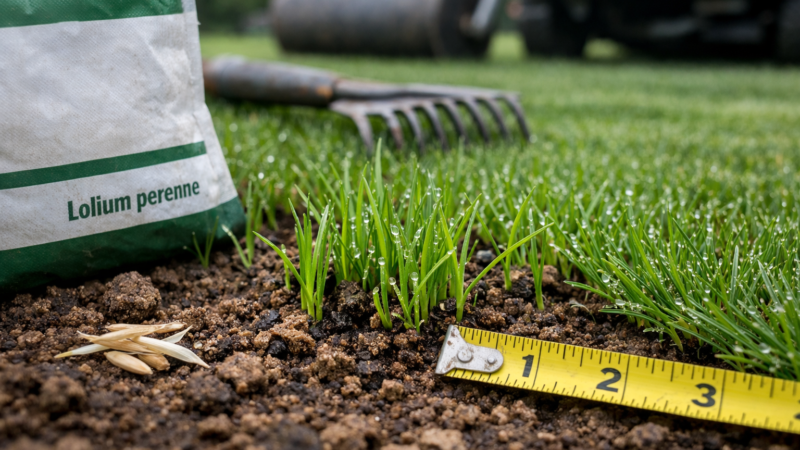
Ten days. That’s roughly how fast perennial rye grass pokes through soil under good conditions, compared to 14-30 days for Kentucky bluegrass. That speed is the whole reason lawn owners reach for it, especially when a bare patch needs cover before the next rainstorm washes the topsoil away. If you’re trying to figure out whether this grass fits your yard, or how to mow it without wrecking it, the details below cover both the plant itself and the practical mower settings that change once it’s in your lawn.
What Perennial Rye Grass Actually Is (And Why It’s Not Annual Rye Grass)
Perennial rye grass (Lolium perenne) is a cool-season bunching grass that comes back year after year, unlike annual rye grass (Lolium multiflorum), which dies off after one season and is mostly used as a cheap temporary cover crop. Confusing the two is one of the most common mistakes homeowners make at the seed rack, and it leads to a lawn that looks great in spring and vanishes by August.
The bunching habit matters more than most buying guides admit. Perennial rye grass does not spread by rhizomes or stolons the way Kentucky bluegrass or Bermuda grass does. Each seed grows into its own clump, and clumps only fill in gaps through tillering (new shoots at the base) or through you reseeding again. If you’re expecting it to creep sideways and patch itself over time, you’ll be disappointed. It won’t.
That bunching structure is exactly why perennial rye grass earns its reputation as a repair grass rather than a full lawn-from-scratch choice for most climates. It germinates fast, establishes a visible stand within two to three weeks, and gives immediate texture to a lawn that otherwise looks patchy. But because it can’t spread on its own, it needs to be paired with a spreading grass or reseeded regularly if you want long-term, self-healing turf.
Growth Habit and Appearance
The blades are fine to medium in texture, dark green, and glossy on the underside — a trait that helps identify rye grass in a seed mix at a glance. It has a moderate growth rate, faster than fine fescue but not as aggressive as ryegrass‘s warm-season cousins like Bermuda grass.
Where It Comes From, Climate-Wise
Perennial rye grass originated in Europe, North Africa, and parts of Asia, and it performs best in temperate climates with cool, moist conditions. In the United States it thrives in USDA hardiness zones 3 through 7, roughly the northern two-thirds of the country, and struggles once summer temperatures push consistently past 90°F.
Cool-Season vs. Warm-Season: Where Rye Grass Fits in the Bigger Picture
Perennial rye grass is a cool-season grass, meaning it grows most actively in spring and fall when soil temperatures sit between 50°F and 65°F, and it goes semi-dormant during hot summer stretches. Understanding this cycle explains almost every maintenance decision you’ll make with it, from when to fertilize to when to expect it to look rough.
Cool-season grasses like rye, fescue, and bluegrass build their root systems and top growth during the shoulder seasons. Warm-season grasses — Bermuda grass, zoysia, St. Augustine grass — do the opposite, growing hardest in June, July, and August and going brown or dormant once frost hits. This is why the two categories are almost never combined at a species level in the same lawn; their growing seasons work against each other.
Where this gets practical is in the transition zone, the band of states stretching roughly from Virginia through Kansas and down into parts of Texas and Oklahoma, where summers are too hot for cool-season grasses to thrive but winters are too cold for warm-season grasses to stay green. Homeowners here often use perennial rye grass for winter overseeding on warm-season lawns — a practice golf courses and sports fields have used for decades to keep turf green through cold months.
If you live in the Deep South or the desert Southwest, straight cool-season rye grass as a permanent lawn is a losing bet. It’ll look strong in April and be dead by August without heavy irrigation. If you live in New England, the Upper Midwest, or the Pacific Northwest, it’s a legitimate long-term option, especially blended with other cool-season species.
Here’s a quick way to sort out which category fits your region and goal:
Region/Climate
Best Grass Category
Perennial Rye Grass Role
Northern states, zones 3-6
Cool-season
Primary lawn component or repair grass
Transition zone (VA to KS)
Mixed
Overseeding on warm-season lawns for winter color
Deep South, desert Southwest
Warm-season
Not recommended as permanent turf
Pacific Northwest
Cool-season
Strong long-term option, tolerates moisture well
The Real Value: Using Perennial Rye Grass for Overseeding and Repair
This is where perennial rye grass earns its place in most home lawns, and it’s the angle most product pages skip. Instead of treating it as a stand-alone lawn seed, use it to patch bare spots, thicken thin turf, and speed up recovery after heavy traffic, dog damage, or a rough winter, because its 5-to-10-day germination window beats almost every other cool-season species by a wide margin.
Compare that to Kentucky bluegrass, which can take up to 30 days to germinate and even longer to establish enough density to survive foot traffic. If you overseed a bare patch in September and want it covered before winter, rye grass’s speed is the difference between success and a muddy spot that erodes over the next few months.
Building a Seed Mix That Works
Straight perennial rye grass rarely makes the best long-term lawn on its own, mainly because of that bunching growth habit already covered. A common and effective approach is blending it with Kentucky bluegrass or fine fescue — the rye grass germinates fast and holds the soil, while the bluegrass slowly spreads underneath and fills gaps between rye clumps over one to two growing seasons.
A workable ratio for many home lawns is 20-30% perennial rye grass by weight mixed with 70-80% Kentucky bluegrass or fescue. Too much rye grass in the mix (over 40%) can actually crowd out the slower-establishing bluegrass before it gets a foothold, defeating the purpose of the blend.
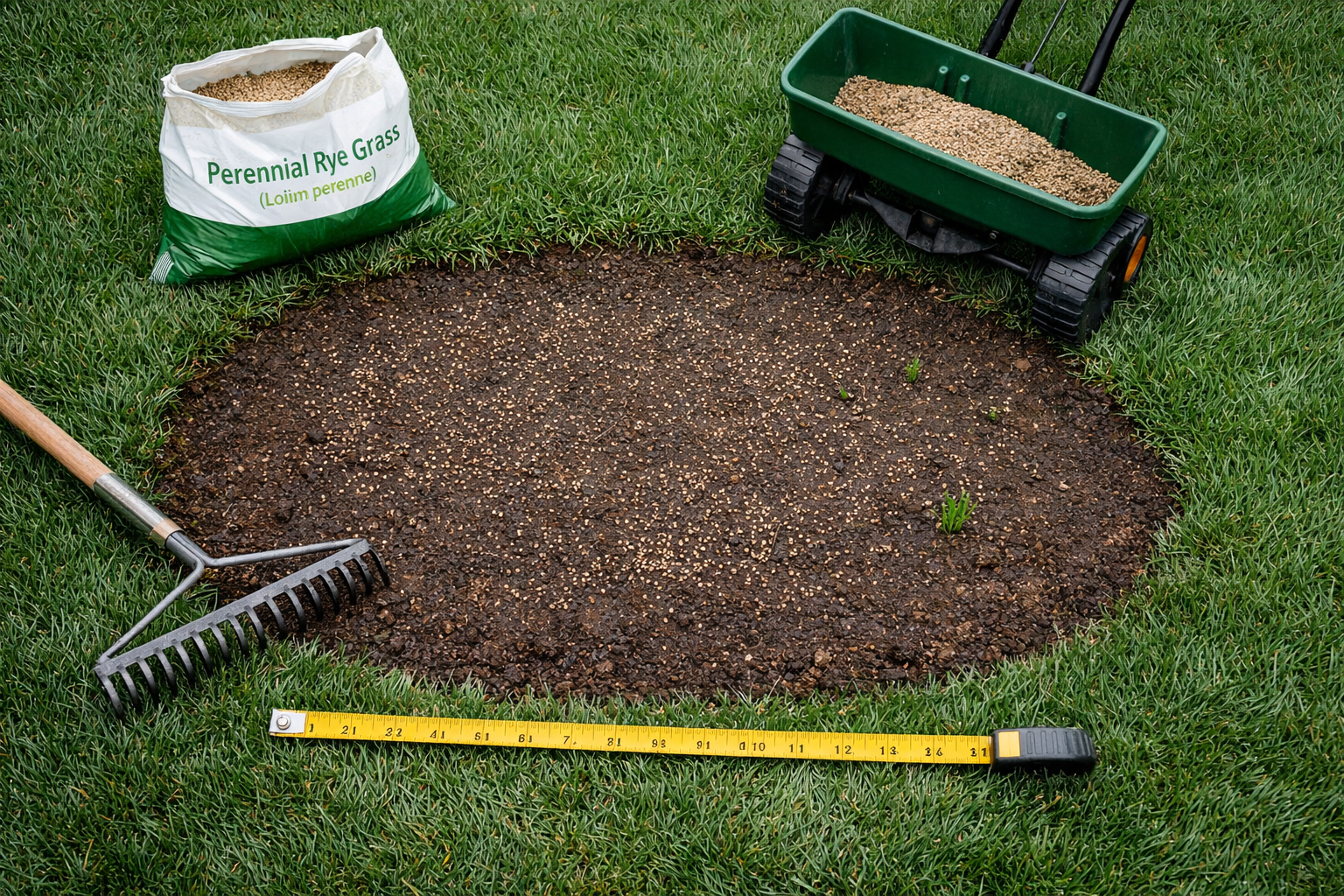
Repairing a Patch Step by Step
Here’s a realistic sequence for using rye grass to fix a damaged section of lawn:
Rake the bare area to remove dead grass and loosen the top half-inch of soil.
Mix perennial rye grass seed with a light layer of compost or topsoil, roughly a 50/50 blend by volume.
Spread the seed-soil mix evenly, aiming for about 6-8 seeds per square inch for rye grass alone, or per the mix rate on the bag if blended.
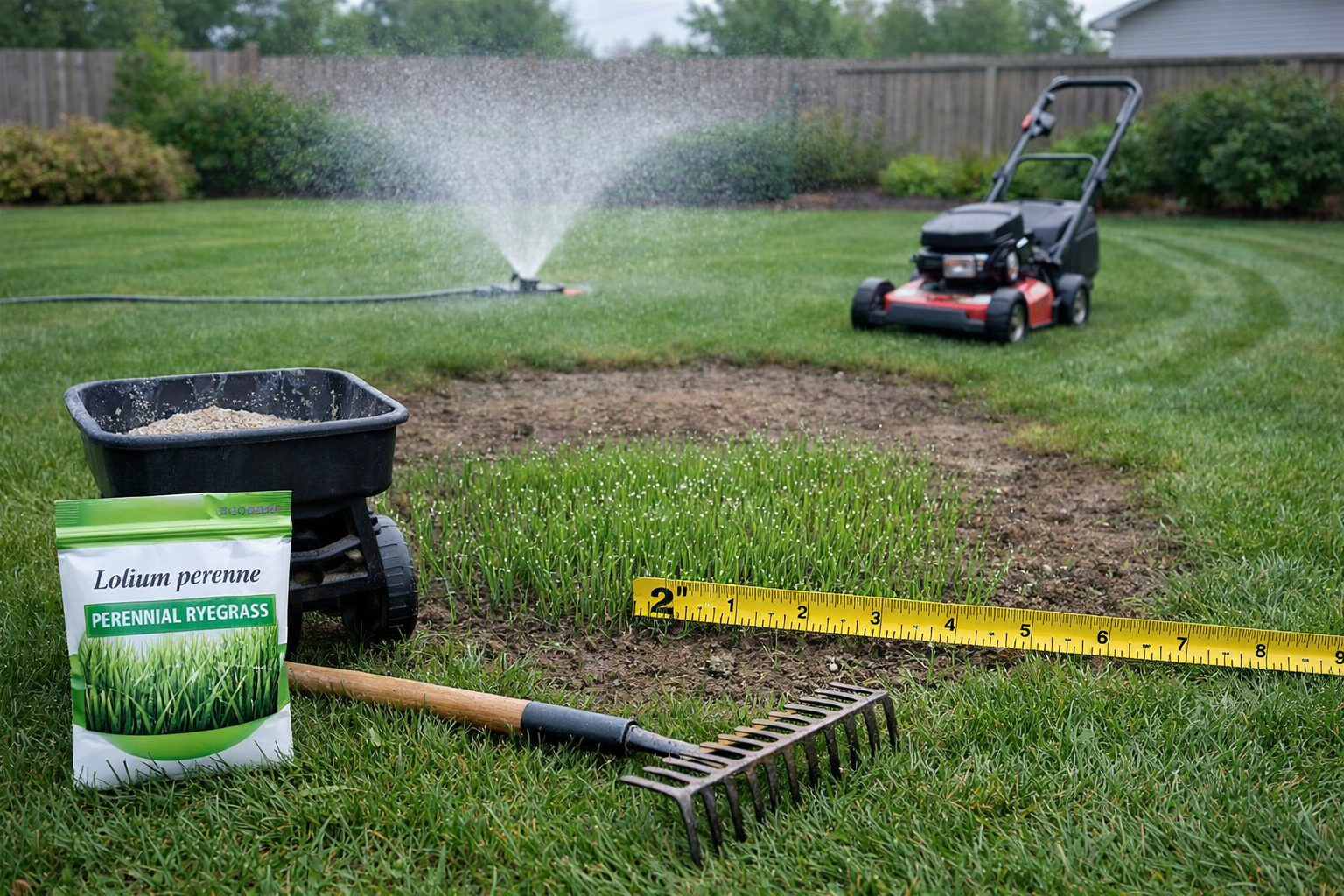
Water lightly twice a day for the first 7-10 days, keeping the top inch of soil moist but not soaked.
Hold off on mowing until the new grass reaches about 3 inches tall.
Make the first cut with a sharp blade set no lower than 2.5 inches, removing no more than a third of the blade height.
Resume normal mowing once the patch blends visually with surrounding turf, usually 3-4 weeks after seeding.
Skipping step 6 — mowing too soon or too low — is the single most common way people undo weeks of successful germination. New rye grass seedlings have shallow, thin root systems, and a low first cut can scalp them right out of the ground.
Mower Blade Settings and Sharpness: What Changes When Rye Grass Is in the Mix
Mowing height for perennial rye grass sits between 2 and 3 inches for most home lawns, and it should never be cut below 1.5 inches even during summer stress. The bigger issue isn’t just height — it’s that rye grass’s fine, dense blades dull mower blades faster than coarser grasses like tall fescue, and a dull blade tears rather than cuts, leaving frayed tips that turn brown and invite fungal disease.
This matters even more in an overseeded lawn where rye grass is mixed with bluegrass or fescue. The two grass types don’t grow at the same rate, and a mower set for the coarser, taller-growing species will often scalp the newer rye grass seedlings underneath, especially in the first month after overseeding.
Blade Sharpness: The Detail Most Owners Skip
A mower blade should be sharpened every 20-25 hours of mowing time, or roughly once a season for an average suburban lawn, more often if you’re mowing sandy or gritty soil that dulls edges faster. On a rye grass lawn, a dull blade shows up fast: you’ll see whitish, ragged tips within a day or two instead of a clean green cut. If you’re not sure how sharp your blade currently is, run a fingernail lightly along the edge — if it doesn’t catch at all, it’s due for a sharpening or a swap.
A properly sharpened rotary mower blade cuts grass cleanly in a single pass, while a dull blade bruises and tears the leaf tip, creating an entry point for fungal pathogens like dollar spot and brown patch.
Setting Deck Height for Mixed Stands
When rye grass is blended with bluegrass or fescue, set the deck at the higher end of the rye grass range — closer to 3 inches — rather than splitting the difference. This protects the shallower-rooted rye seedlings while still keeping the coarser grass in check. For a first mow after overseeding, many mowers let you raise the deck a full notch above your normal setting; do that for the first two or three cuts, then step it back down gradually.
If you’re shopping for a mower or trying to figure out whether your current deck has enough height adjustment range for this kind of mixed-stand mowing, a resource like The Mowers Guide has model-specific comparisons that make it easier to check a mower’s height range before you buy, rather than guessing from a spec sheet.
Watering, Fertilizing, and the Mowing Frequency That Keeps Rye Grass Healthy
Perennial rye grass needs about 1 to 1.5 inches of water per week, split across two or three watering sessions rather than one long soak, and it needs more frequent light watering right after seeding than an established lawn does. Overwatering and underwatering are both common because owners apply generic “water twice a week” advice without adjusting for rye grass’s shallower root system compared to tall fescue.
During germination, the top inch of soil should stay consistently moist — that often means light watering once or twice daily for the first one to two weeks. Once established, cut back to deep, infrequent watering that encourages roots to grow down rather than staying shallow near the surface, where they dry out fast during any hot stretch.
A Practical Fertilization Schedule
Rye grass responds well to nitrogen but doesn’t need heavy feeding. A reasonable schedule looks like this: apply a starter fertilizer with phosphorus at seeding time to support root development, then follow with a balanced nitrogen feed 4-6 weeks after germination, and again in early fall when cool-season grasses naturally ramp up growth. Avoid heavy nitrogen applications in the heat of summer — it pushes soft, fast top growth right when the plant is already under heat stress, which can weaken it right before disease pressure peaks.
Mowing Frequency: More Often Than You’d Think
Because rye grass grows at a moderate-to-fast clip during cool weather, it often needs mowing every 5-7 days during spring and fall, compared to every 10-14 days for slower warm-season grasses in their off-season. The general rule of never removing more than one-third of the blade height in a single cut applies strictly here — if your rye grass is at 3 inches, don’t cut it below 2 inches in one pass.
Skipping a week during peak spring growth and then mowing hard to “catch up” is a common cause of stress and browning. It’s better to mow slightly more often at a consistent height than to let it get shaggy and scalp it back down.
Shade, Heat Tolerance, and the Diseases That Show Up in Poor Conditions
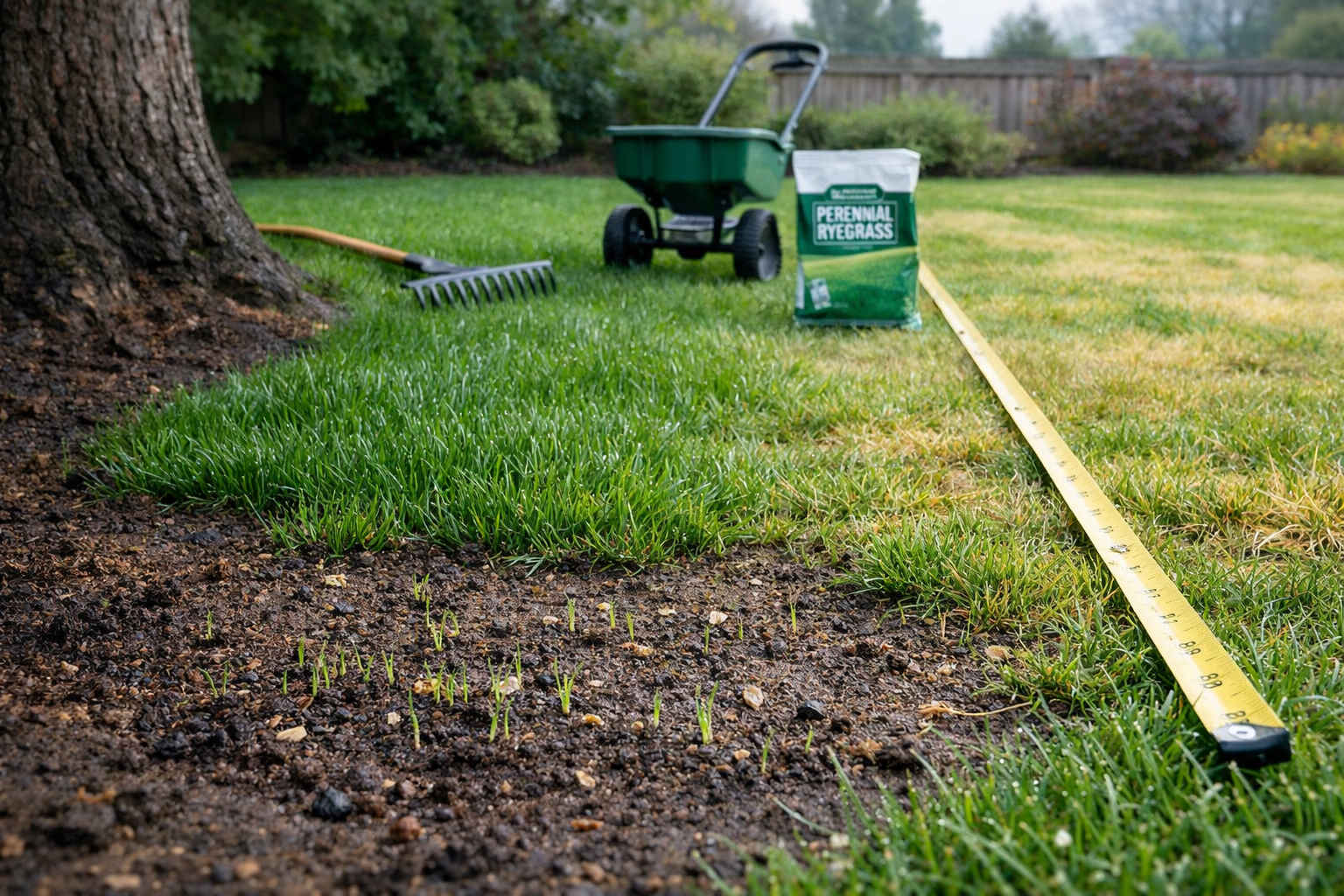
Perennial rye grass has moderate shade tolerance — it holds up reasonably well in dappled or part-day shade but thins out fast in deep, full shade under trees like maples or dense conifers. Its heat tolerance is limited; sustained temperatures above 90°F combined with humidity create the exact conditions where rye grass struggles and disease moves in.
Common Diseases to Watch For
Rye grass is more disease-prone than some coarser turf types, particularly in humid climates or lawns that hold moisture too long after watering or rain. The most frequent problems include:
Gray leaf spot — shows up as gray-brown lesions on blades during hot, humid weather, often after heavy rain
Red thread — pink to red thread-like fungal growth visible in cool, wet spring or fall conditions
Brown patch — circular brown patches that expand during warm, humid nights, especially in overwatered lawns
Crown rust — orange-yellow pustules on blades, more common in shaded or poorly ventilated areas
Practical Steps to Reduce Disease Pressure
Good airflow and correct mowing height do more to prevent these problems than any fungicide application. Mowing at the recommended 2-3 inch height (never shorter) keeps enough leaf surface for the plant to stay healthy, while avoiding evening watering — which leaves blades wet overnight — cuts down on the humid conditions these fungi need to establish. If a lawn already shows signs of one of these diseases, a targeted fungicide can help, but it’s a short-term fix, not a substitute for fixing the watering schedule or mowing routine that caused the problem in the first place.
Shady spots under trees are usually better served by a fescue blend than by straight rye grass, since fine fescues handle low light noticeably better over multiple seasons.
Frequently Asked Questions
How long does perennial rye grass take to germinate?
Perennial rye grass typically germinates in 5 to 10 days under good conditions — consistent moisture and soil temperatures around 50-65°F. That’s faster than Kentucky bluegrass (14-30 days), which is why it’s a go-to choice for quick lawn repairs.
Can I mow perennial rye grass with the same blade height as my regular lawn?
Not if your existing lawn is a different species mowed lower than 2 inches. Rye grass needs a 2-3 inch cutting height, and cutting it shorter stresses the shallow-rooted seedlings and invites disease like brown patch or gray leaf spot.
Does perennial rye grass spread on its own to fill bare spots?
No — it’s a bunching grass, not a spreading one, so it won’t fill gaps through rhizomes or stolons. Any bare patches next to established rye grass clumps need reseeding or a spreading companion grass like bluegrass to close in over time.
Is perennial rye grass the same as annual rye grass?
No, they’re different species with different lifespans. Perennial rye grass (Lolium perenne) comes back yearly, while annual rye grass (Lolium multiflorum) dies after one season — buying the wrong one leads to a lawn that disappears within a year.
Learn essential tips for winter lawn mower storage to protect your equipment and ensure a smooth start next spring. Discover proper cleaning, maintenance, and storage techniques.
John Deere’s E100 series starts at around $1,700, while a comparable X350 runs closer to $3,200. That $1,500 gap is exactly where most homeowners make the wrong call. Deere tractors span...
7 July 2026
The Mowers Guide is reader-supported. When you buy through links on our site, we may earn an affiliate commission.





Comments are closed.