Brown patches spreading across your centipede lawn? Before you blame disease, look at your fertilizer bag and your mower deck. Centipede decline is almost always a combination problem, and the two most common triggers, too much nitrogen and cutting too short, are things you control every week, not things a fungicide fixes.
Homeowners tend to panic and reach for chemicals first. That’s backwards. Fix the habits, then treat what’s left.
Why Centipede Grass Declines: The Real Root Causes
Centipede grass is a low-input grass by design, and that’s exactly where most decline starts. It evolved to survive on lean, acidic soils in the Southeast, so anything that pushes it toward “lush and fed” actually works against it.
Nitrogen Overfeeding Is the Number One Trigger
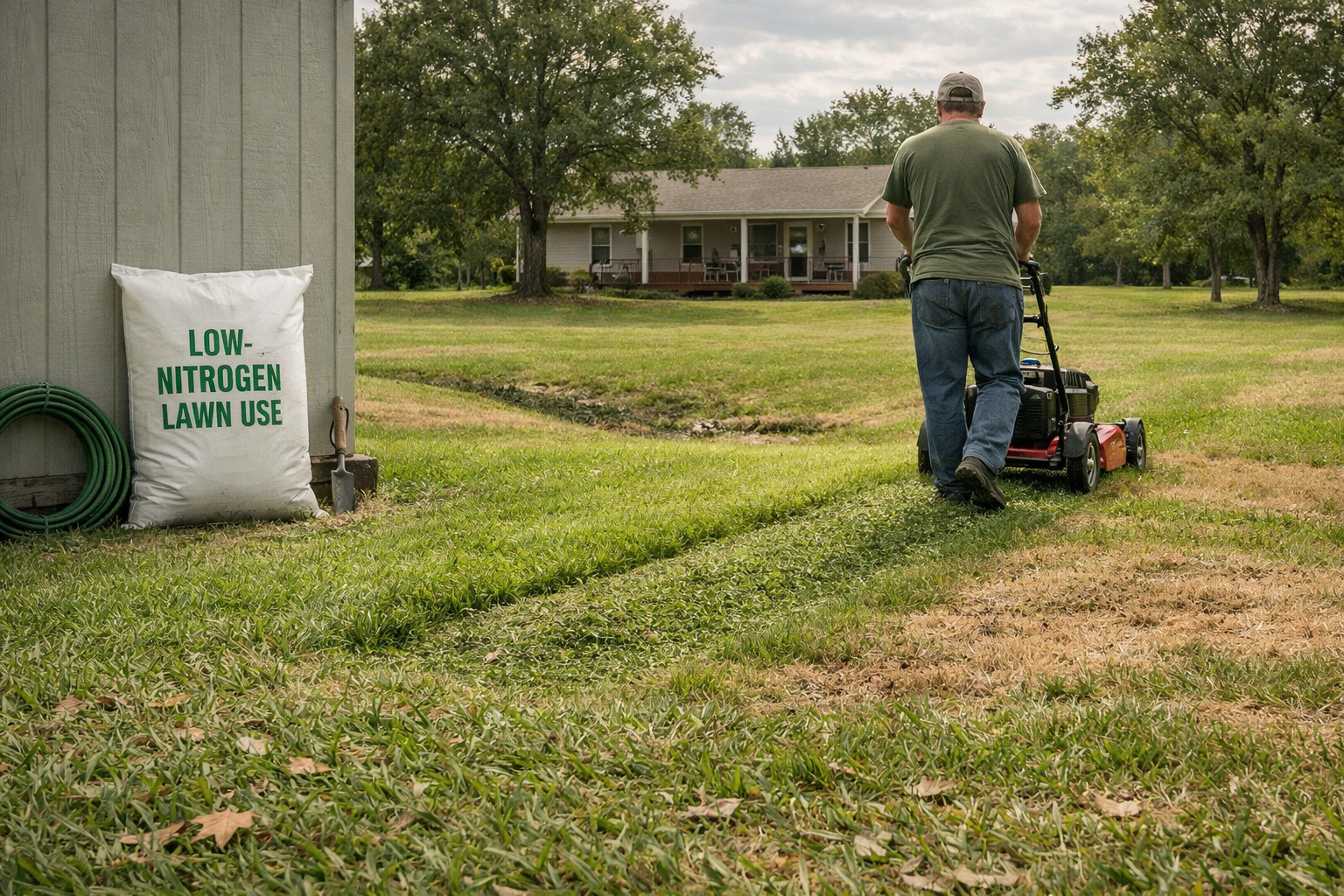
More fertilizer is not better for this species. Centipede grass needs roughly 1 pound of nitrogen per 1,000 square feet per year, way less than fescue or Bermuda. Push past that and you get soft, fast top growth with a weak root system underneath, a condition sometimes called centipede grass decline syndrome. That thin root mass then can’t handle drought, cold, or foot traffic, and the lawn collapses in patches the next stressful season.
Mowing Too Low Stresses the Plant Directly
Centipede should be cut at 1 to 1.5 inches, never scalped to fescue height. Cutting shorter removes too much leaf surface, which cuts down the plant’s ability to photosynthesize and store energy for winter. Pair that with a dull mower blade tearing instead of slicing the leaf tip, and you’ve got an open wound inviting fungus in.
Soil pH and Drainage Set the Stage
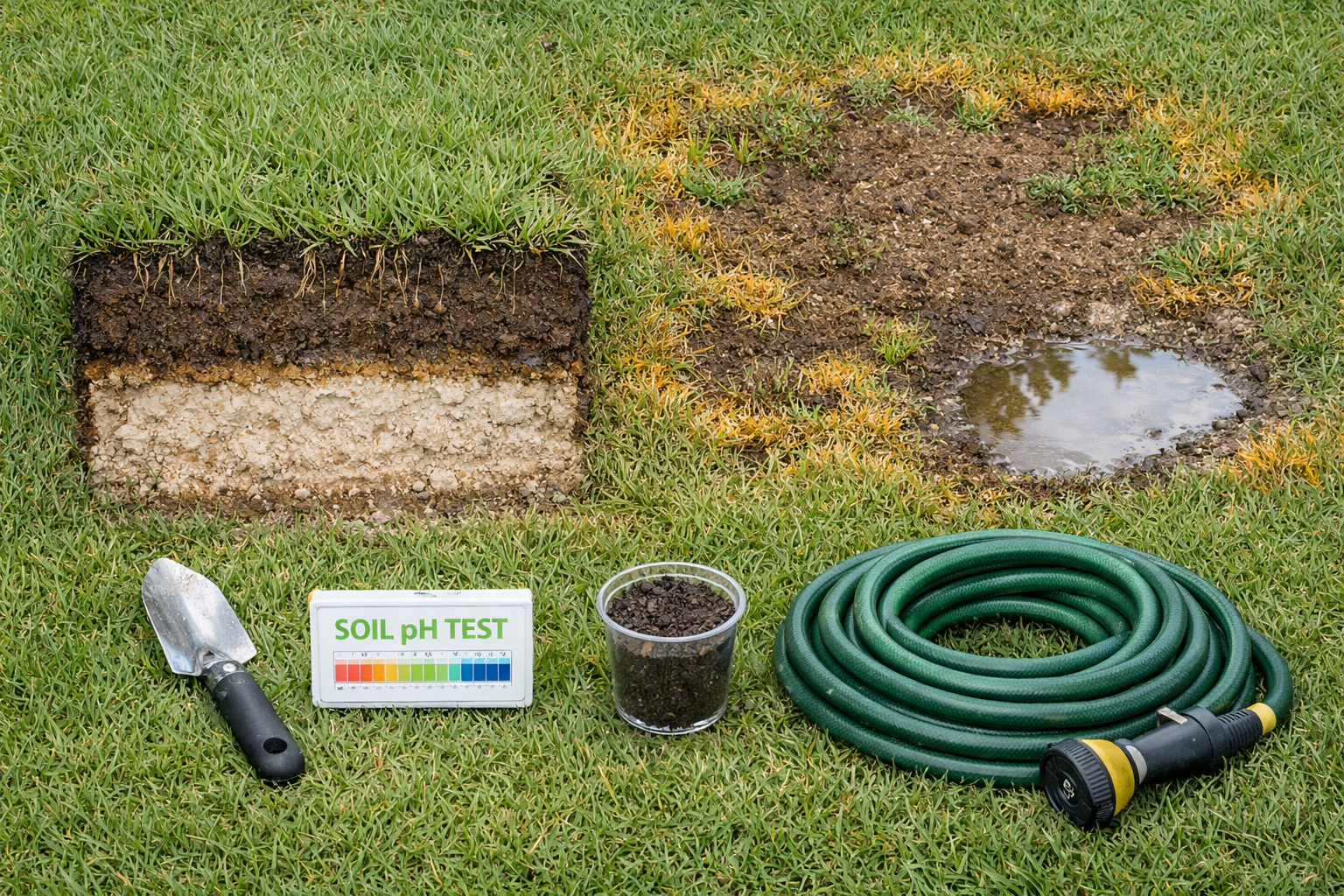
Centipede wants soil pH between 5.0 and 6.0. Push it up toward 7 with lime you didn’t need, or let water sit in a low spot after every rain, and root disease practically writes its own invitation. Poor drainage is often the quiet partner behind large patch outbreaks, not just an afterthought.
Large Patch Disease vs. Everyday Stress: Telling Them Apart
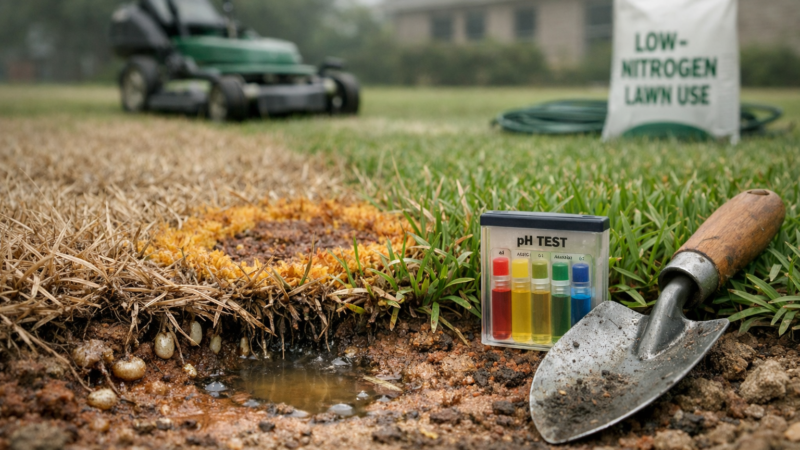
Not every brown circle is disease. Large patch (caused by the fungus Rhizoctonia solani) shows up in cool, wet weather, spring and fall mostly, as roughly circular patches that can stretch several feet across, often with a yellow-orange ring at the edge. Drought stress and dormancy look different: grass fades tan-brown fairly evenly, without that ring, and often bounces back within a couple weeks once water returns.
Ground pearls are another culprit people miss. These small insect pests feed on roots and cause irregular, slowly expanding dead patches that don’t respond to fungicide or watering, because there’s no fungus to kill and no drought to fix. If patches keep showing up in the same spots year after year regardless of rainfall, dig up a few roots and look for tiny round pearl-like cysts.
Large patch disease is a cool-season fungal disease of warm-season turfgrasses, most active when soil temperatures sit between 50°F and 70°F, according to extension turfgrass pathology guidance used widely across the Southeast.
Here’s the mistake I see constantly: someone spots brown grass in July, assumes it’s dead, and rips it out or dumps fungicide on it. Half the time, that grass is just dormant from heat stress and would’ve greened back up on its own.
Recovery Timeline: What to Expect Month by Month
Recovery isn’t instant, and centipede grass is slow by nature even when healthy. Here’s a realistic sequence for bringing a declining lawn back:
Weeks 1-2: Stop all nitrogen applications and raise your mower deck to 1.5 inches. Sharpen or replace the blade before your next cut.
Weeks 2-4: Test soil pH with a home kit or send a sample to your local extension office (most run $10-$20). Apply sulfur if pH is above 6.0, or nothing if it’s already in range.
Weeks 3-6: Improve drainage in low spots with core aeration; rent an aerator for about $70-$100 a day if you don’t own one.
Weeks 4-8: If large patch is confirmed (not just drought stress), apply a labeled fungicide such as azoxystrobin or propiconazole, following label rates exactly.
Months 2-4: Watch for green-up at the crown of affected patches during the next warm stretch above 80°F.
Growing season 2: Full recovery of thin or bare patches often takes a full year, since centipede spreads by stolons at a slower rate than Bermuda or zoysia.
Don’t expect a fungicide alone to solve this. Skipping the drainage and pH work means the same patches often come back the following spring, fungicide or not.
Mower Setup and Habits That Prevent Repeat Decline
Your deck settings matter more than most people think. A mower cutting at an honest 1.5 inches on one side of the yard and 1 inch on the other, because the deck isn’t leveled, will produce uneven stress that looks exactly like disease.
Getting the Height Right, Consistently
Check your deck height with a tape measure, not just the dial, since dial numbers drift between mower brands and even between decks on the same brand. themowersguide.com has deck-height reference charts by mower model if you’re not sure what your dial numbers actually translate to in real inches. Mow often enough that you never remove more than a third of the leaf blade in one pass, that’s the classic “one-third rule,” and during peak summer growth that might mean cutting every 5-7 days instead of stretching to two weeks.
Blade Sharpness and Deck Cleaning
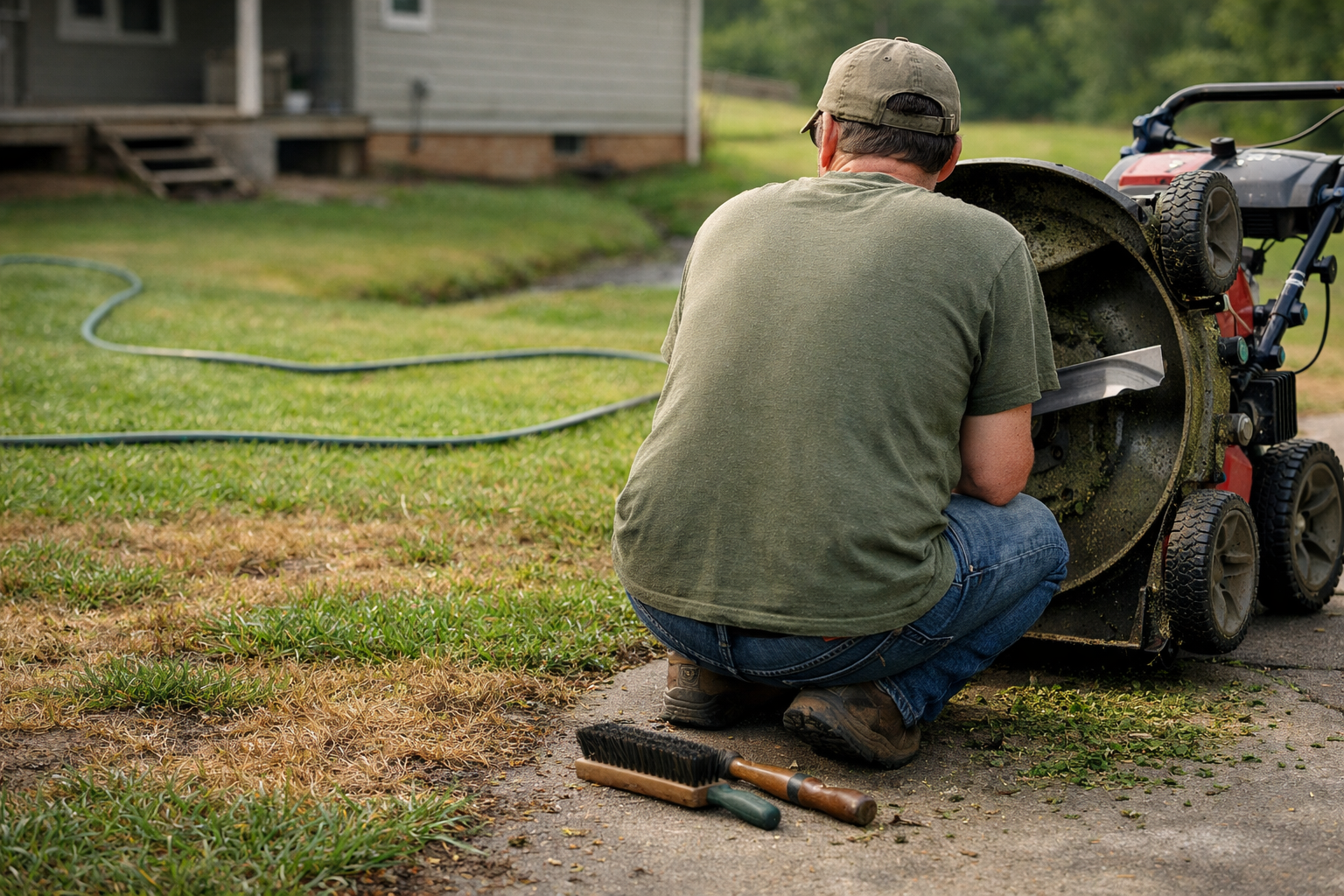
A dull blade shreds grass tips instead of cutting clean, and shredded tips brown out and look like disease from a distance. Sharpen blades every 20-25 hours of use, and scrape packed clippings out of the deck housing so airflow stays even across the cutting width.
Cause
Typical Sign
Fix Timeline
Nitrogen overuse
Lush growth, then sudden collapse
2-4 weeks to stabilize
Mowing too low
Uneven browning, thinning
Immediate on next cut
Large patch disease
Circular patches, orange ring
4-8 weeks with fungicide
Poor drainage/pH
Recurring patches, same spots
1 full growing season
Frequently Asked Questions
Will my centipede grass come back on its own if it’s just dormant?
Often yes. If patches are evenly tan without a ring pattern and rain has been light, hold off on chemicals for 2-3 weeks and water consistently; genuine drought dormancy usually greens back up once conditions improve.
How much nitrogen is actually safe for centipede grass per year?
Stick to about 1 pound of nitrogen per 1,000 square feet annually, split into one or two light applications. Anything higher, especially quick-release formulas, is the most common cause of decline syndrome.
Can I treat large patch disease without fixing drainage first?
You can, but it usually doesn’t last. Fungicide knocks back the active fungus for one season, but standing water or compacted soil brings it right back the next cool, wet spring.
Already got a DeWalt drill sitting in your garage? Then a dewalt weed trimmer might be the cheapest upgrade to your lawn setup you’ll ever make. Instead of buying a whole...
Your lawn feels like a rock when you push a screwdriver into it. Water pools instead of soaking in. That’s your soil telling you it’s compacted, and it’s exactly why aerate...
3 September 2026
The Mowers Guide is reader-supported. When you buy through links on our site, we may earn an affiliate commission.




Comments are closed.