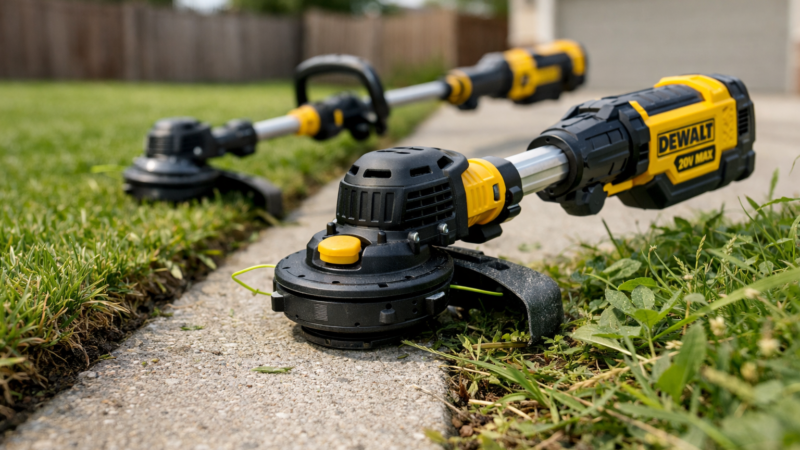
Already got a DeWalt drill sitting in your garage? Then a dewalt weed trimmer might be the cheapest upgrade to your lawn setup you’ll ever make. Instead of buying a whole new gas trimmer or a competing cordless system, you just grab another 20V MAX battery and you’re trimming edges in minutes. That’s the real decision point here, and it’s one most spec sheets don’t spell out.
This guide breaks down the two main cordless trimmer options DeWalt sells right now, what battery compatibility actually means for your wallet, and where a 20V unit falls short of gas power so you’re not disappointed on day one.
Which DeWalt Trimmer Should You Buy: DCST920 or DCST972?
The DCST920 is DeWalt’s standard 20V MAX string trimmer with a bump-feed head, while the DCST972 steps up to a brushless motor and easy-feed line advance. If you’re already in the DeWalt battery ecosystem, the DCST972 is worth the extra money for the motor life and less fiddly line feeding alone.
What Sets the DCST972 Apart
The brushless motor on the DCST972 runs cooler and lasts longer under load, since there’s no brush friction wearing down internal parts. It also pulls more torque out of the same battery, which matters when you hit thick crabgrass or overgrown fence lines. DeWalt rates it with a 13-inch or 14-inch cutting swath depending on the attachment configuration, noticeably wider than what you get on cheaper bump-feed models.
Where the DCST920 Still Makes Sense
The DCST920 costs less upfront, typically running somewhere in the $99 to $150 range for the bare tool. If your lawn is small, under a quarter acre, and you’re not fighting heavy weeds, the bump-feed system works fine. Just know you’ll be tapping the head on the ground more often to feed line, which slows you down compared to the 972’s auto-advance.
The Attachment Capability Angle
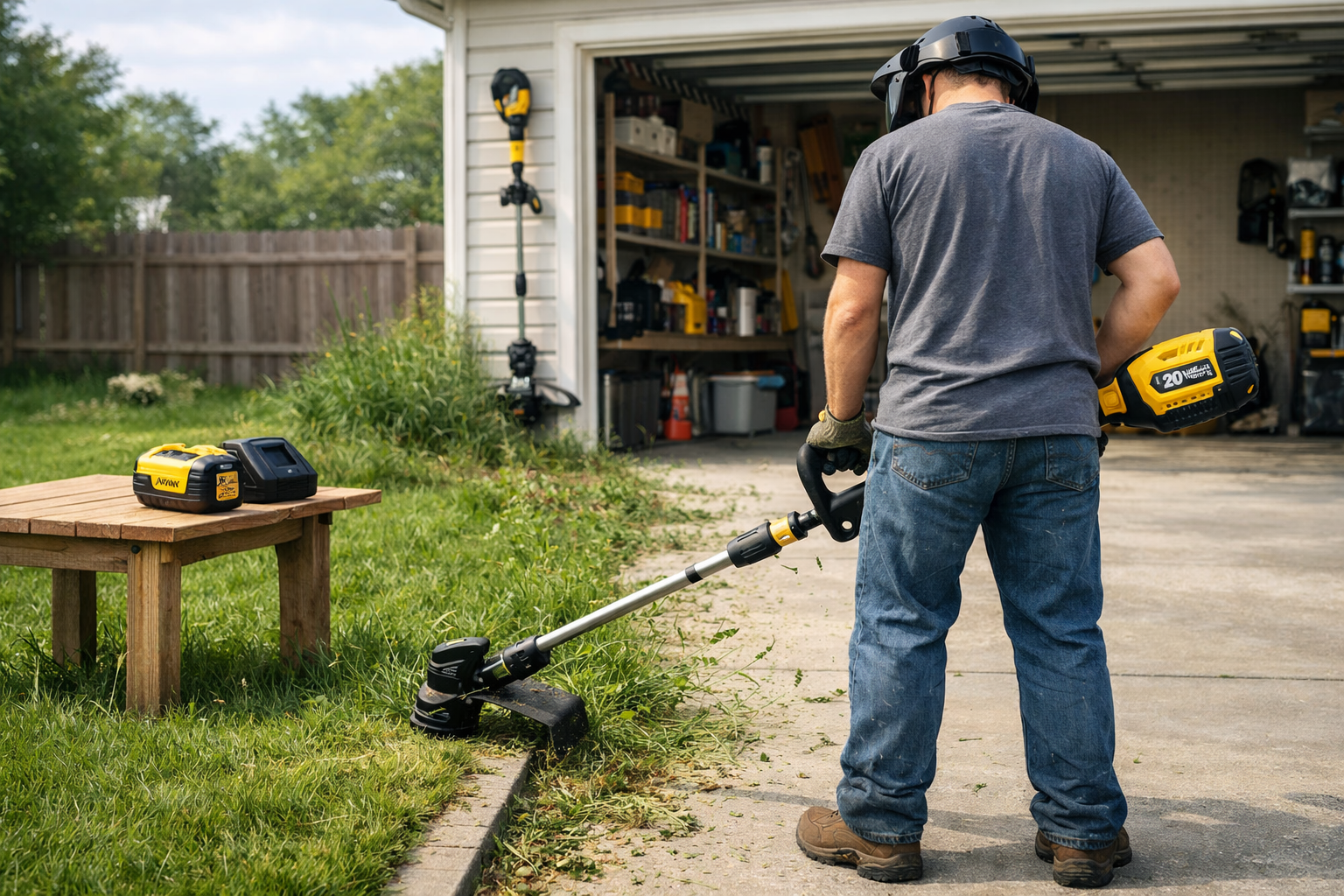
Both trimmers accept DeWalt’s attachment capable heads, meaning the trimmer shaft can swap over to an edger head without buying a second motor. That’s a real cost saver if you want clean edges along driveways and sidewalks without owning a separate edging tool.
Battery Compatibility: The Detail That Actually Saves You Money
Here’s the mistake a lot of buyers make: assuming any DeWalt battery works in any DeWalt trimmer, or that buying the trimmer alone is always the smart move. Neither is guaranteed, and it depends entirely on what’s already in your garage.
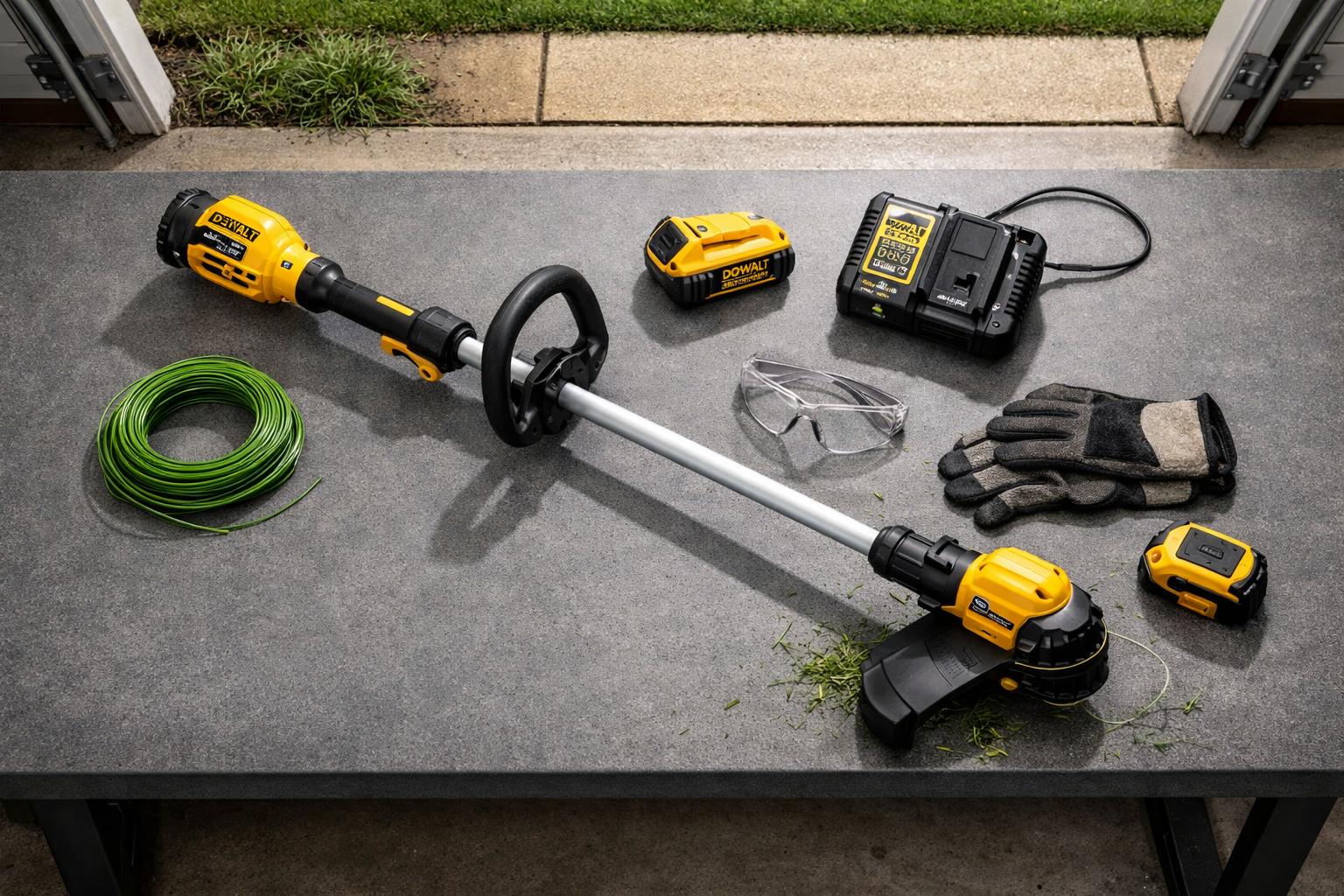
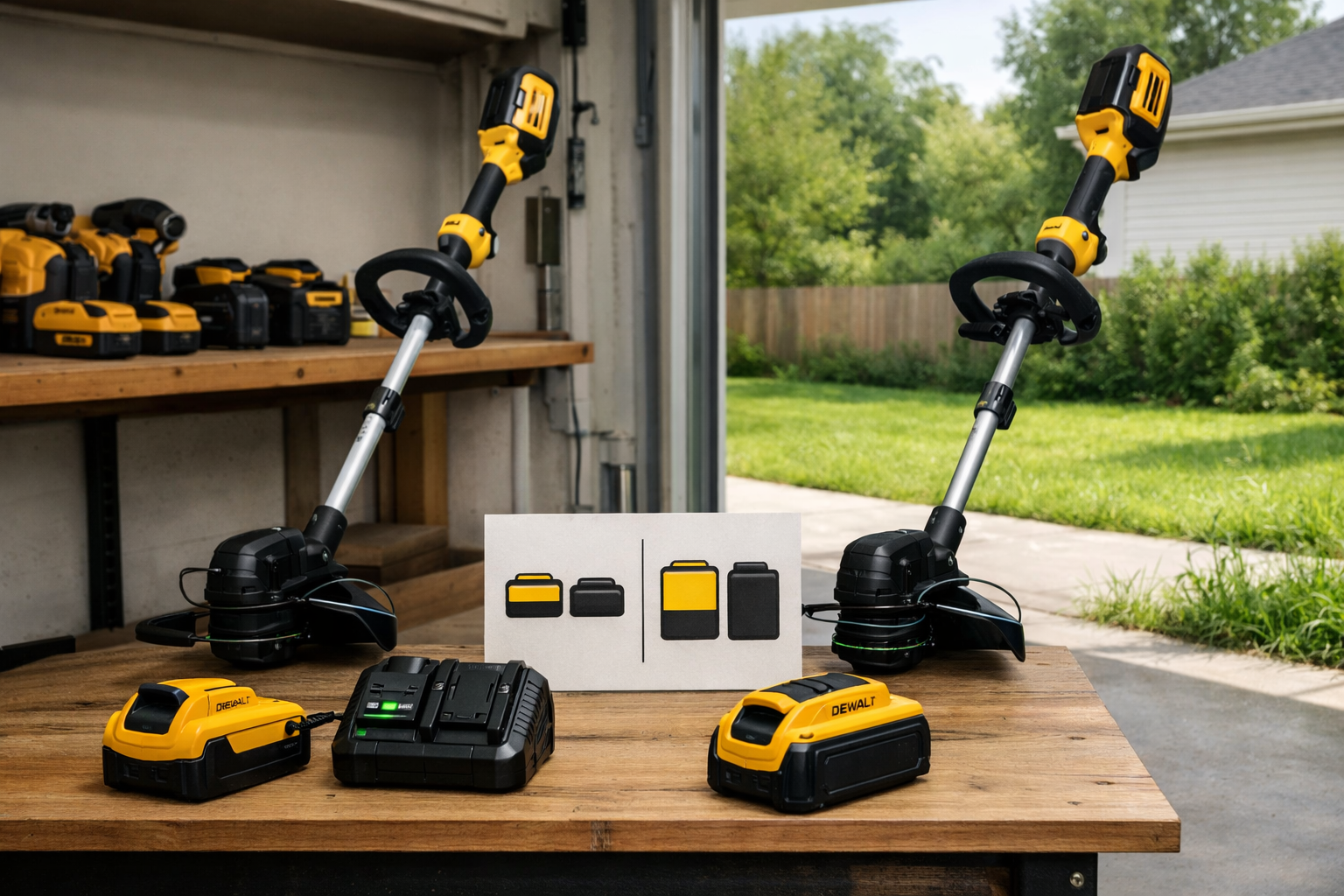
Every current cordless DeWalt weed trimmer runs on the 20V MAX platform, the same battery slot used across DeWalt’s drills, circular saws, and impact drivers. If you already own two or three 20V MAX batteries and a charger, buy the bare tool. You’ll save $50 to $80 compared to a kit bundle that includes a battery and charger you don’t need.
The 20V MAX battery platform is DeWalt’s standard voltage line for compact cordless tools, distinct from its higher-output FLEXVOLT batteries used on larger outdoor equipment.
Don’t assume every DeWalt outdoor tool uses this same 20V slot, though. Some of DeWalt’s larger mowers and higher-power outdoor tools run on FLEXVOLT batteries, which are physically different and won’t fit the trimmer. Check the battery slot shape and voltage stamp before you assume cross-compatibility.
If you’re starting from zero, here’s a reasonable buying order:
Check what DeWalt batteries you already own and their amp-hour rating.
Buy the bare trimmer tool if you have at least one compatible 4.0Ah or 5.0Ah battery.
Add a second battery if you plan to trim for more than 30 minutes at a stretch.
Pick up the edger attachment head separately instead of a second full tool.
Keep a spare spool of 0.080-inch trimmer line on hand for line replacement.
Runtime and Cutting Swath: What You’re Actually Getting
A 20V MAX battery gives you roughly 20 to 40 minutes of trim time depending on battery amp-hours and how hard you’re cutting. A 5.0Ah battery on the DCST972 will comfortably handle a half-acre yard’s edges and trim lines in one charge for most homeowners.
Cutting swath width directly affects how fast you finish the job. A 13-inch swath means more passes around flower beds and fence lines than a 14-inch head. On a small suburban lot that’s a minor difference. On anything over half an acre, it adds up to real minutes, maybe an extra 10 to 15 minutes of walking back and forth.
Model
Motor Type
Cutting Swath
Feed Type
Typical Bare Tool Price
DCST920
Brushed
13 in
Bump feed
$99–$150
DCST972
Brushless
13–14 in
Easy feed
$150–$220
Weight matters too, and it’s easy to overlook until your arms are burning 20 minutes into a job. Both trimmers land around 7 to 8 pounds with a battery installed, light enough for most people to handle without a shoulder strap, though anyone with wrist or shoulder issues should still consider one.
Cordless vs. Gas: Setting Realistic Expectations
A 20V cordless DeWalt weed trimmer will not match a gas trimmer’s raw torque, and expecting it to is where a lot of buyers get frustrated. Gas trimmers spin faster and cut through thick brush and saplings that would stall a cordless head.
That said, for the trimming and edging most homeowners actually do, cordless wins on almost everything else. No mixing gas and oil, no pull-cord starting, no fumes while you’re working close to the house. Weight distribution also feels different, since there’s no fuel tank sloshing around as you move.
The trade-off is technique. Feed less line per pass, let the motor find its rhythm instead of forcing it through dense growth, and clear thick patches in two passes instead of one aggressive pass. Do that and a 20V trimmer holds up fine for seasonal upkeep. For serious overgrowth clearing, though, a gas trimmer or even a brush cutter attachment still does that job faster.
Warranty coverage is worth checking too. DeWalt backs its 20V MAX outdoor tools with a 3-year limited warranty on the tool itself, which beats what most gas trimmer brands offer and gives you a real safety net if the motor fails early. Keeping your trimmer’s air vents clear and the line spool properly wound is basic upkeep, and a site like The Mowers Guide has broader cordless tool maintenance guides if you want to stretch that warranty period into a longer service life.
Frequently Asked Questions
Can I use any DeWalt battery in any DeWalt trimmer?
Only if it’s a 20V MAX battery, since that’s the platform DeWalt’s current cordless trimmers use. FLEXVOLT batteries from larger outdoor tools are a different shape and voltage, and won’t seat in the trimmer’s battery slot.
How long does a DeWalt weed trimmer battery actually last per charge?
Expect 20 to 40 minutes of continuous trimming from one 20V MAX battery, depending on amp-hours and how dense the growth is. A 5.0Ah battery on the DCST972 typically outlasts a 4.0Ah battery by roughly 10 minutes under similar conditions.
Is the DeWalt trimmer worth it if I don’t own other DeWalt tools?
It’s still a solid cordless option, but the price advantage shrinks fast. Without existing batteries, you’re paying for a full kit, which often costs $180 to $250 and erases most of the savings DeWalt owners get from battery reuse.
Pop the hood, grab a drain pan, and stop guessing which oil goes in your Honda mower. Changing oil Honda lawn mower engines require isn’t complicated, but it isn’t identical across...
Discover essential lawn mower safety tips for beginners. I’ll guide you through proper equipment use, protective gear, and safe mowing techniques to keep your lawn care accident-free.
6 March 2025
The Mowers Guide is reader-supported. When you buy through links on our site, we may earn an affiliate commission.





Comments are closed.