Brown patches showing up on your St. Augustine lawn even though you’re watering it every single day? That’s the first clue something’s off with your routine. Good care of St. Augustine grass isn’t about doing more work, it’s about doing the right work at the right time, and a lot of homeowners are fighting the wrong battle entirely.
Most people blame fungus or bugs first. Sometimes that’s right. But just as often, the real culprit is sitting in your garage: a dull mower blade tearing grass tips instead of cutting them clean. We’ll get into watering, mowing, feeding, and pest issues here, so you can figure out what your lawn is actually telling you.
How Often Should You Water St. Augustine Grass?
Water St. Augustine grass deeply, about 1 to 1.25 inches per week, split into 2 watering sessions rather than daily sprinkles. Shallow, frequent watering is one of the most common mistakes homeowners make, and it trains roots to stay near the surface where they’re vulnerable to heat and drought.
Getting the Depth Right
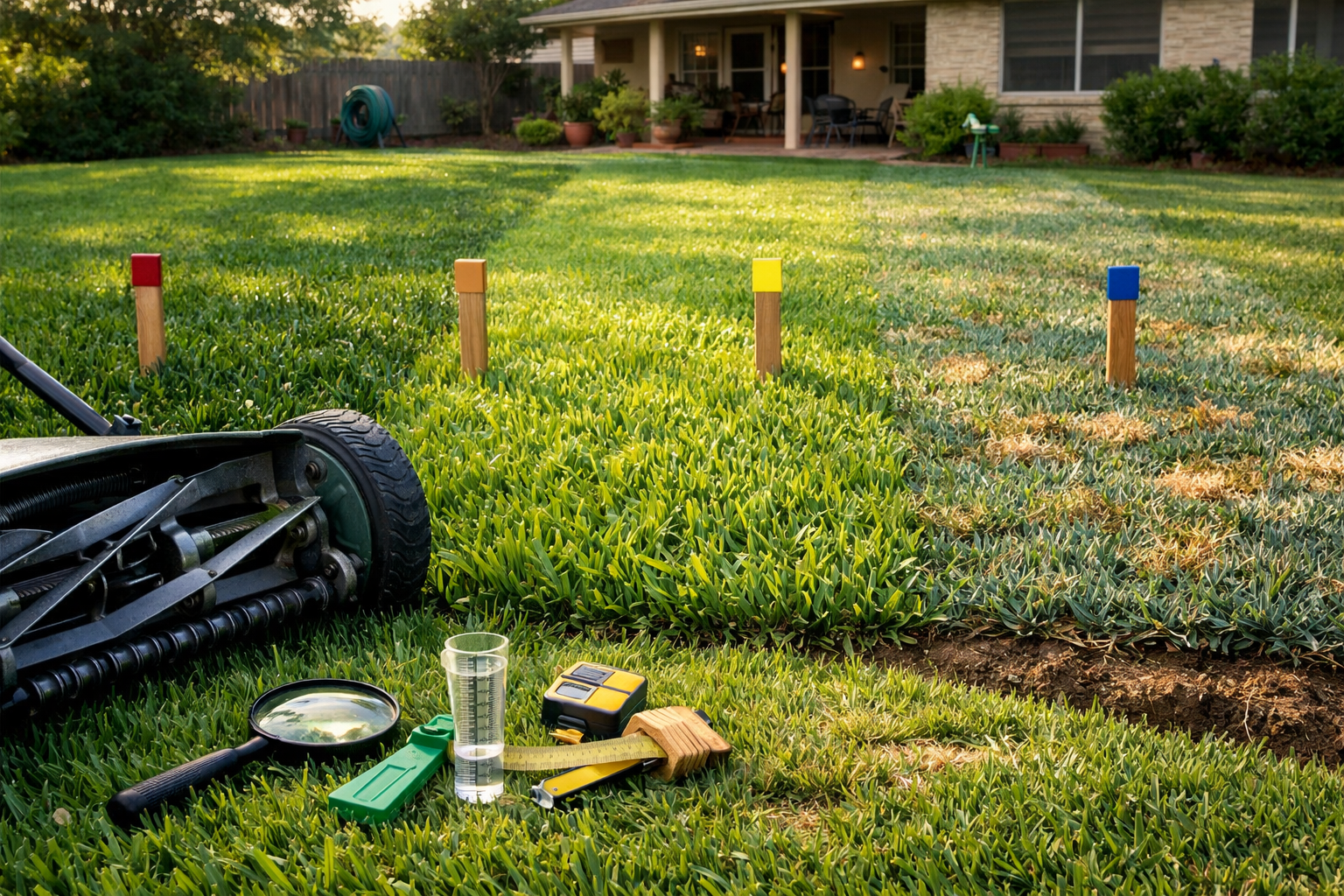
Set a few empty tuna cans or a rain gauge around your yard when you run the sprinklers. Once they’ve collected about half an inch, that’s roughly one watering session done. Two sessions like that a week covers most St. Augustine lawns in Texas, Florida, and along the Gulf Coast during summer.
Signs You’re Watering Wrong
If your grass has a grayish-blue tint or footprints stay visible in the lawn long after you’ve walked across it, that’s drought stress talking. On the flip side, spongy soil and a mushroom problem near the same spots usually mean you’re overwatering. Deep and infrequent beats daily and shallow, every time, because it pushes roots down instead of keeping them lazy near the surface.
Early morning, between 6 and 10 a.m., is the best window. Watering at night leaves grass blades wet for hours, and that’s exactly the kind of damp environment brown patch fungus loves.
Mowing Height and Blade Type: The Part Everyone Skips
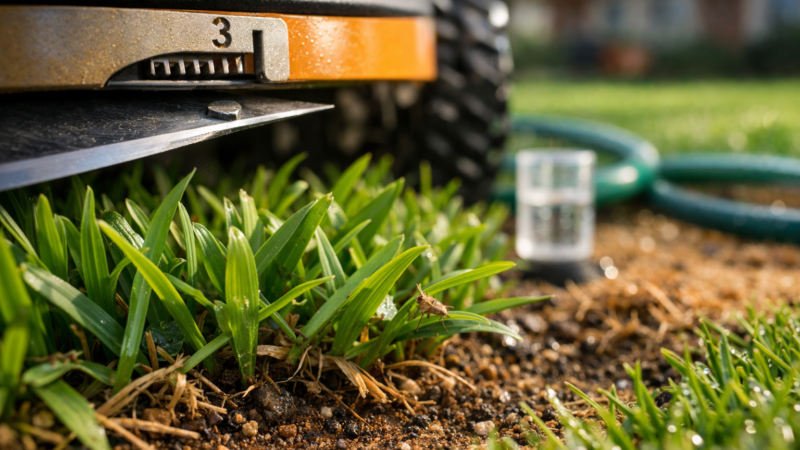
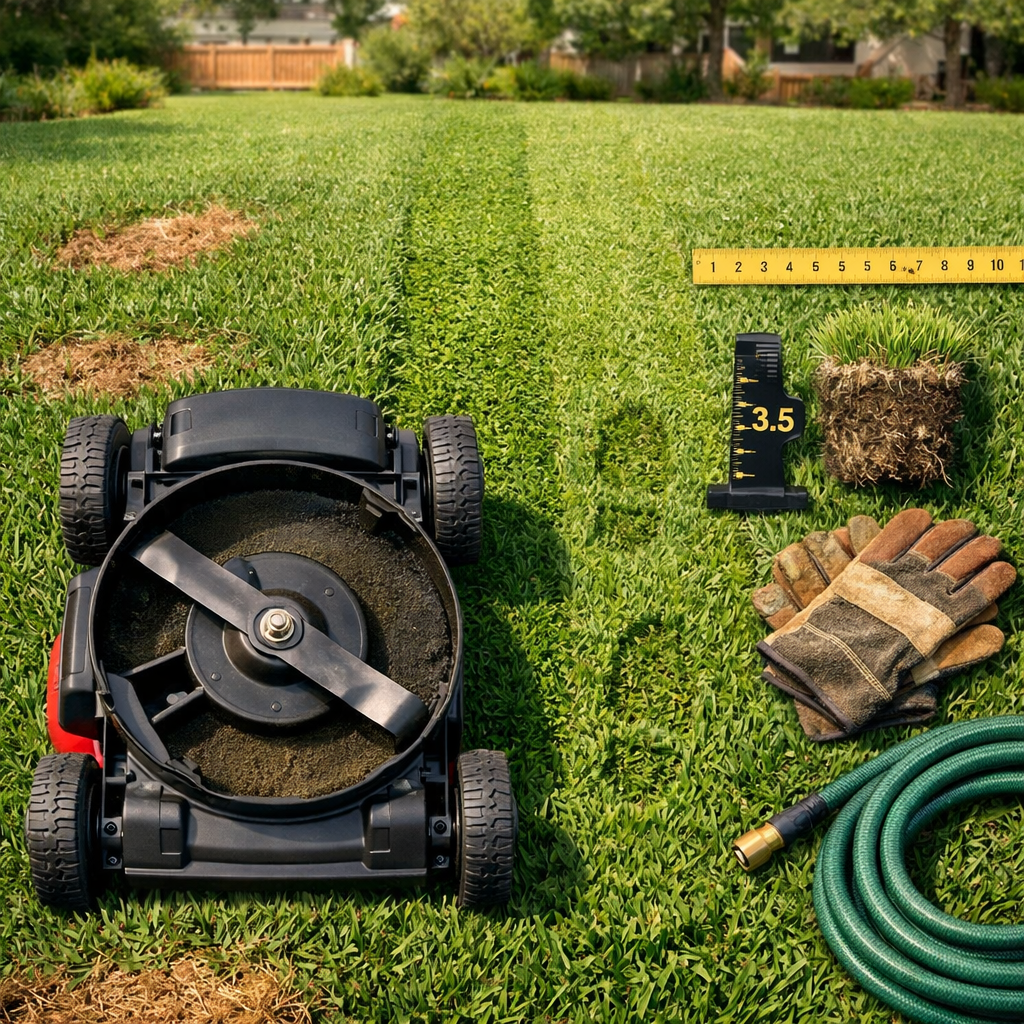
Set your mower deck to 3.5 to 4 inches for St. Augustine grass, and never cut more than a third of the blade length in one pass. This single setting affects root depth, weed pressure, and disease resistance more than almost anything else you’ll do to the lawn.
Why Cutting Height Matters So Much
Mowing too short, sometimes called scalping, exposes soil to sunlight, invites weed seeds to germinate, and stresses the grass right when it needs energy reserves the most. St. Augustine doesn’t bounce back from a scalp the way Bermuda does. Once you’ve scalped it, you’re often looking at weeks of thin, patchy recovery before it fills back in.
The Blade Sharpness Problem Nobody Talks About
Here’s the part most lawn care guides skip entirely: a dull mower blade will shred grass tips instead of slicing them clean. Shredded tips turn brown and ragged within a day or two, and from a few feet away, that looks exactly like a fungal disease. Homeowners spray fungicide on what’s actually a mower maintenance issue.
Sharpen or replace your blade every 20 to 25 hours of mowing time, roughly once a season for an average yard, more often if you’re hitting rocks or edging near a lot of concrete. A rotary mower with a sharp blade is the right tool for St. Augustine; reel mowers are built for lower, tighter grasses and aren’t a good match here. If you’re not sure how to check your blade’s edge or want a walkthrough on sharpening it yourself, themowersguide.com has troubleshooting guides that cover blade maintenance step by step.
A properly sharpened blade makes a clean, angled cut across the leaf blade, leaving a smooth edge that seals quickly, while a dull blade tears the tissue and leaves a ragged, bruised edge that browns within 24 to 48 hours.
Feeding Schedule, Soil pH, and Which Variety You’ve Got
Fertilize St. Augustine grass 2 to 4 times during the growing season, using a nitrogen-heavy blend, and keep soil pH between 5.0 and 8.5 (St. Augustine tolerates a wider pH range than most turf grasses, but it grows best closer to neutral). Skipping a soil test before you fertilize is a common way to waste money on the wrong product.
Feeding Timing That Actually Works
Start your first application in late spring once the grass has fully greened up, not before. A second round in early summer and a third in late summer covers most lawns. Avoid fertilizing in fall going into winter dormancy; it pushes soft new growth right before cold weather, which increases disease risk.
Not All St. Augustine Is the Same
Floratam is the variety most common in new sod across the South, and it’s bred for heat and some pest resistance, but it has poor cold tolerance and struggles in deep shade. Palmetto, by contrast, handles shade noticeably better and holds color longer into cooler weather. Assuming every St. Augustine variety behaves the same is a mistake that trips up a lot of homeowners who move from one region to another or buy sod without asking which cultivar it is.
Variety
Shade Tolerance
Cold Tolerance
Common Use
Floratam
Low
Low
New sod, full-sun lawns
Palmetto
Good
Moderate
Mixed sun/shade yards
Seville
Very good
Low-moderate
Dense shade areas
Chinch Bugs, Brown Patch, and Gray Leaf Spot
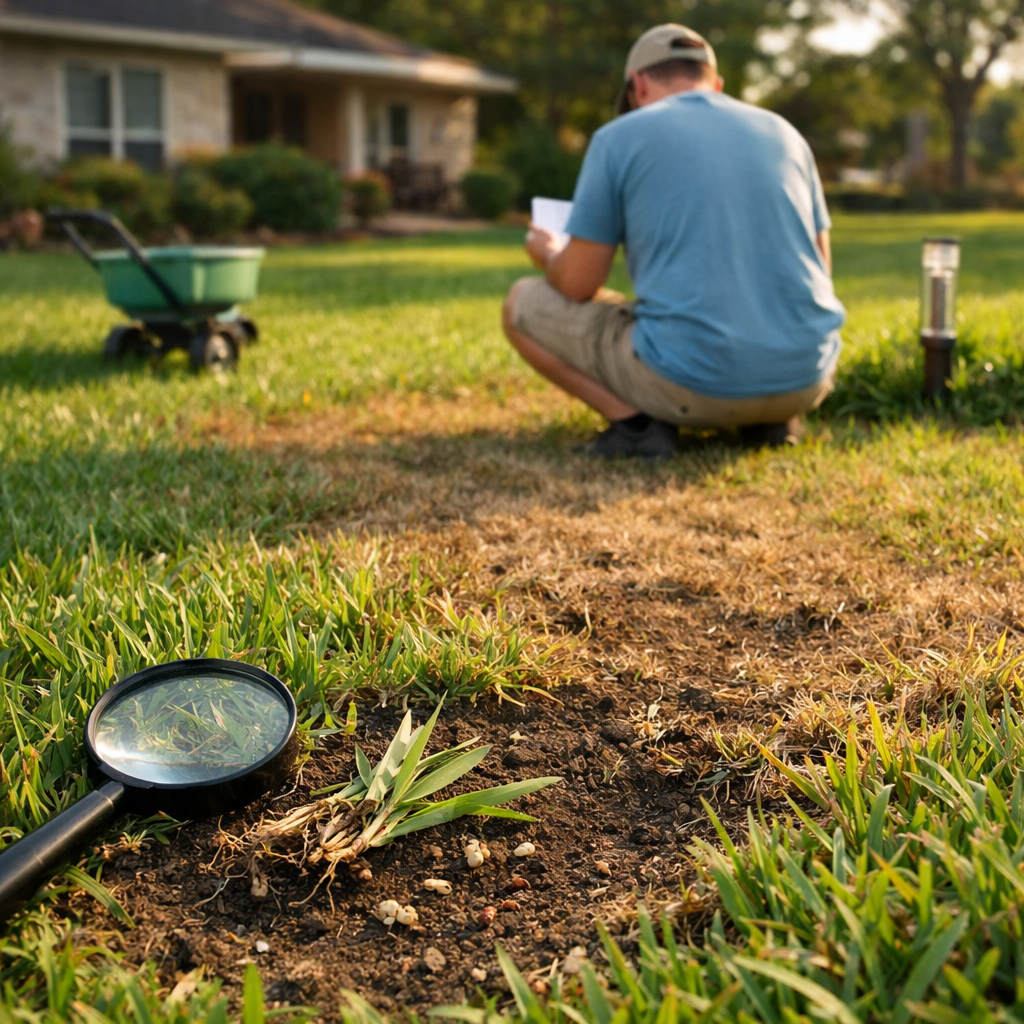
Chinch bugs cause yellow-to-brown patches that spread outward in hot, dry weather, usually starting near sidewalks or driveways where soil runs hottest. Brown patch fungus, on the other hand, shows up in cool, wet conditions and forms roughly circular dead patches, often with a darker “smoke ring” edge.
Telling Pests From Disease
Do the float test for chinch bugs: cut both ends off a coffee can, push it into the soil at the edge of a damaged patch, fill it with water, and watch for small bugs floating up within 5 to 10 minutes. If you see them, that’s your answer. If the patches showed up after a stretch of rainy, humid weather instead, you’re probably dealing with brown patch or gray leaf spot fungus, not bugs.
A Practical Response Order
Check mower blade sharpness first; this rules out the most commonly overlooked cause.
Confirm watering schedule matches the 1 to 1.25 inch weekly target, split into 2 sessions.
Run the float test for chinch bugs in a few different suspect spots.
Look at recent weather; fungus problems spike after humid, overcast stretches.
Dethatch if the thatch layer is thicker than half an inch, since dense thatch traps moisture against the crown.
Apply a targeted insecticide or fungicide only after you’ve confirmed which one you’re dealing with.
Recheck in 10 to 14 days before applying a second treatment.
Spraying a fungicide on a chinch bug problem, or vice versa, wastes money and buys the actual problem more time to spread. Get the diagnosis right first.
Frequently Asked Questions
Why does my St. Augustine grass turn brown even though I water it every day?
Daily light watering keeps roots shallow and doesn’t reach the root zone, which weakens the grass under heat stress. Switch to 2 deep sessions weekly totaling 1 to 1.25 inches, and check your mower blade for dullness too.
How short can I cut St. Augustine grass without damaging it?
Never go below 3.5 inches, and don’t remove more than a third of the blade height per mow. Cutting shorter scalps the crown, exposes soil, and invites weeds and disease into thin spots.
Does St. Augustine grass do well in shade?
It depends heavily on the variety. Palmetto and Seville handle partial shade reasonably well, but Floratam needs mostly full sun and thins out fast under trees or heavy shade cover.
Scag mowers carry a commercial-grade price tag that starts around $5,000 for entry-level zero-turns and climbs past $15,000 for top-tier models. That gap matters because paying for a commercial machine on...
Spray the wrong lawn weed killer on Zoysia or St. Augustine and you won’t just miss the weeds. You’ll kill patches of your own grass and spend the next two months...
20 August 2026
The Mowers Guide is reader-supported. When you buy through links on our site, we may earn an affiliate commission.





Comments are closed.