Your string trimmer choice comes down to one question: how much yard do you have, and how much do you want to spend feeding it? A lawn string trimmer isn’t just about horsepower or battery voltage. Cutting swath, line diameter, and the cost of replacement parts over a few years matter just as much as what’s printed on the box.
This guide picks five trimmers worth your money in 2026, based on how they actually perform for real yards, not just spec sheets. Whether you’re running a quarter-acre lot or trimming around a half-acre of fence line, there’s a match here.
Which Trimmer Fits Your Yard Size and Power Preference
Match the trimmer to the job, not the other way around. A battery trimmer handles most quarter-acre suburban lots just fine, while gas still wins for properties over half an acre with heavy brush or tall weeds.
The Five Picks
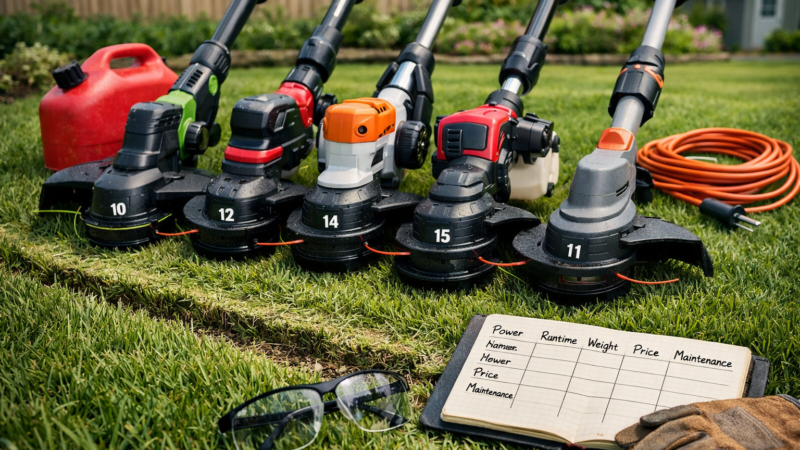
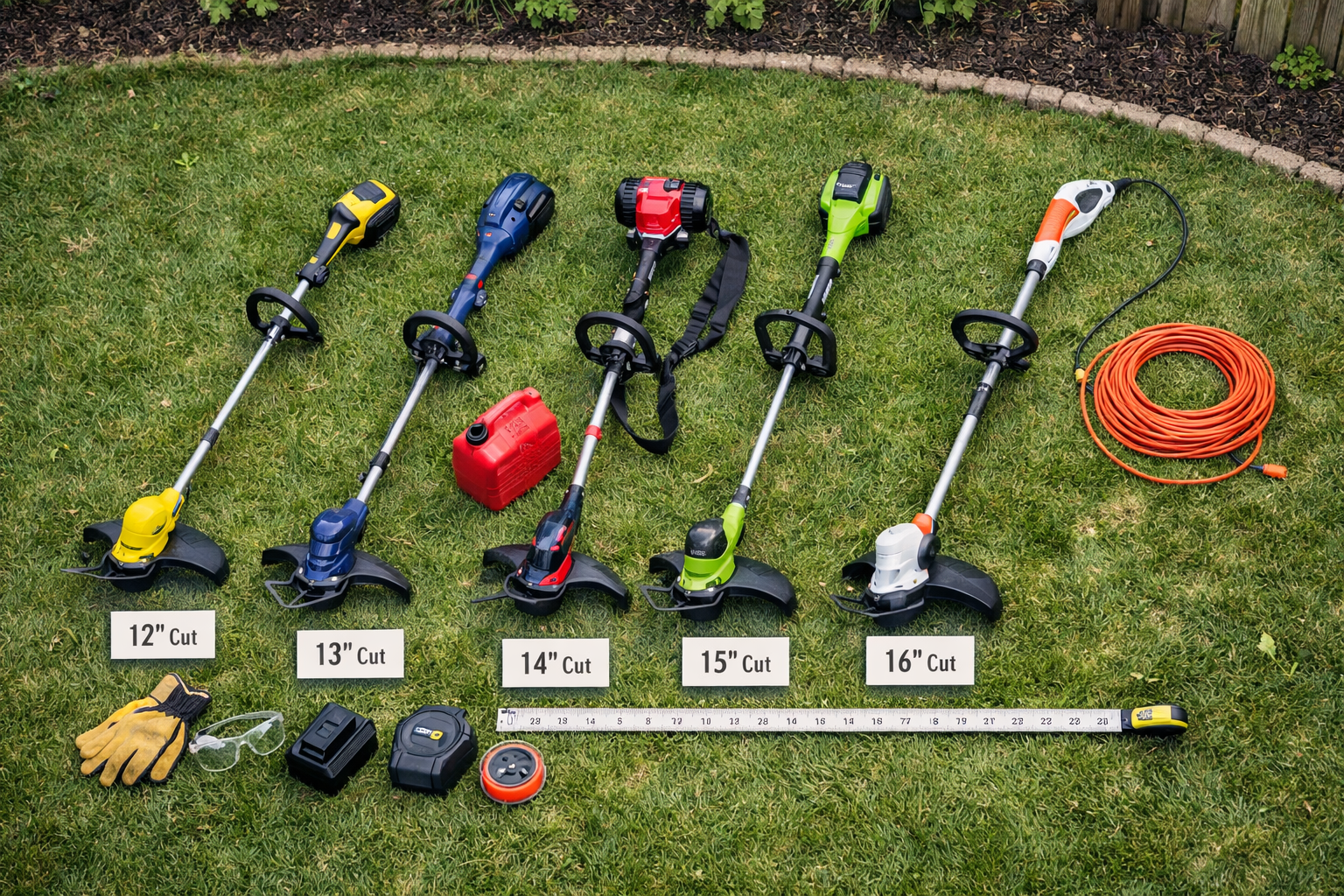
Here’s how the top contenders stack up for 2026:
Model
Power Type
Swath Width
Weight
Approx. Price
Stihl FSA 60 R
Battery (36V)
14.5 in
8.6 lbs
$250 (bare tool)
EGO Power+ ST1623T
Battery (56V)
16 in
10.4 lbs
$280-$330
Echo SRM-225
Gas (25.4cc)
17 in
11.9 lbs
$250-$280
Ryobi 40V Expand-It
Battery (40V)
15 in
9.2 lbs
$180-$220
Husqvarna 129LK
Gas (27cc), curved shaft
15 in
10.8 lbs
$220-$260
The Echo SRM-225 has been a landscaper staple for over a decade, and for good reason: parts and repair guides are everywhere, including on forums and dealer counters nationwide. If you want a battery trimmer with real torque, the EGO ST1623T’s 56-volt pack cuts thick weeds without bogging down, something plenty of 40-volt trimmers struggle with.
Small lots under a quarter acre don’t need gas power at all. The Ryobi is light, quiet, and shares batteries with other tools in the 40V Expand-It lineup, which saves money if you already own a Ryobi blower or hedge trimmer.
Gas vs. Battery vs. Corded: What Actually Changes Day to Day
Gas trimmers run longer without stopping and handle thick brush better, but they’re louder, heavier, and need fuel mixing. Battery trimmers start instantly, need almost no maintenance, and are quiet enough to run at 7 a.m. without annoying neighbors.
Corded electric trimmers barely get mentioned anymore, and that’s fair. They’re cheap, sure, but dragging a cord around a fence line gets old fast. Skip them unless you’ve got a tiny courtyard lawn under 1,000 square feet.
Runtime is the real battery question, not voltage alone. A 56V EGO pack (like the 2.5Ah model) runs close to 45 minutes on medium power, while a smaller 36V Stihl pack might give you 20-25 minutes. If your lawn takes longer than that to trim, buy a second battery upfront instead of stopping mid-job to recharge.
Gas trimmers also mean more upkeep: spark plugs, air filters, fuel stabilizer if you store it over winter. That’s not a dealbreaker, but it’s ongoing work a battery trimmer just doesn’t ask for.
A two-stroke gas trimmer typically needs a 50:1 gas-to-oil mix ratio, and running the wrong ratio is one of the most common reasons these engines seize or run poorly.
Line Diameter and Head Design Matter More Than the Spec Sheet
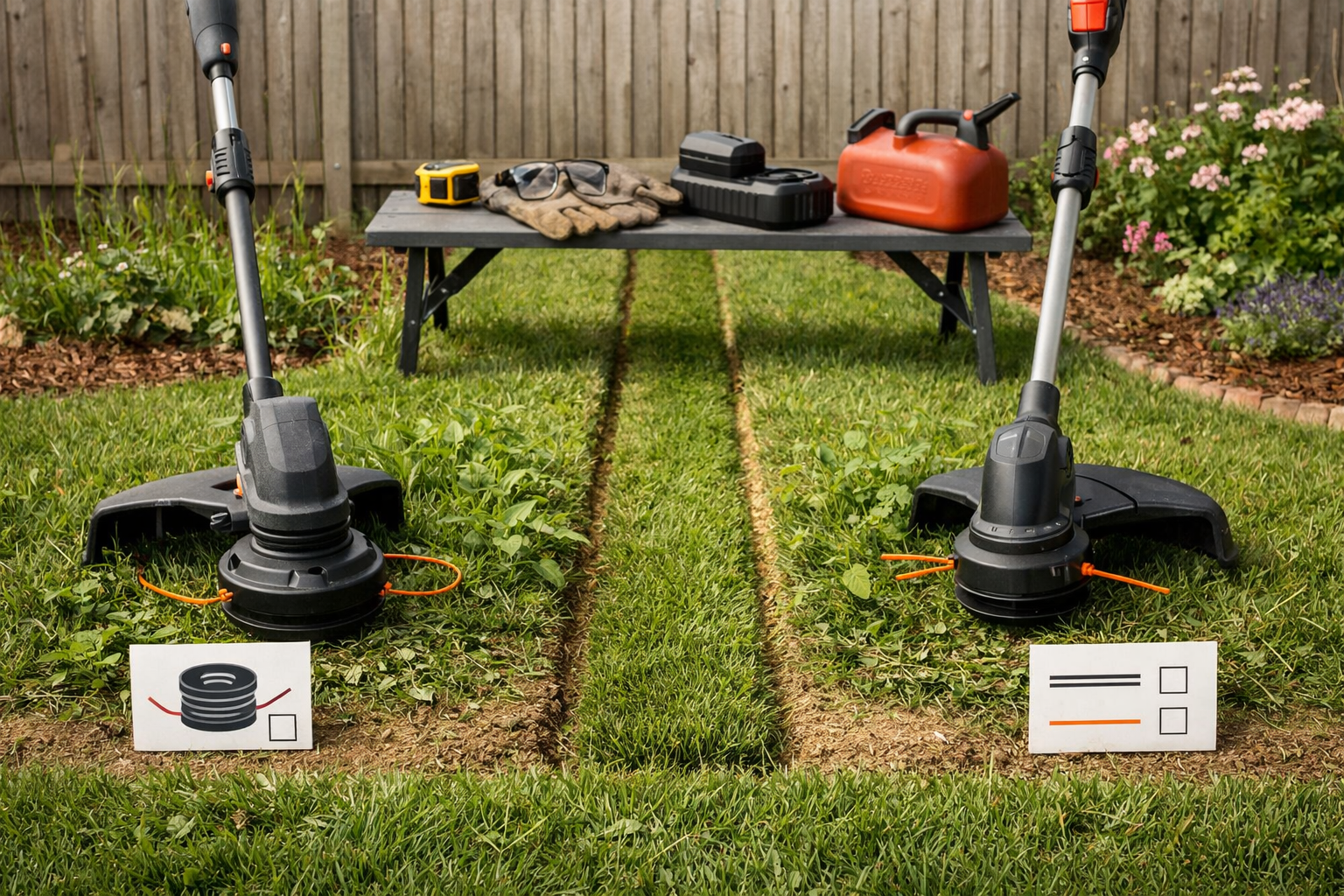
Line diameter compatibility is where most buyers get tripped up, and it causes more frustration than any other trimmer issue. A trimmer built for 0.080-inch line will jam constantly if you load it with 0.095-inch line, and thin line snaps fast against thick weeds or landscape edging.
Bump Feed vs. Fixed Line
Bump feed heads let you tap the trimmer on the ground to advance more line, which is the standard on nearly every trimmer in this list. Fixed line heads need manual reloading but tend to survive rough use better, and pros running the Echo SRM-225 often prefer them for that reason.
Why Higher Voltage Doesn’t Always Win
A 56V EGO with a weak head design can still underperform a well-built 40V Ryobi on thick weeds. Voltage tells you battery capacity, not torque delivery or how the gearbox handles resistance. Check the head design and line diameter rating before assuming a bigger number means a better cut.
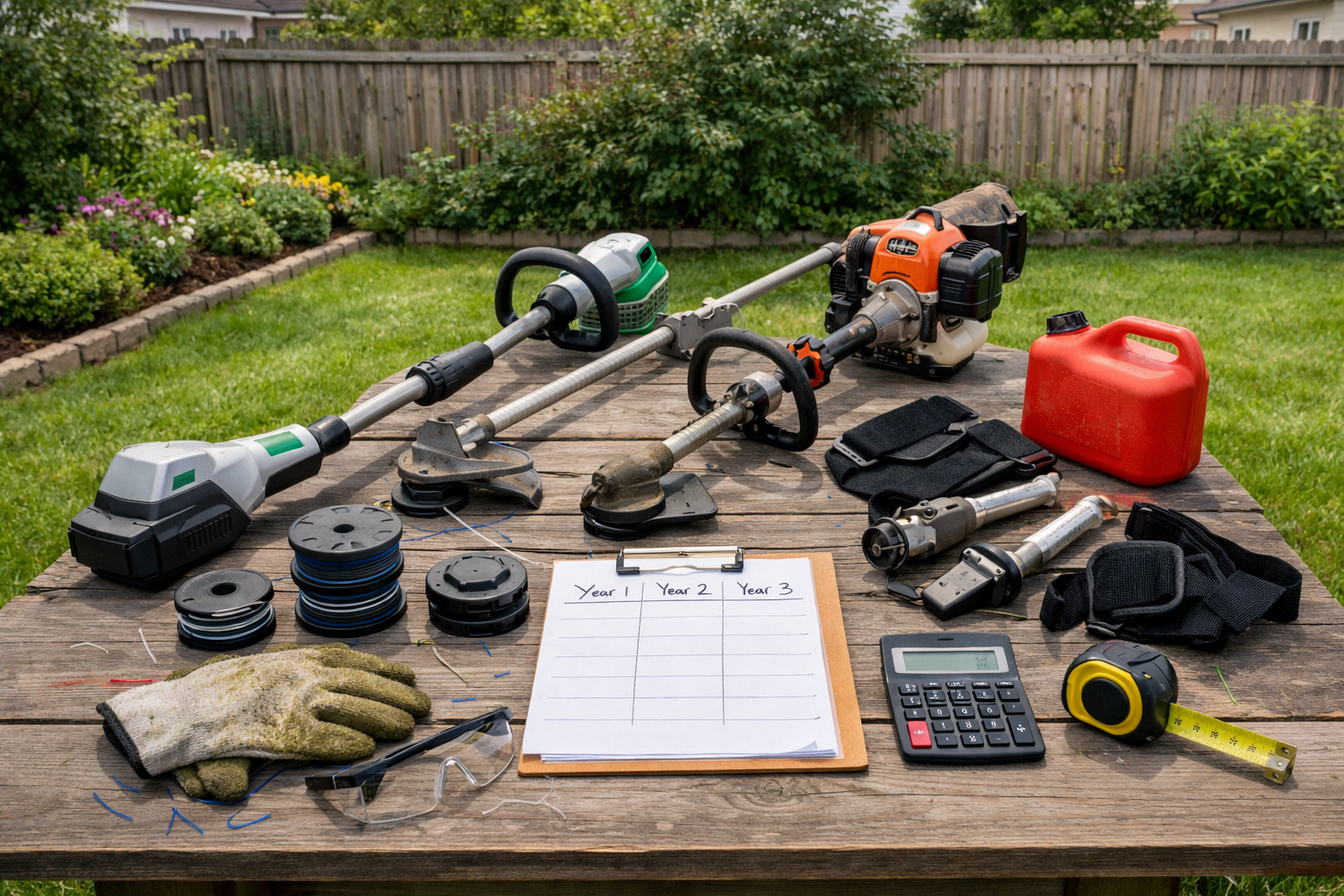
The Hidden Cost: Line, Batteries, and Attachments Over Three Years
The trimmer’s sticker price is rarely the real cost. Replacement line runs $10-$15 per 200-foot spool, and a busy lawn season can burn through 2-3 spools if you’re trimming weekly.
Battery packs are the bigger expense. A replacement 56V EGO battery costs $150-$200, nearly as much as the trimmer itself. If your pack degrades after three or four seasons (which is normal for lithium-ion), that’s a real cost to plan for, not an edge case.
Attachment ecosystems change the math too. Ryobi’s Expand-It and Echo’s PAS system let you swap a trimmer head for an edger or blower attachment for $60-$100 each, instead of buying a whole separate tool. Over three years, that can save more than the trimmer’s purchase price if you need multiple yard tools anyway.
Buy the trimmer that matches your battery platform if you already own other cordless tools.
Check replacement line diameter and price before buying.
Budget for one spare battery if you’re going cordless.
Confirm attachment compatibility if you want an edger or blower down the line.
Factor in gas and oil costs if you go with a 25-27cc gas engine.
Check warranty length: most battery trimmers run 3 years, gas models often just 2.
If your trimmer starts acting up mid-season, checking a maintenance guide on a site like themowersguide.com before assuming you need a new unit can save you both time and money.
Frequently Asked Questions
What size lawn string trimmer do I actually need?
For lots under half an acre, a 14-16 inch swath battery trimmer like the EGO ST1623T or Ryobi 40V is plenty. Anything larger, or heavy weeds, points toward a gas model like the Echo SRM-225 or Husqvarna 129LK.
Is a curved or straight shaft better?
Curved shafts (like the Husqvarna 129LK) are lighter and easier to store, good for flat lawns. Straight shafts reach further under bushes and fences, and they’re required if you want to attach an edger or blower head.
How often should I replace trimmer line?
Most homeowners reload every 2-4 mowing sessions during peak season, depending on how much edging you do. Keep a spare 0.080-inch or 0.095-inch spool on hand, matched to your trimmer’s rated diameter, so you’re not stuck mid-yard with a jammed or empty head.
Stop mowing the second you see white smoke pouring out of the muffler. Before you assume the engine is dying, know this: white smoke from lawn mower engines is almost always...
A slit seeder rental runs about $70 to $100 for a half-day at most equipment centers, while a decent broadcast spreader costs $40 to $60 and lasts a decade. That gap...
23 July 2026
The Mowers Guide is reader-supported. When you buy through links on our site, we may earn an affiliate commission.





Comments are closed.