Your lawn shouldn’t feel like a parking lot. If you can push a screwdriver into your soil less than 2 inches deep without leaning on it, you’ve got compaction, and that’s the whole reason yard aeration benefits matter so much for regular lawn owners. Aeration pokes holes through that hard layer so air, water, and nutrients can actually reach the roots instead of running off the surface.
That matters more if you’ve got kids running around, a dog that wears a path across the yard, or a riding mower rolling over the same tire tracks every week. Compacted soil under heavy foot or wheel traffic acts almost like concrete. Here’s what fixing that actually gets you.
What Soil Compaction Is Doing to Your Grass Right Now
Compacted soil squeezes air pockets out of the ground, and roots can’t breathe or spread in that kind of density. Grass in compacted soil grows shallow roots, browns out faster in summer, and struggles to bounce back after mowing stress.
You’ll notice it in specific spots first: near a mailbox path, under a swing set, along the fence line your dog patrols. Clay soil compacts harder and faster than sandy soil because the particles pack tighter with less room for air. If you’ve got heavy clay and a lot of foot traffic, you’re compacting faster than a sandy-soil lawn with light use, and that changes how often you actually need to aerate.
Soil compaction reduces the pore space available for air and water movement, restricting root growth and reducing a lawn’s ability to absorb rainfall and irrigation.
That’s not a cosmetic problem. It’s a root-zone problem, and it’s the reason mowing height and watering schedule alone won’t fix a compacted lawn.
Core Aeration vs. Spike Aeration: They’re Not the Same Tool
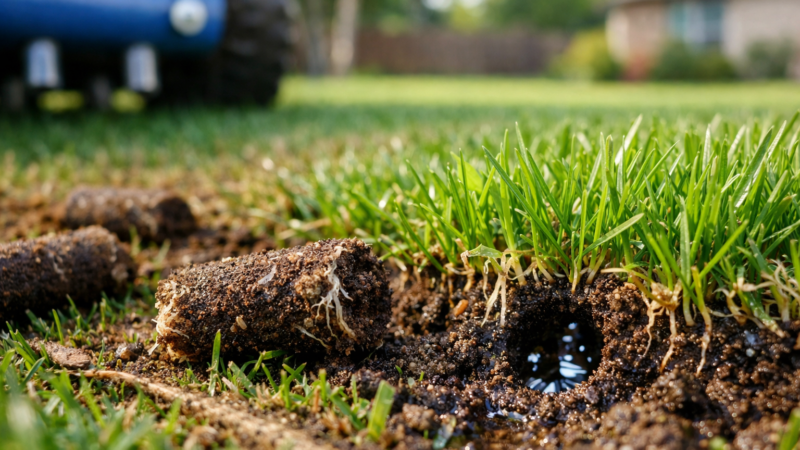
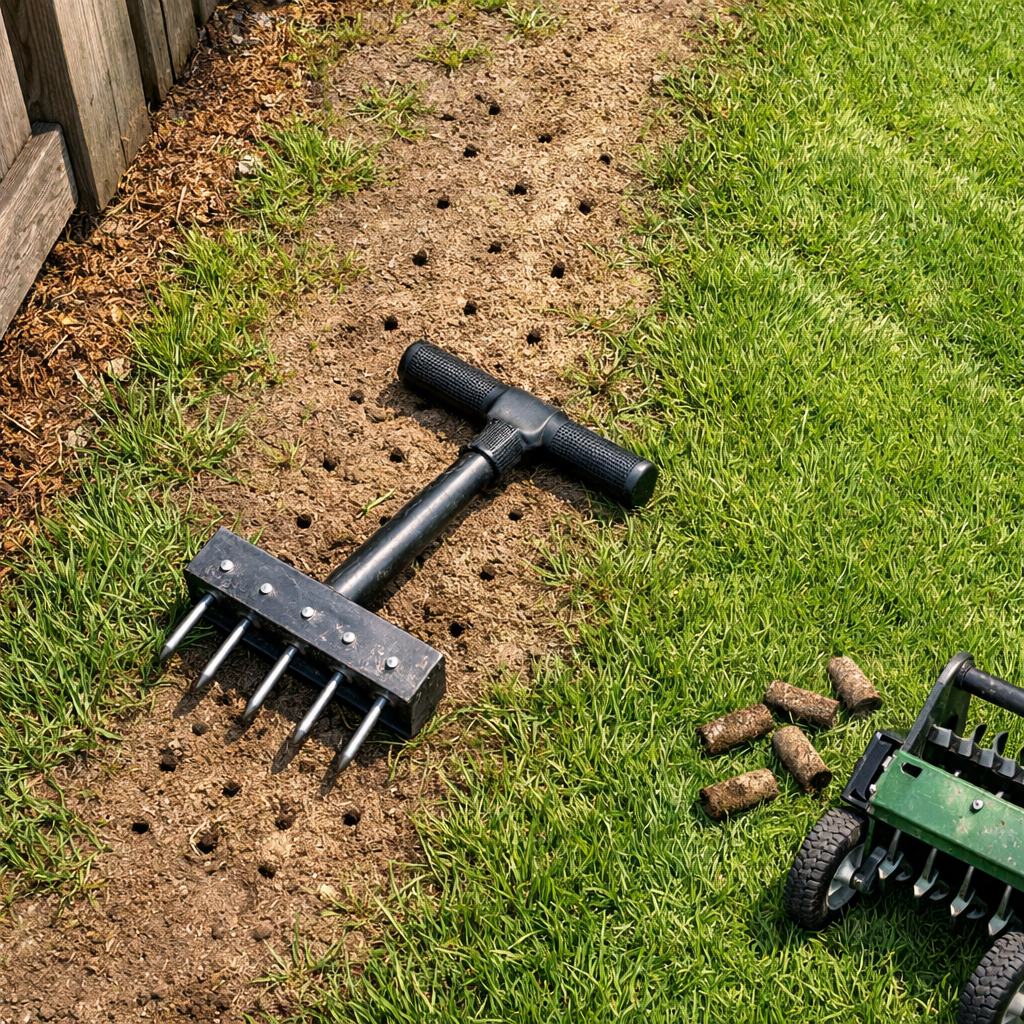
Core aeration pulls actual plugs of soil out of the ground; spike aeration just pokes holes with a solid tine. Core aeration is the one that fixes compaction — spiking can make it worse by compressing soil around the hole.
Why the Difference Actually Matters
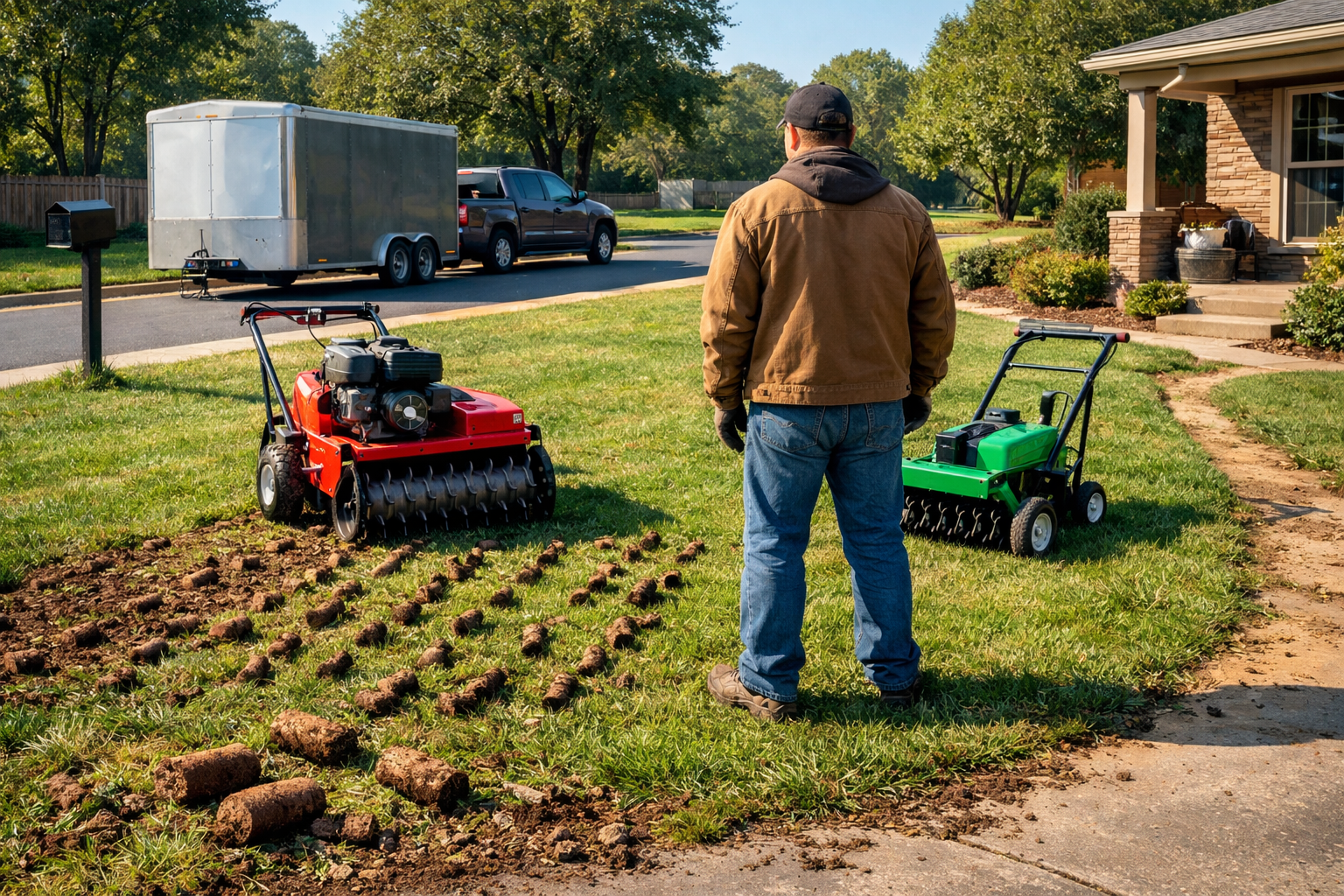
A spike aerator (the kind you strap to your shoes or roll behind a mower) shoves soil sideways as it punches in. That creates extra compression right next to the hole, which partly cancels out the benefit. Core aerators, whether a walk-behind rental or a tow-behind attachment for a garden tractor, physically remove a plug of soil and dump it on the surface.
When Spiking Is Fine Anyway
For light, sandy soil with minimal traffic, spike aeration can work as a quick touch-up between real core sessions. It’s not a fix for a compacted clay lawn that sees riding mower traffic every week, though. If that’s your situation, rent or hire for core aeration and skip the spike shoes entirely.
The 7 Real Benefits of Aerating Your Lawn
Once those soil plugs come out, a handful of things start happening at the root level almost immediately, and a few more show up over the following weeks.
Loosens compacted soil so roots have room to spread instead of staying shallow and stressed.
Improves water absorption — instead of pooling and running off, water soaks down to the root zone where it’s needed.
Boosts nutrient and fertilizer uptake, since fertilizer applied right after aeration reaches roots through the open channels instead of sitting on hard surface soil.
Encourages deeper root growth, which is the single biggest factor in drought resistance during a hot July stretch.
Reduces thatch buildup over time by improving microbial activity that breaks thatch down naturally.
Increases traffic tolerance, letting a lawn recover faster from kids, pets, or mower wheel ruts.
Creates better seed-to-soil contact for overseeding, since grass seed dropped into aeration holes germinates at a noticeably higher rate than seed tossed on undisturbed turf.
That last one is where a lot of homeowners leave value on the table. Aerating without overseeding fixes the soil structure but skips the chance to thicken thin spots while the ground is primed for it.
Timing, Tools, and the Rent-or-Hire Decision
Aerate during active growth, not during a heat wave or drought stress — timing changes by grass type, and getting it wrong wastes the whole effort. Cool-season grass (fescue, bluegrass) does best in early fall, around September in most of the U.S. Warm-season grass (Bermuda, zoysia) prefers late spring to early summer, once it’s actively growing.
Renting vs. Buying vs. Hiring a Service
A quarter-acre lawn typically takes a rental core aerator around 1-2 hours to cover, and rental costs usually run $65 to $100 for a half-day at a local equipment rental shop. Buying a tow-behind aerator for a lawn tractor makes sense only if you’re covering more than half an acre regularly or maintaining multiple properties. Hiring a lawn care service to aerate typically costs somewhere in the $75 to $200 range for a standard suburban lot, depending on size and region.
Method
Typical Cost
Best For
Walk-behind core aerator rental
$65-$100/half-day
Lawns under 1/2 acre, DIY owners
Tow-behind aerator (tractor)
$150-$400 to buy
Large lots, frequent use, acreage
Professional aeration service
$75-$200 per visit
Time-straped owners, tricky terrain
If you’re already running a riding mower or a compact tractor, a tow-behind plug aerator attachment is worth checking out — you’re not adding a new machine to store, just a new attachment. For most single-family lots under half an acre, though, a weekend rental beats owning one outright. It’s also worth browsing detailed aerator comparisons and rental-vs-buy breakdowns on sites like themowersguide.com before committing to either route.
The Overseed-and-Feed Follow-Up
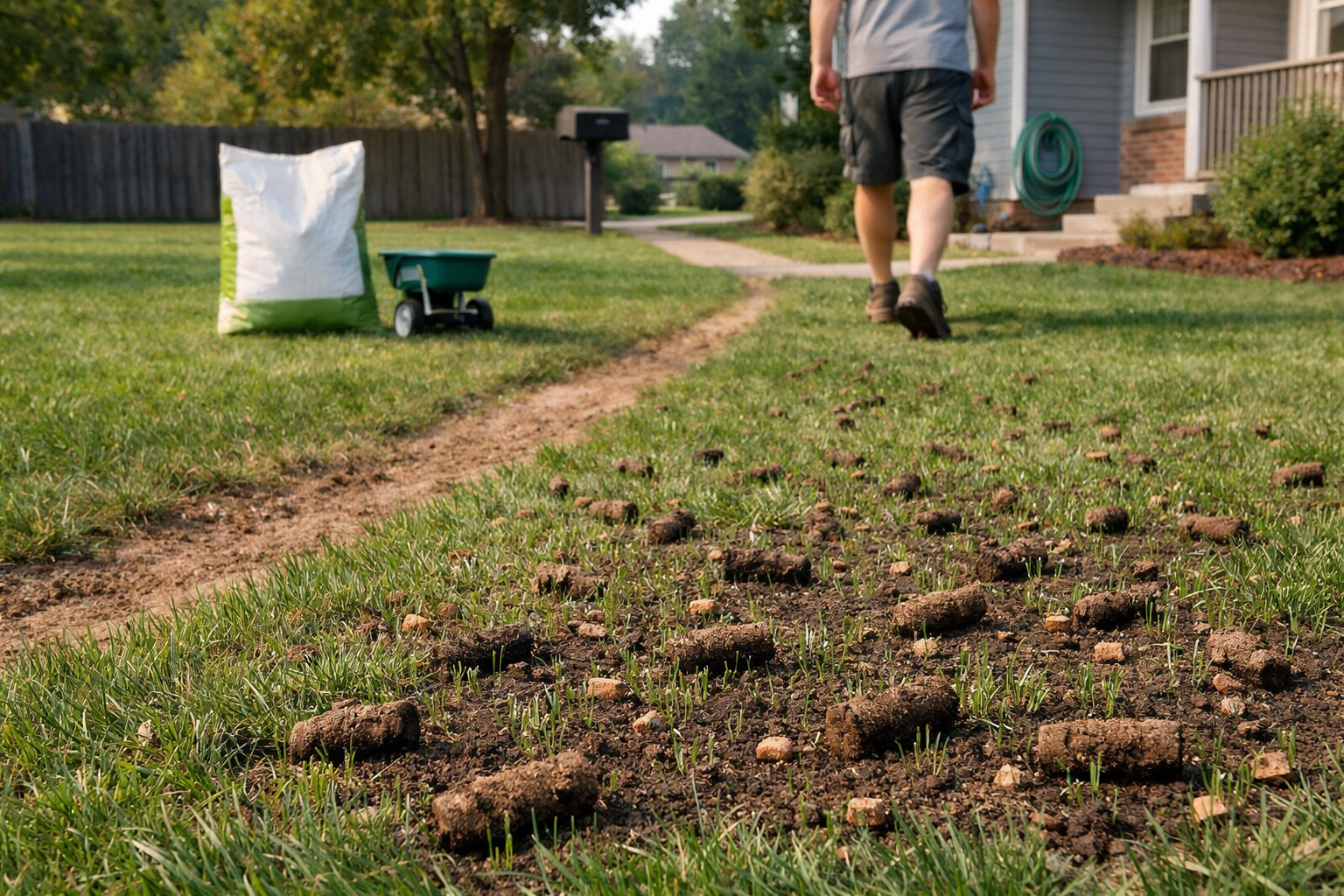
Don’t stop at the holes. Spread grass seed and a starter fertilizer within a day or two of aerating, while those channels are still open. Skip this step and you’ve done half the job — the soil’s loosened, but you’ve missed the window where seed and nutrients sink in easiest.
Frequently Asked Questions
How often should I aerate my lawn?
Once a year is standard for high-traffic or clay-heavy lawns; every 2-3 years works for sandy soil with light use. Lawns with riding mowers or regular foot traffic from kids and pets should lean toward annual aeration.
Can I aerate and dethatch at the same time?
Yes, but do them as separate passes, not simultaneously with one machine setting. Dethatch first with a rake or power dethatcher, then core aerate afterward so the plugs pull cleanly instead of dragging through loose thatch debris.
Does aeration alone fix drainage problems?
No. Aeration helps water soak in rather than pool, but it won’t fix a yard with a grading issue or a heavy clay base that’s several inches deep. For real drainage problems, you’ll likely need topdressing with compost or a grading fix alongside aeration.
Husqvarna’s Automower line has been around since 1995, making it one of the oldest robotic mower systems still in production today. That kind of longevity matters, because it means three decades...
A slit seeder rental runs about $70 to $100 for a half-day at most equipment centers, while a decent broadcast spreader costs $40 to $60 and lasts a decade. That gap...
23 July 2026
The Mowers Guide is reader-supported. When you buy through links on our site, we may earn an affiliate commission.





Comments are closed.