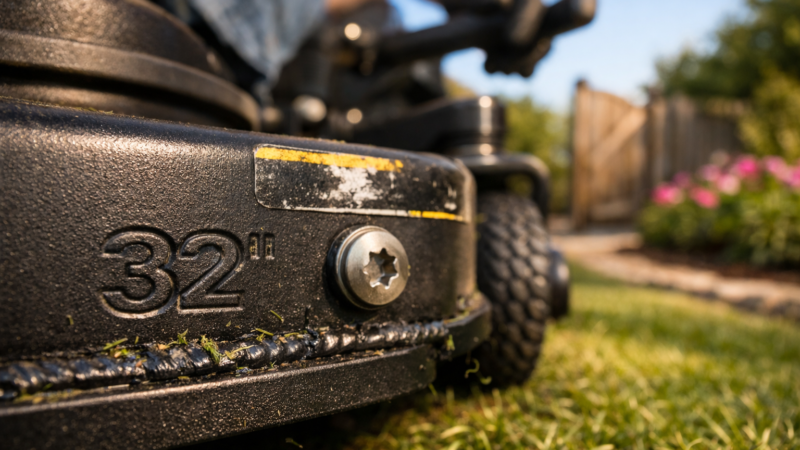
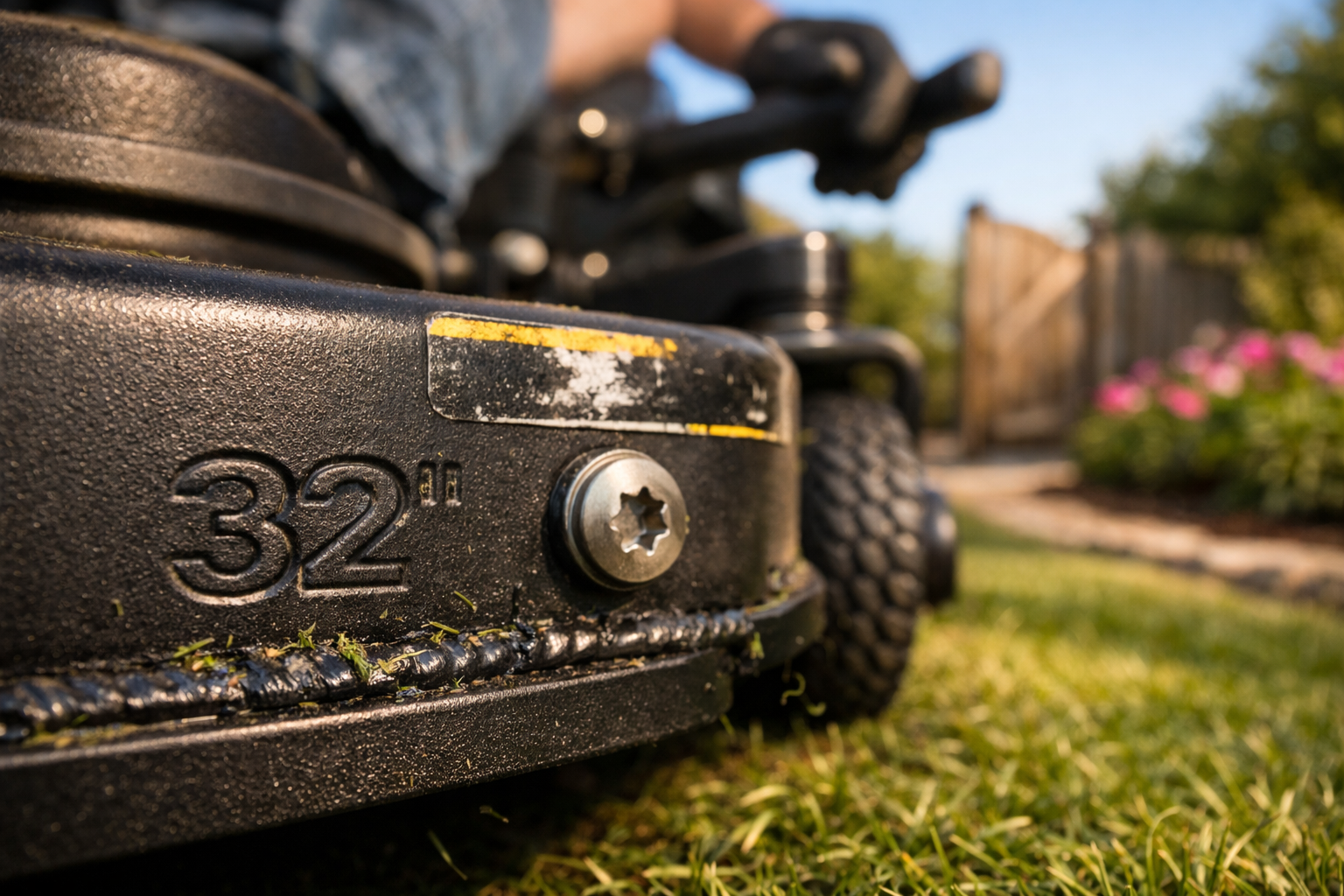
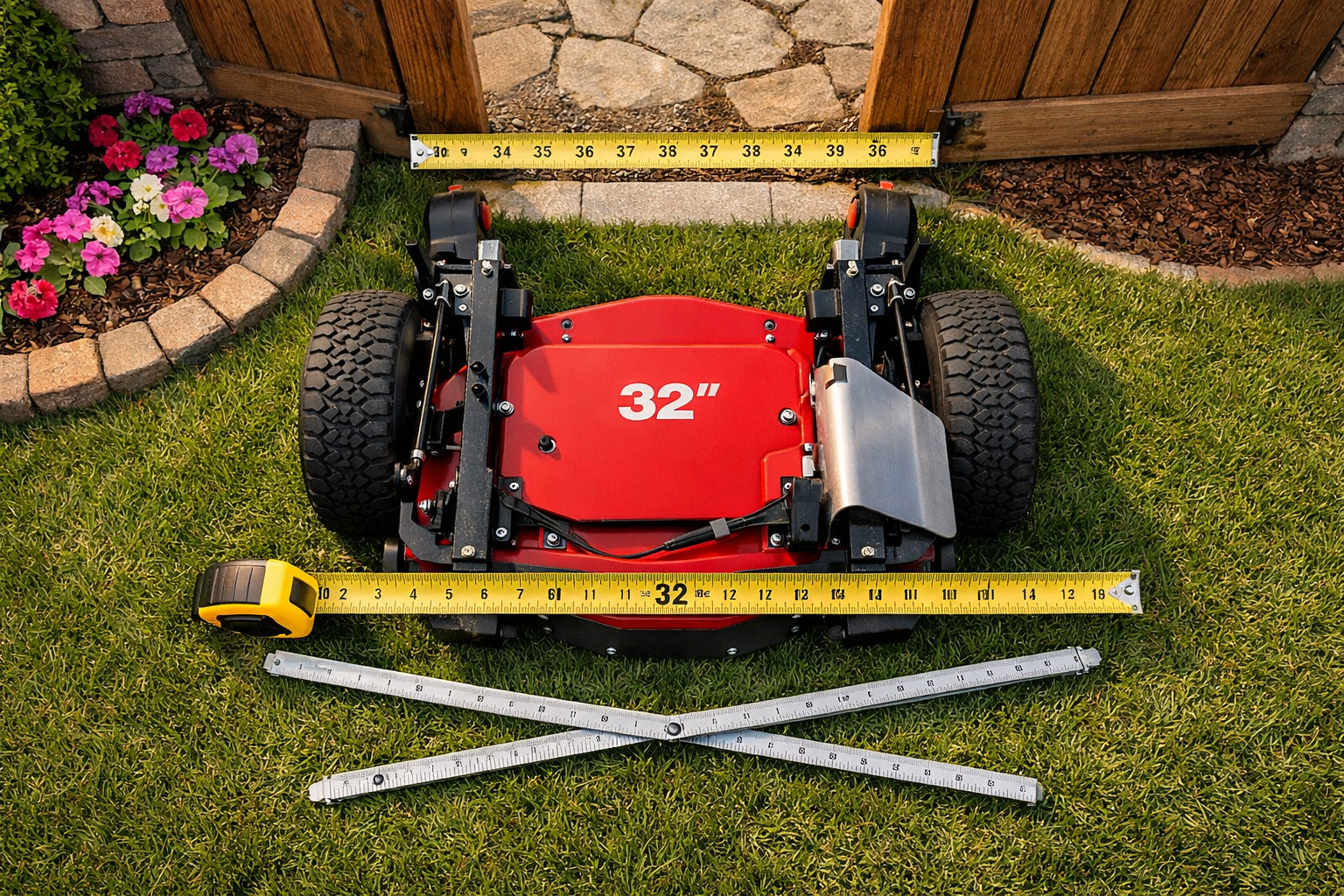
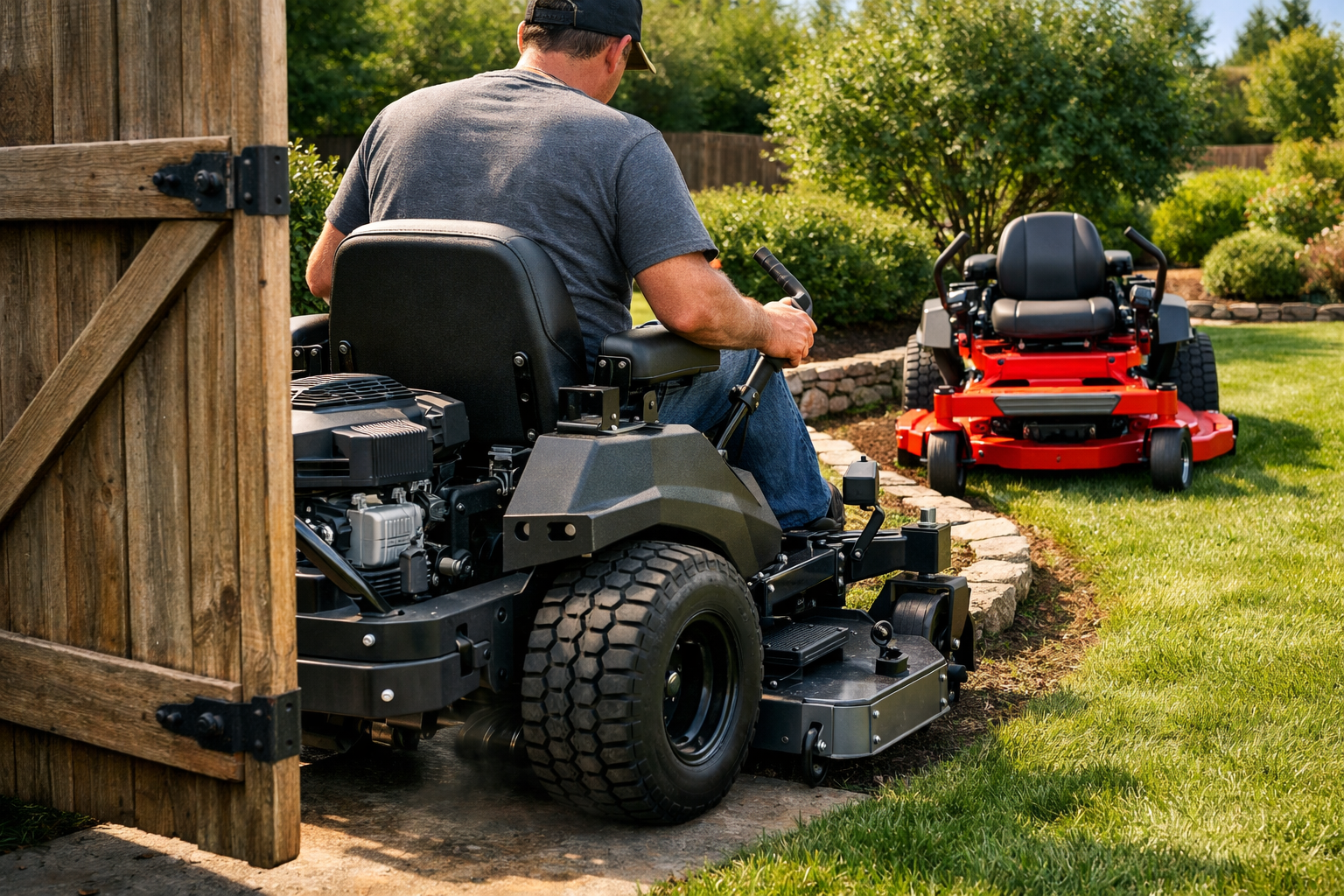
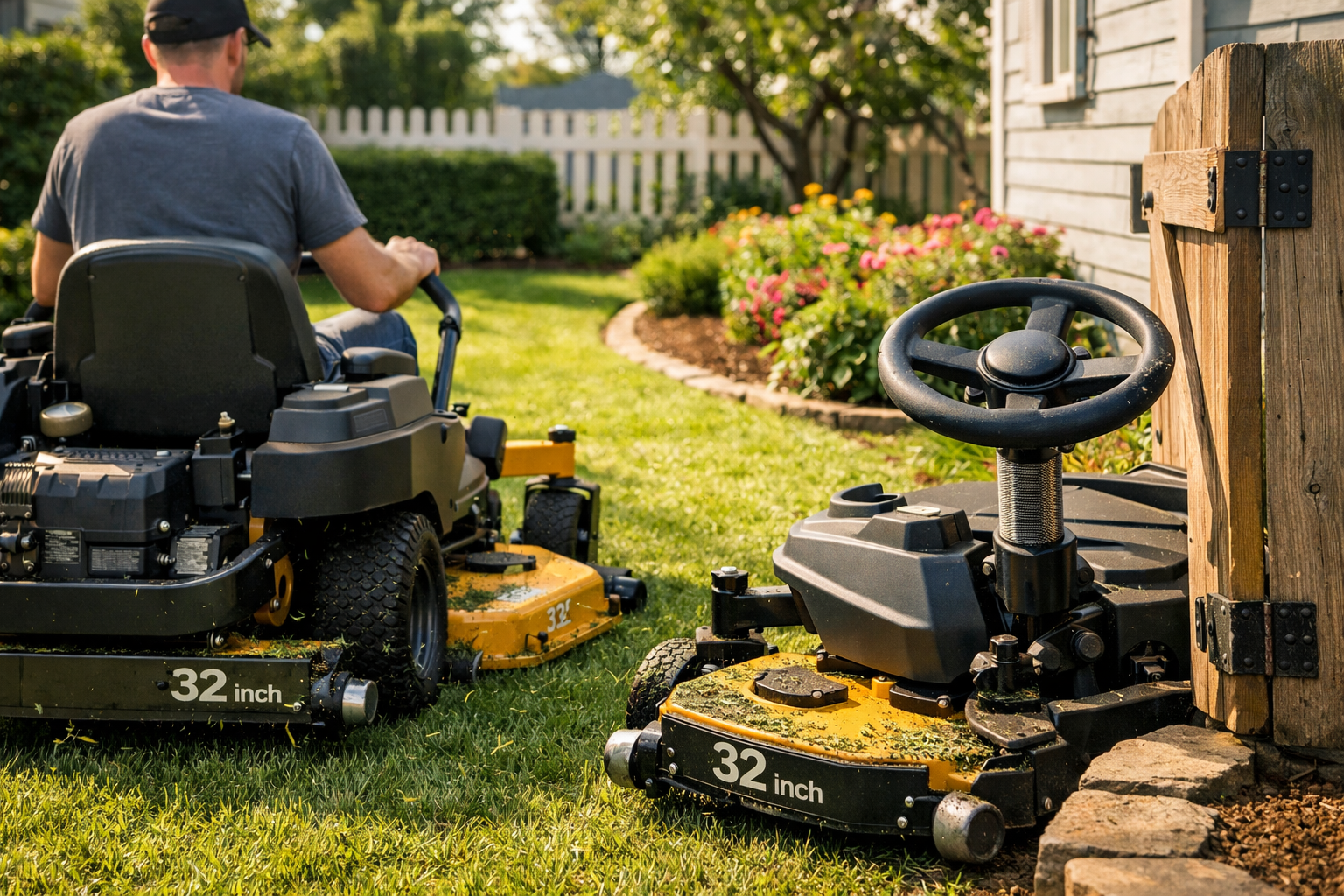
A compact zero turn mower with a 32-inch deck can fit through a standard 36-inch gate opening — but only if the total machine width stays under 35 inches, which not every “compact” model guarantees. That gap between deck size and actual frame width is where most buyers get tripped up. The smallest zero turn lawn mowers solve real problems for yards with tight access or heavy obstacles, but they only make sense within a specific size range.
If your mowed area runs between roughly a quarter-acre and three-quarters of an acre, a compact zero turn is worth serious consideration. Below that, a self-propelled walk-behind does the same job for a fraction of the price. Above it, you’ll want a full-size deck to keep mowing time reasonable.
Is a Compact Zero Turn Actually the Right Machine for Your Yard?
A compact zero turn makes sense when your yard is large enough that mowing by hand feels like a chore, but shaped or fenced in ways that rule out a standard 48- or 54-inch machine. The sweet spot is roughly 0.25 to 0.75 acres with at least one gated access point, significant landscaping, or both.
Zero-turn radius (ZTR) mowers are defined by their ability to spin in place using independently controlled rear drive wheels, achieving a turning radius of effectively zero inches at the rear axle — a design that makes them far faster around obstacles than any lawn tractor.
The yard size question matters more than most buyers realize. On a flat, open half-acre with no gates, a standard 42-inch riding tractor might outperform a compact zero turn on price while covering the same ground. Where compact zero turns earn their keep is in yards with trees, flower beds, tight corners, or a fence gate that a wider machine simply won’t pass through.
One honest drawback: smaller zero-turn frames sometimes carry a lower operator weight limit than full-size units. Some residential compact models cap at 250 lbs, while commercial-grade units typically handle 300 lbs or more. Check that spec before you buy.
Deck Size, Frame Width, and Gate Clearance: The Numbers That Actually Matter
Deck size and total machine width are two different measurements, and confusing them is the most common reason a compact zero turn ends up stuck at the gate. The deck size tells you the cutting width. The total machine width — measured at the widest point of the frame, which is usually the rear wheel assembly — tells you whether the mower physically fits through an opening.
Deck Width vs. Total Machine Width — Not the Same Number
On most compact zero turns, the total machine width runs 4 to 8 inches wider than the cutting deck. A 34-inch deck machine might measure 42 inches across at the rear tires. A 36-inch deck can push that to 46 inches on some frames. The only reliable way to know is to look up the spec sheet, not guess from the deck size alone.
The table below shows approximate relationships between deck size and total machine width across common compact configurations. These are representative ranges, not specs for a single model.
Cutting Deck Width
Approx. Total Machine Width
Typical Gate Clearance Needed
32 inches
34–36 inches
36–38 inches
34 inches
38–42 inches
40–44 inches
36 inches
42–46 inches
44–48 inches
42 inches
46–50 inches
48–52 inches
Always add at least 2 inches of clearance on each side when measuring your gate opening against the total machine width. Tight fits scrape paint, damage gate posts, and make maneuvering genuinely frustrating.
Standard Gate Clearance and Which Models Fit
Most residential fence gates are built at 36, 48, or 60 inches wide. A 36-inch gate is the tightest common standard, and it limits you to machines with a total width under 35 inches — which in practice means a 32-inch deck on a zero-turn frame designed specifically for narrow clearance.
The Husqvarna MZ34S, for example, is built around exactly this constraint: its 34-inch deck sits on a frame that measures roughly 38 inches wide, making a 40-inch gate the practical minimum. For a true 36-inch gate, look at models with a 32-inch deck and a purpose-built narrow frame. Very few brands offer this, and the ones that do typically charge a premium for the engineering.
If your gate is 48 inches or wider, you open up to 36- and 42-inch deck options without much difficulty. That wider gate access is the real dividing line in this market.
Top Compact Zero Turn Models Compared: 32- to 42-Inch Decks
The compact zero turn market splits into two clear groups: residential machines priced under $4,000 and commercial-grade compact units that run $5,000 and up. The brands doing the most volume in this space are Husqvarna, Toro, Ariens, and Cub Cadet, and they approach the compact category differently.
Husqvarna and Toro: The Most Accessible Compact Options
Husqvarna’s MZ34S and MZ38S are the most widely available compact residential zero turns in North America. The MZ34S carries a 34-inch fabricated steel deck and a Kawasaki FR600V engine producing 18 hp, with a retail price typically around $2,799–$3,200 depending on the dealer. It’s a genuine entry point for compact zero turn ownership without sacrificing a reliable engine.
Toro’s TimeCutter series offers a 42-inch compact option, the TimeCutter 42, that sits at the larger end of the compact range. At roughly $2,999–$3,299, it’s competitive with Husqvarna on price. Toro’s MyRIDE suspension system is a real differentiator here; it softens the ride on uneven ground in a way that flat-frame compact machines don’t match. The tradeoff is a slightly wider total machine width, which rules it out for tighter gate situations.
Ariens and Cub Cadet: Built Tighter, Priced Higher
Ariens and Cub Cadet position their compact zero turns as a step up in build quality. The Ariens IKON XD 34 uses a heavier-gauge frame and a Kawasaki engine, and it typically retails around $3,499–$3,800. Cub Cadet’s Ultima ZT1 42 comes in near $3,200–$3,600 and uses a Kohler 7000 Series engine, which has a strong reputation for longevity in residential applications.
Both brands use thicker spindle housings on their decks compared to entry-level competitors, which matters for long-term durability if you’re mowing weekly across a full season. The price premium is real, but so is the build difference.
Residential Compact vs. Commercial Mini Zero Turn — A Real Difference
A commercial mini zero turn, like the Toro TITAN or the Husqvarna commercial line, is not just a better residential machine. It’s a different category. Commercial units use hydrostatic transmissions rated for daily use, heavier frames, and larger fuel tanks. They also cost significantly more: expect $5,500–$8,000 for a commercial compact unit with a 36- to 42-inch deck.
For a homeowner mowing once a week, a residential compact is the right call. Commercial-grade durability doesn’t pay off when the machine runs four hours a week. Where a commercial mini zero turn makes sense is for a lawn care operator running multiple properties, or a homeowner with a genuinely demanding terrain situation (steep slopes, thick grass, or heavy seasonal use) where residential components wear faster than they should.
What Horsepower and Engine Size Do Small Zero Turns Actually Need?
For a compact zero turn with a 32- to 42-inch deck, 14 to 22 hp is the practical range — and most residential yards are well-served by an engine in the 18–21 hp band. Going below 14 hp on a zero-turn frame creates sluggish blade speed under load. Going above 22 hp on a compact deck is mostly wasted money.
Here’s how to match engine size to your actual conditions:
32–34-inch deck, flat terrain, thin grass: 14–16 hp is sufficient. A Briggs and Stratton 500 Series or comparable engine handles this load without straining.
34–36-inch deck, mixed terrain: 18 hp is the minimum worth buying. Kawasaki FR600V and Kohler 7000 Series both hit this mark reliably.
36–42-inch deck, weekly mowing, normal residential grass: 20–22 hp keeps blade tip speed consistent through thicker passes and slightly damp conditions.
Any deck size, heavy or wet grass: Add 2 hp to whatever the manufacturer recommends for dry conditions. Wet grass loads the deck hard.
Sloped yards over 15 degrees: Engine size matters less than transmission rating here — but 20+ hp prevents the engine from bogging mid-slope.
Displacement tells you more than the horsepower number alone. A 603cc engine at 18 hp pulls more consistently than a smaller-displacement engine rated at the same figure on paper. Check the cubic centimeter rating alongside the hp spec when comparing models.
How Much Do the Smallest Zero Turn Mowers Cost — and What Drives the Price?
Compact zero turns start around $2,500 and run past $8,000 at the commercial end. The price spread is wide because “compact” covers two genuinely different machine categories: residential units built for occasional homeowner use and commercial-grade compact mowers built to run daily. Deck size alone doesn’t explain the gap. Frame construction, transmission quality, and engine brand all move the number significantly.
Three factors drive price more than anything else: the hydrostatic transmission grade, the engine brand, and the deck construction method (stamped vs. fabricated steel). A stamped deck is pressed from a single sheet of steel, cheaper to produce, lighter, and fine for most homeowners. A fabricated deck is welded from multiple steel pieces, heavier, and built to take more abuse over more seasons.
Entry-Level Compact Models: $2,500–$3,500
This range covers most residential compact zero turns with 32- to 42-inch decks. The Husqvarna MZ34S sits near the lower end at roughly $2,799–$3,200, and the Toro TimeCutter 42 lands around $2,999–$3,299. Cub Cadet’s Ultima ZT1 42 pushes toward $3,200–$3,600 but delivers a Kohler engine and heavier spindle housings for the extra cost.
At this price point, expect a stamped deck, a residential-grade hydrostatic transmission, and a 2- to 3-year warranty on most models. These machines are built for homeowners mowing once or twice a week across a half-acre to an acre. They’re not designed for daily commercial use, and the transmissions will show wear faster if you run them that hard.
One thing to watch: some entry-level compact units use off-brand or private-label engines rather than Kawasaki, Kohler, or Briggs Commercial Series powerplants. Parts availability for those engines can be thin, and repair costs climb when you can’t source components locally. Stick with a named engine brand even if it costs $200 more upfront.
Mid-Range and Commercial-Grade Compact Units: $4,000 and Up
The Ariens IKON XD 34 at $3,499–$3,800 sits at the transition point between residential and serious-duty construction. Above $4,000, you’re generally looking at fabricated steel decks, commercial-rated Hydro-Gear transmissions, and engines with higher displacement ratings.
Commercial compact zero turns from Husqvarna’s commercial line and Toro’s TITAN compact options run $5,500–$8,000 for 36- to 42-inch configurations. At that price, you get a machine rated for 500-plus hours per season, not the 200-hour residential threshold. The frame weight alone tells the story: a commercial compact often weighs 200–300 lbs more than a residential unit with a similar deck size.
For a homeowner, spending past $4,500 only makes sense if your property has demanding conditions — steep grades, thick turf varieties like Zoysia or Bermuda, or terrain that chews through residential transmissions in two seasons. Otherwise, the $2,800–$3,600 residential bracket delivers genuine value without paying for durability you won’t use.
Lap Bar vs. Steering Wheel Controls on Compact Zero Turns
Lap bars are the standard control system on the smallest zero turn mowers, and for most buyers, they’re the right choice. Each bar independently controls one drive wheel, giving you direct, intuitive steering that makes tight zero-radius turns feel natural after 20–30 minutes of practice.
Lap bar controls also keep the operator platform simpler and lighter, a real advantage on compact frames where weight distribution matters. The learning curve is real but short. Most new operators are comfortable within a single mowing session.
Steering wheel zero turns, sometimes called EZT or steering-wheel zero turns, do exist in the compact range, but they’re less common below 42 inches. The Cub Cadet Ultima ZT2 series uses a steering wheel setup, and it genuinely suits operators who find lap bars physically uncomfortable or who are transitioning from a riding tractor. The tradeoff is slightly reduced turning precision compared to dual-bar systems, and the mechanism adds mechanical complexity.
For tight obstacle-heavy yards, lap bars give you more control over exactly where the mower goes at low speed. A steering wheel system is a reasonable choice for operators with limited hand or wrist mobility, but it’s not a performance upgrade. It’s a comfort and accessibility option.
Frequently Asked Questions
What is the smallest deck size available on a zero turn mower?
32 inches is the smallest deck size you’ll commonly find on a zero turn mower from a major brand. The Husqvarna MZ34S and similar machines start at 34 inches for most retailers. True 32-inch zero turns exist but are less widely stocked.
Will a compact zero turn fit through a standard backyard gate?
Most standard gates are 36 inches wide. A 34-inch deck machine typically has a total frame width of 38–42 inches, which won’t fit. Measure your gate opening before buying, then check the machine’s total width, not just the deck width, in the spec sheet.
Is a compact zero turn worth it for a quarter-acre yard?
Probably not. A quarter-acre takes roughly 20–30 minutes with a good self-propelled walk-behind. A compact zero turn costs $2,500 minimum and needs more storage space. The zero-turn advantage pays off at a half-acre or more, where cutting time and operator fatigue actually differ meaningfully from a walk-behind.
Do smaller zero turns have lower operator weight limits?
Yes, and it’s worth checking. Some residential compact units set their operator weight limit at 250 lbs, compared to 300–350 lbs on full-size models. The seat and platform frame on a compact machine are scaled down. Check the operator weight rating in the owner’s manual before purchase, listed separately from the machine’s own weight spec. Themowersguide.com covers this detail in individual model reviews when manufacturers publish it.
Forget the spec sheets for a second. What actually matters is whether the mower you buy matches the lawn you own. A quarter-acre flat yard and a hilly half-acre lot need...
Brown patches spreading across your centipede lawn? Before you blame disease, look at your fertilizer bag and your mower deck. Centipede decline is almost always a combination problem, and the two...
5 September 2026
The Mowers Guide is reader-supported. When you buy through links on our site, we may earn an affiliate commission.





Comments are closed.