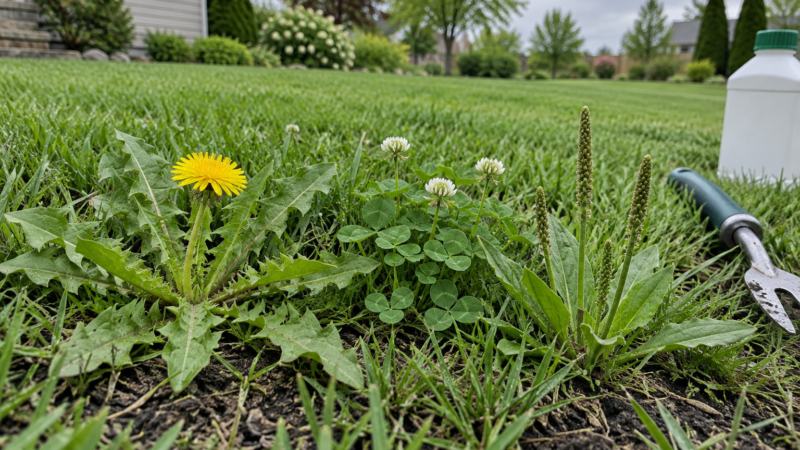
Look at the leaf first. Wide leaves with net-like veins mean broadleaf weeds, like dandelion and clover. Narrow clumping blades mean grassy weeds, like crabgrass. A triangular stem means sedge, like nutsedge. Match the control to the type: pre-emergent before seeds sprout, post-emergent on weeds that are actively growing. Then mow high, water deeply and feed the lawn so wild weeds can’t get a foothold.
A Quick ID Key for Wild Weeds
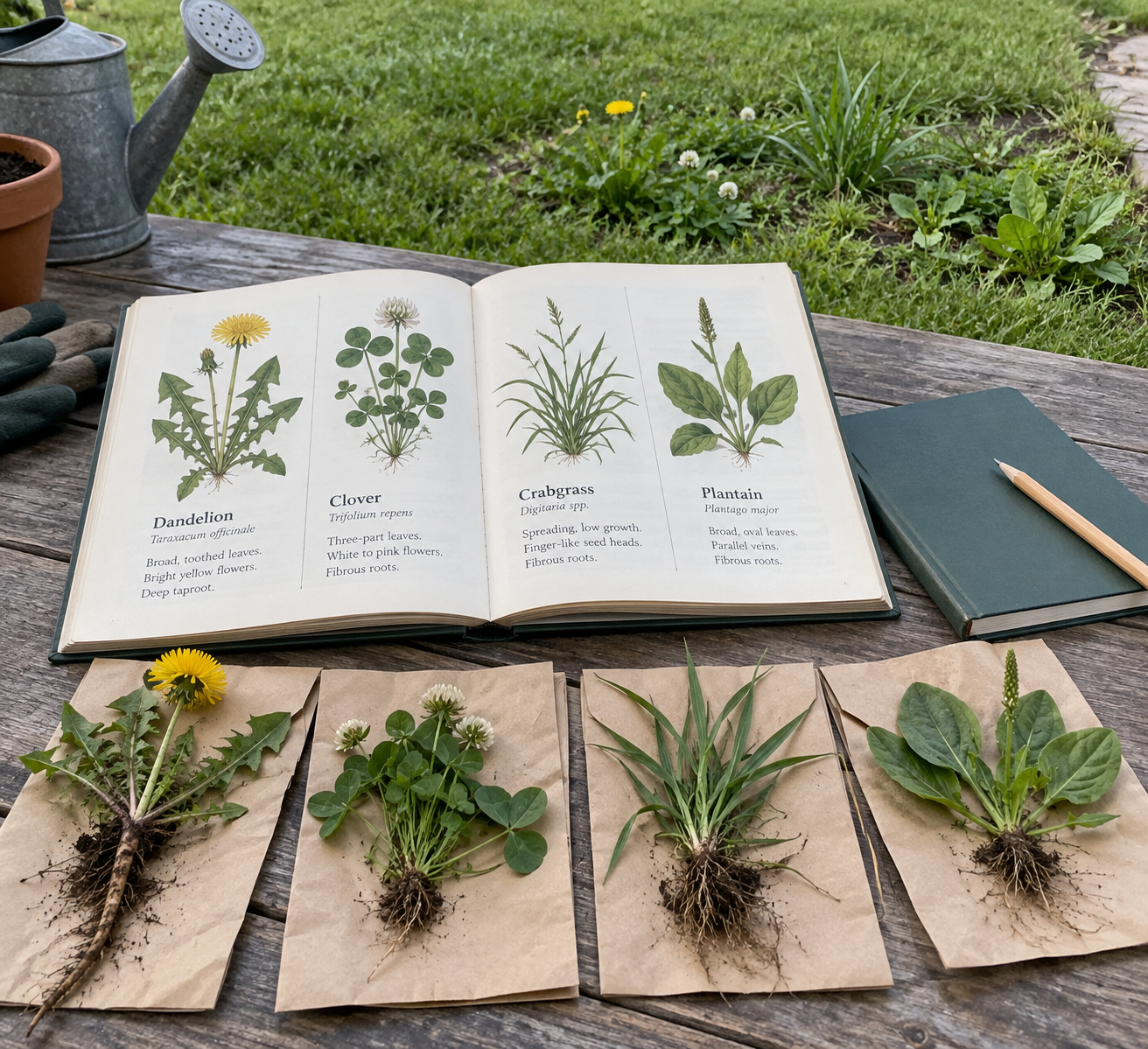
Don’t spray anything until you know what you’re looking at. A product that kills broadleaf weeds does nothing to crabgrass, and the wrong choice wastes money and can stress your grass.
Check the stem and leaf
Roll the stem between your fingers. A triangular stem is a sedge. Round or flat stems with narrow blades are grassy weeds. Wide leaves with branching veins are broadleaf.
Check the life cycle
Annuals live one year and spread by seed. Perennials come back from the roots every year. That’s why pulling a dandelion and leaving half the taproot (the thick main root) fails.
Common Lawn Weeds at a Glance
Here’s the short list I’d learn first. Seasons are typical for most U.S. lawns and shift with your climate.
Weed
Type
Look
Active season
Best control
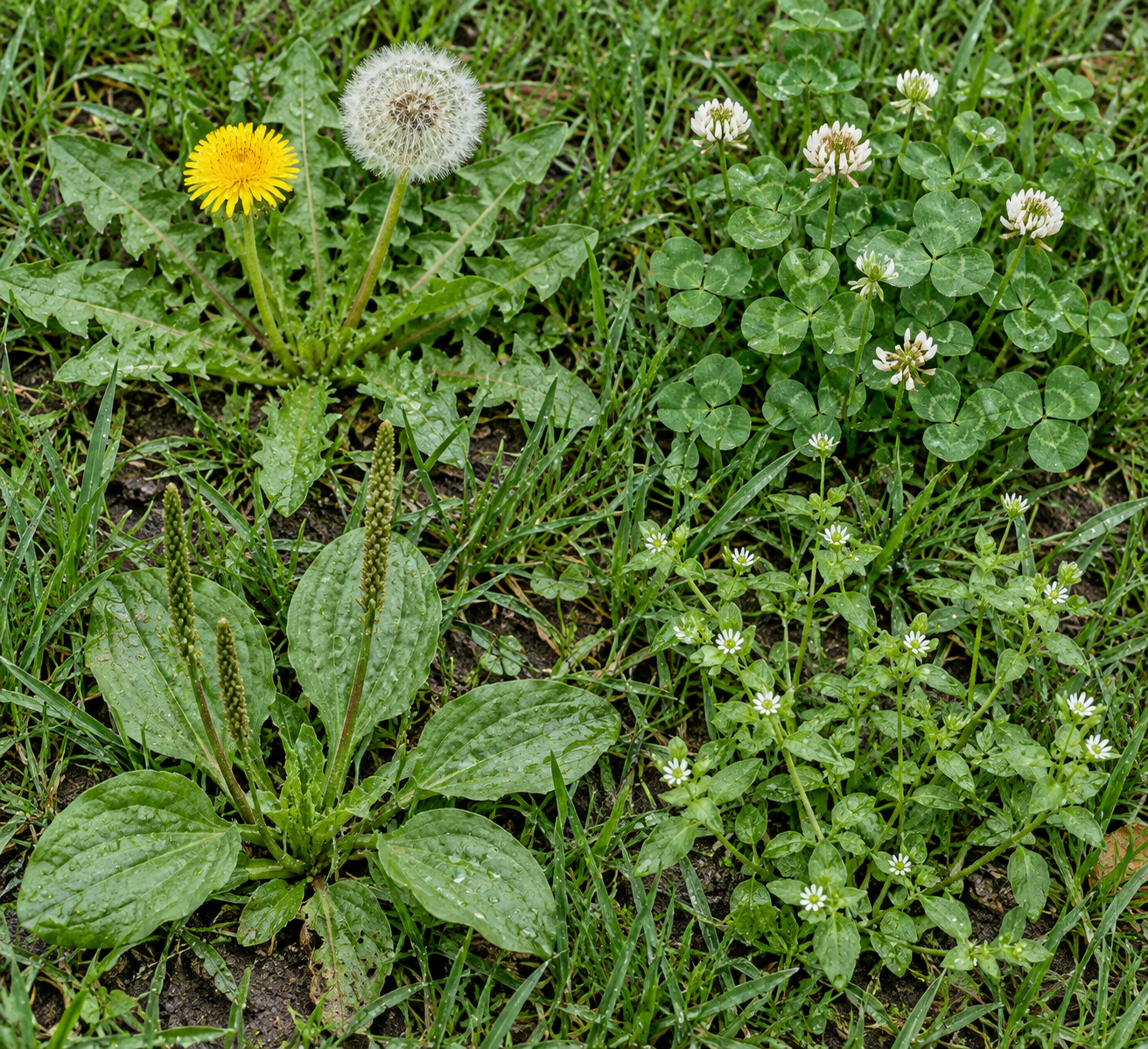
Dandelion
Broadleaf perennial
Toothed leaves in a flat rosette, yellow flowers
Spring and fall
Fall post-emergent or dig out the taproot
White clover
Broadleaf perennial
Three round leaflets, white blooms
Spring to fall
Post-emergent; feed the lawn (clover likes low nitrogen)
Plantain
Broadleaf perennial
Broad, ribbed leaves in a rosette
Summer
Post-emergent or hand-pull
Chickweed
Broadleaf winter annual
Low mat, small oval leaves
Cool weather
Pre-emergent in early fall
Ground ivy
Broadleaf perennial creeper
Scalloped round leaves on creeping stems
Spring to fall
Repeat post-emergent; thicken turf
Crabgrass
Grassy annual
Wide, flat blades radiating from the center
Summer
Pre-emergent in spring
Foxtail
Grassy annual
Bristly seedheads
Summer
Pre-emergent; bag clippings
Yellow nutsedge
Sedge
Glossy, yellow-green, triangular stem
Hot, wet spells
Sedge-labeled herbicide; fix drainage
Your Mower Is a Weed-Control Tool
Most weeds win because the grass is thin or scalped. Light reaches bare soil, and seeds sprout. Fix the turf and half the problem goes away.
Deck height and sharp blades
Mow at 3 to 4 inches for cool-season grasses like Kentucky bluegrass and tall fescue. Taller grass shades the soil, which keeps crabgrass seed from sprouting. Never cut off more than one third of the blade at once. Warm-season lawns like Bermuda take a lower cut, so follow your grass type.
Dull blades tear grass and leave ragged tips that brown and thin the lawn. Sharpen blades about once a season, or after about 20 to 25 hours of mowing.
Bag seedheads and clean the deck
Bag clippings when dandelions or foxtail are setting seed. Otherwise your mower flings seed across the yard. Mow weedy patches last, then brush or rinse the deck before you move to clean areas. Seeds ride on wet clippings.
When not to spray
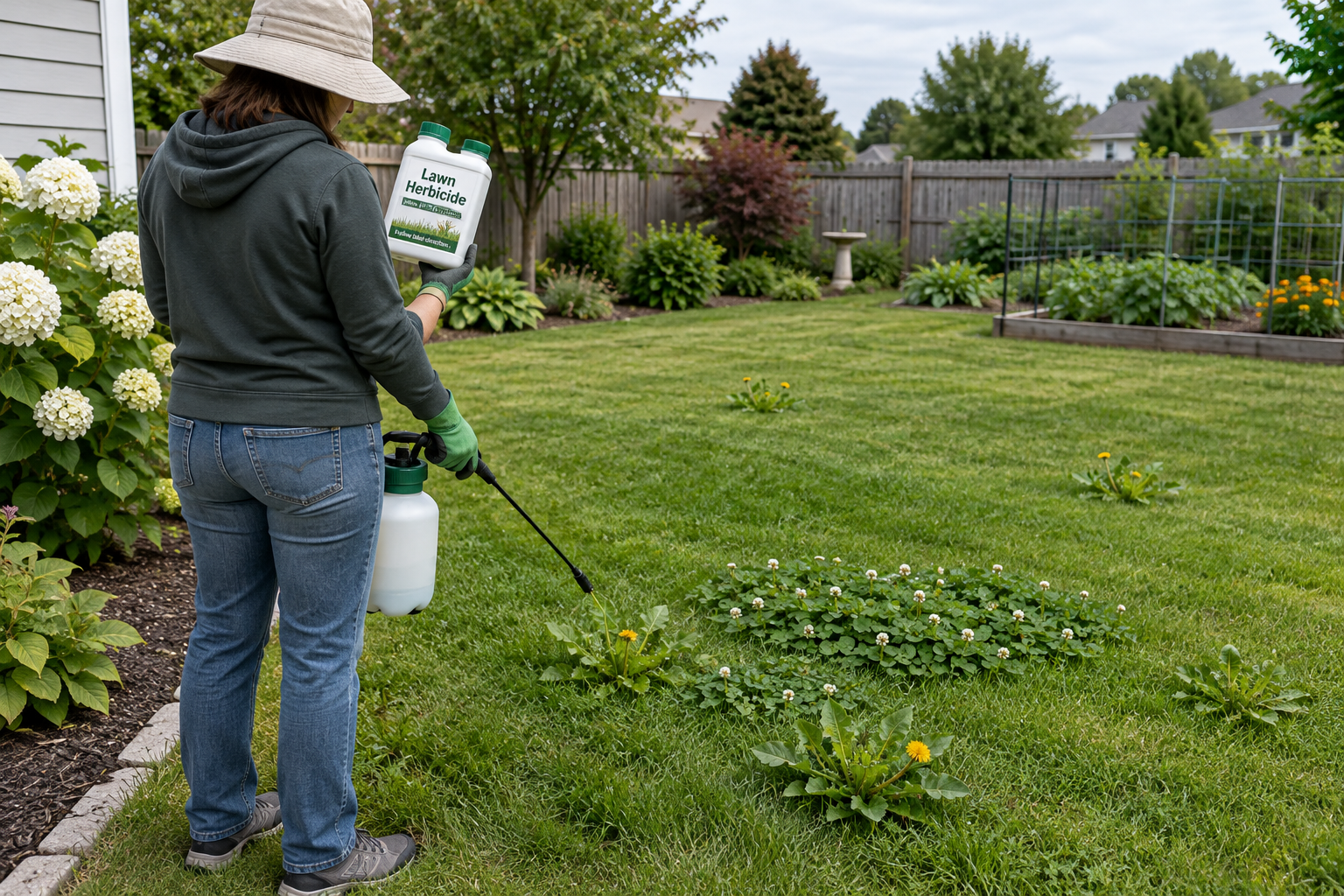
A few weeds in thick turf? Pull them after rain, when the soil is soft. A thin patch with weeds? Overseed and feed it. Spraying a lawn that’s already dense often does more harm than good.
Herbicide Timing and Safe Use
Timing matters more than brand. Get it wrong and the product does very little.
Soil temperature below 70°F (with air temperatures under 80°F) is the signal for fall pre-emergent to work, per University extension guidance compiled by LawnStarter.
Pre-emergent vs. post-emergent
Pre-emergent herbicide makes a barrier that stops seeds from sprouting. It does nothing to weeds already up. Post-emergent kills weeds that are growing. For crabgrass, put pre-emergent down in spring before it sprouts, roughly when soil hits about 55°F. Don’t use it where you plan to overseed, because it blocks grass seed too.
Weed and feed: the temperature window
Weed and feed is fertilizer plus herbicide in one bag. Apply it when the grass is growing and daytime temperatures run above 60°F. Early fall is the best window for cool-season lawns. By mid-October to early November, warm-season lawns are going dormant, so skip it. It’s too late.
Label rules and pet safety
Follow the label for rates and re-entry. One broadleaf product label says to delay mowing 2 days before and 2 days after, and to wait at least 2 hours before watering. Labels often say to keep pets off for 6 to 24 hours, but residue can linger up to 48 hours. I’d wait the full 48 hours. “Natural” doesn’t always mean safe.
Frequently Asked Questions
Does mowing height affect weed growth?
Yes. Taller grass shades the soil and blocks weed seed from sprouting. Mow cool-season lawns at 3 to 4 inches. Scalping to 1.5 inches opens bare soil and invites crabgrass.
Why do weeds keep coming back every year?
Seeds stay alive in soil for years, and perennials regrow from roots left behind. Thin turf gives them room. Pre-emergent in season, deep roots from good watering, and a thick lawn break the cycle.
How do I kill weeds without killing grass?
Use a selective post-emergent labeled for your grass type and the weed you identified. Spray when weeds are young and growing, in daytime temperatures of about 45°F to 90°F. Spot-treat or hand-pull when only a few weeds show up.
Grubs can destroy a lawn in as little as two to three weeks once populations cross the damage threshold, and most homeowners don’t notice until the turf is already peeling back...
Brown patches showing up on your St. Augustine lawn even though you’re watering it every single day? That’s the first clue something’s off with your routine. Good care of St. Augustine...
15 August 2026
The Mowers Guide is reader-supported. When you buy through links on our site, we may earn an affiliate commission.






Comments are closed.