Can you mow wet grass? Yes, your mower will physically run, but you shouldn’t do it. Wet grass clogs the deck, tears blades instead of cutting them, leaves clumps, packs down soil, spreads lawn disease, and makes you slip.
Wait until the lawn feels dry to the touch. If you can’t wait, raise the deck, walk slowly, and clean the mower right after. The rest of this guide shows you exactly when each choice makes sense.
What Actually Goes Wrong When You Mow Wet Grass
Why is everyone so firm about this rule? Because wet grass changes how everything works, from the blades to the soil under your feet. Here are the main problems, from the machine to the lawn to you.
The Mower Takes the First Hit
Wet grass blades are heavy and sticky. They bend over instead of standing up, and the clippings stick together in thick clumps. Those clumps jam the underside of the deck (the metal housing around the blade) and block the discharge chute.
Your engine then works harder. On tall, wet grass, some mowers overheat. Can you ruin a mower this way? One session rarely kills it, but repeated wet mowing strains the engine and belts, and the caked clippings hold moisture against bare metal and cause rust.
The Lawn Pays Next
Bent blades dodge the cutter. Some get missed, and others get knocked over. When the grass dries and stands back up, you see uneven stripes where the “ducked” blades survived.
The blades that do get cut are often torn, leaving ragged tips that turn brown. Wet clippings also fall in heavy mats. These smother the grass underneath, block sunlight, and can kill small patches.
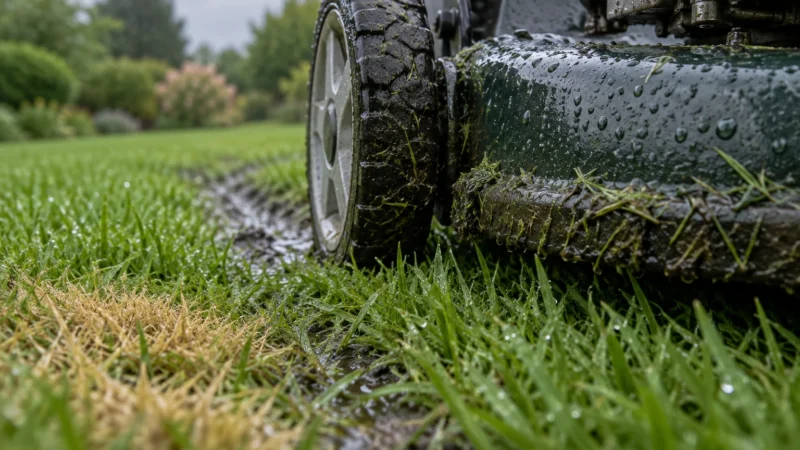
Soft soil is the third problem. Mower wheels press into wet ground and leave ruts. They can also squeeze the soil tight (called compaction), which makes it harder for roots to get air and water.
Disease and Safety Come Along for the Ride
Wet clippings stick to the deck and wheels. As you mow, you carry fungal spores from a sick spot to healthy grass. Damp conditions help those spores take hold.
Then there is you. Wet grass is slick on shoes, especially on slopes. Slipping near a spinning blade is how people get hurt, so treat footing as a real safety issue, not a small one.
Dew, Damp, or Soaked? Know Which One You Have
Is dew the same as a lawn after a rainstorm? No. A light film of morning dew on the leaves is a very different problem from soggy soil, and the right answer changes with it.
Dew only wets the surface of the grass. The soil underneath is still firm, so ruts and compaction aren’t a worry. Clumping and slipping are still possible, so mowing at 7 a.m. is a poor idea. The same lawn is usually fine by late morning, once the sun has burned the dew off.
Damp grass is the in-between stage. The blades feel cool, but your shoes stay mostly dry, and the soil is firm. A careful mow can work here if you follow the steps later in this guide.
Soaked grass is a no. Water pools around your shoes, and the soil feels spongy. Skip it.
A Simple Footprint Test
Walk across the lawn. If your footprints stay visible, the soil is too wet. Healthy, ready grass springs back within seconds. Deep, muddy prints mean you should wait at least another day.
You can also try one test row. If the mower bogs down or the deck clogs fast, stop and save the job for later.
Go or Wait: A Quick Guide by Wetness and Mower Type
Use this table when you’re standing at the garage door deciding. It assumes flat ground, so add extra caution on slopes.
Lawn condition
Gas push or self-propelled
Battery mower
Corded electric
Riding mower or tractor
Morning dew, firm soil
Wait a few hours; fine once dew burns off
Wait a few hours; fine once dew burns off
Wait until fully dry
Wait; fine once dew burns off
Damp, shoes mostly dry
Go with care: high deck, slow pace
Go with care: high deck, slow pace
Don’t
Go only on flat, firm ground
Soaked, puddles or muddy prints
Wait
Wait
Don’t
Wait; ruts and wheel spin likely
Any wet grass on a slope
Wait
Wait
Don’t
Wait; tipping and sliding risk
Notice that the riding mower column is the pickiest. Heavy machines rut the soil faster than a push mower does.
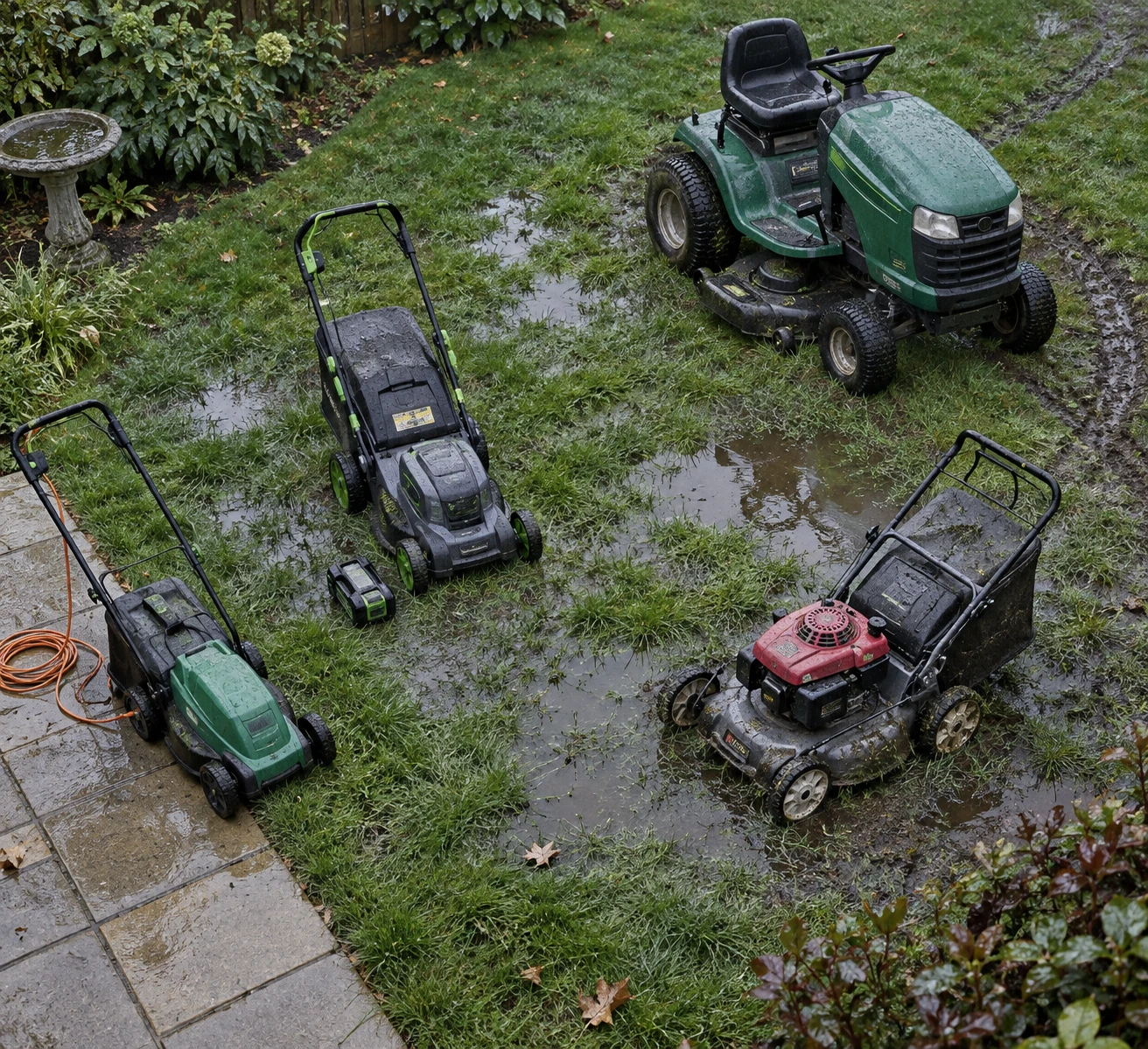
Electric, Battery, Gas and Riding Mowers on Wet Grass
Can you mow wet grass with an electric mower? A corded one, no. Water and electricity don’t mix, and you also drag a cord through wet grass. A battery mower is safer because there is no live cord, but it isn’t risk-free.
Battery mowers are safer, not safe. Moisture can still get into battery connections and electronics, and the clogging and slipping problems stay exactly the same. Check your manual. Many brands say their mowers can handle light moisture, but few say they like it. Store the battery dry and wipe the contacts after use.
Gas mowers have no shock risk. They do suffer from the clogging, the strain on the engine, and slick metal surfaces and handles. A mower with a strong engine and a sharp blade copes better than a weak one.
Riding Mowers and Tractors
Can you mow wet grass with a riding mower? You can, but traction is the problem. Wet tires spin, the machine slides on slopes, and the weight leaves deep ruts. Tires can also tear grass roots out of soft ground.
If you have a lawn tractor, stay off hills when wet. Sliding sideways down a slope is far more dangerous than a clogged deck. Wait for firm ground, and when you do mow, stick to flat areas.
The One-Third Rule: Why It Matters More When Grass Is Wet
What is the one-third rule? Never cut off more than one-third of the grass blade height in a single mowing. If your lawn is 4.5 inches tall, you should trim it to no lower than 3 inches.
Mow so that you remove no more than one-third of the leaf blade at a time.
This rule is a standard lawn care guideline repeated by university extension services across the country. Wet conditions make it even more important. Cutting a lot of wet grass at once means more tearing, bigger clumps, and a heavier load on the engine.
Here is a worked example. Say rain kept you off the lawn for a week, and the grass is now 6 inches tall. Cutting to 3 inches would remove half of it. Instead, set the deck high enough to take off one-third (down to 4 inches). Then, a few days later, mow again at a lower setting to bring it back to your usual height. Two light passes beat one rough cut.
So when you can’t mow on time, don’t try to catch up in one go. You’ll save your mower, and your lawn will recover faster.
How Long to Wait After Rain
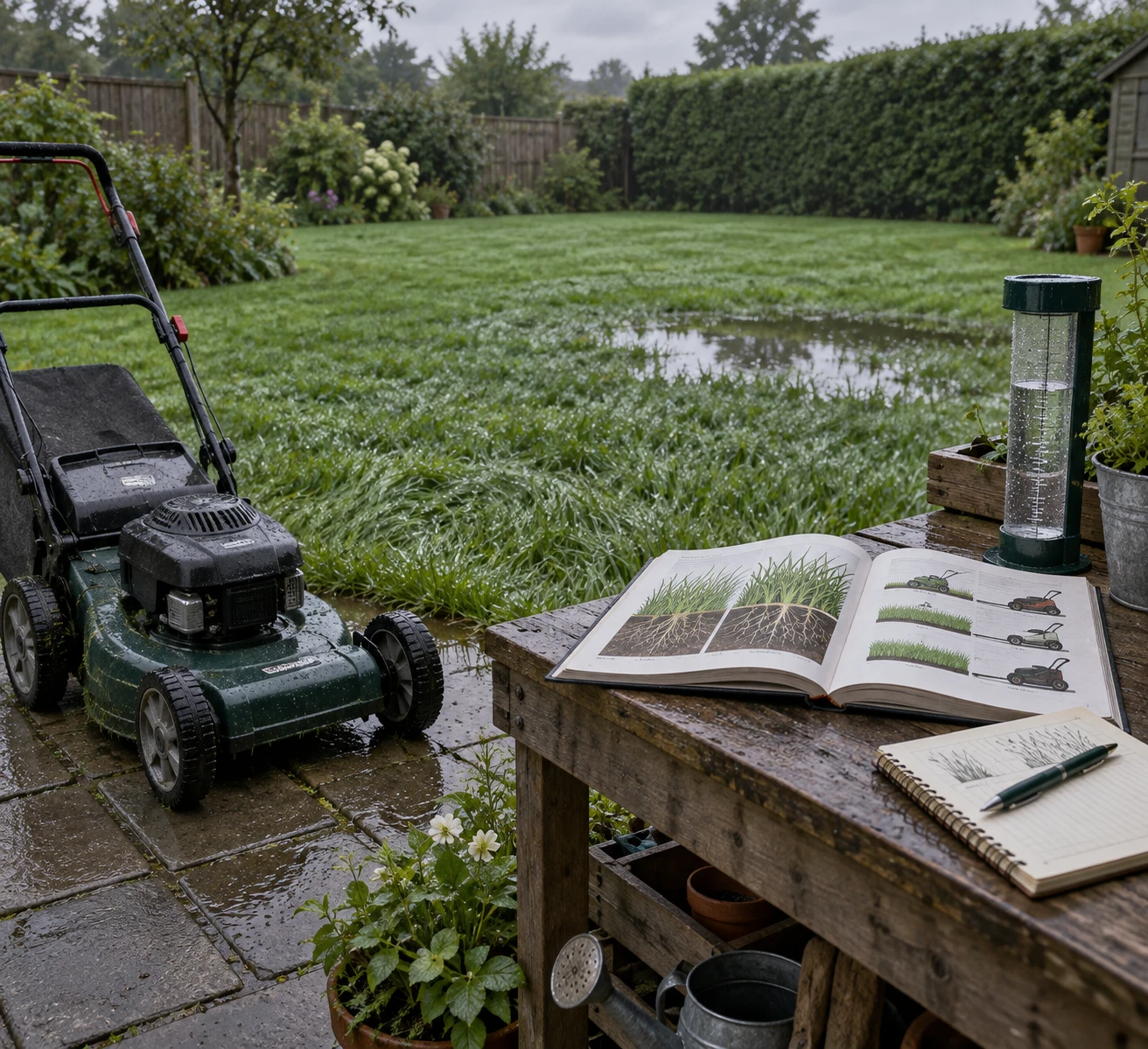
How soon can you cut grass after it rains? A good rule is to wait at least 24 hours after the rain stops. Some lawns need 24 to 48 hours, especially after heavy rain or on cloudy days. Strong sun and a breeze can dry a lawn in a few hours after a light shower.
The time of day matters too. Late afternoon or early evening is usually best, because the sun has had hours to dry both the blades and the top layer of soil. Avoid early morning, when dew wets the grass even without rain.
What Slows Drying
Shade, clay soil, and thick thatch (the layer of dead stems and roots at the base of the grass) all hold water longer. A shady lawn in a humid spring, such as in the Southeast or Pacific Northwest, can stay wet for days. A sunny lawn in the Southwest may dry in an afternoon.
Sprinklers matter as well. If your irrigation system runs at dawn, the lawn is wet at the worst time. Move watering earlier in the night so the grass has time to dry before you mow.
What Speeds It Up
Good drainage and a little airflow help. Trim back low branches and shrubs so wind can reach the grass. Aerating compacted areas (pulling small plugs of soil out) lets water soak down instead of sitting on top.
Ideally, you can walk across the lawn without wet shoes. That’s the simplest check, and it works every time.
If You Have No Choice: A Damage-Control Routine
Sometimes the grass is overgrown, you’re leaving town, or an HOA letter has arrived. Then follow these steps in order. They work best on damp grass, not soaked lawns, and not on slopes.
Check the ground first. Walk the lawn. If you sink or leave muddy prints, stop and wait.
Sharpen the blade. A dull blade tears wet grass badly. A sharp one makes a cleaner cut. Disconnect the spark plug wire or remove the battery before touching the blade.
Raise the deck. Go up one or two notches above your normal height so you take off well under one-third of the grass.
Switch off mulching if you can. Wet grass doesn’t mulch well. If your mower has a bagger or side discharge, use it, and empty the bag often.
Walk slowly. A slower pace gives the blade time to cut and lets clippings clear the deck. Wear shoes with good grip, not sandals.
Overlap less, stop more. Stop every few passes. Turn off the engine, wait for the blade to stop, and clear any clumps from the chute.
Rake or spread the clumps. Heavy piles smother the lawn. Break them up with a rake or leaf blower once the grass dries a little.
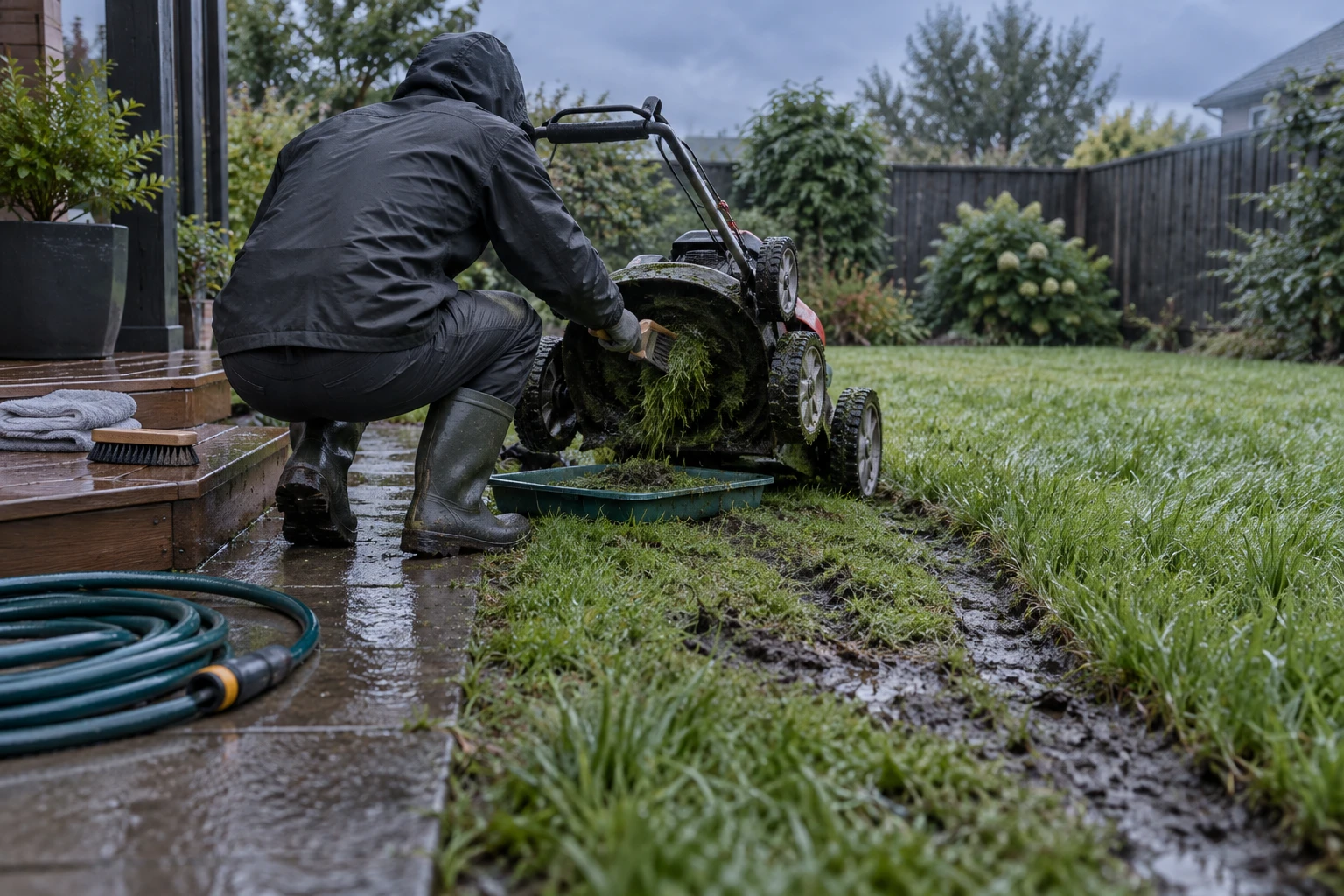
Clean the mower right away. With the engine off and the spark plug wire disconnected, tip the mower per the manual and scrape the deck clean. Dry it with a rag.
Cleaning and Rust Prevention
Don’t skip step 8. Caked clippings hold water against the metal, and rust follows within days. Scrape first, then wipe, then let the deck air dry in the sun or a garage. A light coat of cooking spray or silicone-based deck spray on the clean underside helps clippings slide off next time.
For gas mowers, check the air filter too. Wet debris can get into it. For more routines like this, The Mowers Guide has maintenance and cleaning guides that cover deck care step by step.
After a wet mow, look over the lawn in a day or two. Brown tips, patches of matted clippings, or ruts are your cue to rake, reseed, or give the soil a rest.
Smarter Alternatives to Mowing a Wet Lawn
What else can you do while the lawn is wet? The best alternative is simply to wait, and there are good ways to make waiting easier. None of them need you to rip out your grass.
Reschedule and Trim
Move your mowing day. If rain is in the forecast, mow a day earlier and set the deck a little higher to give yourself a buffer. Check the forecast on Thursday for a Saturday mow, and keep Sunday as a backup.
A string trimmer can handle quick touch-ups along fences, walks, and flower beds, even when things are slightly damp. It won’t fix a whole lawn, but it keeps edges neat until the mower can go out. Wear eye protection and watch for slick spots.
Mow Less Often
Raising your regular mowing height by half an inch makes the grass grow slower and shade out weeds. Taller grass also shades the soil, so it holds water better in dry spells. You’ll mow less often and run into fewer wet-day problems.
Fix drainage in spots that stay soggy. Low areas, downspout runoff, and compacted soil all keep the lawn wet longer. A little regrading or a downspout extension can save you many headaches.
Consider Low-Mow Grasses Over Time
If wet weather is a constant fight, think long term. Fine fescue grows slowly and can be mowed only a couple of times a year in many cases. Microclover also tolerates occasional mowing and doesn’t grow tall. Both work in a wide range of climates (USDA zones 3 to 10). Plan this for a normal season of overseeding, not for a rainy week.
Your lawn will be fine if you skip one mow. Grass grows back, but ruts and torn blades take much longer to fix. Waiting a day beats repair work!
Frequently Asked Questions
Is it safe to cut grass when it’s wet?
It’s not safe or ideal. Wet grass is slippery, clogs the mower, and tears the grass. If you must mow, choose damp rather than soaked grass, wear shoes with good grip, and stay off slopes.
Can you ruin a lawn mower by mowing wet grass?
One wet mow rarely ruins a mower, but repeated wet mowing strains the engine and belts. Caked clippings left on the deck cause rust and poor cutting, so scrape and dry the deck after every wet mow.
Can you mow when the grass is wet from dew?
You can, but late morning or afternoon is better. Dew wets only the surface, so soil damage is low. Still, clumping and slipping are possible, so waiting until the sun burns it off gives a cleaner cut.
How soon can you cut grass after it rains?
Wait at least 24 hours after rain, and up to 48 after heavy storms or on shady, cloudy days. Sunny, breezy weather may dry a lawn faster. Late afternoon is usually the best time to mow.
A toolbox truck keeps lawn care pros running between stops. Learn the best setup, must-carry parts, toolbox types, and organization tips for your service truck.






Comments are closed.