Is your snow blower cranking but not catching, or surging and dying after summer storage? Reaching for carb cleaner snow blower fixes is a fair instinct, but it shouldn’t be your first move. Aerosol cleaner is flammable and harsh on some parts. Here’s the order I’d work in, from a $10 fix to a full replacement, and how to keep a cold garage from turning into a fire hazard.
The Decision Path: Cheapest Fix First
Most no-start problems after storage come from stale gas. Ethanol fuel (E10, the 10% ethanol blend at most U.S. pumps) absorbs moisture and leaves varnish behind. That varnish clogs the tiny jets in the carburetor.
So start with fuel, not spray. Work through the steps in this order.
Drain the old gas from the tank and carburetor bowl into an approved container.
Refill with fresh fuel and add a stabilizer at the label’s ratio.
Check the spark plug and air filter, since both mimic carb trouble.
Spray in place if it still runs rough.
Remove and soak the carburetor if spraying doesn’t help.
Rebuild or replace the carburetor if cleaning fails.
What Each Step Costs
Step
Typical cost (estimate)
Time
Fresh gas plus stabilizer
$10-$20
20 minutes
Spray in place
$6-$10 per can
30 minutes
Remove, soak, clean
$10-$25 for cleaner and gaskets
1-2 hours
Rebuild kit
$10-$30
1-2 hours
New carburetor
$20-$60 aftermarket, more for OEM
1-2 hours
Small-engine shops often charge $75-$150 for a carburetor job, so the DIY savings are real.
Signs the Carburetor Is Actually the Problem
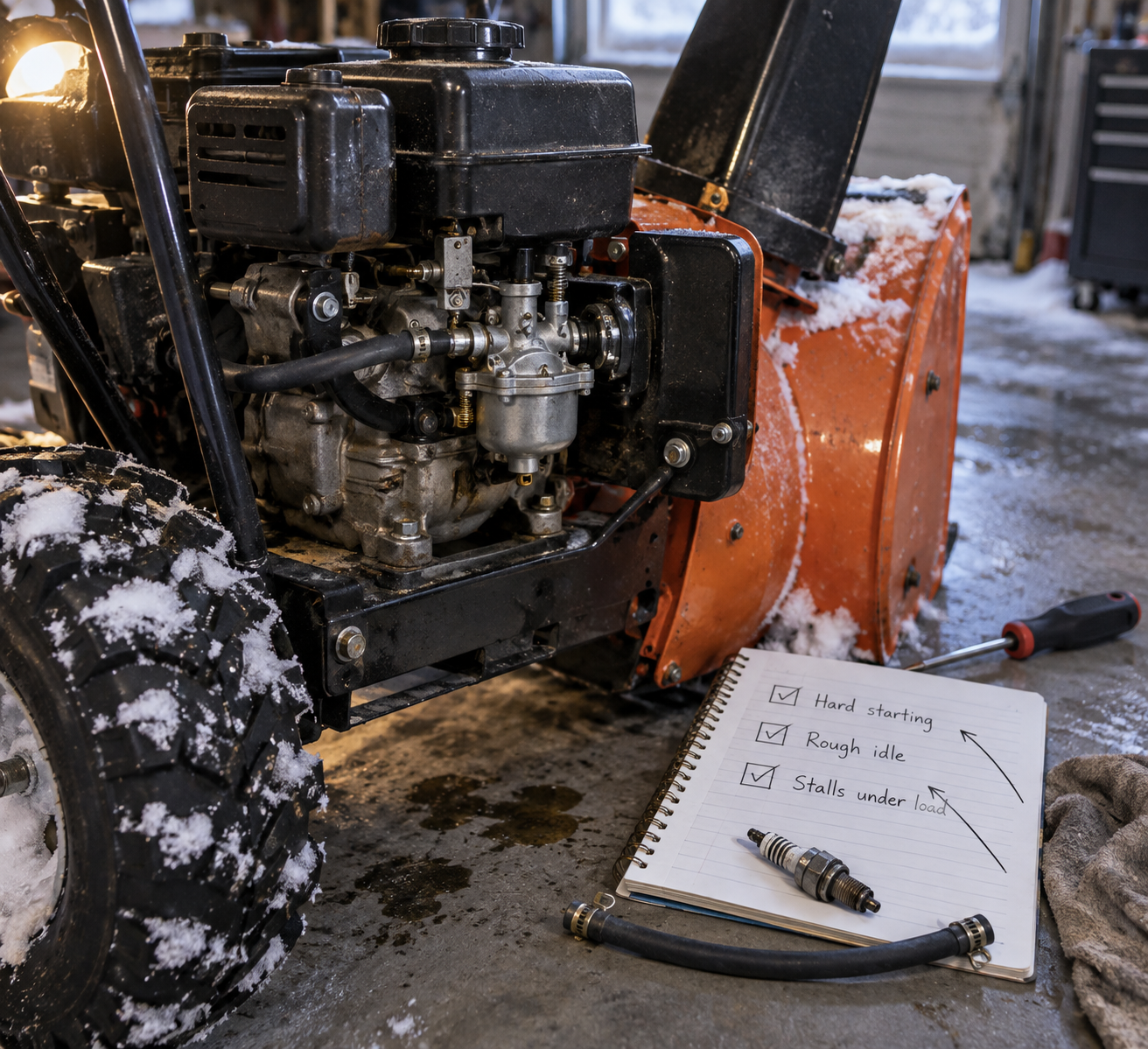
Hard starting, surging (the engine speeds up and slows down on its own), and stalling under load all point to a fuel-metering problem. A snow blower that only runs with the choke on is a classic sign of a clogged main jet.
Rule out the easy stuff first. A fouled spark plug costs about $4. A dirty air filter chokes airflow. Neither needs chemicals.
One more clue: if fuel smells sour or looks dark and varnish-like, the gas is the culprit. Cleaning the carburetor and leaving that fuel in the tank and lines just clogs it again within weeks.
Spraying Carb Cleaner Safely, Step by Step
Spraying in place is a light-duty fix for a mildly sticky carburetor. It won’t clear a heavily gummed one. If the engine only improves for a minute, stop and pull the carburetor.
Safety Before the Nozzle
Aerosol carb cleaner is highly flammable, and the fumes are heavy and linger in a closed, cold garage. Open the door fully, or work outside on a calm day. Wear nitrile gloves and safety glasses. Keep every spark source away, including pilot lights and space heaters.
Carburetor cleaners commonly contain solvents such as toluene, acetone and methanol, so check the can’s safety data sheet for your exact product.
Let the engine cool completely. Never spray into a hot or running engine, because hot exhaust parts can ignite the vapor. Disconnect the spark plug wire and shut off the fuel valve if your model has one.
Spray-in-Place Method
Remove the air filter cover and spray a short burst into the carburetor throat. Use the straw on any linkage you can reach. Wait 10-15 minutes, reconnect the plug wire, and start the engine with fresh fuel.
Don’t soak rubber seals, gaskets or plastic parts without checking the label. Some cleaners swell or harden rubber and cloud plastic. Choose a product marked safe for those materials.
Pulling the Carburetor: Cleaning, Rebuilding or Replacing
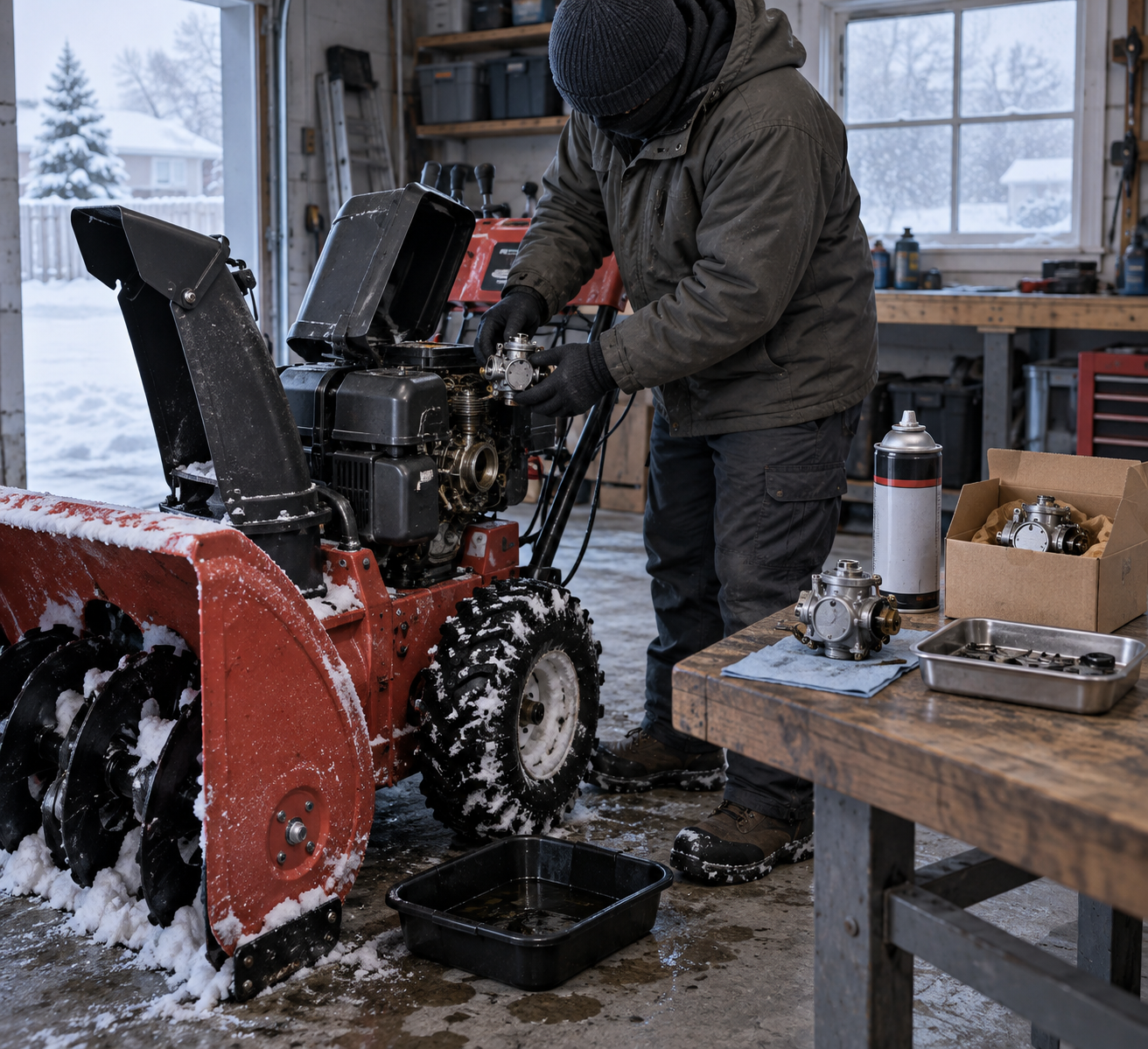
If spray fails, remove the carburetor. Take a phone photo of the linkage and spring positions first. Drain the bowl, then unbolt the carb and unhook the throttle and choke.
Remove the bowl, float, needle valve and main jet. Soak metal parts in a dip-style cleaner, which is a liquid bath made for metal carburetor bodies. Take off rubber o-rings and gaskets first, since a soak can ruin them. Blow out passages with compressed air.
Never poke jets with wire or drill bits. Even a small scratch enlarges the hole and ruins fuel metering, and that damage can’t be undone. Use cleaner and air only.
Check the float for fuel soaking inside and the needle valve tip for a groove. A worn needle makes the carb leak, and a rebuild kit fixes it cheaply. If the body is corroded or the jets stay blocked after a soak, buy a new carburetor. At $20-$60 aftermarket, replacing often beats an hour of fighting a bad one.
Reassemble with new gaskets, refit it, and run the engine for several minutes. Adjust nothing unless the manual calls for it. The troubleshooting guides at themowersguide.com cover model-specific carburetor settings if you need them.
Keeping It From Happening Again
Stabilizer is the cheapest fix you’ll ever buy. Add it to fresh gas at the end of the season and run the engine for 5 minutes so treated fuel reaches the carburetor. Then either leave the tank full of treated fuel or run it dry.
Many owners also use ethanol-free fuel, which is sold at some stations and in canned form. Its drawback is price, often several dollars more per gallon. Buy the smaller amount you’ll actually use before spring.
Frequently Asked Questions
Can I spray carb cleaner into a running snow blower?
No. Spraying into a running or hot engine risks fire and can wash oil off cylinder walls. Let it cool, disconnect the spark plug wire, and spray into the throat of the carburetor instead.
How long does cleaning a snow blower carburetor take?
Spray-in-place takes about 30 minutes. Removing, soaking and refitting the carburetor takes 1-2 hours for most first-timers, plus soak time. Allow extra if you need to order gaskets.
When should I replace instead of clean the carburetor?
Replace it if the body is corroded, the jets stay blocked after a soak, or someone has already drilled them out. A $20-$60 aftermarket unit is often cheaper than repeated cleaning.
A compact zero turn mower with a 32-inch deck can fit through a standard 36-inch gate opening — but only if the total machine width stays under 35 inches, which not...
Is a zoysia grass lawn worth the work? It depends on your climate and your mower. Zoysia makes a thick, soft-looking turf that crowds out weeds and handles heat and foot...
7 October 2026
The Mowers Guide is reader-supported. When you buy through links on our site, we may earn an affiliate commission.





Comments are closed.