
Push Mower With Bagger: How to Choose the Right Size

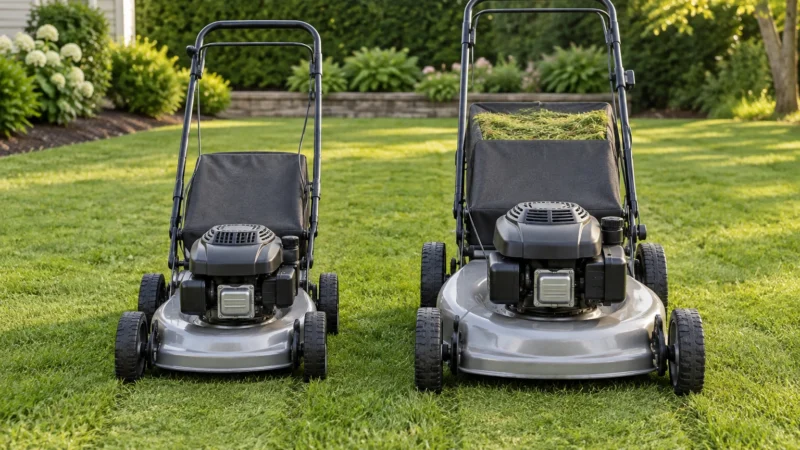
For most lawns up to about a half acre, a push mower with a bagger and a 21-inch or 22-inch deck is the right size. Width is only half the decision, though. The mower also has to fit through your gate, push comfortably on your slopes and hold enough clippings that you aren’t emptying the bag every few minutes.
This guide walks you through sizing step by step. Measure your real grass area, check the full assembled dimensions, and weigh bag capacity against how heavy a full bag gets. Then pick the drive and power type that match your yard.
Start With the Grass You Actually Mow
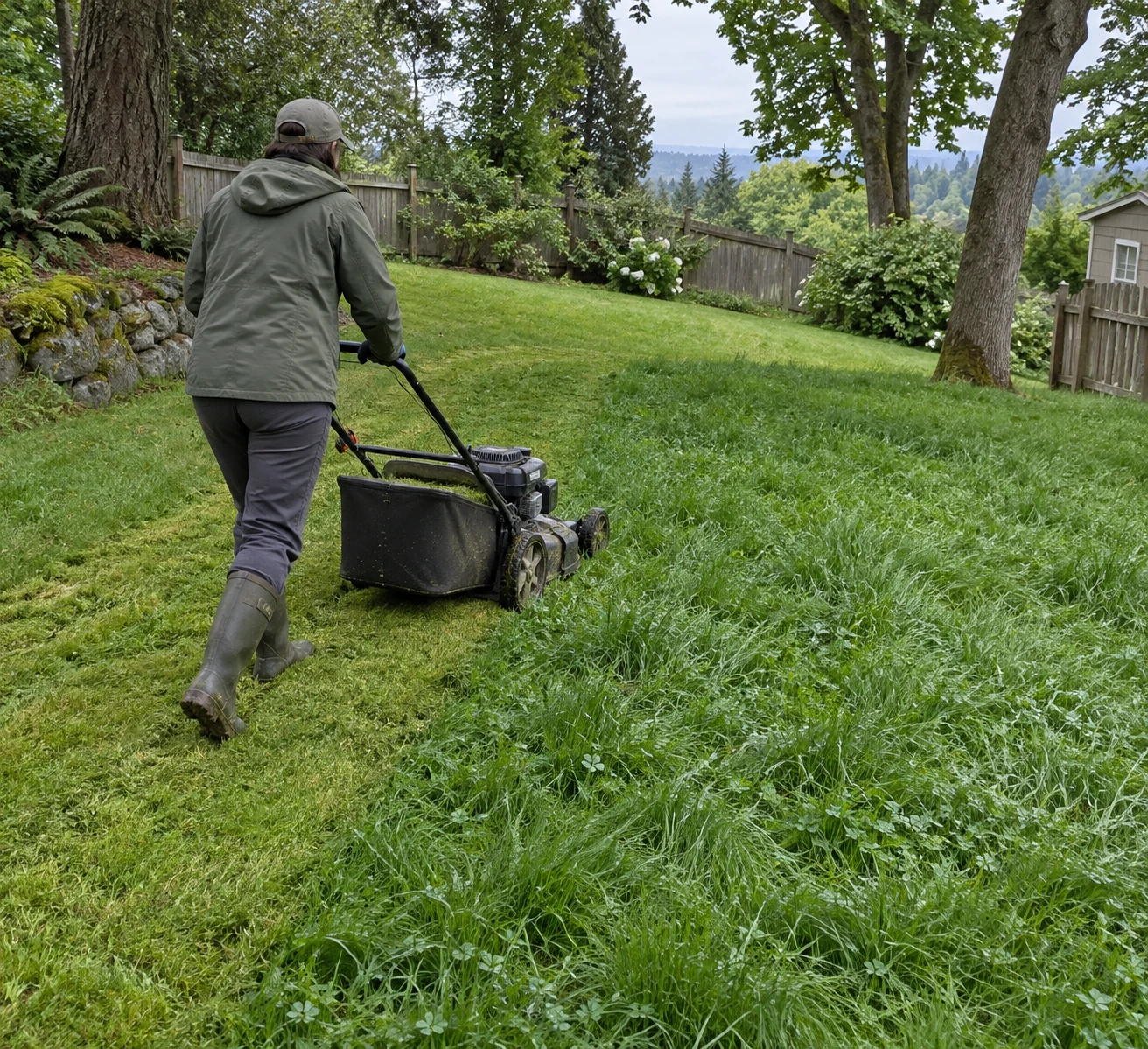
Your lot size is not your lawn size. Before you compare decks, work out the area the mower will actually cover.
Subtract everything that isn’t grass
A quarter-acre lot is about 10,890 square feet, but the house, driveway, patio and beds can easily take up half of it. Measure the grass sections with a tape or a free map tool, multiply length by width for each rectangle, and add them up. A typical suburban result is somewhere between 3,000 and 6,000 square feet of mowable area, the grass the blade will actually pass over.
That number changes your choice. A homeowner who thinks “quarter acre, so I need something big” may really be mowing 4,000 square feet. That is comfortable work for any 21-inch push mower.
Count obstacles and slopes too
Trees, play sets, flower beds and narrow strips beside the house all add turns and trim passes. A wider deck saves time on open ground, but the trimming time stays the same. In a busy yard, extra width buys you very little.
Slopes matter just as much. A 10-minute push on flat ground feels very different on a hill with 20 pounds of clippings in the bag. Note any grade you can’t comfortably walk up while pushing a loaded cart. That one detail will steer you toward self-propelled later.
Is a 21-Inch or 22-Inch Push Mower Better?
For most yards, the difference between 21 and 22 inches is small. Pick the deck that fits your space and budget, not the extra inch. The 21-inch deck is the most common walk-behind size in the US, and residential cutting widths usually run 20 to 22 inches.
What the extra inch really saves
Here is a worked example. Assume you overlap each pass by about 3 inches, so a 21-inch deck clears about 18 inches (1.5 feet) of new grass per pass. At a steady walking pace of about 3 mph (264 feet per minute), you cover about 396 square feet per minute. A 22-inch deck clears about 19 inches (roughly 1.58 feet), which works out to about 418 square feet per minute.
On a 5,000-square-foot lawn, that is about 12.6 minutes of straight cutting with the 21-inch deck. The 22-inch deck takes about 12 minutes. The saving is well under a minute, before turns, trimming and bag emptying. Emptying the bag alone adds more time than that.
Matching width to lawn size
Use this table as a starting point, then adjust for obstacles and slopes.
| Mowable lawn area | Suggested deck | Drive type | Notes |
|---|---|---|---|
| Up to 1/8 acre (about 5,400 sq ft) | 20–21 in | Manual push or battery | Light, quiet, easy to store |
| 1/8 to 1/4 acre (about 5,400–10,900 sq ft) | 20–22 in | Manual push or self-propelled | Bagging works well on either |
| 1/4 to 1/2 acre (about 10,900–21,800 sq ft) | 21–22 in | Self-propelled | Larger battery or reliable gas engine |
| Over 1/2 acre | Consider a rider | Lawn tractor or zero-turn | A walk-behind gets slow and tiring |
A 22-inch model sometimes earns its place for a reason other than speed. Some 22-inch decks are built with a deeper housing or stronger airflow, which can help bagging. Judge each mower on how well it fills the bag, not on the width number alone.
Measure the Whole Mower, Not the Cut
Advertised width only tells you how wide a strip of grass the blade cuts. It does not tell you whether the mower fits through your gate or into your shed.
Cutting width is the swath of grass the blade cuts in one pass. The deck housing, wheels, discharge chute and bag frame make the assembled mower wider and longer than that number.
Gate clearance
A 21-inch mower is often around 22 to 24 inches wide at the wheels, and side-mounted parts can push it wider. Measure your narrowest gate opening at wheel height, since latches and posts often stick out. Then find the overall width in the manufacturer’s specification sheet or manual, or measure a display model with a tape.
Give yourself about 2 inches of spare room on each side. Rolling a mower through a gate with half an inch to spare means scraped knuckles every week. If your gate measures 30 inches, almost any 21-inch or 22-inch walk-behind fits. A 24-inch side path between a fence and the house is the gap to measure carefully.
Storage footprint with the bag on
A rear bag adds a lot of length. The full mower with handle up and bag fitted can run to 5 feet or more, so check the length you actually have in the shed or garage. Measure the floor space, then check whether the handle folds and whether the mower can stand upright.
Some models are built for vertical storage, and some handles fold flat over the deck. Both can cut the floor footprint roughly in half. Gas mowers usually can’t stand on end without fuel or oil problems, unless the maker says they are designed for it. Read the storage section of the manual before you tip any gas mower up.
How Big Should the Grass Bag Be?
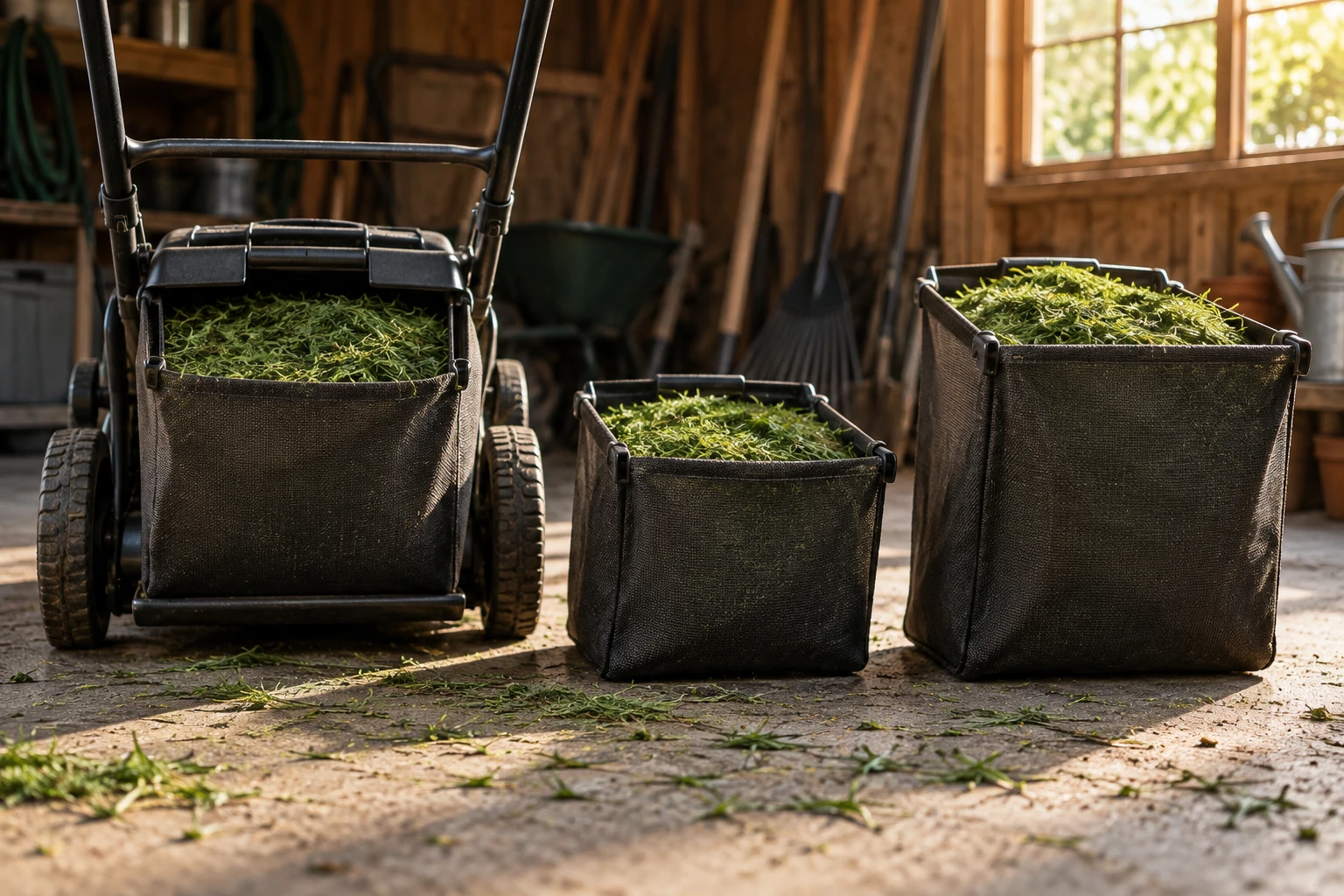
For a typical lawn of 3,000 to 8,000 square feet, a bag of about 1.5 to 2 bushels suits most people. Bigger isn’t automatically better, because every extra bushel is weight you have to lift, carry and tip out.
Capacity versus how often you stop
Clipping volume depends on grass type, season and how long you left it. In the spring flush, even a 2-bushel bag can fill several times on a quarter-acre lawn. In late summer, the same lawn may fill it once. A bushel is about 1.24 cubic feet, so a 2-bushel bag holds roughly 2.5 cubic feet of loose clippings.
Small bags around 1 bushel suit small, light-growth lawns. On a larger lawn, they mean frequent stops. You also lose pickup as the bag fills, because airflow drops, so don’t wait until the bag is packed tight.
What a full bag weighs
Fresh clippings are heavier than people expect. A full 2-bushel bag of dry clippings typically weighs somewhere around 15 to 25 pounds. Damp, packed grass can push that higher, roughly 30 pounds or more. You lift that weight out of the frame, carry it to the bin or compost, and tip it out, sometimes six or eight times a session.
If you have back or shoulder trouble, a medium bag you can empty easily beats a large one you dread lifting. Look for a rigid top or a handle on the bag, because a floppy cloth bag is awkward to lift when full. A blade brake clutch stops the blade while the engine keeps running, so you can empty the bag without restarting a gas mower. That saves several pull-starts each mow.
Wet grass and the one-third rule
Bagging works best on dry grass. Wet clippings clump, stick inside the chute and fill the bag faster with heavy mats. Wait until the dew has burned off, usually late morning, or mow in the afternoon.
The bigger habit is cutting height. Follow the one-third rule: never remove more than one-third of the grass blade height in one mowing. If your grass is at 4.5 inches, cut it no lower than 3 inches. Overgrown grass pushes far more clippings into the bag and strains the engine or battery. On a badly overgrown lawn, lower the height in two cuts a few days apart.
Manual Push or Self-Propelled?
Choose a manual push mower for flat lawns under about a quarter acre if you are comfortable pushing. Choose self-propelled for larger lawns, slopes, or anyone who finds pushing hard. A full bag is the deciding factor more often than lawn size.
A bagging mower gets heavier as you mow. An empty mower might be easy to push, but 20 pounds of clippings at the back makes a real difference, especially uphill. On a flat 4,000-square-foot lawn, a fit adult will manage a manual push mower fine and get some exercise. On the same lawn with a slope to the street, self-propelled is the better choice.
Drive type also matters on a bagger. A front-wheel-drive mower is easy to tip back and turn around trees and beds. The drawback shows up with bagging: as the rear bag fills, weight moves off the front wheels and they can lose grip on hills. For slopes with a rear bag, pick rear-wheel drive. It puts traction under the weight and climbs better.
Large rear wheels help too, on both push and self-propelled models. They roll more easily over bumps and soft ground, and the mower turns with less effort. If your yard has many obstacles but little slope, a light manual push mower with big rear wheels is quick and nimble.
Variable-speed self-propelled models let you match your pace. That helps when you slow down around beds or speed up across open grass. If a household member walks slowly, check that the lowest speed is comfortable for them.
Gas or Battery When You Bag?
Both work well for bagging on a typical suburban lawn. Gas has the edge on very large or thick lawns, and battery wins on noise, starting and maintenance. The key question is whether a battery lasts through your mow while bagging.
Battery runtime under bagging loads
Bagging uses more power than mulching or side discharge. The blade has to cut and also create enough airflow to lift clippings up into the bag. Expect noticeably shorter runtime when bagging, often around a fifth to a third less than the advertised best-case figure. Thick, tall or damp grass cuts it further.
Plan with a margin. If a mower claims 60 minutes and your lawn takes about 30 minutes of cutting, one battery should cover it while bagging. If your lawn takes 45 minutes, you are close to the limit, so buy a second battery or a larger one. Many brands use the same battery across their trimmers and blowers, so a second pack can do double duty.
Some battery mowers offer a blade designed for longer runtime. It saves power but may lift clippings less well, so keep the standard or bagging blade on when you collect.
When gas still makes sense
Gas mowers handle thick or tall grass and long sessions without the worry of a flat battery. More engine torque (measured in foot-pounds) means the blade keeps speed in heavy grass, which keeps the bag filling evenly. The trade-offs are noise, fumes and upkeep: oil changes, spark plugs and air filters each season.
For a lawn under about a quarter acre, a battery push mower with a bagger suits most homeowners. Between a quarter and a half acre, either works. Choose gas if your grass grows fast and thick, or battery with two packs if you value quiet and easy starting.
Twin blades and leaf pickup
Some mowers use twin stacked blades that chop clippings finer. Finer clippings pack more tightly, so more fit into the bag before you stop. Bagging mowers are also handy in fall. Running over dry leaves shreds and collects them in one pass, which saves raking.
Getting a Replacement Bagger That Fits
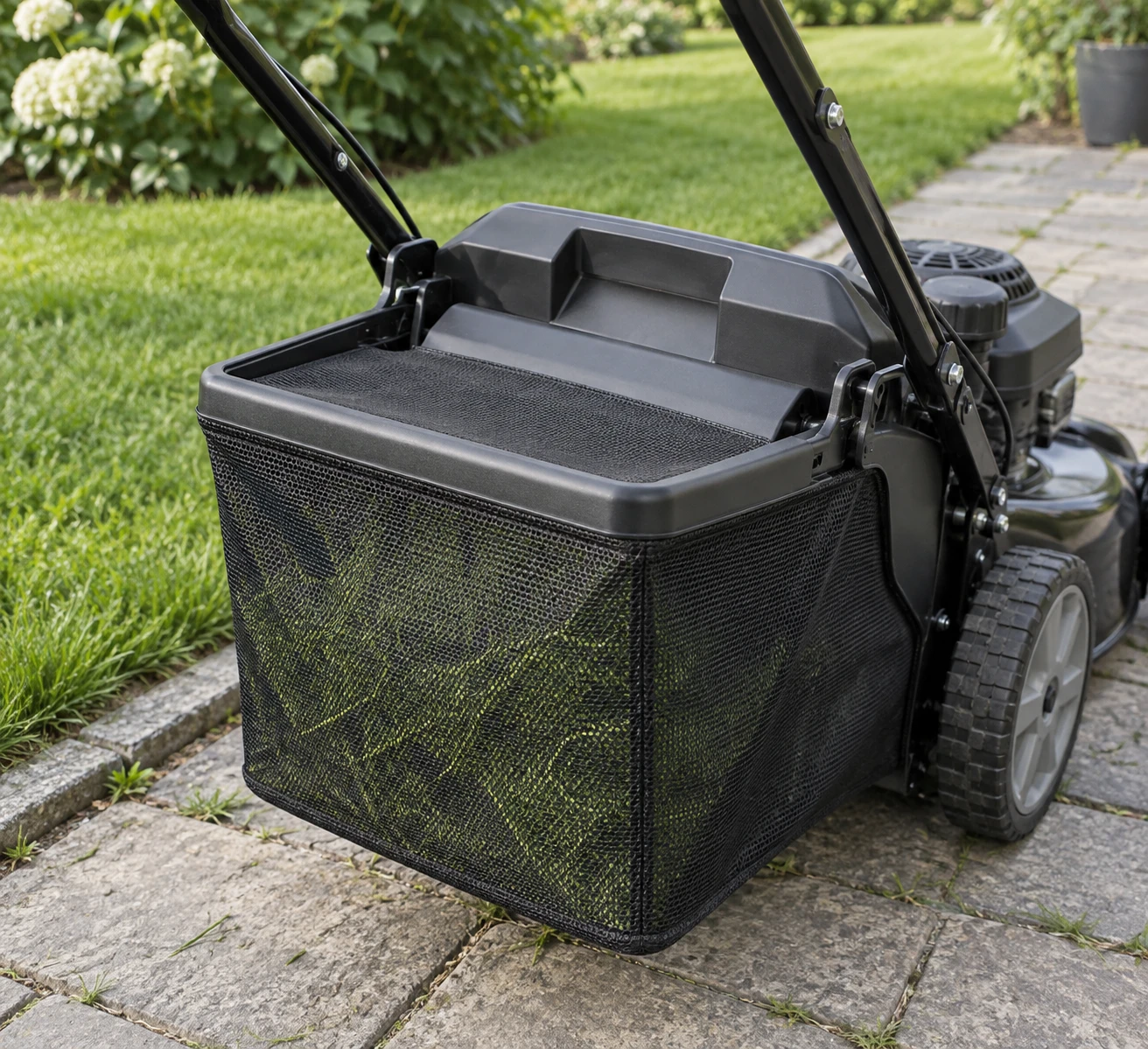
Lawn mower baggers are not universal. A bag that fits one mower may not seal on another, even from the same brand. Always buy by your mower’s exact model number and check the manufacturer’s compatibility list.
Find your exact model number
Look for the label on the deck, usually near the rear wheel or under the handle. It shows the model number and often a serial number or build code. Write both down or take a photo. A mower sold under the same name in two different years can use a different bag frame or chute, so the model number matters more than the name.
Check the frame, chute and seal
A replacement bagger has two parts: the cloth bag and the frame that holds it in shape. Some mowers let you replace only the cloth bag, which is the cheaper fix when the fabric has torn but the frame is straight. Check the manufacturer’s parts listing for which parts fit your model.
The fit at the chute matters most. A bag that doesn’t seal blows clippings back onto the lawn and fills poorly. “Fits most mowers” bags often leave gaps. If you go with a third-party bag, compare its frame shape and mounting points to your old one before you remove the original packaging, so you can return it if it doesn’t fit.
When a new bag won’t fix poor pickup
If the bag is fine but pickup is weak, look elsewhere first. A dull or worn blade, a blade fitted upside down, grass packed under the deck or a clogged fabric bag all reduce airflow. Scrape the deck, sharpen or replace the blade, and wash the bag so air can pass through the cloth. These fixes often restore pickup without any new parts.
When you shop for a whole new mower, The Mowers Guide also covers related buying guides and comparisons that help you narrow down models once you know your size.
Frequently Asked Questions
What is the most common size push mower?
The 21-inch walk-behind is the most common size in the US. It suits lawns up to about a half acre, fits through most gates and stores easily. Most residential walk-behinds fall between 20 and 22 inches.
How do I know what size lawn mower I need?
Measure your actual grass area, not your lot size, then factor in slopes and obstacles. Under a half acre of mowable grass, a 21-inch or 22-inch walk-behind works. Above that, a riding mower usually saves time and effort.
How do I measure a mower for gate clearance?
Measure your narrowest gate opening at wheel height, then compare it with the mower’s overall width from the spec sheet, not its cutting width. Allow about 2 inches of spare room on each side so you can roll it through easily.
Can I use a bagging mower in the fall for leaves?
Yes, as long as the leaves are dry. A bagging mower shreds and collects leaves in one pass, so you skip most raking, though shredded leaves fill the bag quickly and you’ll empty it more often.
References
- Lawn Care 101: Choosing the Best Lawn Mower for Your Needs
- How to Choose the Best Lawn Mower for Your Yard
- Choose the Right Lawn Mower: A Guide by Property Size
[4]
[5] How to Choose the Right Lawn Mower for Your Yard
[6] Lawn Mower Buying Guide – Snapper
[7]
[8] Mower Deck Sizes Explained — How to Pick the Right Cutting Width
[9] Lawn Mower Bags
[10] Grasshopper – Commercial & Residential Zero-Turn Lawn Mowers


Comments are closed.