
Zero Turn Mowers for Sale: A Buyer’s Guide to New and Used

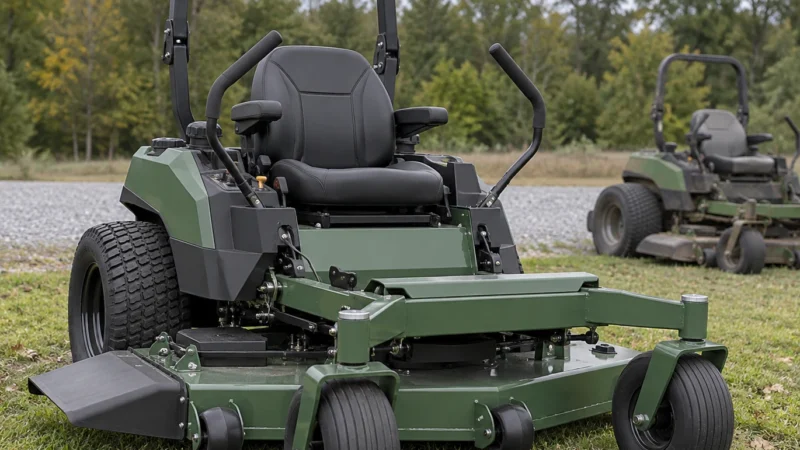
Should you buy new or used? Buy new if you mow more than about 2 acres every week and want a factory warranty. Buy used if you can inspect a machine carefully, because a well-kept used mower is often the better value. Zero-turns work best on yards larger than half an acre, and most residential models cut a 42- to 50-inch swath.
When you browse zero-turn mowers for sale, the hard part is judging the listing. Size, slope, condition and local service support matter more than the brand on the hood. Learn to read a listing, inspect the mower and spot the faults that should end the deal.
New or Used: Which Gives You Better Value?
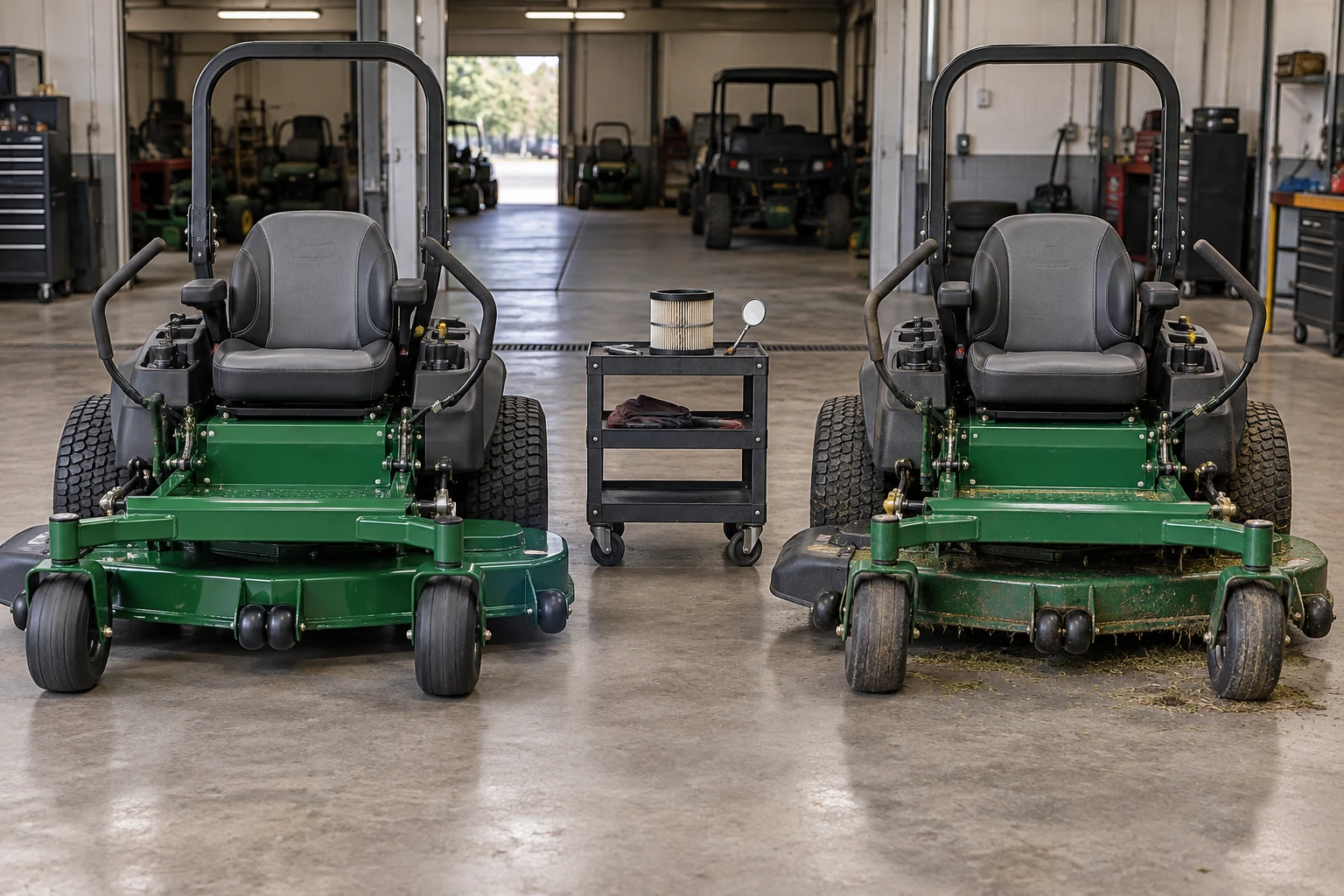
A used zero-turn is worth buying when it has records, normal wear and a dealer nearby who stocks its parts. A new one is worth the extra money when you mow often, want warranty cover or can’t do basic repairs yourself. Your answer depends on how much risk you are willing to take on.
When new makes sense
Factory warranties typically run 2 to 4 years on residential models and 1 to 3 years on commercial ones. Most also have an hour limit, so heavy use can end the cover early. A new mower also comes with a dealer setup, a known history and current safety features. Choose new if you have 2 or more acres, mow weekly through a long season, or would struggle to diagnose a transmission fault.
When used makes sense
Zero-turns lose value quickly in their first few seasons. That means a 3- to 5-year-old residential machine with low hours can cost much less than new and still have years of life left. The catch is that you inherit the last owner’s habits. A mower that got fresh oil and sharp blades is a bargain. One that sat outside with old fuel in it is a project.
Used also suits you if you already maintain small engines. Belts, blades and spindle bearings are normal wear parts, and you can fix them in a garage. If that work sounds unfamiliar, budget for a shop to do it, or lean toward new.
Residential or Commercial Duty?
Residential mowers are built for one owner mowing a few hours a week. Commercial mowers are built for crews mowing all day, every day. The difference shows up most in the transmission, the deck and the frame.
Most residential zero-turns use integrated transmissions, meaning the pump and the wheel motor share one sealed housing on each side. These units are compact and cheaper. Many cannot be fully rebuilt, so a failed one is often replaced as a whole. Commercial machines usually have separate pumps and wheel motors, which owners can service, rebuild and keep running for thousands of hours.
| Feature | Residential duty | Commercial duty |
|---|---|---|
| Typical deck build | Stamped steel, 10–14 gauge | Fabricated (welded) steel, often 7–10 gauge |
| Transmission | Integrated, often sealed | Separate pumps and wheel motors, serviceable |
| Engine life (typical) | About 500–1,000 hours | About 1,500–3,000+ hours |
| Factory warranty | 2–4 years, hour-limited | 1–3 years, hour-limited |
| Best for | Up to about 3 acres, weekly mowing | 3+ acres, daily or business use |
A used commercial mower can look like a smart buy for a homeowner. It has a heavier deck and a rebuildable drive. But it has usually run many hours on a crew, and its parts cost more. A lightly used commercial machine from a small property is a good find. A worn-out landscaper’s mower at a low price is usually not.
What Size Fits Your Yard, Gates and Garage?
Match the deck to your mowing area first. Then check that the whole machine fits through your gates and into your storage space. The deck width on a listing is the cutting width, not the width of the mower.
The table below shows common deck ranges by lot size. These are starting points. Lots of trees, beds or tight corners push you toward the smaller end.
| Property size | Suggested deck width |
|---|---|
| About 1/2 acre | 30–42 inches |
| About 1 acre | 36–52 inches |
| About 2 acres | 48–52 inches, up to 60 inches |
| About 3 acres | 52 inches or wider |
| 4+ acres, few obstacles | 60 inches or wider |
Measure the gate, not the deck
The overall width with the discharge chute down is often 4 to 6 inches wider than the deck. A 48-inch deck can therefore need about 54 inches of space. Many models let you fold the chute up, which saves a few inches. Measure your narrowest gate at its tightest point, such as a latch or post. Then ask the seller for the overall width with the chute up and down.
Check storage and trailer space
Length matters too. Most residential zero-turns are about 6 to 7 feet long. Measure your shed door and floor space, and leave room to walk around the machine. If you plan to haul the mower to another property, check your trailer width and ramp angle as well.
A worked example helps. Say your lot is 1.25 acres with a 50-inch side gate. A 54-inch deck mows faster, but it likely won’t fit through that gate. A 48-inch deck with the chute folded up probably will. On that lot, the 48-inch deck is the right choice, even though it adds a little mowing time.
Slopes, Traction and Manufacturer Limits
Zero-turns are not the best choice for hilly yards. They steer with the rear drive wheels, so on a slope they can lose traction. Once the drive wheels slip, you lose both steering and braking.
Zero-turn mowers are generally not recommended for slopes steeper than about 15 degrees, and many manufacturers set lower limits. The figure that counts is the one in your model’s operator’s manual.
Find your model’s limit before you buy. It is printed in the manual and sometimes on a decal near the seat. A 15-degree slope rises about 27 feet over 100 feet, which is steeper than it looks. You can check your own slope with a phone level app or a simple angle gauge on a straight board.
Site conditions change the real limit. Wet grass, loose soil, a ditch at the bottom or a drop-off near water all make a slope less safe than its angle suggests. Mow across a slope only when the manual allows it, and stay well away from edges. On regular steep ground, a lawn tractor with a lower center of gravity or a purpose-built slope mower is the safer tool.
For moderate slopes, look for a wider stance, a heavier frame and good rear tires. Turf tires with worn tread slip much sooner. Also check that the mower has a rollover protection structure (ROPS), the folding roll bar behind the seat, plus a working seat belt. Never buy a used machine with the ROPS removed or bent.
Where to Find Used Zero-Turn Mowers for Sale

The best places to look are equipment dealers, private sellers on local marketplaces and equipment listing sites. Each channel trades price against protection, so compare them before you start shopping.
| Channel | Price level | What you get | Main risk |
|---|---|---|---|
| Dealer (new) | Highest | Full warranty, setup, financing | Paying for features you don’t need |
| Dealer (used/trade-in) | Medium | Some inspection, sometimes a short warranty | Limited choice |
| Private seller | Lowest | Room to negotiate, owner’s story | No cover, hidden faults |
| Online listings and auctions | Varies | Wide choice | You may not see it run |
Dealers
Dealers sell trade-ins and lease returns. These are often checked over and serviced before sale. Ask what was done and whether any warranty comes with it. A dealer also tells you a lot about parts support, because you are standing where the parts are sold.
Private sellers
Local marketplace and classified listings give the best prices. They also carry the most risk, since you buy as-is. Good private listings show the hour meter, mention service history and include clear photos of the deck underside. Vague listings with one photo and “runs great” deserve caution.
Online and auction listings
Online listings widen your choice, but distance makes inspection hard. Avoid buying a mower you can’t see start cold, unless the seller is a dealer with a return policy in writing. Factor in hauling costs too, since a mower 200 miles away can lose its price advantage fast.
How to Inspect and Test-Drive a Used Zero-Turn
Inspect the mower cold, in daylight, with the seller present. Follow the same order every time so you don’t skip anything. A full check takes about 30 to 45 minutes.
Before it starts
Start by asking the seller not to run the mower before you arrive. A cold start shows problems that a warm engine hides. Next, check the hour meter and compare it with the overall wear. Worn pedals, a torn seat and shiny grips on a “200-hour” mower don’t add up.
Then pull the dipstick. The oil should be amber to dark brown, at the right level, and free of a milky look or a strong fuel smell. Check the air filter, which tells you how carefully the owner kept up maintenance. Look at the transmission area for oil leaks, wet dirt buildup or fresh cleaning in just one spot.
Finally, raise the deck and look underneath. Check for rust holes, cracked welds and bent edges. Grab each blade and try to rock it. Any play or grinding means worn spindle bearings, the bearings that hold each blade shaft. Inspect the belts for cracks and glazing, and spin the idler pulleys by hand. They should turn smoothly and quietly.
The cold start and test drive
Start the engine and watch for blue smoke (burning oil) or heavy white smoke that won’t clear. A little smoke for a few seconds is normal on some engines. Listen for knocking or rattling. Engage the blades and let them run for a minute. A loud whine or rumble points to bearing or pulley wear.
Now drive it. Take it straight forward at full speed, then in reverse. It should track straight with the levers held evenly. Turn in place both ways. Next, drive it up a gentle slope and stop. A mower that creeps, jerks or loses power going uphill once warm often has a worn transmission. Run it for at least 15 to 20 minutes, because hydrostatic problems often appear only when the oil heats up.
Last, test every safety switch. The engine should stop if you rise from the seat with the blades on or the levers out of neutral. The parking brake should hold on a slope.
Hours, Service Records and Walk-Away Faults
Hours matter, but not on their own. A 600-hour mower with oil changes logged every 50 hours can be a better buy than a 250-hour mower that sat neglected for years. Read hours together with records, wear and how it runs.
How many hours is too many?
For a residential gas engine, treat about 500 hours as the point where you start asking more questions. Above about 800 to 1,000 hours, expect larger repairs soon, unless records show good care. Commercial engines and drives typically last 1,500 hours or more. Extended warranty providers reflect this, with one setting eligibility at up to 500 hours for residential mowers and 1,500 hours for commercial ones.
Also check that the hour meter works. A broken or replaced meter makes the number useless. If it reads oddly low for the year, ask why.
What good records look like
Good records show oil and filter changes, blade sharpening, belt changes and transmission oil service where the model allows it. Receipts from a dealer are best, but a dated notebook is fine too. Ask how the mower was stored over winter and whether fuel was stabilized or drained. Old fuel causes many carburetor problems.
Wear you can negotiate vs. faults to walk away from
Some wear is normal and simply lowers the price. Dull or worn blades, a glazed belt, worn tires, a torn seat and a dirty air filter are all cheap fixes. Use them to negotiate, and plan to sort them out in your first weekend. Spindle bearings and a dead battery fall into this group too, if you can do the work.
Other faults should make you walk away. These include a transmission that slips, whines or loses power when warm, an engine that knocks or burns oil steadily, and a cracked or rotted deck shell. Walk away from a bent frame, a missing or damaged ROPS, bypassed safety switches, or a seller who won’t show the title or proof of ownership. Any of these can cost more than the gap between used and new.
Total Cost, Warranty and Parts Support
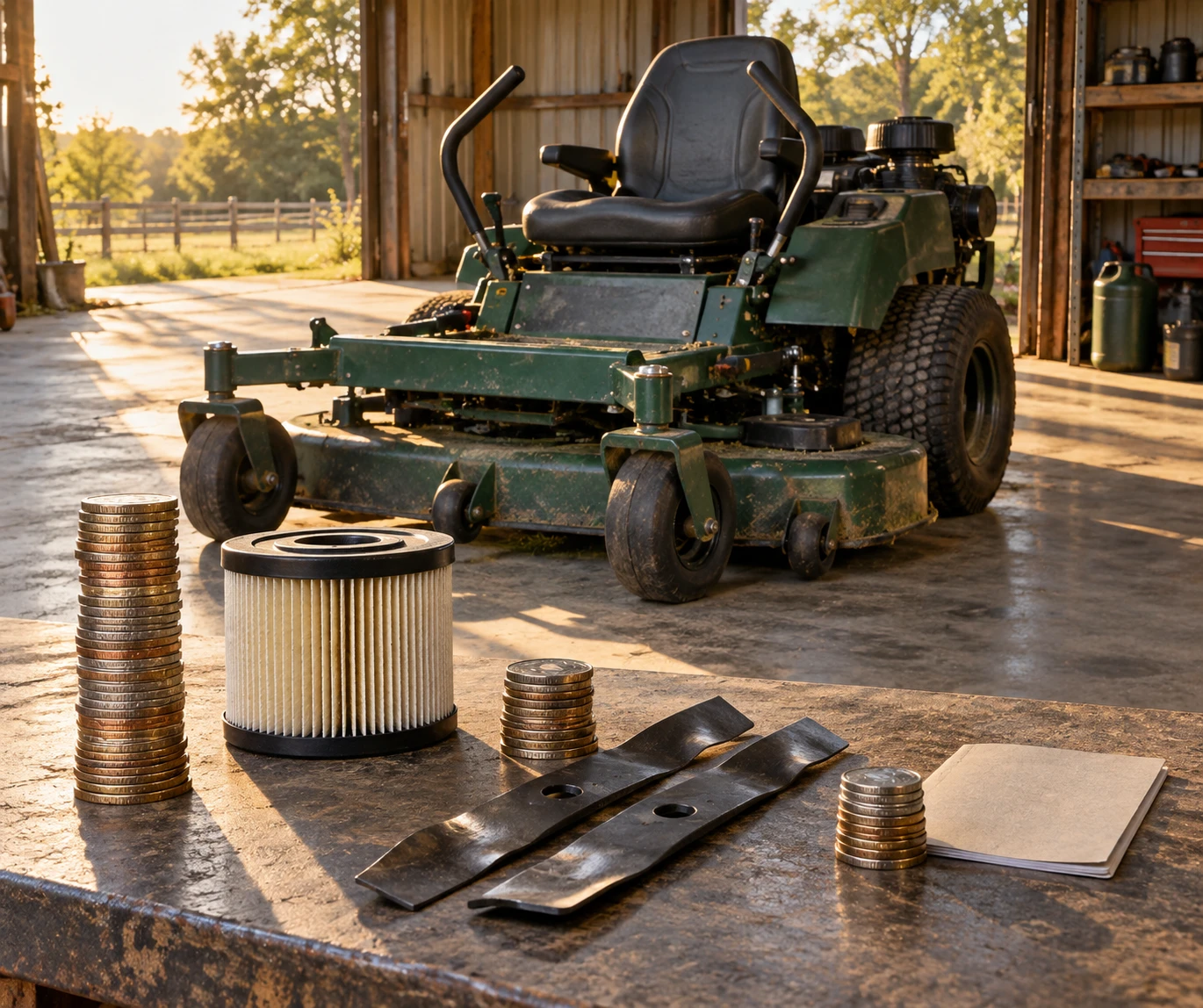
The real cost of a mower is the purchase price plus the first year of repairs, routine maintenance, financing and any warranty cover. Compare your options on that full figure, not on the sticker alone.
Building a real cost comparison
For a used mower, add up the repairs you found during inspection first. Then add yearly upkeep: oil, filters, blade sharpening, spark plugs and maybe a belt. Gas engines need these tune-ups. Battery-powered zero-turns skip oil changes, but you should check the battery’s age on a used one. If you are comparing against a new mower with 0% dealer financing, the gap can be smaller than it looks. A used mower bought with cash and needing $0 in repairs is still often the cheapest option overall.
Read financing terms closely. Promotional rates often apply only for a set term, and missing a payment can bring back interest on the full balance. Ask for the total amount you will repay, not just the monthly figure.
Warranty exclusions and transferability
Factory warranties exclude wear items such as blades, belts, tires and filters. They often exclude damage from misuse or missed maintenance as well. Ask whether the remaining factory warranty transfers to a second owner, because many residential warranties do not. If it does transfer, get the serial number and confirm the coverage with a dealer for that brand before you pay. Third-party extended plans exist for used machines, but they have age and hour limits plus a deductible.
Which brand is most reliable?
No single brand is the most reliable across every model. Each maker sells entry-level and premium lines, and they differ a lot. A well-kept mid-range model from any major manufacturer beats a neglected premium one. Instead of chasing a brand, focus on two things: a model with a serviceable transmission and a dealer within easy driving distance. Parts availability decides how long a used mower stays useful. Before you buy, call your nearest dealer with the model number and ask if they stock blades, belts and spindles for it.
Once you own the mower, regular blade sharpening and oil changes keep it reliable. The Mowers Guide offers lawn care and repair guides.
Frequently Asked Questions
Is it worth buying a used zero-turn lawn mower?
Yes, if it has service records, normal wear and local parts support. A low-hour residential mower a few years old often costs much less than new. Skip it if the transmission slips when warm.
Which zero-turn mowers should I avoid?
Avoid any mower with a slipping transmission, a rotted deck, a bent frame or removed safety parts. Also avoid models no local dealer supports. Without parts nearby, even a small repair can sideline the mower for weeks.
What is the best used zero-turn mower to buy?
The best used zero-turn is one sized for your yard, with low hours for its age, clear records and a dealer nearby. Model condition matters more than brand. A serviceable transmission is a strong plus.
Where should I look for used zero-turn mowers near me?
Start with local equipment dealers for trade-ins, then check local marketplace listings from private sellers. Dealers cost more but often service the mower first. Private sales cost less, so inspect carefully and see the mower start cold.
References
[2]
[3]
[4] Zero Turn Mower Buying Guide: Find Your Perfect Model
[5] Lawn Mower & Tractor Buying Guide
[6] A Buyer’s Guide to Choosing a Zero-Turn Mower | MachineFinder
[7] Zero Turn Mower Buyer’s Guide
[8] What Size Zero-Turn Mower is Right for Me?
[9] Zero Turn Mower Warranty | Residential & Commercial Coverage


Comments are closed.